
Fitting a hammock onto a small condo balcony requires balancing personal comfort with physical safety and spatial flow. To enjoy a relaxing outdoor nook without blocking your primary walkway, you must select a hammock style that matches your balcony’s exact dimensions and hanging capacity. By prioritizing compact designs—such as hanging hammock chairs or highly adjustable gathered-end models—and planning for dynamic movement, you can create a cozy retreat that leaves ample room for daily foot traffic and emergency access.
Assessing Your Balcony Space and Clearance Requirements
Before purchasing any lounging furniture, you must take precise measurements of your balcony’s physical boundaries. Use a metal measuring tape to record the total length, width, and overhead height of the space. Do not rely on visual estimation, as even a few centimeters of error can result in a hammock that scrapes against the wall or completely blocks your balcony door.
Beyond the static footprint of the hammock, you must account for its dynamic swing arc. When you sit or lie in a hammock, it naturally sways and shifts. Ensure there is a buffer zone of clear space on all sides so that you do not bump into concrete walls, glass railings, or delicate balcony plants during use.
Products mentioned in this guide


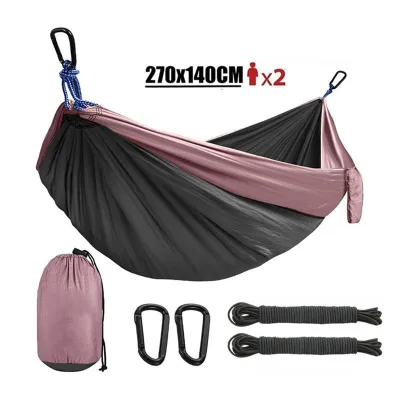


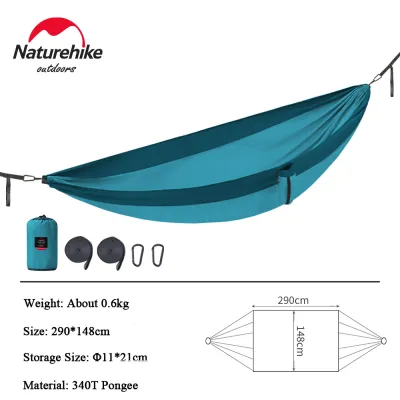

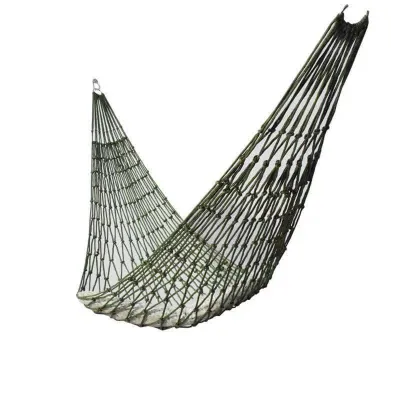
Prices are valid at publication and may change. Please refer to the product page for the latest price.
Identify all fixed obstacles that permanently occupy your balcony floor or wall space. Air conditioning compressor units, drainage pipes, utility meters, and structural pillars cannot be moved and will restrict where your hammock can hang. Mark these obstacles on a simple floor plan to visualize the actual usable area remaining.
Maintaining a clear, unobstructed walkway is a critical safety requirement for any high-rise residence. Ensure that the path from your indoor living space to the balcony railing remains wide enough for comfortable walking. This clear path is essential not only for daily convenience but also for rapid egress during emergencies.
Finally, pay close attention to the swing radius of your balcony door. If you have a traditional hinged door that opens outward onto the balcony, it can easily collide with a suspended hammock or its stand. Measure the door’s full path of motion and ensure your setup sits entirely outside this arc to prevent damage and frustration.
Comparing Hammock Types for Limited Spaces
When space is at a premium, the style of hammock you choose dictates how much usable balcony area remains. Hammock chairs are often highly space-efficient options for narrow condo balconies. Because they suspend from a single overhead point, they require a minimal horizontal footprint, allowing you to tuck them neatly into a corner while preserving the main walkway.

Traditional gathered-end hammocks, which bunch at the ends and suspend from two separate points, offer a classic lounging experience but require more horizontal distance. To lie comfortably in a gathered-end model, you typically lie at a diagonal angle, which spreads the fabric wide. While they require moderate space, they can often be unhooked and packed away quickly when you need to reclaim the balcony floor.
Spreader-bar hammocks, which use wooden or metal bars to keep the fabric flat and taut, are generally poorly suited for tight condo balconies. These models require significant lateral space to remain stable and have a higher risk of tipping if your weight shifts. Their rigid structure also makes them bulky, difficult to store, and highly intrusive in narrow layouts.
Consider the visual weight and storage convenience of the material before making your final decision. Heavy canvas or thick quilted fabrics can make a small balcony feel cramped and cluttered even when unoccupied. Lightweight, weather-resistant woven fabrics or nylon nets offer a more open, airy aesthetic and can be stuffed into compact storage bags when not in use.
Calculating Hanging Distance and Sag
Achieving the perfect hang requires understanding the geometric relationship between your hammock’s length, the distance between your anchor points, and the suspension angle. Ideally, a hammock should hang at roughly a 30-degree angle relative to the ground to distribute weight evenly and provide a comfortable, supportive curve.
Attempting to pull a hammock completely flat to fit a shorter space is a common mistake that increases tension on your mounting points. Instead, plan for a natural, deep sag that cradles your body. This sag allows you to sit comfortably without putting excessive lateral stress on your walls, ceiling, or stand.
Adjusting the height of your anchor points is crucial to prevent the lowest point of the hammock from dragging on the floor when occupied. As a general rule, the bottom of the empty hammock should sit at about chair height. This height makes it easy to get in and out safely while ensuring you remain suspended well above the balcony tiles once your full weight is applied.
To achieve this balance without permanently altering your structural mounts, utilize adjustable suspension straps or heavy-duty chains. These accessories allow you to fine-tune the tension and height of your hammock as the fabric stretches over time. They also make it simple to adjust the setup for different users or to detach the hammock entirely when bad weather approaches.
Evaluating Mounting Options and Structural Limits
Deciding how to support your hammock depends heavily on your balcony’s construction and your building’s regulations. While drilling into walls or ceilings for permanent anchor bolts offers a clean, space-saving look, it is not always permissible or safe. Freestanding stands are a popular alternative, but they occupy valuable floor space and must be carefully measured to ensure they do not block walkways.
Before undertaking any installation that involves drilling, you must consult your condominium association rules and building guidelines. Many property management offices strictly prohibit drilling into exterior walls, structural concrete, or ceilings due to waterproofing concerns and structural integrity. Violating these rules can lead to fines or costly damage to the building’s envelope.
If drilling is permitted, inspect the structural material of your balcony to determine the correct mounting hardware. Solid concrete requires specialized expansion anchors and masonry drill bits, while brick or wood requires different fastening systems. Never attempt to mount hardware into non-structural materials like drywall, plaster, thin metal cladding, or decorative balcony railings.
Establish a strict stop condition for your project: if you cannot verify the composition of your walls, if you detect any cracks or water damage in the concrete, or if you are unsure of the load-bearing capacity, halt the installation immediately. In these scenarios, do not proceed with drilling. Consult a qualified structural engineer or a professional contractor to assess the space and perform a safe installation.
Common Space-Matching Mistakes to Avoid
One of the most frequent errors is ignoring the dynamic swing path of the hammock during actual use. A setup that fits perfectly when static can easily swing into glass sliding doors, concrete pillars, or metal railings once you climb inside. Always test the range of motion gently before fully committing to a layout.
Over-tightening the suspension to force a long hammock into a short space is another hazardous mistake. This practice dramatically multiplies the pulling force exerted on your anchor points, which can cause hardware failure or structural damage. Keep the suspension angle close to the recommended 30 degrees to maintain a safe load distribution.
Do not underestimate the physical footprint of a freestanding hammock stand. While they avoid the need for drilling, their long base legs can easily span the entire width of a small balcony, turning a relaxing space into a tripping hazard. Always compare the stand’s base dimensions against your measured walkway clearance.
Finally, remember that tropical weather can change rapidly, bringing heavy rain, high humidity, and strong winds. Leaving a hammock fully exposed to the elements leads to mold, mildew, and fabric degradation. Choose a setup that is easy to dismantle, or invest in a high-quality, weather-resistant cover that can be secured quickly when a storm approaches.
Frequently Asked Questions (FAQ)
Is it safe to use a freestanding hammock stand on a condo balcony?
Yes, using a freestanding stand is generally safe, provided you carefully verify its physical dimensions and stability. Because these stands do not require drilling, they are an excellent option for renters or buildings with strict structural rules. However, their metal or wooden bases often have a large footprint that can easily obstruct narrow walkways. Before purchasing, measure your balcony floor to ensure the stand leaves a clear path. Additionally, check that the stand is rated for your weight and that its feet sit securely on the balcony floor, keeping in mind that many condo balconies are slightly sloped to allow rainwater to drain.
How do I verify if my balcony structure can support a hammock?
To verify the structural capacity of your balcony, start by contacting your condominium’s property management office or reviewing the building’s original structural plans. These documents outline the load limits and specify which walls are load-bearing concrete and which are non-structural partitions. Never mount hammock hardware into hollow blocks, decorative railings, or exterior cladding, as these materials cannot support dynamic human weight. If the building administration cannot provide clear structural details, or if you have any doubts about the integrity of the concrete, stop the installation immediately and hire a qualified contractor or structural engineer to evaluate the site.

Community discussion
Share your experience or ask a question. Comments are reviewed before publication.