
Finding the right layered shoe organizer for your closet setup is a practical step toward maintaining an orderly, functional home. A well-chosen storage system not only keeps your footwear accessible but also protects your investment in quality shoes by preventing scuffs, dust accumulation, and structural warping. In tropical environments where high relative humidity is a constant factor, proper shoe storage becomes even more critical to prevent mold growth and material degradation. By matching the physical layout of your closet with the specific structural design of a tiered organizer, you can maximize your available space while keeping your collection in pristine condition.
To make an informed decision, you must look beyond simple aesthetics and focus on the physical dimensions, structural stability, and ventilation of the organizer. Different closet configurations—such as spacious walk-in closets, compact reach-in wardrobes, or shared family spaces—each require a distinct approach to vertical storage. Whether you select a freestanding rack, a stackable modular system, a hanging door organizer, or a smooth pull-out sliding unit, verifying the manufacturer’s specifications against your actual space is the key to a successful installation.
Assessing Your Closet Space and Shoe Collection
Before browsing online marketplaces or visiting local home improvement stores, you must gather precise measurements of your closet space. Use a reliable metal tape measure to record the width, depth, and height of the specific area where you plan to place the organizer. If you are placing the unit inside a wardrobe with doors, measure the internal clearance carefully, taking into account any door hinges, sliding tracks, or handles that might protrude inward. Ensure that there is sufficient clearance for wardrobe doors to swing or slide open completely without striking the front of the shoe organizer or the toes of your stored shoes.
Products mentioned in this guide
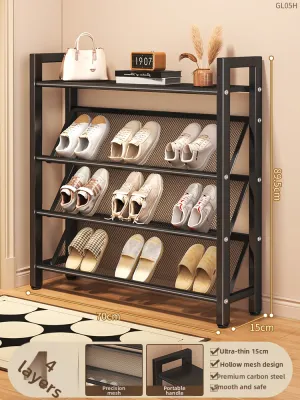
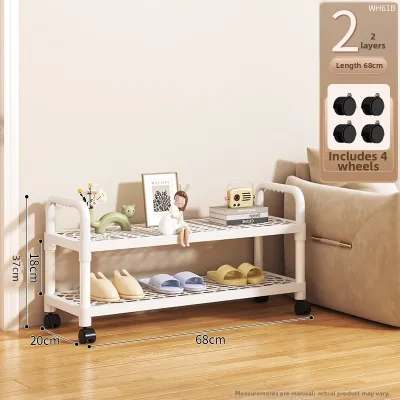
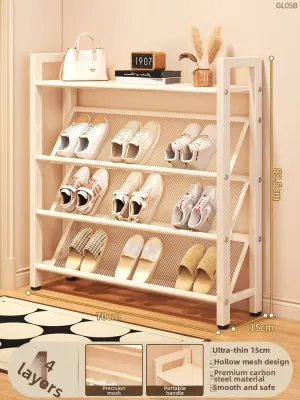
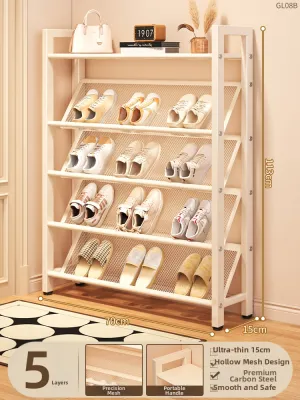
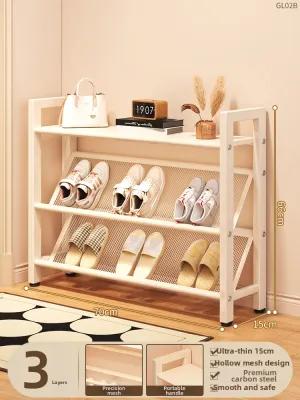
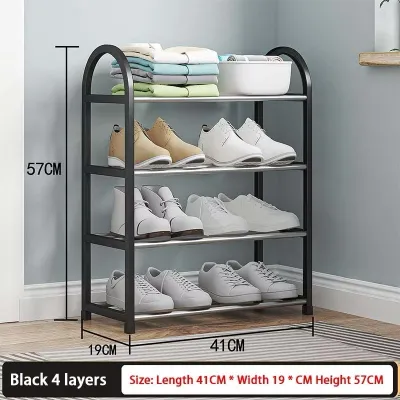
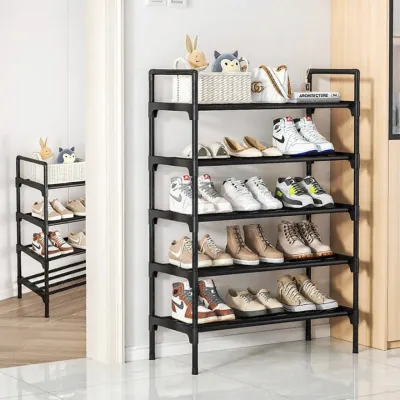
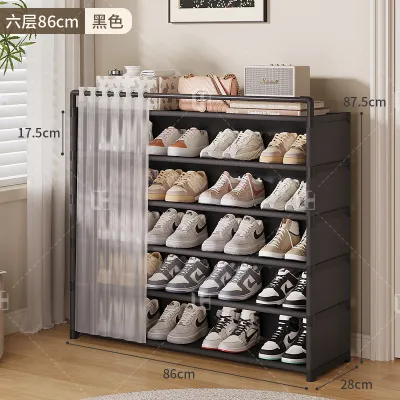
Prices are valid at publication and may change. Please refer to the product page for the latest price.
The next step involves categorizing your footwear collection by height, width, and overall profile. Shoes are not uniform in shape; a pair of high-top sneakers, leather boots, flat sandals, and high heels all require different vertical clearances. Group your shoes into categories based on their height and measure the tallest pair in each group to determine the minimum spacing required between the organizer’s tiers. If your collection is diverse, look for organizers that offer adjustable shelf heights or removable panels, which allow you to customize the vertical clearance of individual layers to prevent crushing or bending your footwear.
Finally, calculate the total number of pairs you currently own and anticipate any future additions to your collection over the coming seasons. It is generally wise to select an organizer with a capacity that exceeds your current inventory by at least ten to twenty percent to accommodate new purchases. This total pair count will help you estimate the number of layers or individual slots required. For instance, if you have twenty-four pairs of shoes and a standard freestanding tier comfortably holds four pairs, you will need to look for a six-tier rack or a modular system that can be expanded to that capacity without compromising stability.
Comparing Common Layered Shoe Organizer Types
Understanding the structural differences, space requirements, and ideal use cases for the main tiered organizer styles is essential for making the right choice. Freestanding tiered racks are among the most common and versatile options available. These units sit directly on the closet floor or on a wide shelf, providing open access to your footwear. When evaluating freestanding racks, prioritize base stability and the overall footprint; a wider base helps prevent the unit from wobbling when fully loaded. Look for models with adjustable shelf heights or slanted shelves featuring a front lip to keep shoes securely in place.

Stackable modular units offer excellent vertical flexibility, allowing you to build your storage system upward as your collection grows. These systems consist of individual tiers or small multi-tier blocks that lock together. When choosing stackable units, carefully inspect the interlocking mechanisms—such as snap-fit joints, dowels, or interlocking clips—to ensure they provide a rigid connection between layers. It is crucial to check the manufacturer’s recommended vertical expansion limits and to distribute the weight evenly across the layers, placing the heaviest shoes on the bottom to maintain a low center of gravity.
Hanging or over-the-door tiered organizers are highly effective for maximizing vertical space in compact closets. These units typically hang from a closet rod or hook over the top of a standard door, utilizing space that would otherwise remain empty. Before selecting a hanging organizer, verify the clearance around your door hinges and the thickness of the door frame to ensure the hanging brackets do not interfere with the door’s operation. Look for models with rigid internal frames, reinforced backing, and sturdy hooks to prevent the organizer from sagging, swaying, or stretching under the weight of your shoes.
Pull-out or sliding tiered systems provide a premium, highly accessible storage solution, particularly for deep closets or lower cabinets where reaching the back is difficult. These systems utilize metal tracks mounted to the floor or existing shelves of your closet, allowing the entire shoe rack to slide forward. When considering a pull-out system, you must verify the depth clearance of your closet to ensure the tracks can fully extend without obstruction. Additionally, check the track installation requirements, the smoothness of the ball-bearing glides, and the maximum load capacity specified by the manufacturer to ensure safe operation.
Matching the Organizer to Your Specific Closet Configuration
Your choice of a layered shoe organizer should align closely with the layout, size, and tenancy status of your living space. In spacious walk-in closets, you have the freedom to utilize both floor space and dead corners effectively. Freestanding racks or large modular stackable units are ideal for these configurations, as they can be arranged along empty walls or tucked into corners to create a high-capacity, boutique-style display. Utilizing modular units in walk-in closets allows you to customize the layout around existing hanging rods and drawers, ensuring no space is wasted.
For reach-in closets with limited floor space, preserving room for hanging clothes is often the primary concern. In these tight setups, maximizing vertical door space with an over-the-door hanging organizer is an excellent way to clear the floor. Alternatively, you can install low-profile, under-shelf pull-out tiers or compact stackable units that sit beneath short-hanging garments like shirts and jackets. This approach keeps your footwear organized and off the floor without encroaching on the vertical space required for longer coats or dresses.
Shared or family closets present a unique organizational challenge, as multiple users with different shoe sizes and styles must share the same storage system. To maintain order, consider using adjustable stackable layers that can be zoned by user or shoe type. Assigning specific tiers or sections to each family member helps prevent confusion and ensures that smaller children’s shoes are kept on lower, easily reachable levels, while adult footwear is stored higher up. Clear labeling or color-coded modular bins can further enhance the efficiency of a shared closet system.
If you are a renter or living in a temporary setup, permanent modifications to the closet cabinetry are usually not an option. Prioritize non-damaging, freestanding, or over-the-door storage solutions that require no drilling, screws, or permanent adhesive. Lightweight freestanding plastic or metal racks, as well as fabric hanging organizers, can be easily assembled, disassembled, and transported to a new home when you move. Choosing modular systems that do not require wall anchoring—provided they are kept at a safe, low height—allows you to maintain an organized closet without risking your security deposit.
Essential Specifications and Safety Checks Before Buying
Before finalizing your purchase, it is vital to perform a thorough check of the physical and structural specifications of the organizer. Start by verifying the maximum weight capacity per tier and the overall weight limit of the entire unit. Exceeding these limits can lead to bowing shelves, cracked joints, or a complete structural collapse. Keep in mind that different types of footwear vary significantly in weight; a pair of heavy leather work boots or thick-soled platform shoes weighs much more than lightweight canvas sneakers, sandals, or slippers.
Do not rely solely on material names to assume durability or performance. Instead, inspect the actual material finishes, joint structures, and base footprints for physical stability. If you are choosing a metal organizer, check for a rust-resistant powder-coated finish to withstand high humidity. For wooden or engineered wood units, verify that all edges and joints are properly sealed to prevent moisture absorption, swelling, and warping. Examine the joints to ensure they are secured with robust hardware, such as screws or bolts, rather than flimsy plastic push-fit connectors that can degrade over time.
In tropical climates, adequate ventilation is essential for preventing mold, mildew, and unpleasant odors from developing on your footwear. Open-slat shelves, wire grids, or breathable fabric pockets allow air to circulate freely around your shoes, helping them dry out after wear. If you prefer an enclosed cabinet-style organizer to protect your shoes from dust, ensure the unit features ventilated back panels, mesh doors, or louvers that facilitate continuous airflow while keeping dust accumulation to a minimum.
Finally, confirm the assembly requirements, the tools needed for installation, and the retailer’s return policy. Some tiered organizers require complex assembly with specialized tools, while others feature simple, tool-free snap-together designs. Make sure you have the necessary tools on hand before the product arrives. Additionally, verify that the retailer offers a clear return or exchange policy in case the physical dimensions of the organizer do not match your measured closet space or if the unit exhibits any structural instability upon assembly.
Frequently Asked Questions (FAQ)
Can I mix different shoe types on the same tiered organizer?
Yes, you can safely mix different shoe types on a single tiered organizer by paying close attention to weight distribution and vertical spacing. To maintain the unit’s stability and prevent structural stress, always place your heaviest footwear, such as boots, leather shoes, and thick-soled sneakers, on the bottom tiers. Lighter items, such as sandals, flats, and slippers, should be placed on the upper levels to keep the center of gravity low. If your organizer features adjustable shelves or removable dividers, customize the spacing to accommodate taller boots on one side while keeping tighter spacing for flat shoes on the other, maximizing your vertical storage efficiency.
How do I prevent a tall stackable shoe rack from tipping over?
Preventing a tall stackable shoe rack from tipping over is crucial for maintaining a safe home environment, especially in active households. Always consult the manufacturer’s instructions to check for included wall-anchoring kits, anti-tip straps, or brackets, and verify that they are compatible with your specific wall material, whether it is concrete, drywall, or wood. To maximize baseline stability, always load the rack from the bottom up, placing the heaviest shoes on the lowest tiers to lower the overall center of gravity. Avoid stacking modular units beyond the height limit recommended by the manufacturer, and regularly inspect the interlocking joints to ensure they remain tightly connected and secure.

Community discussion
Share your experience or ask a question. Comments are reviewed before publication.