
Finding the right lagayan ng sapatos organizer for a compact Filipino closet requires balancing limited floor space with high tropical humidity. In many Philippine homes, bedrooms feature built-in wooden wardrobes or freestanding cabinets that quickly become crowded with clothes, bags, and footwear. To maximize these tight spaces, you must look beyond traditional floor racks and explore vertical, door-mounted, and stackable storage solutions. The most effective organizer for your closet is one that utilizes underused zones without trapping moisture or obstructing your daily routine.
Selecting the ideal storage system is not just about finding a container that fits your shoes; it is about matching the physical dimensions and structural limits of your closet with the right organizer type. By assessing your available space, understanding the weight capacities of your closet components, and choosing materials suited for a humid climate, you can keep your footwear collection organized, accessible, and well-preserved.
Assessing Your Closet Space and Clearance
Before purchasing any storage accessory, you must take precise measurements of your closet’s interior. Use a metal measuring tape to record the exact width, depth, and height of the usable space. Do not rely on visual estimates, as even a discrepancy of a few centimeters can prevent closet doors from closing or cause stackable bins to jam. When measuring the height, account for the space already occupied by hanging clothes, as garments like long dresses or trousers will reduce the vertical clearance available on the closet floor.
Products mentioned in this guide
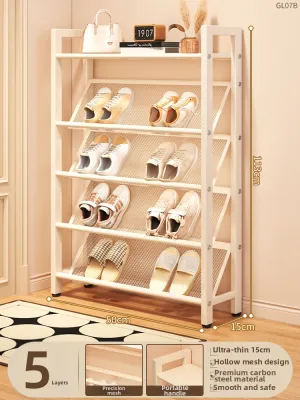
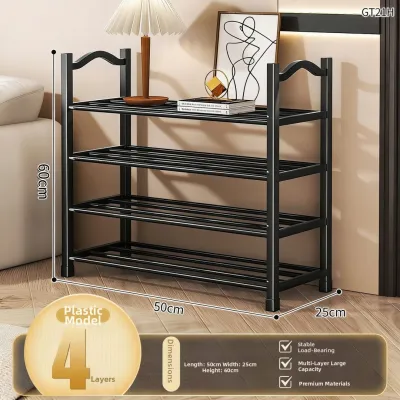
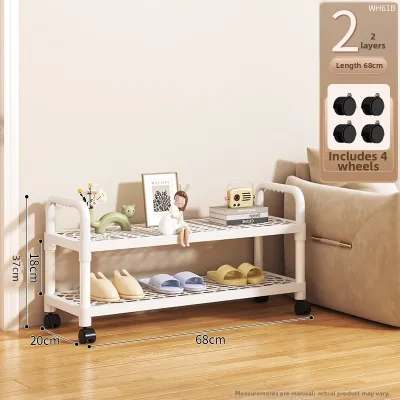
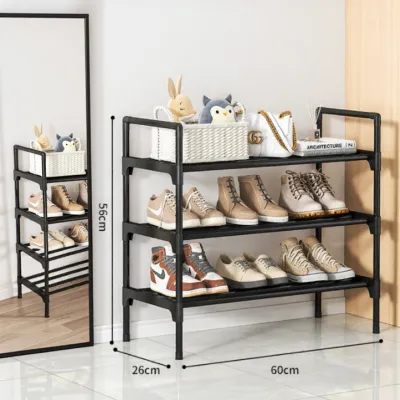
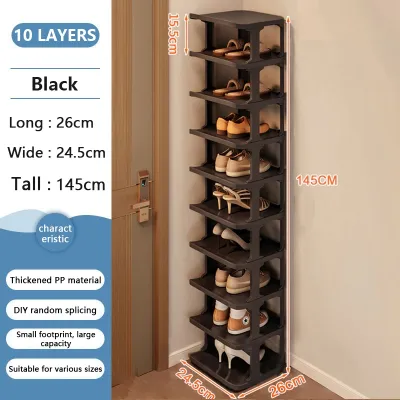
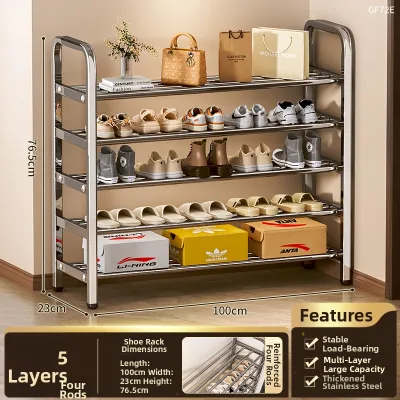
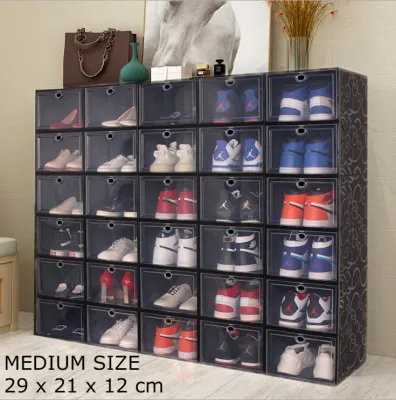
Prices are valid at publication and may change. Please refer to the product page for the latest price.
Next, evaluate the clearance required for your closet doors to operate smoothly. If you have hinged doors, measure the swing radius to ensure that any floor-standing or door-mounted organizer will not block the door from opening fully. For sliding doors, check the overlap area and the depth of the tracks, as organizers placed too close to the front edge can obstruct the sliding mechanism. Additionally, inspect the closet floor for any unevenness, which is common in tiled or older concrete floors, as an uneven base can compromise the stability of stacked organizers.
Finally, identify the underutilized “dead zones” within your closet layout. These typically include the back of the closet door, the vertical gap between the bottom of hanging shirts and the floor, and the deep, dark corners of lower shelves. Mapping out these zones allows you to target specific areas for storage expansion. For instance, a deep but narrow floor space is ideal for stackable bins, while a wide, shallow gap beneath hanging rods is perfect for a hanging fabric shelf.
Matching Organizer Types to Your Available Space
To optimize your closet, you must map specific shoe storage styles to the physical zones you have measured. Different organizer designs excel in different areas of the wardrobe, and choosing the wrong type can lead to wasted space or restricted access. A systematic approach ensures that every centimeter of your closet is utilized efficiently.

The three primary spatial zones in a standard closet are the door backs, the vertical hanging gaps beneath closet rods, and the floor or deep shelf areas. By categorizing your storage needs into these three zones, you can select organizers that complement your closet’s architecture rather than fighting against it.
Door-Mounted and Over-the-Door Racks
Over-the-door racks are excellent for utilizing the vertical plane of hinged closet doors, making them highly suitable for small bedrooms where floor space is at a premium. Before choosing this option, measure the thickness of your closet door to ensure the mounting hooks will fit snugly over the top edge. You must also check the clearance gap between the top of the door and the door frame; if this gap is too narrow, the hooks may scrape the frame or prevent the door from closing.
The weight-bearing capacity of your closet door is another critical factor to verify. Many modern built-in wardrobes use hollow-core doors, which are lightweight but have limited structural strength. Heavy footwear, such as leather boots or thick-soled sneakers, can strain the hinges of a hollow-core door over time, leading to sagging or misalignment. For these doors, limit storage to lightweight footwear like slippers, sandals, and flats, and check that the mounting hooks feature protective padding to prevent scratching the door’s finish.
Hanging Shelf Organizers
Hanging shelf organizers suspend directly from your closet rod, making them an excellent choice for utilizing the vertical dead space beneath shorter hanging garments like shirts and jackets. To determine if this style fits your closet, measure the distance from the top of the closet rod to the floor or the nearest lower shelf. This measurement will help you select an organizer with the correct number of tiers without it bunching up at the bottom.
Because these organizers hang from the closet rod, you must confirm the rod’s overall weight capacity and stability. Standard wooden or thin metal rods can sag or pull away from their wall mounts if overloaded with heavy shoe organizers. To maintain structural integrity, distribute the weight evenly across the rod and reserve hanging fabric shelves for lightweight shoes. Additionally, check the attachment mechanism—such as wide hook-and-loop straps or metal hooks—to ensure it matches the diameter of your closet rod.
Stackable Boxes and Drop-Front Bins
Stackable boxes and drop-front bins are ideal for maximizing deep shelves or the closet floor, allowing you to build a customized storage tower that fits your exact space. When selecting stackable options, prioritize stability by checking for interlocking lids, molded grooves, or anti-tip mechanisms that lock the boxes together. A stable interlocking system prevents the tower from tipping over when you retrieve a pair of shoes from the bottom.
Depth clearance is crucial when placing stackable bins inside a closet. Measure the external depth of the bins and compare it to the interior depth of your closet to ensure the wardrobe doors can close completely. In the humid Philippine climate, look for bins made from breathable materials or those featuring built-in ventilation holes. Proper airflow is essential to prevent moisture buildup, which can lead to mold, mildew, and the deterioration of shoe materials like polyurethane and leather.
Installation, Weight Limits, and Safety Checks
Proper installation and adherence to weight limits are vital to ensure your shoe organizers remain safe and functional over time. Before loading any organizer with your footwear collection, consult the manufacturer’s guidelines for maximum load capacities. Overloading shelves, rods, or doors can lead to structural failure, damaging both your wardrobe and your shoes.
When installing wall-mounted or door-mounted organizers, verify that your mounting hardware is compatible with the specific materials of your closet. For example, securing a heavy rack to a thin plywood closet partition requires different anchors than mounting it to a concrete wall. If you are stacking plastic or acrylic shoe boxes, always place the heaviest shoes, such as boots or heavy sneakers, in the bottom boxes to lower the center of gravity and improve overall stability.
Ensure that all floor-standing and stacked organizers are positioned on a completely level surface. If your closet floor is uneven, use shims or adjustable leveling feet to stabilize the base before stacking bins. Avoid stacking boxes higher than the manufacturer’s recommended limit, and consider anchoring tall stacks to the closet wall if they are placed in high-traffic areas where they could be easily bumped.
Common Space-Matching Mistakes to Avoid
One of the most common mistakes when choosing a lagayan ng sapatos organizer is ignoring the height profiles of your footwear. Many standard organizers feature low-clearance slots designed solely for flat shoes or low-top sneakers. If you attempt to force high-top sneakers, high heels, or ankle boots into these tight spaces, you risk bending, creasing, or damaging the shoes. Always measure the height of your tallest shoes and ensure the organizer has adjustable shelves or varied compartment sizes to accommodate them.
Another frequent error is overloading door-mounted organizers without monitoring the condition of the door hinges. Over time, the constant downward pull of a fully loaded shoe rack can loosen hinge screws, causing the door to scrape against the floor or fail to latch. Periodically inspect your closet door hinges for signs of wear or loosening, and tighten the screws immediately if you notice any sagging.
Finally, avoid blocking essential closet ventilation pathways with deep floor stacks or oversized organizers. In tropical environments, wardrobes require consistent airflow to prevent humid air from becoming trapped in dark corners. Placing large, solid plastic bins tightly against the back and side walls of your closet can restrict air circulation, creating a breeding ground for mold. Leave a small gap between your organizers and the closet walls to promote healthy ventilation.
Frequently Asked Questions (FAQ)
How do I protect my closet doors from scratches when using over-the-door organizers?
To prevent surface damage to your closet doors, look for over-the-door organizers that include built-in foam padding or felt bumpers on the inside of the mounting hooks. If your organizer does not come with these, you can apply self-adhesive felt pads or silicone bumpers to the contact points yourself. Additionally, ensure there is a small clearance gap between the top of the door and the frame so the metal hooks do not rub against the wood when the door is opened and closed.
Can I use stackable shoe boxes on wire closet shelves?
Placing flat-bottomed stackable shoe boxes directly on wire closet shelves can cause stability issues, as the thin wire grates may cause the boxes to tilt, slide, or sag into the gaps. To create a stable foundation, place a solid shelf liner, a thin acrylic sheet, or a piece of sturdy cardboard over the wire shelf before arranging your shoe boxes. This distributes the weight evenly across the wire supports and ensures your stacked boxes remain perfectly upright and secure.

Community discussion
Share your experience or ask a question. Comments are reviewed before publication.