
Finding the right dining table for large family gatherings requires balancing daily space constraints with occasional hosting needs. To comfortably seat 6 to 10 people, a foldable round dining table must expand to a diameter of 120 cm to 180 cm, depending on the exact guest count and chair sizes. A round shape naturally fosters conversation and makes it easier to share dishes, but choosing the wrong size can lead to cramped elbows or blocked walkways. By understanding standard diameter guidelines, folding mechanisms, and clearance requirements, you can select a versatile table that fits your home perfectly.
Standard Diameter Guidelines for 6 to 10 Seats
When shopping for a foldable round dining table, the fully extended diameter is the most critical measurement to verify. For a gathering of 6 people, a minimum diameter of 120 cm (approximately 4 feet) is standard, though 135 cm offers more breathing room. If your guest list regularly grows to 8 people, you will need a table that extends to at least 150 cm (5 feet) to prevent place settings from overlapping. Accommodating 10 people comfortably requires a substantial diameter of 180 cm (6 feet), which provides enough perimeter space for everyone to sit without bumping elbows.
The actual comfort level of your guests also depends heavily on the style of chairs you use. Standard dining chairs without armrests typically measure 45 to 50 cm in width, which fits neatly within these baseline guidelines. If you prefer wider, upholstered chairs or designs with armrests, you must factor in the extra width and choose a table on the larger end of the spectrum. Additionally, consider your typical dining style; family-style meals with multiple shared platters in the center require more tabletop depth than individually plated courses.
Products mentioned in this guide
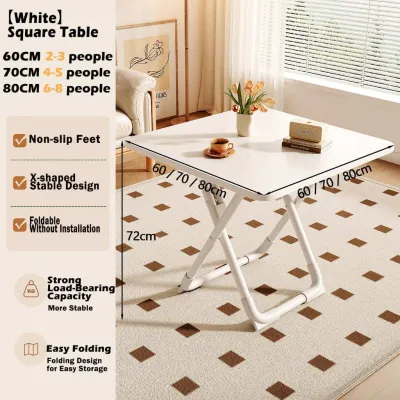
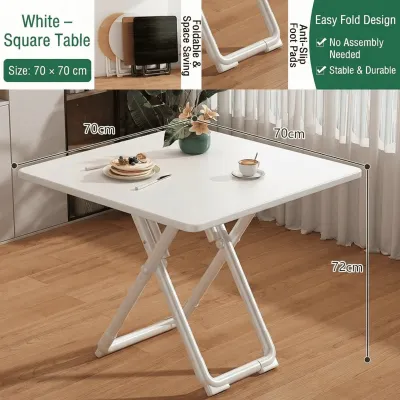
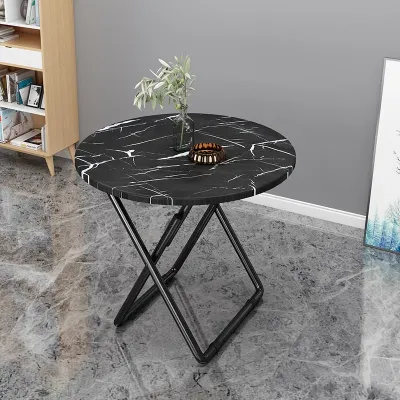
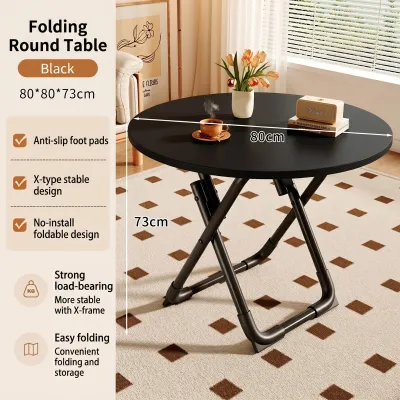
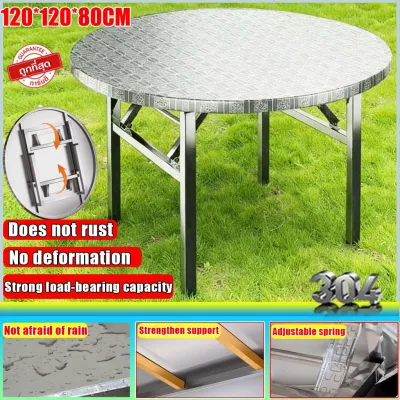
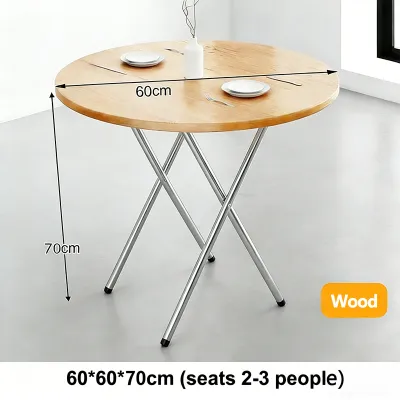
Prices are valid at publication and may change. Please refer to the product page for the latest price.
Before making a purchase, always cross-reference these general guidelines with the manufacturer’s official product specifications. Look for the maximum extended diameter listed on the product label rather than relying solely on the advertised seating capacity. Some brands may claim a table seats 10 people, but this might assume very narrow stools and minimal elbow room. Verifying the exact dimensions ensures the table meets your realistic hosting expectations.
Evaluating Foldable and Extendable Round Table Designs
Foldable round dining tables utilize various mechanisms to transition from a compact daily footprint to a large hosting configuration. One common design is the drop-leaf table, where the sides of the tabletop fold down when not in use. While highly convenient for saving space against a wall, drop-leaf models often have fixed legs that can limit where guests can comfortably place their chairs when the leaves are raised.

Another popular option is the extendable table with removable center leaves. This design allows you to pull the two halves of the round table apart and insert one or more extension panels in the middle, transforming the round shape into an oval. This mechanism keeps the main supporting legs at the outer edges, which generally provides excellent legroom. However, you must ensure you have a dedicated closet or storage space to keep the loose leaves safe from moisture and warping when they are not in use.
Gateleg tables feature hinged leaves that are supported by legs swinging out from the main frame. While incredibly stable, the abundance of legs underneath can severely restrict knee room, making it challenging to arrange 8 or 10 chairs symmetrically. When evaluating any of these designs, pay close attention to the leg placement in the fully extended state. Ensure that the support structure does not force your guests to straddle a table leg uncomfortably during a long meal.
Finally, check the structural integrity and surface continuity of the extended sections. High-quality locking clips underneath the tabletop are essential to keep the leaves tightly joined and prevent sagging. In humid tropical climates, wood can expand and contract, so verifying that the alignment pins and tracks operate smoothly is crucial for long-term durability. Look for robust hardware that can support the weight of heavy serving dishes across the entire expanded surface.
Room Space and Clearance Requirements
A table that fits your guests must also fit comfortably within your dining room. To calculate the total floor space required, you must look beyond the table’s diameter and account for the footprint of the chairs and the space needed to move around them. As a general rule, add at least 90 cm of clearance to the entire perimeter of the extended table. This allowance accommodates the depth of the chairs when occupied and leaves enough room for guests to pull their chairs back and stand up easily.
For example, if you extend your table to a 150 cm diameter to seat 8 people, the total dining footprint expands to a circle with a diameter of approximately 330 cm. If your dining room is bordered by walls, sideboards, or doorways, you should aim for a minimum of 90 cm to 120 cm of walkway space behind the chairs. This ensures that family members can walk past seated guests to serve food or access the kitchen without causing a disruption.
In smaller homes or condominiums, attempting to squeeze a 10-seat configuration into a tight dining area can restrict airflow and make the room feel incredibly stuffy. High humidity levels can amplify this feeling of confinement. If your space cannot accommodate the recommended clearance for a 180 cm table, consider adjusting your expectations. You might opt for a slightly smaller extended table and utilize compact folding chairs, or set up a separate buffet station nearby so the dining table remains clear of bulky serving platters.
Pre-Purchase Measurement and Verification Checklist
Before finalizing your purchase, performing a thorough physical assessment of your home will prevent costly delivery and installation mistakes. Use this practical checklist to verify your space and the product details:
- Measure the Room Dimensions: Map out the extended table's footprint on your floor using painter's tape or newspapers. This visual aid helps you assess the remaining walkway space and ensure the table aligns well with overhead lighting fixtures or ceiling fans.
- Verify Delivery Pathways: Measure the width and height of all entry points, including front doors, narrow hallways, stairwells, and elevator cabins. Even a folded or flat-packed table can be difficult to maneuver around tight corners if the packaging is exceptionally long or bulky.
- Review Product Labels: Carefully read the manufacturer's specifications for the exact folded dimensions, fully extended dimensions, and total weight. Ensure the table's weight capacity is sufficient for your needs and check if professional assembly is recommended.
- Assess the Floor Surface: Ensure your dining room floor is level. Large, extended tables can wobble or experience joint strain if placed on uneven tiles or warped wooden planks.
Frequently Asked Questions (FAQ)
Can a foldable round table comfortably seat 10 people without feeling crowded?
Seating 10 people at a round table is entirely possible but requires careful planning. To avoid a cramped dining experience, you will need a table with a fully extended diameter of at least 180 cm and relatively compact, armless dining chairs. If you use wide, cushioned chairs, guests will likely bump elbows. Additionally, serving style plays a major role; instead of placing large serving bowls directly on the table, consider serving food buffet-style from a nearby kitchen counter or sideboard to maximize individual table space.
How do I maintain the folding hinges and joints on an extended dining table?
Maintaining the moving parts of your table is essential for smooth operation, especially in humid environments where moisture can affect both wood and metal. Regularly inspect the underside of the table to check for loose screws, debris in the tracks, or misaligned hinges. Clean the hardware using a dry microfiber cloth to prevent dust buildup. Always follow the manufacturer’s specific care instructions regarding lubrication, and avoid using harsh chemical cleaners that could degrade the protective finish on the wood or corrode the metal joints.

Community discussion
Share your experience or ask a question. Comments are reviewed before publication.