
Fitting a folding bed with foam into a compact condo bedroom requires finding a balance between sleeping comfort and daily room functionality. To ensure your wardrobe remains fully accessible, the ideal folding bed size is typically a single (30 inches wide) or a twin (36 inches wide). These sizes allow you to maintain the necessary 60 to 70 centimeters of clearance required to fully open hinged wardrobe doors, or the 50 centimeters of standing space needed in front of sliding wardrobe doors. By selecting a bed that folds into a compact vertical profile, you can reclaim valuable floor space during the day, improve tropical airflow to prevent mold growth on your foam mattress, and ensure your bedroom remains easy to navigate.
Measure Your Bedroom and Wardrobe Clearance First
Before browsing online marketplaces or local furniture showrooms, you must establish the exact physical limits of your bedroom. Start by clearing the floor and measuring the total length and width of the room using a steel tape measure. Identify the precise zone where the folding bed will be unfolded for sleep. This area must be completely free of permanent fixtures, electrical outlets that need constant access, and light switches.
Next, calculate the clearance zone required for your wardrobe doors. If you have hinged wardrobe doors, measure the width of a single door panel. This width represents the swing radius. Draw an imaginary arc on your floor from the hinge point to the fully open position, and add an extra 10 to 15 centimeters of buffer space. This boundary is your strict “no-bed” zone. If your wardrobe has sliding doors, you do not need to worry about a swing radius, but you must still measure the depth of the sliding track and ensure there is enough standing room—typically at least 50 centimeters—for you to comfortably slide the doors and reach your clothes while the bed is unfolded.
Products mentioned in this guide
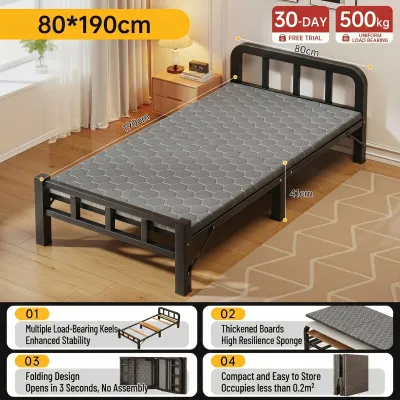

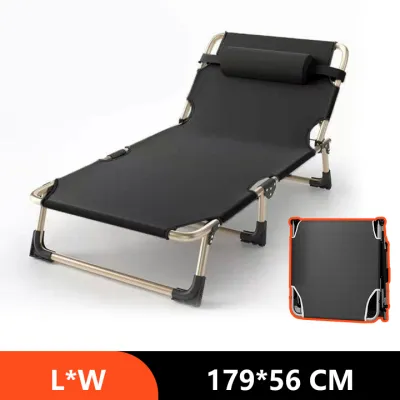
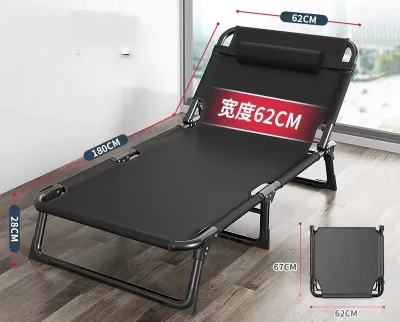
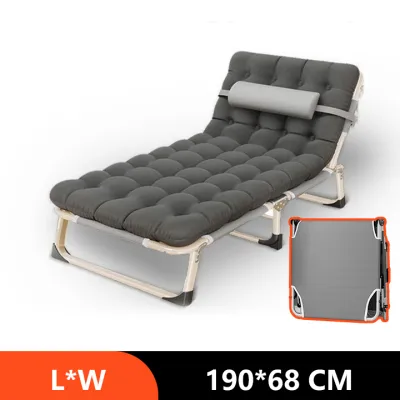
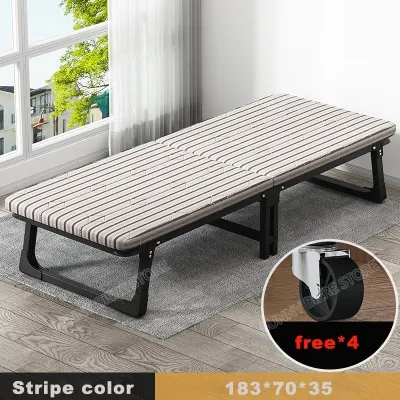

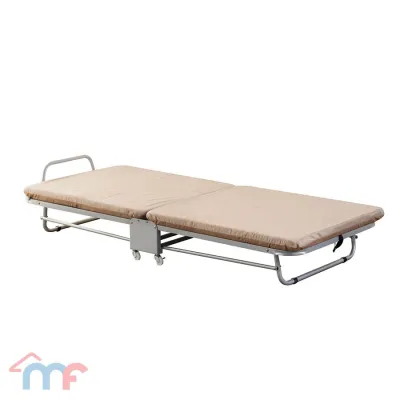
Prices are valid at publication and may change. Please refer to the product page for the latest price.
Finally, map out the walking paths around the bed. A bedroom feels cramped and becomes a tripping hazard if you cannot walk around the sleeping area. Aim for a minimum clearance path of 50 to 60 centimeters between the edge of the unfolded mattress and the walls or other furniture. In tropical climates, keeping this space open is also essential for maintaining proper air circulation, which helps prevent humidity from trapping moisture under the bed frame and causing musty odors in your foam mattress.
Match Folding Bed Dimensions to Your Available Space
Once you have mapped your room’s boundaries, you can compare standard folding bed dimensions against your safe zone. Folding beds with foam are generally categorized by their width, with the most common options being single, twin, and double sizes. The length of these beds is standard, usually ranging from 72 to 75 inches (approximately 183 to 190 centimeters).

When evaluating a folding bed, you must consider two distinct sets of dimensions: the unfolded footprint and the folded storage dimensions. The unfolded footprint determines whether you can sleep comfortably without blocking your wardrobe, while the folded dimensions dictate where the bed will live during the day. A bed that is too tall when folded might block low-hanging wall decorations, air conditioning units, or window frames.
To help you visualize how different bed sizes fit into typical compact condo layouts, refer to the dimension matrix below:
| Bed Type | Standard Unfolded Width | Standard Unfolded Length | Folded Depth (Thickness) | Recommended Wardrobe Type | Minimum Room Clearance Needed |
|---|---|---|---|---|---|
| Single | 30 inches (76 cm) | 75 inches (190 cm) | 12 to 15 inches (30-38 cm) | Hinged or Sliding | 60 cm from wardrobe door |
| Twin | 36 inches (91 cm) | 75 inches (190 cm) | 12 to 15 inches (30-38 cm) | Sliding Preferred | 70 cm from wardrobe door |
| Double | 48 inches (122 cm) | 75 inches (190 cm) | 16 to 18 inches (40-46 cm) | Sliding Only | 85 cm from wardrobe door |
If your condo bedroom has a hinged wardrobe, a single folding bed is usually the safest choice because it leaves the widest possible clearance path. If you opt for a twin or double folding bed, positioning the bed parallel to a sliding door wardrobe is often the most space-efficient layout, as it eliminates the need for door-swing clearance entirely.
Evaluate the Foam Mattress Thickness and Folding Mechanism
The comfort of a folding bed depends heavily on its foam mattress, but the thickness of this foam directly impacts how the bed folds and stores. Most standard folding beds come with a foam mattress ranging from 2 to 4 inches in thickness. While a thicker mattress offers more cushioning, it also increases the overall depth of the bed when it is folded in half.
Before making a purchase, check the manufacturer’s specifications to see how the foam thickness affects the folded profile. A bed with a 4-inch high-density foam mattress may not fold completely flush, requiring more storage depth and potentially sticking out into your walking path even when put away. If you plan to store the bed inside a closet or behind a door, measure the depth of that storage space and compare it to the bed’s folded depth, leaving at least a 5-centimeter margin so the storage door can close easily.
The folding mechanism itself also plays a major role in how much effort and space are required to operate the bed. Look for frames with smooth, assisted folding joints and secure locking mechanisms. Bi-fold frames, which fold in the middle like a book, are the most common and are easy to deploy, but they require sufficient vertical clearance when being folded. Ensure that the frame features durable caster wheels with locks. These wheels allow you to roll the bed away from the wardrobe area during the day and lock it securely in place at night so it does not slide around on smooth condo flooring.
Common Sizing Mistakes to Avoid in Small Condos
When dealing with tight condo spaces, even a few centimeters can make the difference between a functional bedroom and a frustrating obstacle course. One of the most common mistakes is ignoring the depth of baseboards, skirting boards, or wall moldings. Furniture measurements are often taken wall-to-wall, but baseboards can protrude by 1 to 2 centimeters, preventing a folded bed frame from sitting completely flush against the wall and reducing your calculated clearance.
Another frequent oversight is forgetting to account for the bulk of bedding. Pillows, thick blankets, and duvets add extra volume to the bed. If you try to fold the bed with the sheets and blankets still on it, the frame may not lock properly, or the foam mattress may become compressed and damaged over time. Always plan a separate storage spot, such as a basket or a wardrobe shelf, for your heavy bedding, or ensure the folding frame has adjustable straps designed to hold the mattress and light bedding in place when folded.
Finally, do not forget to measure the pathway required to bring the bed into your condo in the first place. Many condo residents purchase a folding bed only to find that the boxed frame cannot fit inside the building’s passenger elevator, around tight hallway corners, or through the main entryway door. Always check the shipping dimensions of the product and compare them to your building’s service elevator and doorway clearances to avoid a difficult delivery process.
Frequently Asked Questions (FAQ)
Can I use a thick memory foam mattress on a standard folding frame?
Using a thick memory foam mattress on a standard folding frame is generally not recommended unless the frame is specifically designed for it. Standard folding frames are engineered to accommodate the specific mattress thickness and density they are sold with, usually between 2 and 4 inches. Adding a thicker or heavier memory foam mattress can strain the folding hinges, prevent the locking mechanism from engaging, and cause the frame to bow or warp over time. Always consult the frame manufacturer’s maximum weight and thickness limits before attempting to swap or upgrade the mattress.
How much space should I leave between the bed and a sliding door wardrobe?
While sliding door wardrobes do not require swing clearance, you should still maintain a minimum gap of 50 centimeters between the edge of the unfolded folding bed and the wardrobe doors. This space ensures you have enough room to stand, slide the doors open, and access your clothing without having to climb onto the bed. Additionally, check for any protruding door handles or decorative trim on the wardrobe, and add their depth to your clearance calculations to prevent the bed frame from scratching the wardrobe surface during setup.

Community discussion
Share your experience or ask a question. Comments are reviewed before publication.