
Finding the right folding wooden bed for a compact bedroom requires balancing sleeping comfort with daytime floor space. In studio condos and tight urban apartments, a bed that folds away can instantly transform a cramped sleeping quarters into a functional home office or living area. To determine the correct size, you must evaluate both the unfolded footprint and the folded storage dimensions against your room’s physical boundaries.
Selecting the right size is not just about matching mattress labels like single or double. It involves analyzing door swings, walking paths, and the physical effort required to operate the folding mechanism daily. By taking precise measurements and planning for clearances, you can ensure your wooden frame provides a stable night’s sleep without obstructing your daily routine.
Measure Your Bedroom and Spatial Clearances
Before browsing online catalogs or visiting furniture showrooms, grab a steel tape measure to map out your room. Avoid fabric measuring tapes, which can stretch over time and lead to inaccurate dimensions. Measure the total length and width of the room from baseboard to baseboard, and sketch a quick layout on paper to visualize the space.
Products mentioned in this guide
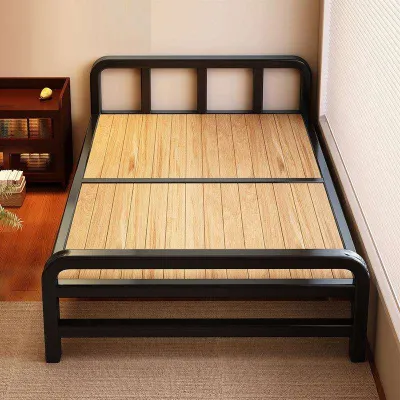
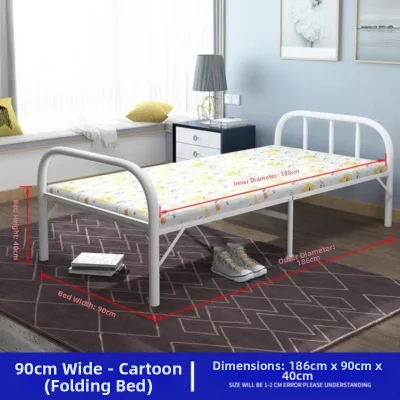

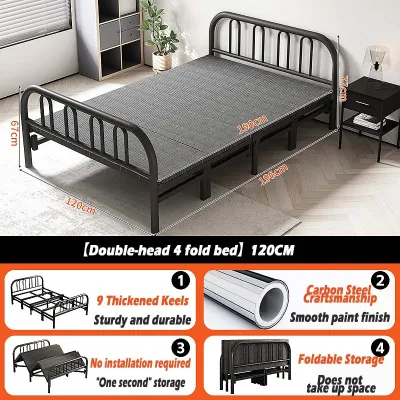
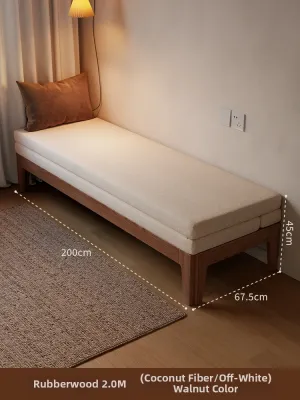
Prices are valid at publication and may change. Please refer to the product page for the latest price.
Next, identify and mark all fixed obstacles on your sketch. In many residential layouts, built-in wardrobes, window frames, wall-mounted air conditioning units, and electrical outlets are permanent fixtures. You must ensure that the bed, when fully deployed, does not block access to these essential features or cover power outlets that you need to reach daily.
Calculate the required clearances for all moving parts in the room. A folding bed needs space to transition from stored to deployed without colliding with other elements. Measure the swing clearance of your bedroom door, wardrobe doors, and any cabinet drawers. If a wardrobe door cannot open fully when the bed is down, the layout will quickly become a source of daily frustration.
Leave a clear walking path around the bed’s perimeter. A standard pathway should be at least 60 centimeters wide to allow comfortable movement. If the bed frame blocks this path, you will find yourself squeezing past walls or tripping over corners in the middle of the night.
Consider vertical space and wall obstructions if you are planning on a vertical folding mechanism, such as a wall-mounted bed. Measure your ceiling height carefully to ensure the top of the frame clears any ceiling fans, light fixtures, or decorative crown moldings. Also, check for wall-mounted light switches, intercom panels, or artwork that might be covered or damaged when the bed is folded up.
Account for tropical wall conditions when planning your bed’s placement. In humid climates, concrete walls can retain moisture, especially during the rainy season. When planning where to place a folded wooden bed against a wall, plan for a small clearance gap of about 2 to 3 centimeters to allow air circulation and prevent mold growth on the wooden frame.
Match Unfolded Bed Dimensions to Usable Floor Space
Once you have your clear floor measurements, compare them to standard bed sizes. In the local market, folding wooden beds generally come in single, twin, or double sizes. Each option serves a different spatial need and sleeping preference.

A standard single folding bed frame typically requires a clear floor area of about 90 centimeters in width and 190 centimeters in length. This size is highly suitable for narrow studio alcoves, guest rooms, or shared children’s rooms where floor space is at a premium during the day.
A double folding bed frame, which usually measures around 120 to 135 centimeters wide, offers more sleeping surface but demands a much larger footprint. If you opt for a double size, verify that you still have at least 50 centimeters of clearance on both sides of the bed so sleepers can get in and out without crawling over each other.
Do not rely solely on mattress dimensions when planning your layout. Wooden frames often add 5 to 10 centimeters of extra width and length due to the headboard, side rails, and folding hinges. Always check the manufacturer’s specified finished frame dimensions rather than just the mattress size to avoid layout surprises.
Visualize the layout before making a final decision. Use painter’s tape or lay down old newspapers on the floor to match the exact unfolded dimensions of the bed frame. Leave this mock-up on the floor for a full day, walking around it and opening your closets to see if the layout feels natural or overly restricted.
Evaluate Folded Footprint and Daily Workflow
A folding wooden bed is only an effective space-saver if it is easy to store and does not create a new obstacle when folded. You must evaluate how the bed fits into your room when it is not in use.
Check the folded depth and height of the frame. If you choose a freestanding bi-fold wooden bed that rolls on casters, verify where it will stand during the day. Measure the depth of your storage closet or the alcove where you plan to tuck it away to ensure the folded frame can be fully enclosed or kept out of sight.
Analyze the folding swing radius. As the bed transitions from vertical to horizontal, it sweeps through an arc of space. Ensure this path is completely clear of low-hanging light fixtures, wall decor, or nearby furniture like study desks and side tables that you do not want to move every night.
Assess the physical effort required for daily operation. Solid wood frames, such as those made from mahogany, tanguile, or pine, can be heavy. If the bed relies on manual lifting without gas struts or spring-assisted mechanisms, consider whether you can comfortably lift and lower it every day without straining your back.
Inspect the locking mechanisms and safety straps. A safe folding bed must have secure latches to keep the frame and mattress in place when folded. Check if these locks are easy to reach and operate, ensuring the bed remains securely closed when stored vertically.
Verify Structural Limits and Installation Needs
Safety and durability depend heavily on the structural integrity of the wooden frame and how it is installed in your home. A folding bed undergoes regular movement, which puts unique stress on its joints.
Review the manufacturer’s stated weight capacity. This limit must accommodate the combined weight of the mattress, bedding, and the sleepers. Solid wood frames generally offer robust support, but their joints must be inspected for sturdy hardware like steel brackets and heavy-duty screws rather than simple wood glue or light staples.
Check your floor leveling. Many residential floors, particularly tiled or concrete floors, may have slight unevenness. A folding bed frame must sit level to distribute weight evenly. If the floor is uneven, the frame may wobble, putting uneven stress on the folding hinges and eventually causing the wood to warp or split.
Identify anchoring requirements before purchasing. If you select a wall-mounted folding bed, it must be anchored securely to prevent tipping. Never anchor a heavy wooden wall bed to standard drywall or thin plywood partitions. It requires solid attachment to concrete hollow block walls or structural wooden studs.
Verify installation conditions and building rules. Check if the product package includes all necessary masonry bolts and brackets. If you are renting a condo or apartment, consult your building administration or landlord first, as drilling deep anchor holes into structural concrete walls may violate tenancy agreements. When budgeting for your purchase, check if the total price in ₱ includes professional delivery and assembly, as proper installation is critical for wall-mounted designs.
Frequently Asked Questions (FAQ)
Can a folding wooden bed support two adults?
Yes, provided you select a double-sized frame specifically rated for two sleepers. Always check the manufacturer’s weight capacity label before purchasing. Look for frames featuring reinforced center support legs and heavy-duty steel hinges, as these components help distribute weight evenly across the wooden slats and prevent sagging over time.
Do I need to anchor a folding bed to the wall?
It depends entirely on the design of the bed. Freestanding folding wooden beds, such as rollaway frames or simple bi-fold designs, do not require any wall anchoring. However, vertical wall beds or cabinet-style folding beds must be securely anchored to a solid concrete wall or structural studs to prevent the unit from tipping over when lowered or stored.

Community discussion
Share your experience or ask a question. Comments are reviewed before publication.