
Finding the perfect high bed with storage for a condo bedroom requires balancing sleeping comfort with the physical realities of limited square footage. In compact urban spaces, every centimeter of floor area counts, making a storage-integrated bed frame an excellent way to maximize utility. However, a bed that is too large or has incompatible storage mechanisms can quickly turn a cozy sanctuary into an inaccessible bottleneck. To choose the right size, you must look beyond standard mattress dimensions and evaluate how the bed interacts with your room’s entryways, walkways, vertical clearance, and existing furniture.
Measure Your Bedroom and Map Out Clearances
Before browsing online catalogs, you need a precise map of your bedroom’s physical boundaries. Measure the overall length and width of the room from wall to wall at floor level where the bed frame will sit. Do not rely on developer floor plans, as baseboards, columns, and slight structural variations can reduce actual usable space. Additionally, measure the vertical distance from floor to ceiling, as a high bed frame combined with a thick mattress significantly reduces overhead clearance.
Next, map out the swing paths of your bedroom door, closet doors, and windows. A bed frame that blocks a wardrobe door from opening fully defeats the purpose of integrated storage. Mark the locations of built-in features, such as low-hanging window sills or structural pillars, which might prevent a rectangular bed frame from sitting flush against the wall.
Products mentioned in this guide



Prices are valid at publication and may change. Please refer to the product page for the latest price.
Walkways require careful planning to ensure you can move comfortably around the room without shimmying sideways. Identify your primary path of travel—usually from the bedroom door to the side of the bed or the wardrobe—and ensure this route remains entirely unobstructed. If you share the room, plan for dual walkways so both occupants can move freely.
Finally, locate all wall fixtures that could be covered or rendered useless by a high bed frame. Take note of electrical outlets, light switches, internet ports, and air conditioning vents. Blocking a split-type air conditioner vent can disrupt airflow and cause uneven cooling in tropical climates, while covering power outlets makes charging devices or plugging in bedside lamps a major hassle.
Match Mattress Dimensions to Your Available Floor Space
Once you have your room’s exact measurements, evaluate how different standard mattress sizes fit into the layout. In many modern condos, a queen-size mattress is the largest viable option, while a double or single mattress may be necessary to preserve floor space in studio units. Compare the physical footprint of these mattress sizes against your calculated usable floor area, keeping in mind that the actual bed frame will always be slightly wider and longer than the mattress itself.

Your placement strategy plays a critical role in how much open space remains in the room. Pushing the bed into a corner or flush against a wall is a common tactic for saving space, as it consolidates the remaining floor area into a single, larger walkway. However, this layout limits access to only one side of the bed and makes changing fitted sheets more difficult. Centering the bed against a main wall creates a more balanced, traditional look but requires sufficient clearance on both sides, which may force you to choose a smaller mattress size.
Do not forget to account for other essential furniture pieces that must share the room. Bedside tables, dressers, vanity desks, or study chairs all require their own dedicated footprints and operational clearances. If your heart is set on a larger mattress, you may need to sacrifice traditional bedside tables in favor of wall-mounted shelves or integrated headboard storage.
If your calculations show that a larger bed leaves less than the recommended clearance for comfortable movement, consider downsizing the mattress. Prioritizing floor space over mattress width often results in a much more livable and less stressful bedroom environment. A slightly smaller bed that allows for easy movement and fully functional storage is far more practical than a massive bed that traps you in a cramped corner.
Choose the Right Storage Configuration for Your Layout
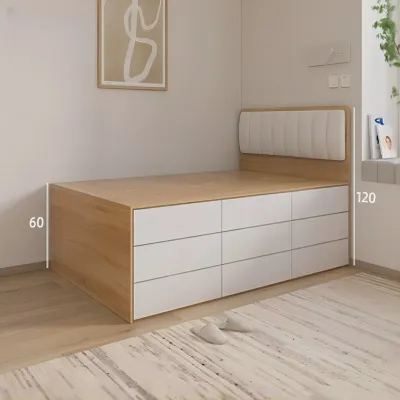
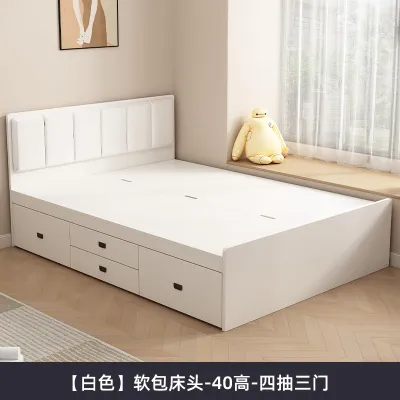
The storage mechanism of a high bed is just as important as its physical dimensions, as different designs require different types of operational clearance. Pull-out drawers are highly convenient for organizing daily essentials, but they require ample open space on the sides or foot of the bed to extend fully. Before choosing a drawer system, measure the depth of the drawers and verify that your walkways are wide enough to accommodate the fully extended drawer plus the space needed for you to kneel or bend down to access your items.
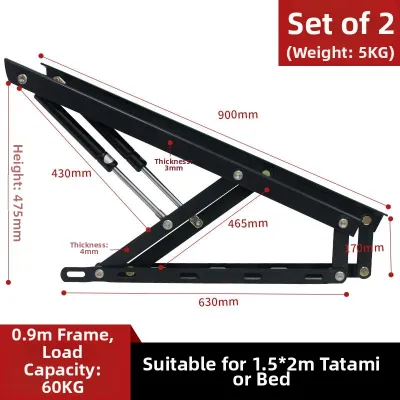
For rooms where side clearance is extremely limited, a hydraulic lift-up bed frame is often a superior alternative. These systems utilize gas-lift pistons to raise the entire mattress platform, revealing a massive, undivided storage compartment underneath. While they do not require any lateral clearance, you must verify that your ceiling height is sufficient to allow the bed to open fully. Ensure the raised frame will not collide with ceiling fans, pendant lights, or smoke detectors.
Open shelving or cubbies built into the base of the bed frame offer quick, easy access without requiring any moving parts. This configuration is ideal for tight spaces where drawers cannot open, though it does require you to keep the shelves organized to maintain a tidy appearance. Alternatively, enclosed cabinets with sliding doors provide a clean, minimalist look while eliminating the swing clearance needed for traditional cabinet doors.
Match your chosen storage configuration to the specific items you plan to store. If you need to store bulky, seasonal items like extra bedding, luggage, or holiday decorations, a hydraulic lift-up system is highly efficient. For daily-use items like clothing, shoes, or extra towels, pull-out drawers or open cubbies are much more practical, as they do not require you to lift the entire mattress every time you need to retrieve an item.
Verify Structural Limits and Assembly Conditions
High storage beds are inherently heavier than standard frames, especially when fully loaded with books, clothes, and heavy storage boxes. While modern condo buildings are engineered to handle standard residential loads, it is always wise to check your building’s guidelines regarding concentrated weight limits if you plan to install an exceptionally heavy solid-wood storage system.
Tall or top-heavy bed designs, particularly those with integrated shelving units or loft configurations, may require anti-tip hardware or wall-anchoring systems. If your bed frame needs to be anchored, inspect your condo walls beforehand. Many modern partition walls are made of lightweight drywall rather than solid concrete, which may require specialized wall anchors or professional reinforcement to secure heavy furniture safely.
Before finalizing your purchase, verify that the packaged components of the bed frame can actually reach your bedroom. Measure the height, width, and depth of your building’s service elevator, the clearance of tight stairwell turns, and the width of your condo’s entrance and bedroom doors. A beautifully designed king-size storage bed is of no use if the headboard or side rails cannot clear the elevator doors or make the turn in your hallway.
Consider the complexity of the assembly process when deciding between professional installation and a DIY approach. Hydraulic lift mechanisms and multi-drawer systems require precise alignment to function smoothly and safely. If you are not experienced with complex furniture assembly, investing in professional installation ensures the frame is structurally sound, the lift pistons are safely calibrated, and the warranty remains intact.
Avoid Common Sizing and Layout Mistakes
One of the most frequent oversights when planning a bedroom layout is forgetting to account for baseboards, skirting boards, or uneven walls. These small architectural details can prevent a bed frame from sitting completely flush against the wall, creating a gap of several centimeters that can throw off your entire clearance calculation. Always add a small buffer to your measurements to accommodate these minor structural variances.
Underestimating the depth and accessibility of the storage compartments can also lead to frustration. Deep drawers are excellent for storage capacity, but if they are too deep, reaching items at the very back can be difficult, especially in a narrow room. Opt for drawers with full-extension glides to ensure you can access the entire compartment easily.
Be careful not to block natural light sources or restrict the airflow from your air conditioning unit. Placing a high bed directly under a window can block natural light and make the room feel smaller, while obstructing an air conditioning unit can lead to poor air circulation and increased energy consumption. Ensure your bed placement allows air to circulate freely throughout the space.
Finally, consider the overall height of the bed, including the mattress. A bed that is too high can be difficult to climb into, especially in a tight space where you cannot easily step back to gain leverage. If the bed height requires a step stool, ensure you have a safe, stable spot to store the stool when it is not in use so it does not become a tripping hazard in your walkway.
Frequently Asked Questions (FAQ)
Can a high bed with storage work in a room with low ceilings?
Yes, a high storage bed can work in a room with low ceilings, but it requires careful vertical planning. Measure the distance from the top of your mattress to the ceiling to ensure you have enough headroom to sit up comfortably without bumping your head. Avoid hydraulic lift-up beds if the raised frame risks hitting ceiling fans, light fixtures, or smoke detectors. In low-ceiling rooms, low-profile storage drawers or open cubbies are often a safer and more practical choice.
How much clearance is needed around the bed for comfortable movement?
For comfortable movement, aim for a primary walkway clearance of at least 60 to 70 centimeters around the accessible sides of the bed. If your bed features pull-out drawers, you will need to add the full length of the extended drawer plus an additional 30 to 40 centimeters of space to allow yourself room to kneel and access the contents. If space is extremely tight, prioritizing clearance on one side of the bed while pushing the other side against a wall can help maximize your usable floor area.

Community discussion
Share your experience or ask a question. Comments are reviewed before publication.