
Determining the correct size for a Leego Home wardrobe requires balancing your bedroom’s physical constraints with your actual storage needs. Rather than guessing dimensions, the most reliable approach involves accurately measuring your available space, evaluating your clothing volume, verifying delivery and assembly clearances, and cross-referencing these findings with the manufacturer’s official specifications.
Assessing Your Bedroom Space and Clearance
Before browsing any wardrobe catalog, establish your bedroom’s physical boundaries. Measure the width, height, and depth of the wall or corner using a metal tape at three different points—top, middle, and bottom—to account for uneven surfaces. Even a slight wall tilt can prevent a tight-fitting wardrobe from sliding into place.
Identify permanent fixtures like baseboards, electrical outlets, light switches, and wall-mounted air conditioning units that could obstruct the wardrobe. In tropical climates, air conditioners require significant clearance. Placing a tall wardrobe too close to an AC unit can block airflow or expose the wood to condensation, causing moisture damage over time.
Products mentioned in this guide
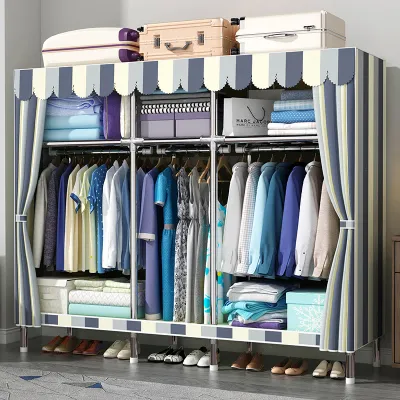
Prices are valid at publication and may change. Please refer to the product page for the latest price.
Calculate the space required to open wardrobe doors fully and pull out drawers without hitting your bed, nightstands, or other furniture. Ensure there is enough room to stand comfortably in front of an open wardrobe. If your bedroom has a tight layout, measuring these clearance zones helps you decide between swinging doors and space-saving sliding doors.
Factor in ventilation gaps to protect your furniture and clothing. In humid environments, pushing a wardrobe flush against a concrete wall traps moisture, leading to mold and mildew. Leaving a gap of 2 to 5 centimeters behind the wardrobe and a similar clearance at the top allows air to circulate freely, keeping the interior dry and preventing musty odors.
Evaluating Your Storage Needs and Configuration
Once you know how much space your bedroom can spare, determine how much storage capacity you actually require. Begin by auditing your current clothing collection to understand your specific storage habits. If your wardrobe consists mostly of formal wear, long dresses, or delicate garments that must be hung, you will need a configuration with generous hanging rails. Conversely, if your daily wear consists mainly of folded clothes and activewear, prioritize adjustable shelving and deep drawers.

Internal organization is key to maximizing the efficiency of your wardrobe’s footprint. Look for modular options that allow you to customize the interior layout with drawers, shelves, and specialized compartments. Having dedicated spaces for shoes, bags, and small accessories keeps the interior organized and prevents clutter from piling up at the bottom. Adjustable shelves are particularly useful, as they allow you to reconfigure the interior layout as your storage needs change.
Consider how seasonal changes and future lifestyle shifts might affect your storage requirements. While the local climate may not require heavy winter coats, you might still need extra space to store bulky bedding, extra pillows, or travel luggage. Choosing a slightly larger wardrobe or a modular system that can be expanded with add-on units later is a smart way to future-proof your investment. It is always better to have a small amount of empty shelf space than to find yourself out of storage room within a year.
The height of your storage zones also plays a major role in daily convenience. Frequently used items should ideally be placed at eye level or within easy reach, while seasonal items, extra linens, or travel gear can go on the topmost shelves. When evaluating different wardrobe heights, ensure that you can comfortably reach the upper compartments, or plan to keep a sturdy step stool nearby. Organizing your wardrobe based on accessibility ensures a smoother daily routine and keeps your bedroom looking tidy.
Checking Delivery, Assembly, and Installation Limits
A wardrobe might fit perfectly on your bedroom wall, but it still has to get there first. Before finalizing your purchase, map out the entire delivery path from the delivery truck to your bedroom. Measure the width, height, and turning clearance of all entryways, hallways, stairwells, and elevators. If you live in a high-rise condominium or a multi-story home, tight corners and low elevator ceilings can prevent large, flat-packed boxes or pre-assembled frames from reaching your unit.
Assembly clearance is another critical factor that is often overlooked. Many tall wardrobes are assembled flat on the floor and then tilted upright into position. This process requires a diagonal clearance that is greater than the actual height of the wardrobe. Verify that your bedroom ceiling is high enough to allow the frame to be raised safely without scraping the ceiling or getting stuck. If your ceiling height is limited, look for wardrobes designed to be assembled upright from the start.
Floor levelness can significantly impact the stability and operation of your wardrobe. Uneven floors, which are common in many homes, can cause the wardrobe frame to twist slightly, leading to misaligned doors, sticking drawers, and structural strain. Use a spirit level to check the floor where the wardrobe will stand. If the floor is uneven, use shims or adjustable leveling feet to ensure the unit is perfectly level and stable before attaching any doors or internal fittings.
Safety should always be a priority, especially with tall, heavy furniture. Taller wardrobes must be securely anchored to the wall to prevent tipping, which is a vital safety measure in earthquake-prone regions or homes with active pets and children. Identify the type of wall you have—whether it is concrete, drywall, or hollow block—so you can purchase the correct wall plugs and anchoring hardware. Ensuring a secure wall anchor provides peace of mind and guarantees the long-term stability of your wardrobe.
Matching Your Measurements to Leego Home Specifications
With all your measurements and storage requirements in hand, systematically compare them against the official Leego Home product specifications. Consult the brand’s official catalog, website, or authorized retail listings to find the exact exterior dimensions, including width, depth, and height. Do not rely on visual estimates from product photos, as styled room settings can make furniture appear smaller or larger than it actually is.
Compare the footprints of different wardrobe configurations to see which one fits your space best. For instance, a 2-door wardrobe might fit comfortably in a small room, while a 3-door or modular multi-unit setup might be ideal if you have a spacious master bedroom. If space is tight, look closely at the depth specifications; some wardrobes are shallower to fit narrow walkways, while others are deeper to accommodate bulky hangers without pressing against the doors.
Always review the manufacturer’s assembly instructions, material care guidelines, and weight capacity limits before making a decision. Knowing the weight limits for hanging rails and shelves prevents overloading, which can cause sagging or structural damage over time. Additionally, understanding the care requirements for the specific finishes—such as avoiding harsh chemical cleaners or excessive moisture—will help you maintain the wardrobe’s appearance and durability in your home.
Finally, verify the retailer’s return policy, delivery terms, and measurement guarantees. Even with careful planning, minor manufacturing tolerances or unexpected home layout quirks can sometimes cause fitting issues. Knowing the terms for returns, exchanges, or professional assembly services can save you time and stress. If you are unsure about assembling the unit yourself, opting for professional installation services ensures that the wardrobe is built correctly, leveled, and safely anchored to your wall.
Frequently Asked Questions (FAQ)
How much extra clearance do hinged doors need compared to sliding doors?
Hinged doors require a clear swing arc in front of the wardrobe that matches the width of the door panel, typically between 40 to 60 centimeters. You must also factor in an additional 50 to 60 centimeters of standing space so you can comfortably access the interior while the door is open. In contrast, sliding doors do not extend outward, making them ideal for narrow bedrooms or tight walkways. However, sliding door tracks do require a bit more depth within the wardrobe frame itself, and you will not be able to view the entire contents of the wardrobe at once since one side is always covered.
Can I assemble a large wardrobe in a room with low ceilings?
Assembling a tall wardrobe in a room with low ceilings can be challenging because raising a flat-assembled frame requires extra diagonal clearance. To determine if you have enough space, calculate the diagonal depth of the wardrobe side panel using the Pythagorean theorem, or check the manufacturer’s manual for the minimum ceiling height required for assembly. If your ceiling is too low for a standard tilt-up assembly, check if the wardrobe can be assembled in an upright position. If the instructions do not support upright assembly, you may need to choose a shorter model or hire professional installers who have the tools and experience to handle tight spaces safely.

Community discussion
Share your experience or ask a question. Comments are reviewed before publication.