
Choosing a plastic dining table set for a large household of 6 to 10 people requires balancing daily usability with spatial reality. In many homes, the dining area serves as the central hub for shared meals, homework, and family celebrations. While plastic furniture offers incredible benefits—such as resistance to tropical humidity, lightweight mobility, and easy cleanup—selecting the wrong size can quickly turn a festive family gathering into a cramped and uncomfortable experience. To find the right fit, you must look beyond the seating capacity label and evaluate your room’s physical dimensions, the table’s shape, and its structural integrity.
By taking precise measurements and understanding how different table shapes utilize space, you can select a set that accommodates everyone comfortably. This guide walks you through the essential steps to measure your space, choose the right configuration, verify structural stability, and ensure a smooth delivery and assembly process.
Measuring Your Dining Area and Required Clearance
Before browsing online marketplaces or visiting local furniture showrooms, you must determine the maximum footprint your dining area can accommodate. Start by using a metal tape measure to record the total length and width of the designated dining zone. If your dining room shares space with the living area or kitchen, define the boundaries of the dining zone clearly so the table does not encroach on active living spaces or block major household pathways.
Products mentioned in this guide

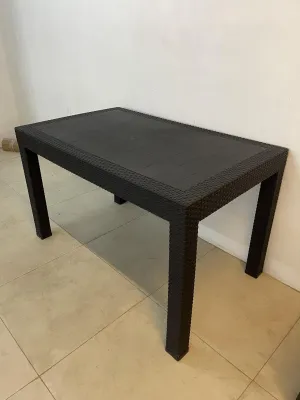


Prices are valid at publication and may change. Please refer to the product page for the latest price.
Once you have the room’s total dimensions, you must calculate the clearance required for people to move around the table. A common mistake is only measuring the physical size of the table itself, forgetting that chairs must be pulled out and guests must be able to walk behind them. To ensure comfortable movement, leave a minimum clearance of 90 centimeters—ideally 120 centimeters—between the edge of the table and the nearest wall, sideboard, or appliance. This clearance allows guests to sit down and stand up without trapping themselves or bumping into surrounding structures.
Additionally, identify any physical obstacles in the room that could restrict chair placement or table positioning. In tropical homes, wall-mounted cooling fans, standing air conditioners, structural pillars, or low-hanging ceiling fans can limit where you can safely place a large table. Ensure that when the chairs are fully extended, they do not block doorways, hallway entrances, or the path to the kitchen. Mapping out these constraints beforehand prevents layout issues once the furniture arrives.
Matching Table Shapes and Dimensions to 6-10 Seats
The shape of your plastic dining table set plays a critical role in how efficiently it utilizes your floor space and how easily your family can interact during meals. Rectangular tables are the most traditional and practical choice for seating 6 to 10 people. Their long, straight edges align perfectly with walls and open-plan layouts, maximizing the usable surface area. An oval table offers a similar elongated footprint but features rounded corners, which can soften the visual flow of the room and make it easier to squeeze in an extra stool or chair when unexpected guests arrive.

For homes where space is limited during the week but extra seating is needed for weekend gatherings, an extendable or drop-leaf plastic dining table set is an excellent solution. These versatile designs allow you to keep the table compact for daily family meals, saving valuable floor space, and then expand the tabletop when hosting larger groups. When choosing an extendable model, verify the expansion mechanism is smooth and check whether the extra leaves store inside the table or must be kept separately.
Never rely solely on visual estimates or generic seating labels when purchasing a large dining set. A table advertised for “up to 10 people” might only fit that number if you use narrow, armless chairs. Always check the manufacturer’s detailed dimension chart to verify the exact length and width of the tabletop. For a comfortable dining experience, each seated guest requires at least 60 to 75 centimeters of horizontal tabletop space. Compare these specifications against your room measurements to ensure a proper fit.
Checking Plastic Construction, Weight Capacity, and Stability
A dining table built to accommodate up to 10 people must be exceptionally sturdy to handle the weight of daily meals, heavy serving platters, and household activities. When evaluating a plastic dining table set, pay close attention to the leg design and the base footprint. Look for models that feature powder-coated steel legs or integrated metal cross-bracing beneath the plastic tabletop. A wide, stable base footprint prevents the table from wobbling or tipping, which is especially important if your dining area has slightly uneven tiled floors or if you plan to use the set on an outdoor patio.
Next, verify the manufacturer’s stated weight capacity and load distribution limits. Large family feasts often involve heavy serving dishes, rice cookers, and beverage dispensers concentrated in the center of the table. A high-quality plastic tabletop, such as one made from high-density polyethylene (HDPE), should be engineered to distribute this weight evenly without sagging or bowing. Check the product manual or specification sheet to ensure the table’s load limit comfortably exceeds your typical usage requirements.
Finally, review the surface treatment and care instructions provided by the manufacturer. Because plastic can be sensitive to extreme heat and abrasive materials, look for tables with UV-resistant coatings and scratch-resistant textures. These protective finishes help prevent the plastic from yellowing in sunny dining areas, staining from spilled sauces, or scratching during daily use. Understanding these material limits helps you protect your investment and keep the dining set looking pristine for years to come.
Verifying Delivery Access and Assembly Requirements
Even the most beautiful plastic dining table set is of no use if it cannot fit through your front door. Before finalizing your purchase, compare the packaged dimensions of the table and chairs against the entryways of your home. Measure the width and height of your front door, any tight hallway turns, stairwells, and elevator cabins. This is particularly crucial for condominium residents, where narrow service elevators and sharp corridor turns can present significant delivery challenges.
Once the set is safely inside, you will need to assemble it. Review the manufacturer’s assembly instructions beforehand to understand the required tools, hardware, and level of effort. While some lightweight plastic tables feature simple snap-together joints, larger models designed for 6 to 10 people often require metal screws, brackets, and specific tools to ensure structural integrity. Because of the size and weight of these tables, plan to have at least two people available to safely lift, flip, and assemble the frame without damaging the joints.
Lastly, prepare your dining space for the assembly process. Lay down cardboard or a soft blanket to protect both your flooring and the new plastic tabletop from scratches during setup. If your home has tiled or polished concrete floors, check if the table and chair legs are equipped with non-slip rubber caps or adjustable leveling feet. These small details protect your floors from scuff marks and allow you to level the table perfectly, ensuring a stable and enjoyable dining experience for your entire family.
Frequently Asked Questions (FAQ)
Can a plastic dining table safely hold heavy serving dishes and appliances?
Yes, a high-quality plastic dining table can safely support heavy serving dishes and small kitchen appliances, provided you follow the manufacturer’s guidelines. Always check the specific weight limit detailed in your product’s manual, as structural support designs vary significantly between brands. To ensure safety, distribute heavy items like rice cookers, soup tureens, and beverage dispensers evenly across the tabletop rather than clustering them in the center. Additionally, always use heat-resistant mats or trivets under hot cookware to prevent the plastic surface from softening, warping, or discoloring under high temperatures.
How should I clean and maintain a large plastic table surface?
To maintain the appearance and extend the lifespan of your plastic dining table set, always check the manufacturer’s care label for approved cleaning agents. For daily cleanup, wipe the surface with a soft microfiber cloth dampened with mild soapy water. Avoid using abrasive scrubbing pads, steel wool, or harsh chemical cleaners containing bleach or acetone, as these can strip away protective UV coatings, scratch the finish, and make the plastic more susceptible to staining over time. For stubborn stains, a gentle paste of baking soda and water applied with a soft cloth is usually sufficient.

Community discussion
Share your experience or ask a question. Comments are reviewed before publication.