
Choosing a rotating shoe rack organizer is an excellent way to maximize vertical space and keep your footwear collection accessible. However, a spinning organizer requires more precise spatial planning than static shelving. To find the perfect fit, you must balance your closet’s physical boundaries with the dynamic clearance required when the rack is fully loaded and spinning.
Measure Your Closet Space and Operational Clearance
Start by clearing out your closet floor to get an accurate assessment of the raw space. Use a metal measuring tape to record the internal height from the floor to the lowest obstruction, which could be a hanging rod, a fixed top shelf, or a light fixture. Next, measure the internal width and depth of the closet bay where the organizer will stand. Do not rely on the general dimensions of the closet exterior; instead, measure the narrowest points inside, accounting for baseboards, door hinges, and sliding door tracks that might protrude into the space.
Operational clearance is just as critical as static space. If your closet has hinged doors, measure how far they swing inward and ensure the rotating mechanism will not collide with them. For sliding doors, identify the dead zones where the doors overlap, as these areas can restrict access to a spinning rack.
Products mentioned in this guide
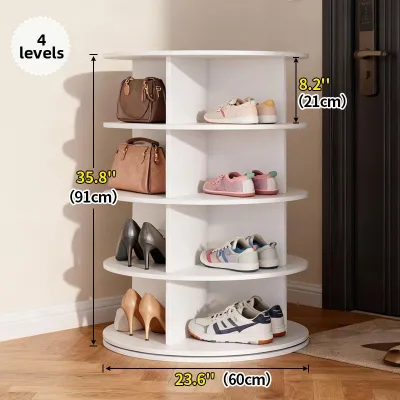
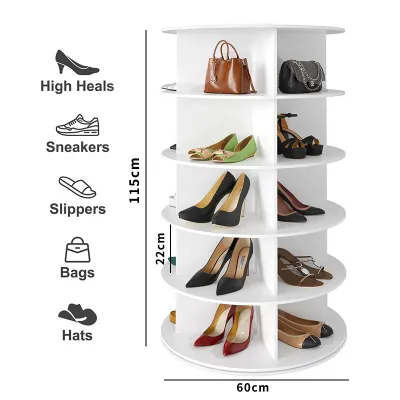
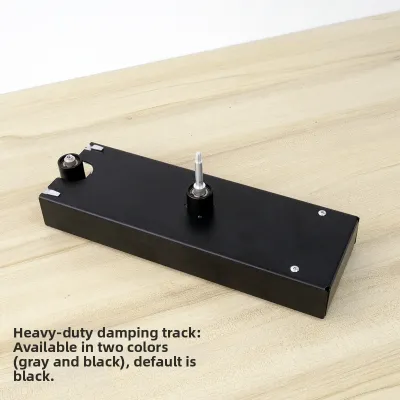
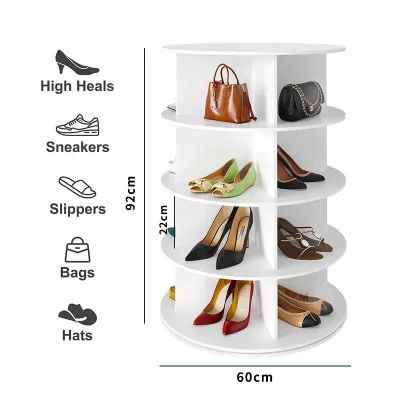
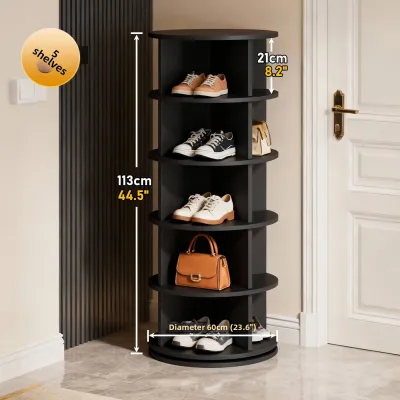
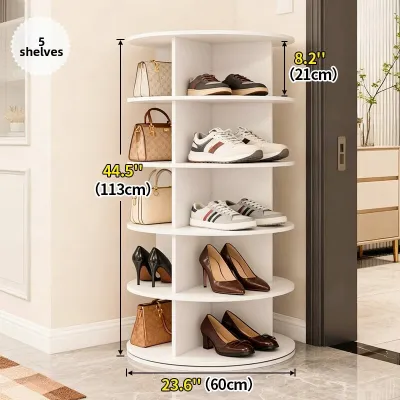
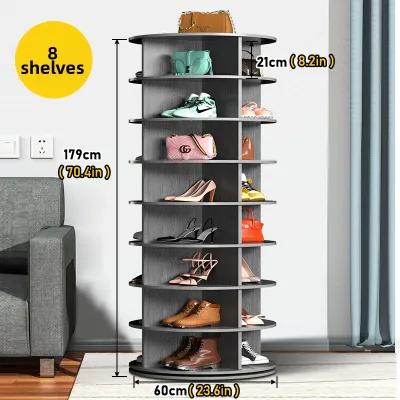
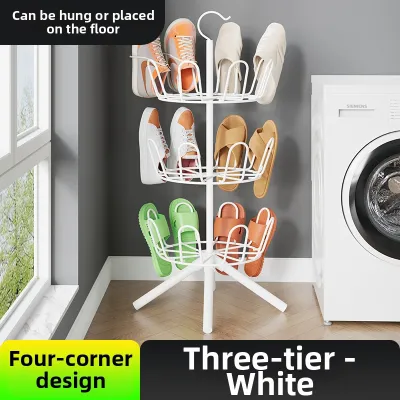
Prices are valid at publication and may change. Please refer to the product page for the latest price.
Finally, inspect the floor surface. A rotating shoe rack organizer relies on a perfectly level foundation to spin smoothly without putting uneven stress on its central bearing or pole. Use a spirit level to check for any sloping, which is common in older homes or near floor drains in utility areas. If the floor is uneven, you will need to address this before installation to prevent the rack from drifting or tipping.
Calculate Your Shoe Storage Capacity Needs
Before browsing organizer models, gather all the footwear you plan to store and conduct a thorough inventory. Count the total number of pairs to establish a baseline capacity. A rotating shoe rack organizer typically lists its capacity by the number of pairs it can hold, but this estimate is often based on standard flat shoes or sandals.

Categorize your shoes by type and height. In tropical climates like the Philippines, your collection likely includes a mix of thin sandals, casual slippers, canvas sneakers, and perhaps structured leather shoes or high heels. Taller footwear, such as boots or high-top sneakers, requires more vertical clearance between tiers than flat sandals. Check if the rotating rack you are considering features adjustable shelves, which allow you to customize the tier heights to match your specific inventory.
Always factor in a buffer for future purchases. Investing in a high-quality organizer that costs several thousand pesos (₱) is only worthwhile if it actually accommodates your daily footwear over the long term. If you currently own twenty pairs of shoes, choosing a rack that maxes out at exactly twenty pairs will leave you with no room for growth. Opting for a unit with ten to twenty percent extra capacity ensures you will not have to double-up shoes on a single shelf, which can restrict rotation and damage delicate materials in humid conditions.
Match Rotating Shoe Rack Dimensions to Your Space
Once you have your closet measurements and capacity requirements, you can begin matching them to specific product dimensions. The most critical dimension of a rotating shoe rack organizer is its base diameter. This circular footprint must fit comfortably within the square or rectangular floor space of your closet, leaving a safety margin on all sides.
Compare the total height of the rack against your measured internal closet height. It is vital to leave adequate clearance at the top of the unit. Many rotating racks require assembly inside the closet, or they may need to be tilted upright during installation. A gap of at least ten to fifteen centimeters at the top is generally recommended to allow for comfortable assembly, adjustment, and smooth rotation without scraping the ceiling or upper shelves.
Review the manufacturer’s detailed specifications for individual tier spacing. If the overall height of the rack is tall but the tiers are fixed close together, you may struggle to fit anything other than flat shoes. Ensure the proportion of the rack matches both your physical closet volume and the physical height of your footwear.
Verify Installation Requirements and Safety Limits
A rotating shoe rack organizer is a dynamic piece of furniture, meaning its safety and usability depend heavily on proper installation and weight distribution. When the rack is fully loaded, the outer edges of your shoes will extend beyond the physical shelves. You must verify that this loaded diameter has enough clearance to spin freely without scraping against closet walls, hanging clothes, or door frames.
Weight capacity is another critical factor to verify. Check the manufacturer’s specified weight limits for both individual tiers and the entire unit. Exceeding these limits can warp the shelves, damage the central rotating bearing, or cause the entire structure to lean. Place heavier footwear, like leather boots or thick-soled sneakers, on the lower tiers to keep the center of gravity low and improve overall stability.
Review how the unit is anchored. Some tall rotating shoe racks require ceiling-to-floor tension mounts or wall-anchoring brackets to remain stable. Others rely on a heavy, weighted freestanding base. If you live in an area prone to minor seismic movements, or if you have children or pets in the home, prioritizing a model that can be securely anchored to the wall or closet frame is a crucial safety step.
Avoid Common Sizing and Clearance Mistakes
One of the most frequent mistakes when choosing a rotating shoe rack organizer is failing to account for shoe overhang. A rack might have a nominal diameter of fifty centimeters, but once size-forty-five sneakers are placed on the shelves, the actual spinning diameter can increase significantly. Always measure your longest pair of shoes and add that overhang to the rack’s base diameter when planning your clearance zone.
Another common oversight is ignoring the height of the base plate and the top finial or tension mechanism. These components can add several centimeters to the overall height of the unit, potentially making it too tall for a tight closet niche. Always check the total finished dimensions, not just the height of the shelving tiers.
Lastly, avoid the temptation to squeeze a large-capacity rack into a tight corner where you cannot easily access all sides. If you have to squeeze your hand into a narrow gap to spin the rack, or if the shelves constantly rub against hanging garments, the organizer will become frustrating to use. Ensure there is clear physical and visual access to the unit so it can perform its job effectively.
Frequently Asked Questions (FAQ)
Can I use a rotating shoe rack in a walk-in closet with carpeted floors?
Yes, but you must take precautions to ensure stability. Thick or plush carpeting can cause a freestanding rotating shoe rack to wobble, which can misalign the central rotating mechanism and make spinning difficult. To prevent this, check the manufacturer’s guidelines regarding floor surfaces. If you are installing the rack on carpet, placing a rigid, flat wooden or acrylic baseboard underneath the unit’s base can provide the stable foundation needed for smooth, level rotation.
How much extra space do I need around the rack for it to spin freely?
As a general rule, you should allow at least five to ten centimeters of clear space around the entire loaded diameter of the rotating shoe rack organizer. This clearance ensures that even if shoes shift slightly or overhang the edges of the shelves, they will not scrape against closet walls, doors, or adjacent hanging clothes. To calculate this accurately, measure the distance from the central pole to the heel of your longest shoe when placed on a shelf, double that measurement to find the loaded diameter, and then add your clearance buffer.

Community discussion
Share your experience or ask a question. Comments are reviewed before publication.