
The ideal round center table for a small living room typically features a diameter between 60 and 90 centimeters. This size range provides a practical surface for daily items while preserving precious floor space. In compact homes, such as urban condominiums or cozy townhouses in the Philippines, choosing the right size prevents the room from feeling overcrowded and ensures smooth foot traffic.
Determining the perfect fit requires a balance of sofa proportions, clearance boundaries, and visual weight. By taking a few key measurements of your seating area and understanding how different table designs affect the perception of space, you can select a table that is both highly functional and visually harmonious.
Measure Your Available Space and Seating Layout
Before browsing for a round center table, you must gather the foundational spatial data of your living room. Start by measuring the total length and depth of your primary sofa. In many compact living rooms, a standard two-seater or a small three-seater sofa serves as the anchor for the entire seating arrangement. Knowing these exact dimensions prevents you from purchasing a table that looks disproportionately large or small.
Products mentioned in this guide
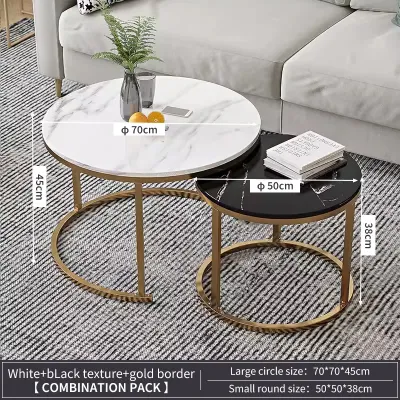
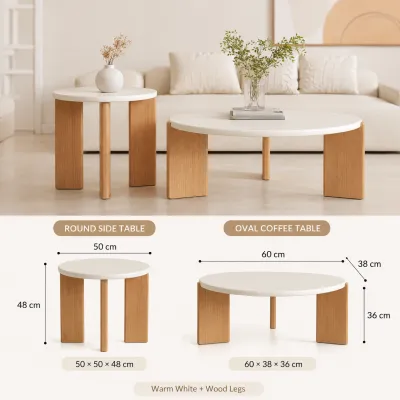
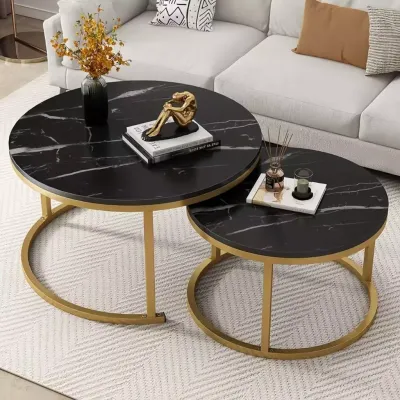
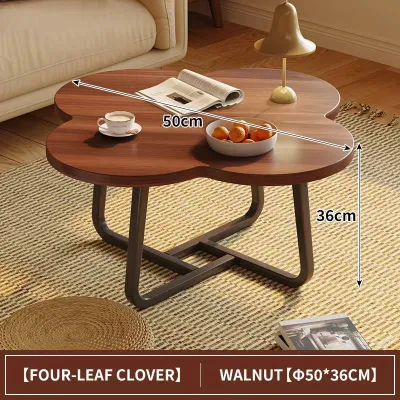
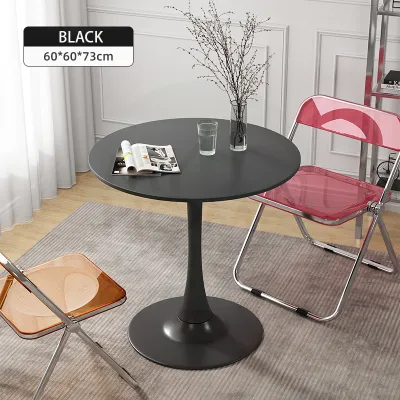
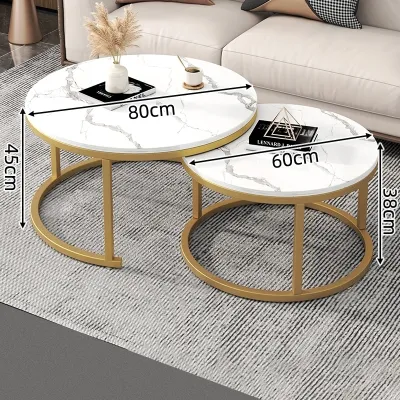
Prices are valid at publication and may change. Please refer to the product page for the latest price.
Next, identify the distance between opposing seats if your layout includes accent chairs, native rattan armchairs, or a secondary loveseat. Measure the open floor area directly in front of the sofa from the edge of the seat cushions to the opposite wall or the front of your television console. This measurement establishes the absolute physical boundary for your central zone.
Do not forget to note the placement of adjacent furniture and household fixtures. In smaller homes, items like standing fans, indoor plants, or media units often encroach on the central living area. Mapping out these items ensures that your future table will not block access to storage drawers or crowd the pathways leading to other rooms.
Calculate the Ideal Diameter Using Proportion Rules
To achieve visual harmony, apply the classic design principle of sizing your round center table diameter to approximately one-half to two-thirds of your sofa’s total length. For example, if your sofa measures 150 centimeters in length, a table with a diameter of 75 to 100 centimeters is a balanced starting point. For exceptionally tight spaces, leaning closer to the one-half ratio keeps the room feeling open and airy.

Adjust this baseline calculation depending on your specific seating type. If you have a compact loveseat, a smaller table diameter of 60 centimeters prevents the furniture from looking crowded. If you are styling an L-shaped sectional, the round table must fit comfortably within the open nook of the “L” shape without blocking the chaise lounge extension or making it difficult to sit down.
Factor in the visual weight of the table design alongside its physical measurements. A round table with a glass top, an open metal frame, or a light-colored natural finish allows light to pass through, making the room feel larger. These airy designs can accommodate a slightly larger diameter. Conversely, a solid drum-style table or a dark-stained wooden piece has high visual weight and should be kept on the smaller side of the spectrum to avoid dominating the room.
Verify Clearance and Traffic Flow Requirements
Maintaining comfortable legroom and unobstructed walkways is essential in a compact layout. Standard ergonomic guidelines suggest leaving a gap of 30 to 45 centimeters between the edge of the sofa cushions and the edge of the round center table. This distance provides enough space to sit down, stretch your legs, and comfortably reach for a drink or a remote control without straining.
Beyond the immediate seating area, verify that the remaining clearance between the table edge and surrounding walls or walkways is at least 60 to 75 centimeters. This ensures that family members and guests can walk through the living room naturally without having to squeeze past the table sideways. Proper clearance is especially important in high-traffic zones near entryways or dining areas.
Account for dynamic space usage that changes throughout the day. If your sofa features reclining mechanisms, or if you have nearby cabinets with doors and drawers that swing outward, measure the clearance with these features fully extended. In tropical climates, leaving ample open space around the table also promotes better natural air circulation from open windows or cooling fans, keeping the living area comfortable.
Adapt Table Choices for Tight Living Room Constraints
When the mathematically ideal table diameter exceeds your actual floor space, practical adjustments can help you maximize functionality. Consider scaling down the diameter to 50 or 60 centimeters while prioritizing a design that offers smart storage solutions, such as a lower shelf or a removable top. This allows you to keep the tabletop clear of clutter while retaining a small footprint.
Nesting round tables are an excellent alternative for flexible living. These sets feature two or three tables of graduating sizes that slide completely underneath one another when not in use. You can keep them stacked to preserve floor space during daily routines, then slide the smaller tables out to provide extra surface area when hosting guests or enjoying family gatherings.
Pay close attention to the table height relative to your sofa’s seat cushions. Ideally, the top of the round center table should sit within 2 to 5 centimeters of your sofa’s seat height, which is typically around 40 to 45 centimeters from the floor. A table that matches this height is highly ergonomic, whereas a table that is too low or too high can make a small room feel fragmented and physically awkward to use.
Common Sizing and Proportion Mistakes to Avoid
One frequent error is ignoring the design of the table’s base structure. A round table with a heavy, solid pedestal base can make a small room feel visually crowded and physically block foot traffic, even if the tabletop diameter is technically correct. Opting for slender tapered legs, a tripod base, or an open geometric frame keeps the floor visible and creates the illusion of a larger room.
Avoid the “island effect,” which occurs when a table is chosen that is far too small for the seating arrangement. If a tiny table is placed in front of a long sofa, it becomes unreachable from the outer seats and looks lost in the space. If your layout requires a larger reach but cannot accommodate a wide circular footprint, look for a slightly oval shape or use a pair of smaller matching tables side-by-side.
Be mindful of how dark colors and heavy, opaque materials interact with a small room’s lighting. Solid black or dark espresso-colored tables can visually shrink the remaining floor space, counteracting the benefits of a well-sized diameter. Choosing lighter wood tones, warm rattan, or metallic frames with glass tops helps reflect light and maintains a bright, spacious atmosphere in your home.
Frequently Asked Questions (FAQ)
Can a round center table be too small for a large sectional sofa?
Yes, a very small round table paired with a large sectional sofa can look visually lost and fail to serve the seating area effectively. Guests sitting on the outer edges of the sectional will find it difficult to reach the table surface. To resolve this proportion mismatch, you can use a pair of matching round tables placed side-by-side, or opt for a larger oval table that offers more length while retaining soft, rounded edges.
Should the round center table be the same height as the sofa cushions?
For optimal comfort and ergonomics, the top of your round center table should be the same height as your sofa’s seat cushions, or up to 5 centimeters lower. A table that aligns with the cushions makes it easy to reach for items while keeping sightlines clear. Avoid tables that are significantly taller than your sofa cushions, as they can create an awkward physical barrier and make a compact living room feel cluttered.

Community discussion
Share your experience or ask a question. Comments are reviewed before publication.