
To comfortably seat 6 to 10 people, a stainless kitchen table must scale from a minimum length of 180 centimeters for six diners up to 240 to 300 centimeters for ten diners. The exact footprint depends on the table’s shape, the width of your dining chairs, and how much elbow room your guests require. Because stainless steel tables bring a sleek, industrial aesthetic that is highly resistant to tropical humidity, choosing the right size ensures your dining area remains both highly functional and visually balanced.
When selecting a large metal table, balancing physical dimensions with spatial flow is essential. A table that is too small will leave guests feeling cramped, while an oversized table can block vital walkways and make your kitchen feel crowded. By understanding standard seating allocations and room clearance guidelines, you can find a configuration that accommodates large gatherings without compromising daily usability.
Calculating Table Dimensions Based on Shape and Seating
To determine the ideal size for your stainless kitchen table, start with standard per-person space requirements. For comfortable dining, each individual needs about 60 to 75 centimeters of table width and at least 35 to 40 centimeters of depth. This ensures diners have enough room to eat without bumping elbows and leaves sufficient space in the center of the table for shared serving platters, water pitchers, and centerpieces.
Products mentioned in this guide

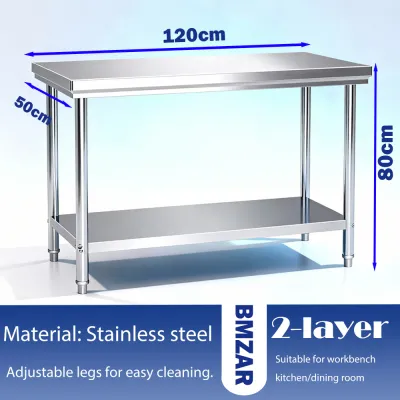
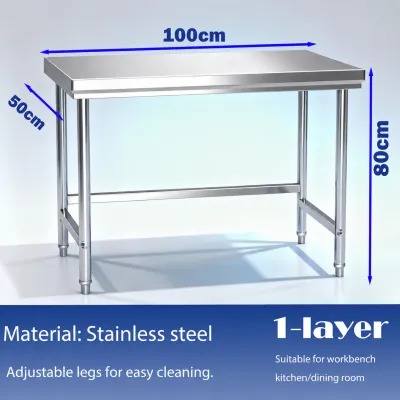
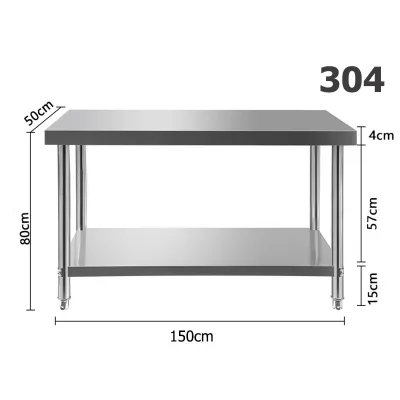
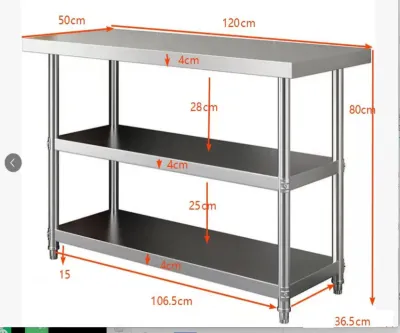
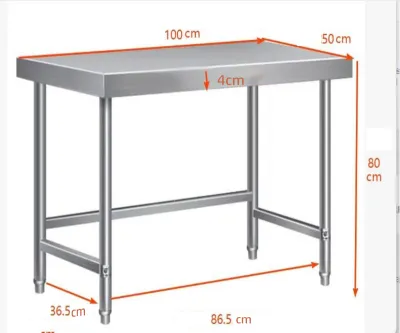
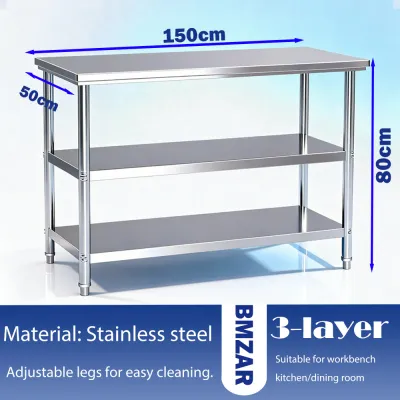
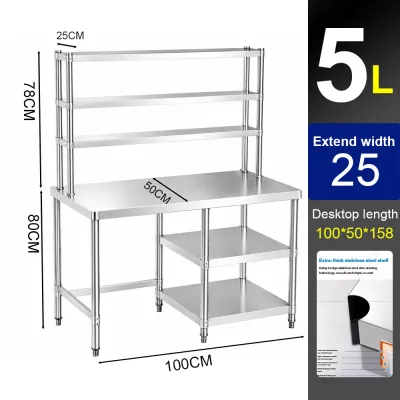
Prices are valid at publication and may change. Please refer to the product page for the latest price.
For rectangular and oval layouts, these per-person measurements dictate the overall length of the table. To seat six people, a rectangular table should measure at least 180 centimeters in length and 90 centimeters in width, allowing for three diners on each long side. To accommodate eight people, look for a length of 210 to 240 centimeters. For a gathering of ten, you will need a table that is at least 270 to 300 centimeters long if you plan to seat everyone along the sides, or 240 centimeters if you utilize the two end seats.
Round and square layouts offer excellent conversational dynamics but require a larger overall footprint to seat the same number of people. A round table seating six requires a diameter of 135 to 150 centimeters. Seating eight people comfortably requires a diameter of at least 150 to 180 centimeters. Attempting to seat ten people at a round table requires a massive diameter of 210 centimeters, which often makes reaching for food in the center difficult and consumes an impractical amount of floor space in standard residential kitchens.
If your household size fluctuates, an extendable or drop-leaf stainless steel table offers a highly flexible solution. These designs allow you to maintain a compact 150-centimeter footprint for daily family meals and expand the surface to 240 centimeters or more when hosting guests. When shopping for extendable options, verify that the extension mechanisms are made of corrosion-resistant materials to withstand humid environments.
Measuring Your Kitchen or Dining Space for Clearance
Choosing the right table size is only half the battle; you must also ensure the table fits comfortably within your physical room. To calculate the total footprint required, you must add the table’s dimensions to the clearance space needed on all sides. This prevents the dining area from feeling restricted and ensures that traffic can flow smoothly even when everyone is seated.

Standard walkway guidelines require at least 90 centimeters of open space between the edge of the table and the nearest wall, cabinet, or appliance. This clearance allows diners to pull out their chairs and sit down without difficulty. For main thoroughfares or walkways where people must pass behind seated guests, aim for a more generous clearance of 110 to 120 centimeters.
In many homes, the dining table sits adjacent to architectural obstacles such as kitchen islands, pantry doors, or entryways leading to outdoor spaces or secondary kitchens. Carefully map out these zones to ensure that fully occupied chairs do not block cabinet drawers, refrigerator doors, or high-traffic pathways. Using painter’s tape to outline the proposed table dimensions on your floor is an excellent way to visualize the physical impact of a large table before making a purchase.
Finally, do not overlook the logistics of delivery and assembly. A large, solid stainless kitchen table—especially one with a fully welded frame—cannot be bent or disassembled to fit through tight spaces. Measure the width and height of all doorways, hallways, stairwells, and elevator doors along the delivery route to guarantee the table can safely reach its final destination.
Evaluating Stability and Structural Specifications
Because stainless steel tables are often associated with commercial kitchens, they are built to be incredibly durable, but residential models vary widely in construction quality. To ensure your table can handle the weight of daily meals and large gatherings, you must evaluate its structural specifications. Start by checking the gauge, which refers to the thickness of the stainless steel top; a lower gauge number indicates thicker, stronger steel.
For a heavy-duty dining table that resists bowing and denting, look for 14-gauge or 16-gauge stainless steel. An 18-gauge top is acceptable for lighter use but may flex slightly under the weight of heavy serving dishes or when people lean on the edges. Additionally, check for reinforcing channels welded underneath the tabletop, which provide essential structural support and minimize metallic echoing sounds when items are placed on the surface.
Leg placement and base design play a critical role in both stability and legroom. Post legs positioned at the absolute corners of the table maximize the space available for chairs and diners’ knees. If you prefer a pedestal or trestle base, verify that the central support structure does not interfere with the feet of those sitting near the center or ends of the table. A wide, heavy base is particularly important for tables extending past 240 centimeters to prevent tipping.
Lastly, consider the grade and finish of the steel. Grade 304 stainless steel is highly recommended for residential use due to its excellent resistance to rust and corrosion, which is vital in humid climates. For the finish, a brushed or satin texture is highly practical for daily dining, as it hides minor scratches, water spots, and fingerprints much better than a highly polished mirror finish.
Common Sizing and Layout Mistakes to Avoid
One of the most frequent mistakes homeowners make is measuring the room based solely on the table’s dimensions while ignoring the space occupied by dining chairs. Chairs extend significantly when in use, and choosing a table that fits the room only when the chairs are tucked in will result in an incredibly cramped dining experience once guests sit down.
Another common error is selecting a table shape that hinders conversation. While a very long, narrow rectangular table might fit a narrow room, a length of 300 centimeters with a width of only 80 centimeters makes it difficult for guests at opposite ends to interact. Keep the width to at least 100 centimeters for long tables to maintain comfortable sightlines and leave room for shared dishes.
Additionally, consider the visual weight of a large metallic piece of furniture. A massive stainless steel table can easily dominate a room, making a small or poorly lit space feel cold and institutional. To avoid this, balance the industrial look of the steel by pairing the table with warm wooden chairs, soft upholstered seating, or colorful table linens that soften the overall aesthetic.
Frequently Asked Questions (FAQ)
Can a round stainless steel table comfortably seat 10 people?
While round tables are excellent for conversation, seating ten people comfortably requires a diameter of at least 180 to 210 centimeters. A table of this size occupies an exceptionally large footprint, requiring a very spacious room to maintain proper clearance. Additionally, the center of a 210-centimeter round table is difficult to reach, making food service impractical without a large rotating tray. For seating ten people, a rectangular or oval configuration is generally much more space-efficient.
Are extendable stainless steel tables sturdy enough for daily meals?
Yes, high-quality extendable stainless steel tables are highly durable, provided they feature robust engineering. When evaluating an extendable model, inspect the locking mechanisms that secure the leaves and check the strength of the internal glides. Ensure the table frame or legs provide adequate support at the center point when fully extended to prevent sagging, and verify that the seams align tightly to prevent food particles and liquids from falling into the extension tracks.

Community discussion
Share your experience or ask a question. Comments are reviewed before publication.