
Quick Answer: Sizing Your Table Top Bookshelf
To choose the right size table top bookshelf, you must first measure your desk’s usable width, depth, and vertical clearance. Next, calculate the required shelf depth and tier height based on the specific books or items you plan to store. Finally, verify the unit’s footprint-to-height ratio and check the manufacturer’s weight limits to ensure stability and prevent tipping. This systematic approach ensures your workspace remains organized, functional, and free of clutter.
Establish Your Maximum Desk Footprint and Clearance
Before browsing online marketplaces or local furniture shops, grab a tape measure to establish your desk’s physical boundaries. Measure the total width and depth of your desk surface. However, the total surface area is not your actual usable footprint. You must subtract the space already occupied by essential equipment like your computer monitor, keyboard, mouse pad, desk lamp, and cable management accessories. If you use a dual-monitor setup or a flexible monitor arm, map out their full range of motion so the shelf does not obstruct your screens.

Next, assess the vertical clearance of your workspace. This step is particularly important if your desk sits beneath a wall-mounted air conditioning unit, a window frame, or low overhead cabinets. Measure from the desk surface to the lowest point of any overhead obstacle. If you plan to place the table top bookshelf directly under a monitor stand or a hutch, measure the exact height of that gap to ensure the shelf fits seamlessly without blocking your view or forcing you to tilt your screen.
Products mentioned in this guide
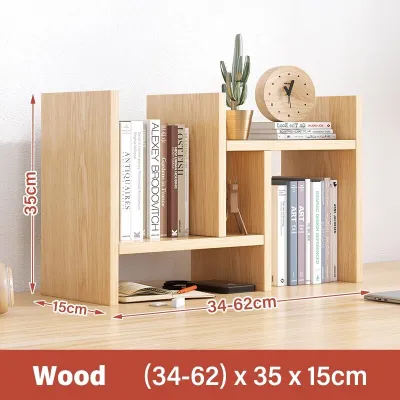
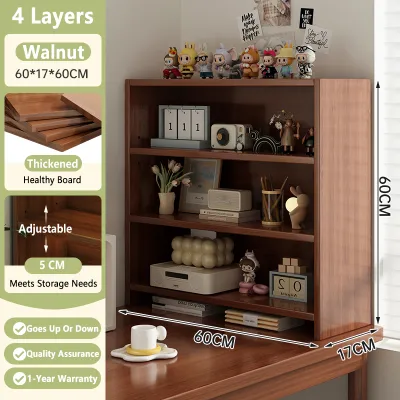
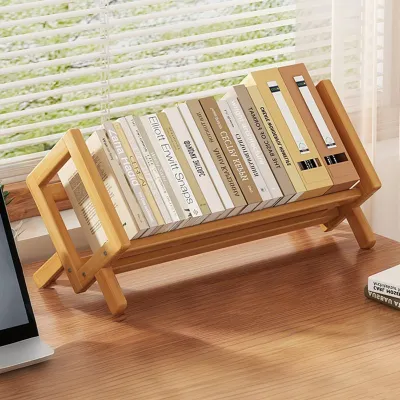
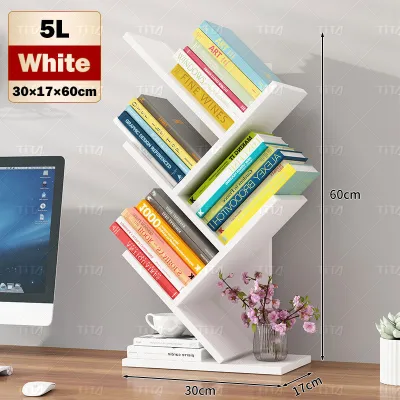
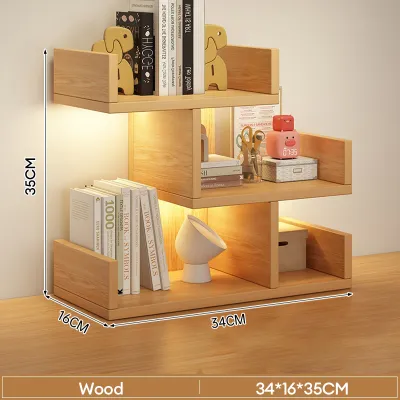
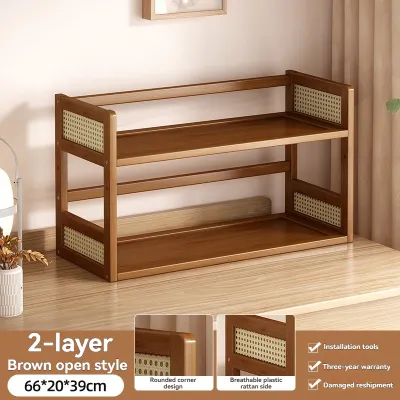
Prices are valid at publication and may change. Please refer to the product page for the latest price.
Beyond physical measurements, consider the visual weight and breathing room of your setup. A massive, solid-backed shelf can make a compact study room or home office feel cramped and dark. In tropical climates where open, airy spaces help maintain a cool and comfortable environment, leaving at least 10 to 15 centimeters of open space on either side of the shelf is highly recommended. This gap prevents the desk from feeling visually overwhelming and allows natural light to flow across your workspace.
Translate Your Items into Required Shelf Dimensions
Once you have established your desk’s maximum limits, turn your attention to the items you need to store. Gather your books, binders, notebooks, and storage boxes to measure their physical dimensions. Standard novels and paperbacks typically require less depth, whereas large reference textbooks, academic binders, or storage boxes need a deeper shelf base. Choosing a shelf that is too shallow will cause your items to overhang, creating an unstable setup that is prone to falling.
Evaluate the vertical spacing between the shelf tiers. If you have tall A4 binders, legal-sized documents, or decorative items, check the manufacturer’s specifications for the height clearance of each individual tier. Fixed-tier shelves offer no flexibility, so you must ensure your tallest items fit comfortably. If you anticipate your storage needs changing, look for models with adjustable shelf heights that allow you to customize the vertical gaps.
Decide on the number of tiers by balancing your storage volume with your vertical clearance. A single-tier or two-tier shelf is often sufficient for daily office essentials and keeps the profile low. If you require three or more tiers to accommodate a large book collection, ensure the overall height does not overwhelm your desk or block natural light from nearby windows.
Verify Stability, Weight Limits, and Surface Protection
A tabletop shelf must remain perfectly stable under the weight of your books. Examine the footprint-to-height ratio of the unit. Taller shelves with narrow bases are inherently more prone to tipping, especially if you place heavy items on the top tier. To maintain a low center of gravity, plan to store your heaviest textbooks and files on the bottom shelf and lighter items above.
Always check the manufacturer’s specified weight capacity for both the individual tiers and the entire unit. These limits vary significantly depending on the construction materials—such as solid wood, engineered wood, or steel frames—and the quality of the joints. In humid environments, engineered wood can be sensitive to moisture, so verifying the finish quality and joint stability is essential before loading it with heavy reference books.
Protecting your desk surface is another critical consideration. Look for shelves that feature built-in rubber feet, foam padding, or non-slip felt pads on the bottom corners. These protective elements prevent the shelf from sliding and protect your wooden or laminate desk from scratches. If the shelf does not include these, consider placing a dedicated desk mat underneath the unit to distribute the weight evenly and safeguard your furniture investment, especially if you have invested in a premium wooden desk worth ₱5,000 or more.
Common Sizing Mistakes to Avoid
One of the most common mistakes is ignoring the depth of the shelf base. A shelf that is too deep will encroach on your primary work area, pushing your keyboard, mouse, and monitor too close to the front edge of the desk. This setup reduces forearm support and can lead to physical discomfort during long working hours.
Another frequent error is overestimating your vertical space. Buyers often select a tall shelf without accounting for the height of their computer monitor or wall-mounted fixtures. This can result in a cramped workspace where the shelf blocks your screen or collides with overhead cabinets, forcing you to reposition your entire desk layout.
Lastly, avoid choosing a shelf that is too narrow or shallow just to save space. If your books or storage bins overhang the edges, they will look cluttered and risk falling. Always compare the actual dimensions of your largest items against the usable inner dimensions of the shelf tiers, rather than relying solely on the overall external measurements of the unit.
Frequently Asked Questions (FAQ)
Can I use a table top bookshelf on a glass desk?
Yes, but you must take extra precautions. First, check your glass desk manufacturer’s specifications to verify the maximum weight limit and glass thickness. To prevent scratching and distribute the weight of the table top bookshelf evenly, always use protective rubber padding, felt feet, or a thick desk mat beneath the shelf’s contact points.
How much weight can a typical table top bookshelf hold?
The weight capacity varies widely based on the design and materials used. You should always check the specific manufacturer’s weight limit per tier and for the entire unit before purchasing. Generally, the actual capacity depends on the shelf material, the thickness of the panels, the connection hardware, and the overall span of the shelves.

Community discussion
Share your experience or ask a question. Comments are reviewed before publication.