
Finding the ideal wall mount cabinet for your dining room is a balancing act between spatial harmony, storage utility, and structural safety. A cabinet that is too large can overwhelm the room and disrupt the flow of traffic, while one that is too small may fail to meet your storage needs and look visually lost on an expansive wall. To make an informed decision, you must evaluate your physical wall dimensions, the layout of your existing dining furniture, and the specific items you plan to store.
Selecting the right size is not merely about matching aesthetic preferences; it requires a practical assessment of how the cabinet interacts with your daily living space. In tropical environments like the Philippines, where dining rooms often serve as high-traffic hubs with open layouts to maximize airflow, spatial planning is particularly critical. By taking precise measurements and understanding your wall’s structural capacity, you can select a cabinet that enhances both the beauty and functionality of your dining area.
Measure Your Available Wall Space
Before browsing online marketplaces or visiting local showrooms, establish the physical boundaries of your dining room wall. Measure the total width and height of the empty wall space, noting the locations of adjacent doors, windows, light switches, and power outlets. Failing to account for these fixtures can result in a cabinet that blocks access to essential controls or prevents doors from opening fully.
Products mentioned in this guide
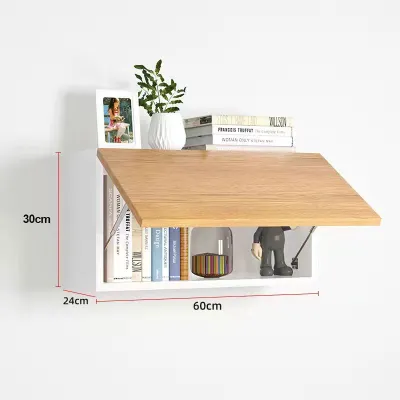
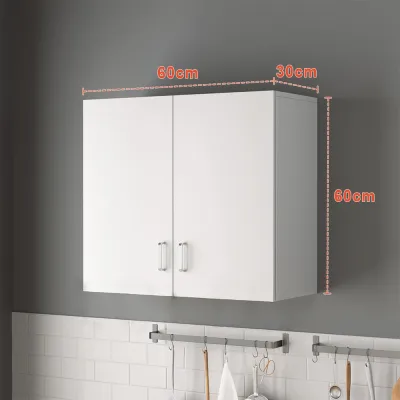
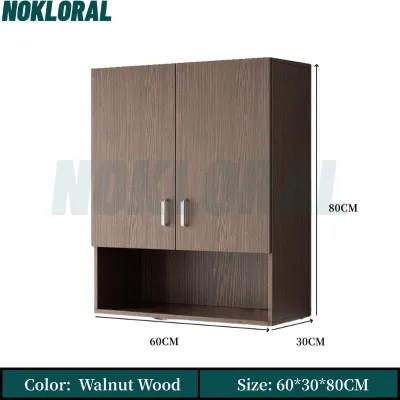
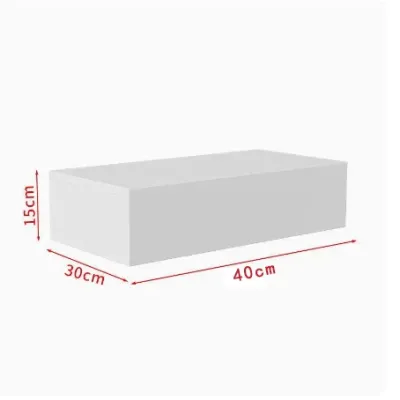
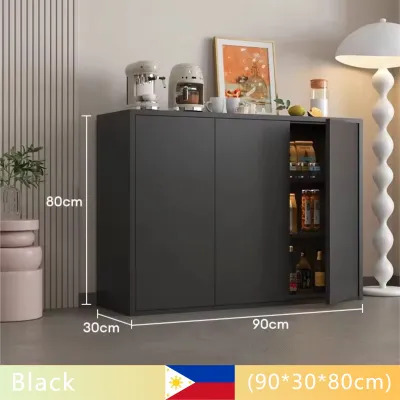
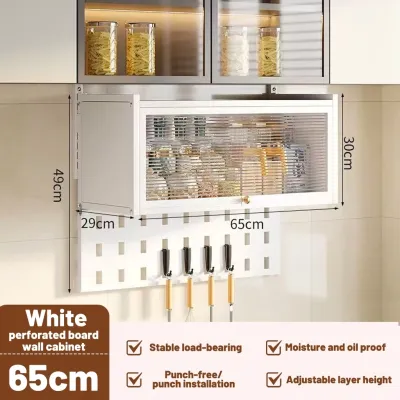
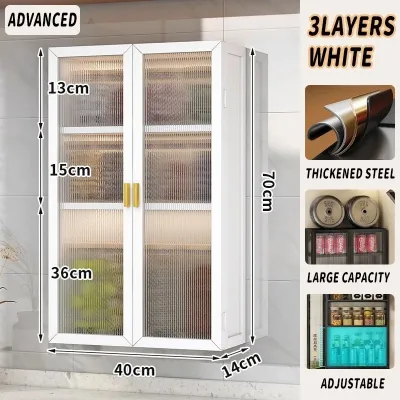

Prices are valid at publication and may change. Please refer to the product page for the latest price.
Next, determine the maximum projection, or depth, that the cabinet can have without obstructing traffic patterns. In a dining room, people must be able to move freely around the table, pull out chairs, and walk past seated guests. Ensure there is ample clearance between the front of the cabinet and the back of any fully extended dining chairs. If your dining area is compact, a shallower cabinet is often the safest choice to maintain comfortable walkways.
Visual margins are equally important for maintaining a balanced aesthetic. A wall mount cabinet should never look squeezed into a tight space or completely cover a wall from corner to corner. Leave a generous amount of empty wall space on all sides of the cabinet to act as a visual frame. This negative space prevents the dining room from feeling cramped and allows the cabinet to serve as an elegant focal point.
Match Cabinet Dimensions to Your Storage Needs
The ideal dimensions of your wall mount cabinet are heavily influenced by what you plan to store inside it. If your primary goal is to display delicate glassware, ceramics, or decorative plates, a shallower cabinet depth is highly advantageous. Shallow cabinets keep items close to the front, maximizing visibility and making it easier to arrange displays without pieces getting lost in dark corners.

Conversely, if you need to store bulky kitchen appliances, large dinnerware sets, or heavy serving platters, you will require a deeper cabinet with robust shelving. Before purchasing, measure the diameter of your largest plates and the physical dimensions of any appliances you plan to house. Compare these measurements against the cabinet’s internal depth specifications, keeping in mind that the external depth includes the back panel and doors, which reduces the actual usable interior space.
The choice between open shelving, glass doors, and solid doors also impacts both functionality and visual weight. Glass doors and open shelves create an airy, spacious feel that can make a small dining room appear larger, but they require you to keep the contents neatly organized. Solid doors are excellent for concealing everyday clutter, pantry overflow, or mismatched dishes, providing a clean and minimalist exterior.
Determine the Ideal Mounting Height and Clearance
Positioning your wall mount cabinet at the correct height is essential for both ergonomic comfort and visual balance. If you are mounting the cabinet above an existing piece of furniture, such as a dining buffet, sideboard, or console table, you must maintain a functional clearance distance between the two pieces. This gap should be wide enough to allow you to place decorative items, food platters, or small appliances on the surface below without hitting the bottom of the wall cabinet.
Accessibility is a key consideration when determining mounting height. The cabinet should be positioned so that the primary users can easily reach the lower and middle shelves without needing a step stool. If the cabinet is mounted too high, accessing everyday dinnerware becomes an inconvenient and potentially unsafe chore. Conversely, mounting it too low can make the dining area feel closed in and restrict the usability of the wall space below.
Verify Wall Structure and Weight Capacity
Before mounting any cabinet, you must conduct a thorough assessment of your wall structure to ensure it can safely support the weight of the unit and its contents. Wall types vary significantly, and each requires specific mounting hardware and installation techniques. In the Philippines, residential walls are commonly constructed from solid concrete, concrete hollow blocks, or drywall partitions.
Concrete and brick walls offer exceptional load-bearing capacity but require specialized masonry drill bits, wall plugs, and heavy-duty anchors to secure the cabinet brackets. Drywall partitions, on the other hand, are much more delicate and cannot support the weight of a loaded dining cabinet on their own. For drywall installations, the mounting brackets must be anchored directly into the wooden or metal wall studs behind the plasterboard.
To determine if your wall can handle the load, calculate the total anticipated weight of the installation. This is done by adding the empty weight of the cabinet—which should be specified by the manufacturer—to the estimated weight of all the items you plan to store inside. Dinnerware, glassware, and serving platters are surprisingly heavy when stacked together. If the total weight approaches or exceeds the limits of your wall type or the manufacturer’s hardware specifications, you must reconsider the cabinet size or choose a freestanding alternative.
Common Sizing and Placement Mistakes to Avoid
One of the most frequent mistakes homeowners make is choosing a wall mount cabinet that is too deep for the space. A deep cabinet hanging over a dining area can easily lead to painful head bumps when guests stand up from the table or lean back in their chairs. It can also create dark shadows over the dining table, making the room feel gloomy and cramped.
Another common oversight is ignoring the swing radius of nearby doors, including the cabinet doors themselves. Ensure that when the cabinet doors are fully opened, they do not collide with adjacent room doors, window treatments, or light fixtures. Additionally, map out the traffic flow of the dining room to ensure that open cabinet doors do not completely block the walkway, trapping family members or creating safety hazards during meal times.
Frequently Asked Questions (FAQ)
Can I install a wall mount cabinet on a drywall partition?
Yes, but you must take strict safety precautions. You should never rely solely on standard plastic drywall anchors or toggle bolts to support a loaded dining cabinet, as these can easily tear through the plasterboard under tension. Instead, the cabinet’s mounting brackets must be anchored directly into the wooden or metal wall studs behind the drywall. Use a reliable stud finder to locate the center of the studs, and ensure your mounting screws penetrate deep into the structural framing to provide a secure hold.
How do I maintain the safety of a wall-mounted cabinet over time?
Maintaining safety requires periodic inspections and mindful usage. Every few months, check the mounting brackets, screws, and wall anchors for any signs of looseness, pulling away from the wall, or structural stress. In humid tropical climates, inspect the cabinet joints and back panel for signs of moisture absorption or warping, which can weaken the unit’s structural integrity. Additionally, always distribute weight evenly across the shelves and avoid placing all heavy items on one side, which can exert uneven torque on the wall mounts.

Community discussion
Share your experience or ask a question. Comments are reviewed before publication.