
Selecting a sliding steel wardrobe for a compact bedroom requires balancing storage capacity with spatial harmony. Sliding doors eliminate the swing clearance needed for hinged models, making them ideal for tight floor plans. To choose the right one, you must measure your space accurately, determine the optimal dimensions, select the right door configuration, and plan the interior layout to maximize utility without overwhelming the room.
Assessing Your Bedroom Space and Clearance
To find a wardrobe that fits seamlessly, start by measuring the physical boundaries of your room. Use a metal measuring tape to record the width of the wall, the floor-to-ceiling height, and the maximum depth the unit can occupy. Always measure at multiple points—along the floor, the middle of the wall, and near the ceiling—as walls in many homes are rarely perfectly straight.
Remember to account for fixed architectural features that can reduce your usable space. Baseboards, crown moldings, window sills, and electrical outlets can prevent a wardrobe from sitting flush against the wall. If a baseboard projects two centimeters from the wall, your wardrobe will be pushed forward by that same distance, directly reducing your remaining floor clearance.
Products mentioned in this guide
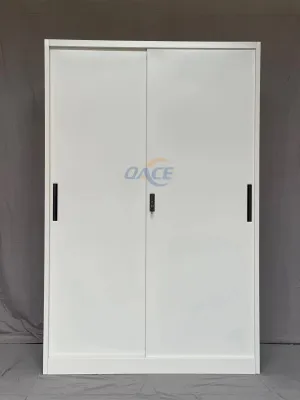
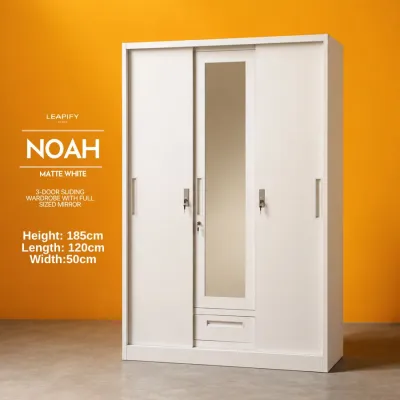
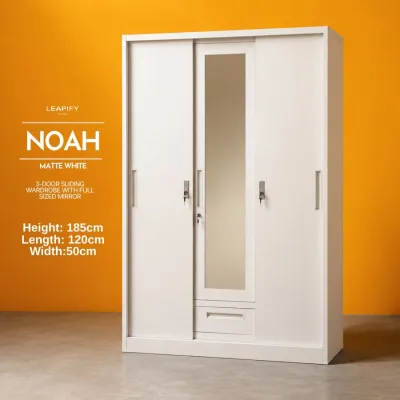
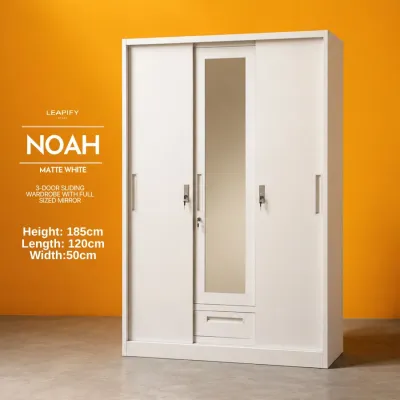
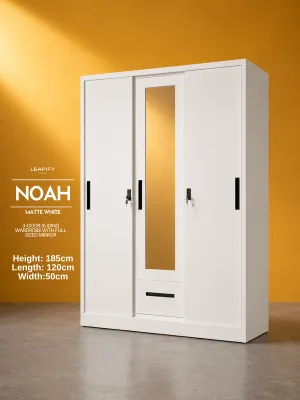
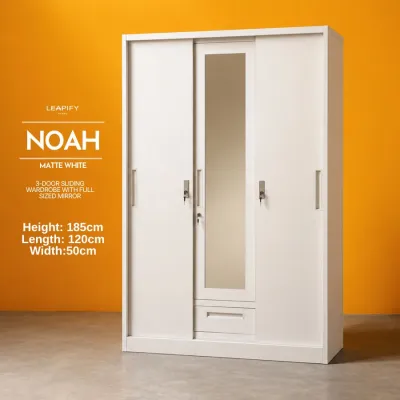
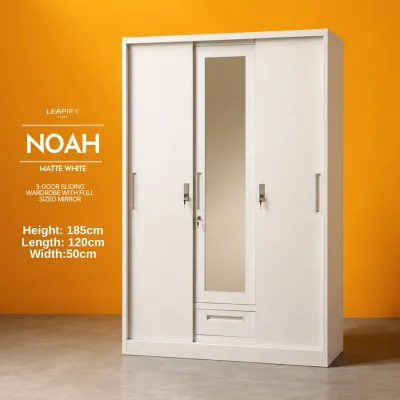

Prices are valid at publication and may change. Please refer to the product page for the latest price.
Next, map out the clearance zones required for comfortable daily movement. Although sliding doors do not swing outward, you still need enough floor space to stand, walk past, and access the interior. A good rule of thumb is to maintain at least 60 centimeters of open space in front of the wardrobe. This ensures you can stand comfortably with the doors open without bumping into your bed frame.
Finally, identify any overhead or wall-mounted obstacles that could interfere with the wardrobe’s placement. In tropical climates, wall-mounted split-type air conditioners and ceiling fans are common. Ensure the wardrobe’s height does not block the airflow of your air conditioner or come close to spinning fan blades. Additionally, check that the wardrobe will not cover light switches or wall sockets.
Determining the Ideal Wardrobe Dimensions
Once you have mapped your space, you can match your measurements to standard or customizable sliding steel wardrobe dimensions. Steel wardrobes are highly valued for their structural rigidity, but their fixed metal panels mean you must get the dimensions right before purchase. Start by evaluating standard width increments, which typically range from 90 centimeters for single-user units to 180 centimeters or more for larger setups. Choose a width that leaves at least a few centimeters of breathing room on either side to make installation and cleaning easier.

Depth is a critical factor that directly impacts how your clothes hang. Standard clothes hangers require an internal depth of at least 50 to 55 centimeters to prevent garments from brushing against the doors. Because sliding door track mechanisms occupy an additional 5 to 8 centimeters of depth, the external depth of your sliding steel wardrobe should ideally be between 60 and 65 centimeters. If you choose a shallower unit, your clothes may get caught in the sliding tracks, leading to jammed doors.
Height selection requires balancing your storage needs with the visual scale of the room. Full-height wardrobes that reach close to the ceiling maximize vertical storage, making them excellent for storing seasonal items or extra bedding. However, in a small bedroom, a massive floor-to-ceiling steel cabinet can feel visually overwhelming. A standard-height unit of around 180 to 200 centimeters keeps the room feeling more open while still providing ample storage, though you will need to manage the dust that accumulates on the top surface.
Selecting Door Configurations and Track Systems
The door configuration and track system you choose will dictate how easily you can access your belongings. For wardrobes under 150 centimeters in width, a two-panel sliding door configuration is generally the most practical choice. This setup allows you to slide one panel over the other, exposing exactly half of the wardrobe’s interior at any given time.
For wider wardrobes, a three-panel configuration might be tempting, but it comes with distinct trade-offs. A three-panel system only allows you to open one-third of the wardrobe at a time, which can make it difficult to view or reach items stored in the center. If you opt for a three-panel design, ensure your internal drawers and shelves are positioned so they can open fully without hitting the overlapping door panels.
You must also choose between top-hung and bottom-rolling track systems. Top-hung systems suspend the doors from an upper track, which keeps the bottom guide minimal and reduces the risk of dust and debris clogging the path. Bottom-rolling systems distribute the door weight onto the floor track, offering smooth operation and high stability, but the lower tracks require regular vacuuming to prevent lint, hair, and dust from derailing the rollers.
Before finalizing your choice, verify the track overlap and panel thickness. The physical overlap where the sliding doors meet in the middle reduces the usable opening width. Ensure that this overlap does not block access to internal drawers or pull-out accessories, as even a minor misalignment can prevent drawers from opening smoothly.
Optimizing Internal Layout for Compact Storage
A well-planned internal layout is essential for maximizing the storage capacity of a compact steel wardrobe. Because steel shelves are highly durable and resistant to sagging, they provide excellent support for heavy folded items, but you must balance shelf space with hanging zones. Analyze your wardrobe habits: if you wear mostly formal shirts, dresses, or barongs, prioritize hanging rods. If your wardrobe consists mainly of casual wear, t-shirts, and jeans, maximize adjustable shelving.
To make the most of limited horizontal space, utilize double hanging rods. By installing one rod near the top of the wardrobe and another halfway down, you can hang two tiers of shorter garments, such as shirts, jackets, and folded trousers. This simple adjustment effectively doubles your hanging capacity within the same footprint.
Incorporate space-saving accessories to keep smaller items organized. Pull-out trouser racks, shallow metal drawers, and adjustable shelf dividers help prevent clutter from piling up. When selecting these accessories, verify that they are compatible with the wardrobe’s internal dimensions and that the sliding doors allow enough clearance for them to extend fully.
Do not overlook the valuable vertical space at the very top of the wardrobe. Use the topmost shelves to store bulky, infrequently used items like luggage, extra pillows, or seasonal blankets. Since steel frames can support significant weight, you can safely store heavier items on these upper shelves, provided you distribute the load evenly and do not exceed the manufacturer’s specified weight limits.
Pre-Delivery and Installation Checks
Before your new sliding steel wardrobe arrives, you must perform several practical checks to ensure a smooth delivery and installation process. Unlike wooden furniture that can sometimes be trimmed or adjusted on-site, steel wardrobes are rigid and unforgiving. Start by verifying the packaged dimensions of the unit. Ensure the boxes can easily navigate your building’s stairwells, elevators, narrow hallway corners, and the bedroom doorway.
Once the wardrobe is in the room, check the levelness of your floor and the plumbness of your walls. Sliding door mechanisms rely on gravity and precise alignment to function correctly. If your floor slopes even slightly, the sliding doors may roll open on their own or bind in the tracks. Use a spirit level to inspect the floor; if you detect an uneven surface, check if the wardrobe comes with adjustable leveling feet or if you will need to use shims to level the base.
Finally, address the anchoring requirements to ensure long-term stability and safety. Tall steel wardrobes can be top-heavy, especially when loaded with clothes and accessories. To prevent tipping, the wardrobe must be securely anchored to the wall. Inspect your wall structure beforehand: concrete or solid brick walls require heavy-duty masonry anchors, while drywall installations require locating the wall studs and using appropriate toggle bolts. Never skip this step, as a stable anchor is essential for keeping the rigid steel frame square and the sliding doors operating smoothly.
Frequently Asked Questions (FAQ)
Do steel wardrobes rust in humid climates?
Steel wardrobes can be susceptible to rust if they are exposed to high humidity without proper protection. To prevent this, check the manufacturer’s specifications and product labels to ensure the steel has been treated with a high-quality powder coating, galvanization, or a rust-inhibiting finish. To maintain the finish, ensure your bedroom has adequate ventilation, use dehumidifiers if necessary, and promptly wipe down any condensation or moisture that accumulates on the metal surfaces.
Can I install a sliding wardrobe on uneven floors?
You can install a sliding wardrobe on slightly uneven floors, provided the unit features adjustable bottom rollers or leveling feet that can compensate for minor variations. These adjustments help keep the frame square so the doors slide smoothly. However, if your floor has a significant slope or structural sag, you should stop and consult a qualified professional to level the floor before attempting installation, as excessive tilt will cause the sliding doors to malfunction or jump off their tracks.

Community discussion
Share your experience or ask a question. Comments are reviewed before publication.