
Choosing the right slim shoe rack size for your closet requires matching the unit’s exact external dimensions with your closet’s interior depth and width, while leaving a buffer of at least 5 to 10 centimeters for door clearance and air circulation. In warm, humid tropical climates, packing footwear too tightly in an enclosed space invites mold and mildew. Selecting a slim rack that balances space-saving design with adequate ventilation is essential for preserving your shoes.
To find a rack that integrates seamlessly into your closet system, you must systematically measure your space, calculate shoe footprints, and verify clearance paths. This guide walks you through the precise spatial planning steps needed to optimize your closet storage without compromising accessibility or safety.
Measure Your Available Closet Space First
Before browsing online marketplaces or local furniture stores, you must take precise measurements of your closet’s interior. Do not rely on the builder’s blueprint or nominal dimensions, as walls are rarely perfectly straight. Use a metal measuring tape to record the interior width, depth, and height at three different points: the top, the middle, and the bottom of the closet floor.
Products mentioned in this guide
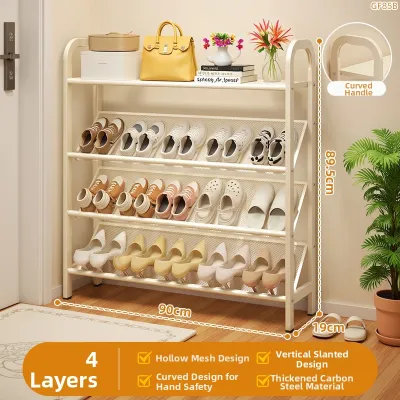
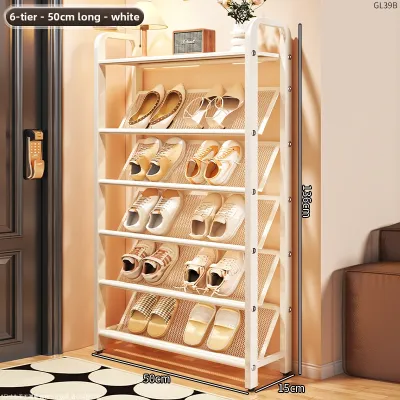
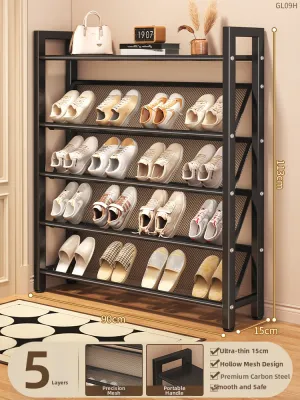
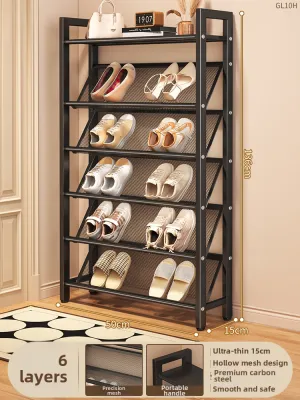
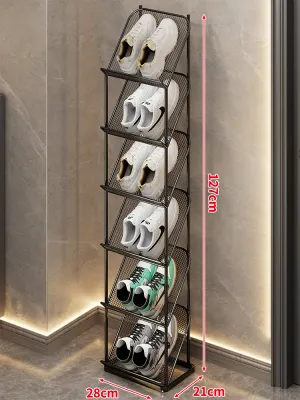
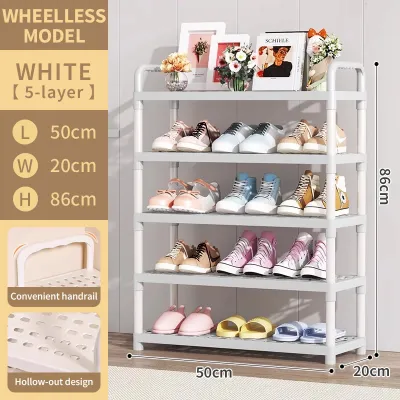
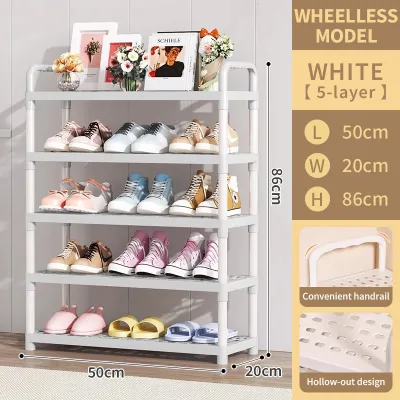
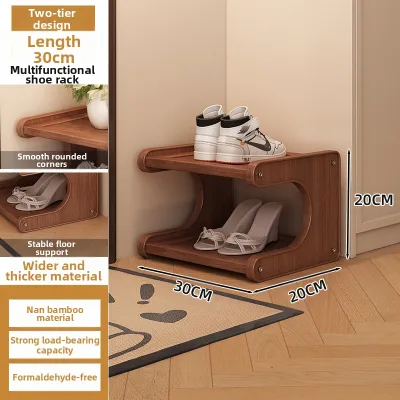
Prices are valid at publication and may change. Please refer to the product page for the latest price.
Uneven plaster, baseboards, or wall bulges can reduce your usable space by several centimeters. If your closet floor has baseboards, measure the width directly between the baseboards rather than wall-to-wall, as a flush-mounted shoe rack must sit within this narrower gap. Always record your measurements in a single unit, such as centimeters, to make direct comparisons with manufacturer specifications straightforward.
Next, identify any physical obstructions that could interfere with the rack’s placement. Look for low-hanging clothes rods, door hinges, sliding door tracks, light switches, or floor-level electrical outlets. If your closet features a vertical support post or an access panel, note its location and depth. These elements restrict where a shoe rack can stand and may limit the maximum height or width you can safely install.
Match the Rack Depth to Your Closet Interior
Slim shoe racks are specifically designed for tight spaces, typically featuring depths ranging from 15 to 30 centimeters. When comparing a product’s listed overall depth against your measured closet depth, ensure the rack will not protrude past the door frame. If you have a standard reach-in closet with a depth of 60 centimeters, a slim rack will easily fit, but you must still account for the items hanging directly above it.

Ensure the rack’s depth leaves enough clearance so that hanging coats, dresses, or shirts do not drape over the shoes and crush the fabrics. If your closet is exceptionally shallow, look for specialized slim racks with tilting compartments or slanted shelves. These designs store shoes at an angle, significantly reducing the cabinet’s physical depth while still accommodating larger shoe sizes.
Keep in mind that the listed depth of a shoe rack represents the empty frame. When fully loaded, the heels or toes of larger shoes may overhang the edges of the shelves by 2 to 5 centimeters. If you are placing the rack behind a sliding or hinged door, add this overhang estimate to the rack’s physical depth to ensure the closet doors can still close completely without pressing against your footwear.
Optimize Width and Configuration for Accessibility
To maximize your storage capacity, you must calculate how many pairs of shoes can realistically fit on each shelf tier. On average, a pair of adult shoes requires about 20 to 25 centimeters of horizontal shelf width. Divide the rack’s internal shelf width by this average to estimate the capacity per tier, keeping in mind that bulky sneakers or boots will require more lateral space than flat sandals or slippers.
Depending on your closet’s layout, you can choose between a single wide shoe rack or multiple narrow, stackable units. Stackable configurations offer excellent flexibility, allowing you to build upward if your horizontal wall space is limited. This modular approach is particularly useful if you need to leave room on one side of the closet floor for taller items like umbrellas, vacuum cleaners, or tall boots.
If your storage needs fluctuate or if you live in a rental property with non-standard closet sizes, consider an expandable or adjustable shoe rack. These units feature telescoping metal bars that let you customize the width to fit your exact closet dimensions. However, always check the manufacturer’s weight limit specifications, as fully extended racks can sag in the middle if loaded with heavy footwear.
Verify Door Clearance and Walkway Safety
An otherwise perfect shoe rack can become a daily frustration if it blocks your movement or prevents your closet doors from operating smoothly. For closets with hinged doors, map out the swing radius of the door to ensure it does not strike the corner of the shoe rack. For sliding doors, verify that the rack does not sit so close to the front track that it prevents the door panels from bypassing one another.
Walkway safety is equally important, especially in narrow hallways or compact bedrooms. You should maintain at least 60 to 90 centimeters of clear space in front of the closet so you can comfortably bend down, reach the bottom shelves, and pull out your shoes. If the space is too tight, a tilting cabinet design with front-opening compartments is often safer than a traditional pull-out drawer system.
Finally, check how the rack’s height interacts with your closet’s vertical layout. A tall, slim shoe rack must not block access to overhead shelving or interfere with the hanging rod. Because slim racks have a narrow footprint and a high center of gravity, they are prone to tipping. Verify that the top of the rack aligns with a solid wall area where you can securely install anti-tip hardware.
Common Sizing and Placement Mistakes to Avoid
One of the most common mistakes is assuming a shoe rack will fit based solely on the nominal size of the closet. Always measure the actual interior floor space, as door frames and trim can significantly reduce the entry clearance. A rack that matches the interior width perfectly might not even fit through the door opening during assembly or installation.
Another frequent oversight is ignoring the depth added by baseboards or wall moldings. If a slim shoe rack cannot sit flush against the wall because of a thick baseboard, it will be pushed forward by several centimeters. This gap not only wastes valuable floor space but also reduces the stability of the unit, making it harder to secure to the wall.
Lastly, do not forget to account for the physical space required to retrieve your shoes. Angled shelves and pull-out drawers require extra clearance above and in front of the rack. If you place a slanted rack directly beneath a low-hanging shelf, you may find it difficult to slide your hand in to grab high-top sneakers or boots without scraping your knuckles against the shelf above.
Frequently Asked Questions (FAQ)
Can I use a slim shoe rack in a walk-in closet with a center island?
Yes, but you must carefully plan the aisle clearance between the shoe rack and the center island. To maintain comfortable movement and allow two people to pass, aim for a minimum aisle width of 90 centimeters. Measure the narrowest gap between the island’s outer edge and the wall where the rack will stand, ensuring that any drawers or cabinet doors on the island can still open fully without hitting the shoe rack.
Do I need to anchor a slim shoe rack inside a closet?
Yes, anchoring is highly recommended for any slim shoe rack, especially units that are taller than 1 meter or shallower than 20 centimeters. Because of their narrow base, these racks can easily tip over when fully loaded with heavy shoes or if accidentally bumped. Check the manufacturer’s instructions and use appropriate wall anchors; for concrete or hollow block walls common in local homes, use masonry plugs and screws rather than standard drywall anchors.

Community discussion
Share your experience or ask a question. Comments are reviewed before publication.