
Selecting the ideal steel shoe cabinet capacity for your household requires a clear understanding of your family’s footwear habits and the physical limits of your living space. A steel cabinet offers excellent durability and structure, but choosing one that is too small leads to overflow, while an oversized unit can obstruct your entryway. To find the perfect balance, you must calculate your current collection, account for future purchases, and measure your space to ensure a seamless fit.
Assess Your Household's Shoe Storage Needs
To establish a baseline capacity, start by conducting a thorough inventory of every pair of shoes currently owned by your household. Gather all footwear from entryways, closets, and bedrooms to get an accurate count. It is helpful to categorize these shoes by user, as this highlights who owns the most pairs and whose collection is most likely to grow over time. If you have growing children or family members who frequently buy new footwear, factor in a buffer of at least twenty percent to accommodate future acquisitions.
Next, group the inventoried shoes by their physical height. Flat shoes, sandals, and slippers require very little vertical clearance, whereas high-top sneakers, leather work boots, and high heels need significantly more space. This categorization helps you determine whether you need a cabinet with fixed shelves or one with adjustable shelf heights. If your collection consists of diverse footwear styles, adjustable steel shelves are essential to maximize vertical space and prevent taller shoes from being bent or damaged.
Products mentioned in this guide
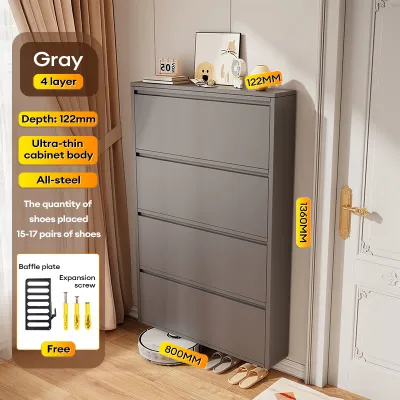
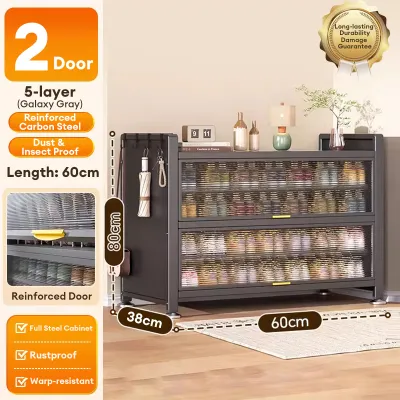
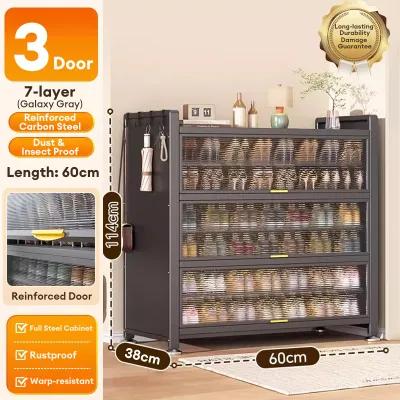
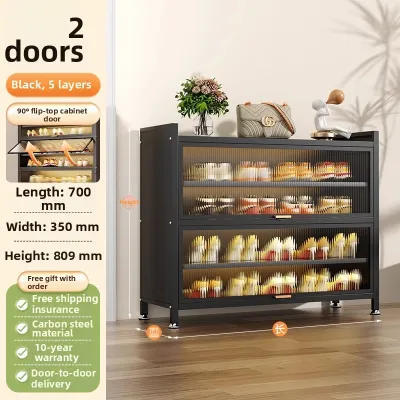
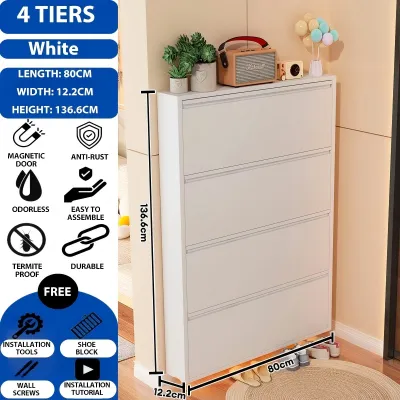
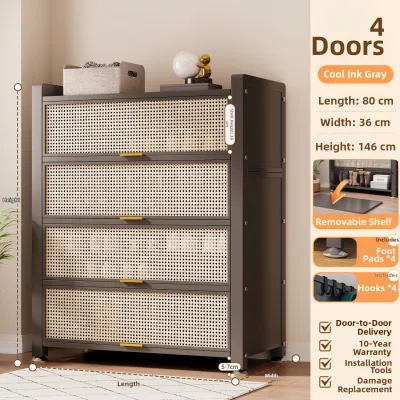
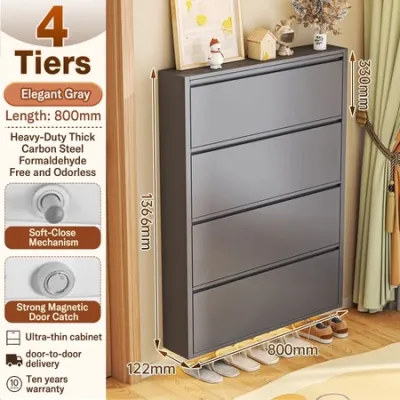
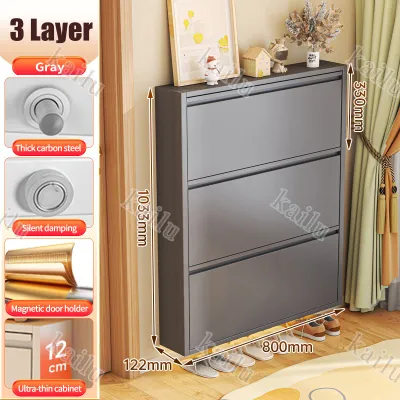
Prices are valid at publication and may change. Please refer to the product page for the latest price.
Do not forget to account for seasonal rotation, guest slippers, and occasional-use footwear. In many households, indoor slippers are kept near the door for guests, requiring dedicated, easily accessible slots. If you store out-of-season shoes or specialized sports footwear in their original boxes, measure the boxes as well. Boxed shoes occupy significantly more volume than loose pairs, which will directly impact the total capacity your steel cabinet must provide.
Match Cabinet Tiers and Dimensions to Your Space
Once you have a clear picture of your storage needs, you must reconcile this capacity with the physical dimensions of your entryway or hallway. Begin by measuring the available floor space, paying close attention to the width, depth, and height of the intended installation area. Use a high-quality measuring tape and record the maximum dimensions that the space can comfortably accommodate without blocking light switches, electrical outlets, or wall decor.

Compare different tier configurations against your wall height and the comfortable reach of your family members. A tall, multi-tier steel cabinet maximizes vertical space, making it an excellent choice for narrow entryways with high ceilings. However, ensure that the top shelves are still within a safe and comfortable reach for daily use, or reserve those higher tiers for infrequently worn items. Low-profile, wider cabinets with fewer tiers can double as a console table, but they require a larger floor footprint.
Crucially, verify the pathway width and main door clearance after the cabinet is placed. Open the main entrance door fully to ensure it does not strike the cabinet. You must also simulate daily traffic: leave enough clearance for family members to walk past the cabinet comfortably, even when the cabinet doors are fully open. If your entryway is tight, consider a steel cabinet with sliding doors or tilting drawers, which require much less clearance than traditional swing doors.
Finally, plan for the delivery and installation process. Measure your home’s entry points, including external doorways, narrow corridors, stairwells, and elevator doors. A fully assembled steel shoe cabinet can be heavy and rigid, meaning it cannot be bent around tight corners like some modular plastic organizers. Confirming these dimensions beforehand ensures the delivery team can safely transport the unit into your home without damaging your walls or the cabinet itself.
Evaluate Steel Cabinet Features for Daily Use
A steel shoe cabinet is a long-term investment, so it is vital to verify that your chosen model can handle the physical weight of your collection and withstand local environmental conditions. Start by checking the manufacturer’s specified weight limit per shelf. Heavy footwear, such as steel-toed work boots, thick-soled leather shoes, or wet-weather gear, can put significant stress on individual shelves. Ensure the steel gauge and shelf support brackets are rated to carry your heaviest pairs without bowing over time.
Ventilation is another critical factor when storing shoes in an enclosed steel space. Without proper airflow, trapped moisture from sweat or rain can lead to unpleasant odors, mold growth, and damage to delicate shoe materials. Look for steel cabinets that feature built-in ventilation solutions, such as louvers, perforated door panels, or rear ventilation mesh. These designs encourage continuous airflow, keeping your footwear dry and fresh even during humid seasons.
Additionally, inspect the surface treatment specifications of the steel. In tropical climates or coastal areas where humidity levels are consistently high, untreated or poorly finished steel is susceptible to rust. Look for cabinets with high-quality powder coatings or specialized rust-resistant finishes. A durable, moisture-resistant finish not only protects the structural integrity of the cabinet but also makes it much easier to wipe down and clean when dirty shoes leave mud or dust behind.
Common Sizing Mistakes to Avoid
One of the most frequent errors when choosing a steel shoe cabinet is ignoring baseboard thickness and uneven flooring. Many homeowners measure the wall-to-wall distance but forget that baseboards protrude from the bottom of the wall, preventing the cabinet from sitting completely flush. This gap can cause the cabinet to tilt slightly forward or take up more depth than anticipated. Always measure from the outermost edge of the baseboard rather than the bare wall, and check if the cabinet features adjustable leveling feet to compensate for uneven tiles or concrete.
Another common mistake is assuming that all shoe types will fit standard, non-adjustable shelf heights. Standard shelves are often designed with average flat shoes in mind, leaving insufficient clearance for ankle boots, high heels, or bulky athletic sneakers. Purchasing a cabinet with fixed shelves can force you to store taller shoes on their sides, which ruins their shape and wastes valuable storage space. Prioritize models that offer flexible, modular shelving systems that can be customized as your collection changes.
Lastly, do not overlook the physical constraints of your home’s access routes. Many buyers focus entirely on the final placement spot and forget to measure the path the cabinet must take to get there. If you live in a multi-story building or a home with tight staircases, a large, pre-assembled steel cabinet may not fit through the elevator or around landing corners. Always verify whether the cabinet is delivered flat-packed for home assembly or as a single, fully welded unit to avoid costly return delivery fees.
Frequently Asked Questions (FAQ)
How many pairs of shoes can a standard steel shelf hold?
The number of shoes a single steel shelf can hold depends entirely on the manufacturer’s specific dimensions and the physical width of your footwear. To determine the exact capacity, check the product label or specification sheet for the shelf’s usable width. As a general rule, a standard adult pair of shoes requires about 20 to 25 centimeters of lateral space. Bulky sneakers, wide boots, or shoes stored inside their original boxes will take up more room, reducing the total number of pairs you can fit side-by-side. Always refer to the manufacturer’s guidelines to avoid overloading the shelf beyond its weight capacity.
Should I leave extra space above the steel shoe cabinet?
Yes, leaving a clear gap above your steel shoe cabinet is highly recommended for both ventilation and ease of maintenance. In warm, humid environments, allowing air to circulate freely around the top and sides of the cabinet helps prevent moisture from condensing on the cool metal surfaces, reducing the risk of rust and mold. Additionally, if your cabinet features a top-opening lid or if you plan to use the top surface for temporary storage—such as placing keys, mail, or a small decorative tray—having adequate vertical clearance ensures you can access these items comfortably without hitting the ceiling or overhead shelving.

Community discussion
Share your experience or ask a question. Comments are reviewed before publication.