
Finding the right step stool height for your child’s study desk setup is essential for creating a comfortable, focused learning environment at home. When children sit at standard-sized desks, their feet often dangle in the air, which pulls their pelvis forward, rounds their spine, and leads to premature fatigue. A properly sized step stool acts as a solid foundation, stabilizing their posture so they can concentrate on writing, reading, and online lessons without constant wiggling.
By matching the stool’s height to your child’s leg length and the desk’s dimensions, you can prevent the physical strain that often leads to slouching and restlessness. This guide provides a practical, step-by-step approach to measuring, calculating, and selecting the ideal step stool to support your child’s ergonomic needs.
Identify If Your Child Needs a Footrest
Children rarely complain about poor ergonomics directly; instead, their discomfort manifests through observable physical habits. If you watch your child during a study session, you might notice them constantly shifting their weight, wrapping their legs around the chair frame, or sitting on their knees. These movements are natural attempts to find stability when their feet cannot reach the floor to support their upper body weight.
Products mentioned in this guide

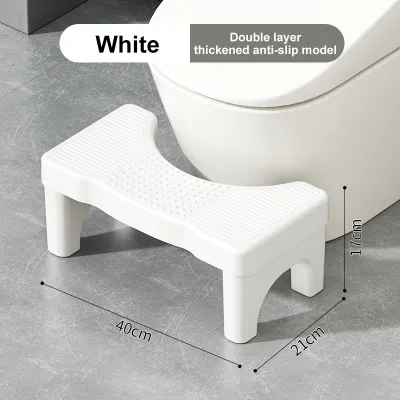
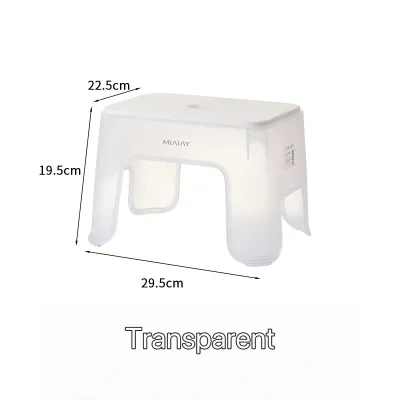
Prices are valid at publication and may change. Please refer to the product page for the latest price.
Dangling feet place continuous pressure on the back of the thighs, which can restrict blood circulation and cause a tingling sensation over time. To relieve this pressure, children often slide forward in their seats, causing their lower back to lose contact with the chair’s backrest. This slouching posture forces the neck and shoulders to work harder to keep the head upright, leading to muscle tension and a rapid drop in concentration.
Even if you invest ₱2,000 or more in a high-quality study chair, the setup will still fall short if your child’s feet cannot reach a stable surface. While many parents initially use makeshift solutions like stacked cardboard boxes, old directories, or plastic storage bins, these temporary fixes present several drawbacks. Cardboard boxes compress and deform under constant pressure, while plastic bins often slide easily across smooth tiled or wooden floors. Transitioning to a dedicated step stool provides a flat, rigid, and non-slip surface that remains securely in place, offering the reliable resistance your child’s feet need to maintain an upright posture.
Measure Your Child and the Study Desk
To determine the correct step stool height, you must gather a few precise measurements using a standard measuring tape. Begin by having your child sit on the study chair they use daily, ensuring their back is pressed firmly against the backrest. Their thighs should be fully supported by the seat pan, with a small gap of about two fingers between the back of their knees and the front edge of the seat.

While they are in this seated position, measure the distance from the floor to the back of their knee, right at the crease where the leg bends. This measurement represents their natural lower leg height. Next, measure the height of the chair’s seat pan from the floor, as well as the height of the desk surface from the floor.
If you are using an adjustable “grow-with-me” desk and chair set, note the current settings and check the manufacturer’s manual for the adjustment increments. You should also measure the seat depth of the chair; if the seat is too deep for your child’s thighs, they will not be able to sit back far enough to benefit from either the backrest or a standard step stool. Having these dimensions written down will make it much easier to calculate the exact height of the stool you need to purchase.
Calculate the Ideal Step Stool Height
The fundamental ergonomic principle for children’s seating is the “90-90-90” rule: their hips, knees, and ankles should all be bent at approximately 90-degree angles, with their feet resting completely flat on a supportive surface. To calculate the ideal step stool height, subtract your child’s lower leg measurement from the height of the chair’s seat pan when the chair is adjusted to the correct height for the desk.
For example, if your child needs the chair seat to be 45 centimeters high so their elbows can rest comfortably on the desk surface, but their lower leg measurement is only 30 centimeters, you will need a step stool that is 15 centimeters tall. This simple calculation ensures that the stool bridges the gap perfectly, allowing the feet to rest flat while keeping the knees level with or slightly below the hips.
When shopping for a step stool, you will encounter both fixed-height and adjustable models. Fixed-height wooden or plastic stools are highly stable and straightforward, but children can quickly outgrow them within a single school year. Adjustable step stools, which feature removable panels or multiple slots to change the platform height, are highly recommended because they can be lowered gradually as your child grows, saving you from buying a new stool every few months.
Before finalizing your purchase, always read the product specification sheets or assembly manuals carefully. Ensure you are looking at the actual platform height—the surface where the feet will rest—rather than the overall height of the product, which may include decorative side panels, safety rails, or carrying handles.
Evaluate Safety and Stability Features
A step stool used in a child’s study corner must be exceptionally stable to handle daily movement, shifting weight, and the occasional energetic climb. Look for a stool with a wide, flared base where the bottom footprint is significantly larger than the top platform. This design lowers the center of gravity and prevents the stool from tipping over if your child accidentally steps near the outer edge.
In tropical climates where smooth ceramic tiles, polished concrete, or laminate flooring are common, the stool must have reliable grip on the floor. Check the bottom of the stool’s legs for thick, non-slip rubber pads or silicone feet that prevent it from sliding away when your child pushes against it. The top surface of the platform should also feature a textured pattern, rubberized grip tape, or molded ridges to prevent socks or bare feet from slipping during warm afternoons.
Depending on your child’s age and coordination, you may want to consider a step stool with integrated handrails or side grab handles. For younger children, these handles provide a secure grip as they climb onto the chair, whereas older children generally do fine with a simple, low-profile platform stool.
Finally, check the manufacturer’s packaging or instruction manual for the maximum weight capacity. Even though a child’s study stool is intended primarily for sitting support, it should be sturdy enough to support their full standing weight, especially if they use it to reach books on a high shelf. Choosing a stool with a robust weight rating ensures long-term durability and peace of mind.
Test and Verify the Final Setup
Once you have selected and positioned the step stool, it is time to conduct a practical posture check to verify that the setup is working as intended. Have your child sit in their study chair with their feet resting flat on the new stool. Observe them from the side to ensure their ankles, knees, and hips are aligned comfortably, and that their shoulders remain relaxed when their hands are on the desk.
Next, have your child perform a short, 15-minute study task, such as drawing, reading, or writing. Watch their behavior closely: if they begin to slide forward, pull their feet up onto the chair seat, or push the stool away with their heels, the stool height may need a slight adjustment. A successful setup should allow them to remain seated comfortably without feeling the need to constantly shift their legs.
Keep in mind that children grow rapidly, and an ergonomic setup that works perfectly today may become uncomfortable in a few months. Make it a habit to re-evaluate the step stool height at the start of every school term or whenever you notice your child fidgeting during homework sessions. If you are using an adjustable stool, simply lower the platform by one level to accommodate their growth; if you are using a fixed stool, prepare to transition them to a lower model or remove the stool entirely once their feet can reach the floor naturally.
Frequently Asked Questions (FAQ)
Can I use a regular household step stool for a study desk?
While a standard household utility step stool might seem like an easy solution, it is rarely suitable for prolonged study sessions. Utility stools are designed for quick, vertical tasks like reaching a high kitchen cabinet, meaning they often feature narrow steps, sharp plastic edges, and highly aggressive textures meant for outdoor shoes rather than bare feet or socks.
Additionally, many household utility stools are lightweight or foldable, which makes them prone to sliding or collapsing if a child shifts their weight while concentrated on schoolwork. A dedicated study step stool provides a much wider, flat platform that supports the entire foot comfortably, with smooth edges and a heavy, stable base designed for hours of continuous use.
Should the footrest be attached to the chair?
The choice between a freestanding step stool and an attached footrest depends largely on your child’s chair and study habits. Freestanding step stools offer excellent versatility because they can be easily moved out of the way, cleaned, or used in other parts of the home, and they allow the child to stretch their legs freely during study breaks.
However, if your child’s study chair is a high-swivel model or has rolling casters, a freestanding stool can easily get pushed out of reach as the chair moves. In this scenario, an attached foot ring or a built-in footrest bar is highly beneficial, as it moves in tandem with the chair, ensuring your child always has a stable surface to rest their feet regardless of how the chair rotates.

Community discussion
Share your experience or ask a question. Comments are reviewed before publication.