
Finding the right wardrobe cabinet with drawers for a small Philippine bedroom requires balancing storage capacity with the physical limits of your floor plan. In compact urban condos, townhouses, or cozy provincial homes, a poorly chosen wardrobe can quickly make a room feel cramped and difficult to navigate. The ideal configuration is one that maximizes vertical space, utilizes smart door mechanisms, and consolidates different storage types to eliminate the need for extra freestanding furniture.
By choosing a wardrobe that combines hanging rods with built-in drawers, you address two distinct storage needs in a single footprint. This setup keeps your delicate garments wrinkle-free while providing organized compartments for folded clothes, activewear, and daily essentials. To find the configuration that fits your specific space, you must focus on precise measurements, internal layouts, door styles, and material durability suited to the local climate.
Measure Your Space and Clearances First
Before browsing local furniture showrooms or online catalogs, you must establish a reliable baseline using a physical measuring tape. Relying on general assumptions about what constitutes a “small” wardrobe is a common mistake that often leads to layout frustration. Start by measuring the exact width, height, and depth of the wall space where you plan to position the cabinet.
Products mentioned in this guide
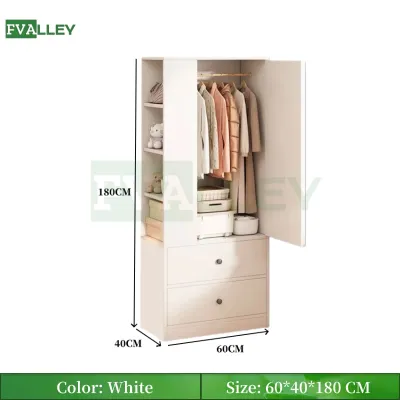
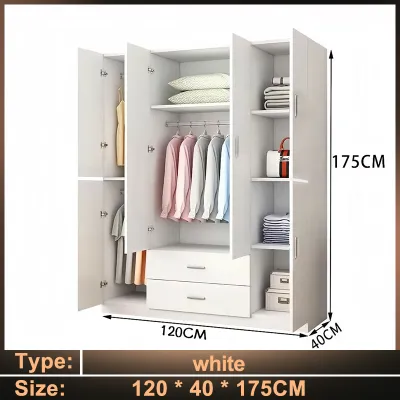
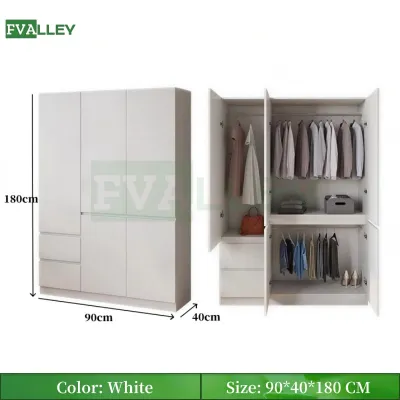
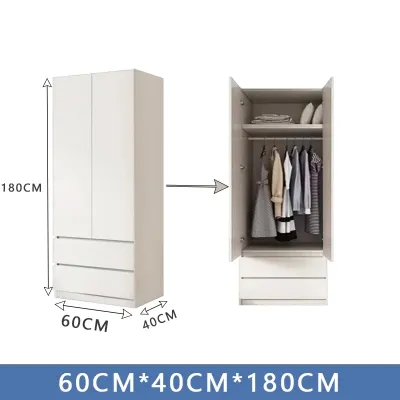
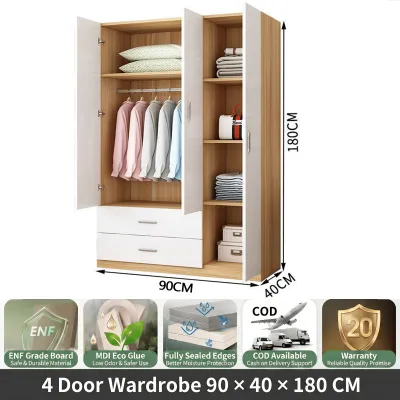
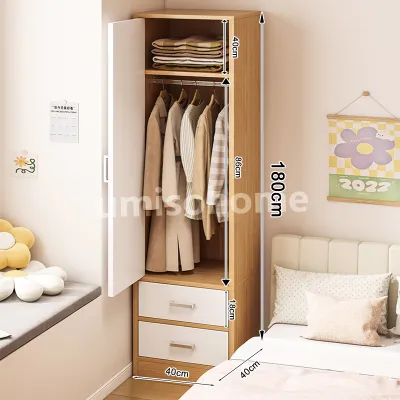
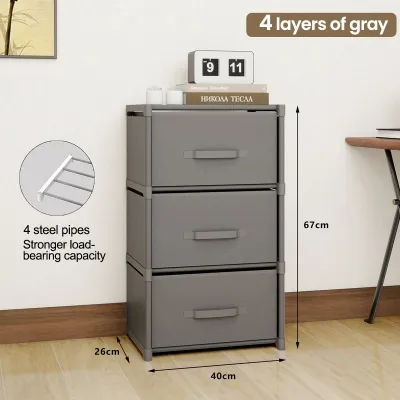
Prices are valid at publication and may change. Please refer to the product page for the latest price.
When measuring, look beyond the open wall surface and account for architectural details that can interfere with installation. Take note of baseboards, window sills, electrical outlets, light switches, and wall moldings. A wardrobe pushed against a wall might be blocked by a protruding baseboard, leaving an unsightly gap, or it could completely cover an active power outlet, creating a safety hazard and rendering the outlet useless.
Calculating physical clearance is just as critical as measuring the cabinet’s static footprint. You must ensure that hinged doors can swing open fully and that drawers can extend to their maximum length without colliding with your bed frame, study desk, or other bedroom items. To do this, measure the distance from the front of the wardrobe’s proposed position to the nearest piece of furniture, ensuring there is enough room left for you to stand comfortably in front of an open drawer.
Finally, plan the delivery and assembly path from your home’s entrance to the bedroom. Measure the width and height of front doors, hallway corners, stairwells, and condo elevator doors. If you purchase a pre-assembled wardrobe, it must be able to clear these tight turns; if you choose a flat-pack unit, ensure the individual packaging boxes can be safely carried through these passages without damaging your walls or the furniture itself.
Best Wardrobe Configurations with Drawers for Compact Spaces
Different lifestyles require different internal storage ratios. Choosing the right configuration depends on whether you hang most of your clothes or prefer to fold them.

Full-Length Hanging with Bottom Drawers
This layout is highly optimized for individuals who wear long garments regularly. If your wardrobe consists of long dresses, formal barongs, corporate trousers, or lightweight coats, you need a configuration that offers maximum vertical hanging space.
In this setup, a high hanging rod runs across the width of the cabinet, leaving the lower section open for two or three wide drawers. Placing the drawers at the bottom utilizes the naturally empty space below the hemlines of your hanging clothes. This configuration keeps your daily essentials, such as undergarments, socks, and folded t-shirts, easily accessible at waist level or below, while keeping your longer garments free from creases.
Half-Hanging with Stacked Drawers
If your daily wardrobe consists primarily of casual wear, folded t-shirts, activewear, and shorts, a half-hanging configuration is a highly efficient use of space. This layout divides the wardrobe vertically or horizontally to limit hanging space in favor of more drawer storage.
By utilizing a shorter hanging rod—which is perfectly adequate for shirts, blouses, and folded trousers—you free up a significant amount of vertical space. This extra space is filled with a taller stack of four or five drawers. This configuration acts as a hybrid wardrobe and chest of drawers, allowing you to organize a large volume of folded clothing within a very narrow footprint, keeping your bedroom floor clear of extra storage units.
Sliding Doors vs. Hinged Doors
Choosing the right door mechanism is a critical decision that directly affects how much usable floor space remains in your bedroom. The two primary options have distinct spatial requirements that dictate where the wardrobe can be placed.
- Sliding Doors: These doors glide horizontally along a track, requiring zero front clearance to open. This makes sliding door wardrobes the superior choice for narrow bedrooms where the cabinet must sit close to the side of the bed or a walkway. The main trade-off is that sliding doors only allow you to view one side of the wardrobe's interior at a time.
- Hinged Doors: These doors swing outward into the room, offering complete, simultaneous visibility of the entire wardrobe interior. However, they require at least 50 to 60 centimeters of clear swing space in front of the cabinet. In a compact room, an open hinged door can completely block the walkway or collide with nearby furniture, making daily use inconvenient.
Strategies to Maximize Storage Without Overwhelming the Room
A large, dark wardrobe can easily dominate a small bedroom, making it feel cramped and dark. To prevent this, you can apply several design and organizational strategies to maximize storage capacity while keeping the room’s visual weight light.
First, utilize your bedroom’s vertical space by selecting a taller cabinet that reaches near the ceiling. While the very top shelves may be difficult to reach daily, they provide excellent storage for seasonal bedding, travel bags, or items you only use occasionally. This keeps clutter out of your primary living zones and makes the ceiling appear higher.
Second, optimize the interior of your drawers to prevent wasted space. Deep drawers can easily become cluttered, leading to lost items and unused volume. Incorporate modular drawer organizers, shallow trays, or fabric bins to categorize your clothes. This allows you to stack items vertically or use file-folding methods, ensuring every cubic centimeter of drawer space is utilized efficiently.
Third, consider the visual impact of the wardrobe’s exterior. Light-colored finishes, such as soft whites, light oaks, or matte beige tones, reflect natural light and help the cabinet blend into the walls. Incorporating mirrored doors is another highly effective technique; the mirrors reflect the room’s natural light, visually doubling the perception of space in a compact bedroom.
Finally, pay attention to the hardware profile. Wardrobes with integrated J-pull handles, recessed grooves, or push-to-open mechanisms offer a completely flat, sleek exterior. Eliminating protruding metal handles prevents you from accidentally bumping into them or snagging your clothes as you navigate tight walkways around the bed.
Material and Climate Checks for Philippine Homes
The tropical climate in the Philippines presents unique challenges for wooden furniture. High humidity levels, especially during the wet season, can cause low-quality materials to deteriorate quickly if they are not selected and maintained properly.
When purchasing a wardrobe, check the manufacturer’s specifications and product labels for moisture-resistant treatments. Look for high-density boards with sealed edge banding or protective laminate finishes. Sealed edges are critical because they prevent humid air from penetrating the core material, which can cause swelling, warping, or peeling over time. Avoid untreated, raw particleboard units in highly humid areas.
Inspect the drawer slide mechanisms closely before buying. Look for metal slides with rust-resistant coatings, such as powder-coated steel, or high-quality nylon wheels. Untreated metal runners can quickly rust in humid coastal or urban environments, causing the drawers to stick, squeak, or become completely jammed.
Proper ventilation is essential for preventing mold and mildew growth inside your wardrobe. When positioning your cabinet, leave a small gap of approximately 2 to 5 centimeters between the back of the wardrobe and the wall, as recommended by many manufacturers. This gap allows air to circulate, preventing moisture from getting trapped against the wall and transferring to your clothes.
Additionally, always verify the weight capacity of the drawers. Heavy textiles like thick denim, canvas bags, or heavy cotton towels can put significant stress on drawer bottoms. Check the product documentation to ensure you do not exceed the recommended weight limits, which can cause the drawer tracks to sag or detach.
Common Sizing and Placement Mistakes to Avoid
To ensure your new wardrobe cabinet functions seamlessly, avoid these common placement and sizing errors during your planning phase:
- Blocking Airflow and Fixtures: Always check the height of your wardrobe against wall-mounted fixtures. A tall cabinet placed directly beneath a split-type air conditioner can block the downward airflow, reducing the cooling efficiency of the unit. Similarly, ensure the top corner of the wardrobe does not interfere with the rotating blades of a ceiling fan.
- Ignoring Drawer Extension Depth: It is easy to forget that a drawer's physical depth doubles when it is fully pulled out. If you place the wardrobe too close to your bed frame, you may find it impossible to open the bottom drawers fully, or you may have to squeeze into a tight, uncomfortable angle just to reach your clothes.
- Disregarding Safety Anchors: Tall, narrow wardrobes with heavy bottom drawers can become top-heavy when multiple drawers are pulled out at once. For safety, always anchor the cabinet securely to the wall using the manufacturer-provided anti-tip hardware, especially if you have children or pets in the home.
- Neglecting Access Point Dimensions: Never buy a wardrobe based solely on bedroom measurements without verifying how it will get there. Large, pre-assembled cabinets can easily get stuck in tight stairwell turns or fail to fit inside standard condominium service elevators, leaving you with an expensive return process.
Frequently Asked Questions (FAQ)
Can I add drawers to an existing wardrobe cabinet?
Yes, you can add drawers to an existing wardrobe, but you must first verify the cabinet’s internal width, depth, and structural integrity. If the cabinet walls are strong enough, you can install aftermarket metal drawer runners and custom wood drawers. If the wardrobe’s material cannot support drilling or heavy tracks, using freestanding plastic drawer units or fabric drawer inserts is a safer, non-destructive alternative. Always check the manufacturer’s warranty guidelines before making any permanent structural modifications.
What is the standard depth for a wardrobe with drawers?
The standard depth for a wardrobe cabinet typically ranges between 50 and 60 centimeters. This depth is designed to accommodate standard adult clothes hangers comfortably without forcing the doors to press against your clothes, while also providing sufficient depth for standard drawer glide mechanisms. However, exact dimensions vary significantly by brand and design. Always check the manufacturer’s product label or specification sheet to verify the precise external and internal dimensions before making your purchase.

Community discussion
Share your experience or ask a question. Comments are reviewed before publication.