
Finding the perfect wardrobe is not just about choosing an attractive piece of furniture; it is about balancing your daily routines, bedroom dimensions, and storage needs. To determine exactly what type of wardrobe you need, you must evaluate your physical room constraints, audit your clothing collection, and understand how different door mechanisms interact with your floor plan. In the Philippines, where bedroom layouts vary from compact high-rise condominiums to spacious suburban homes, selecting the right storage system—often referred to as a clothing kabinet—requires a methodical approach to ensure both functionality and long-term durability.
Diagnose Your Bedroom Space and Door Clearances for Your Kabinet
Before browsing online catalogs or visiting showrooms, you must establish the physical boundaries of your bedroom. Start by measuring the designated wall where the unit will stand. Use a metal measuring tape to record the exact width of the wall, the height from the floor to the ceiling, and the available depth. When measuring depth, be mindful of how far the wardrobe can protrude into the room without blocking light switches, electrical outlets, or window frames. It is a common mistake to measure only the floor area; older homes or units with architectural details may have uneven walls or bulkheads that reduce the actual usable space at higher points.
Next, evaluate the door swing clearances. If you are considering a traditional hinged or swing-door cabinet, you must ensure that the doors can open to a full 90-degree angle (and ideally 110 degrees) without striking your bed frame, bedside tables, or the bedroom’s main entry door. A standard swing door requires at least 50 to 60 centimeters of clear, unobstructed floor space in front of the wardrobe just to open. If your bed is positioned close to the wall, this clearance zone is compromised, which can make accessing your clothes a daily frustration.
Products mentioned in this guide
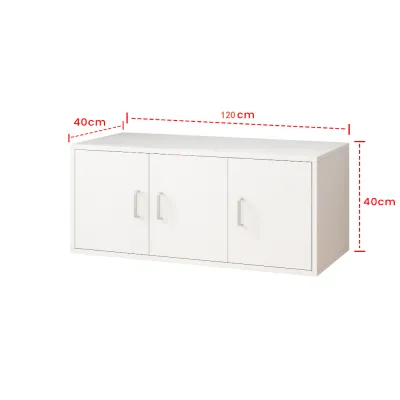
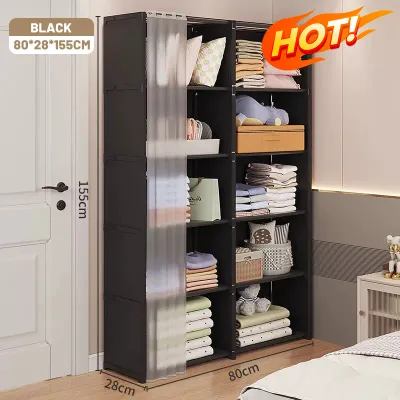
Prices are valid at publication and may change. Please refer to the product page for the latest price.
You must also account for ceiling and floor obstructions. Look upward to check for ceiling fans, air conditioning units, light fixtures, or decorative bulkheads that might interfere with a tall wardrobe’s placement or door operation. On the floor, check for thick baseboards or uneven tiles that could prevent a heavy freestanding unit from sitting flush against the wall. A gap behind a wardrobe not only collects dust but can also compromise the stability of the entire structure.
Finally, consider the room’s natural light and traffic flow. A massive, dark-colored wardrobe positioned directly opposite a window can block natural light, making a small bedroom feel cramped and gloomy. Ensure there is a clear pathway of at least 70 to 80 centimeters for daily movement around the room, allowing you to walk comfortably even when the wardrobe is in use.
Audit Your Clothing Volume and Daily Habits
Once you have mapped out your physical space, turn your attention inward to what you actually store. A wardrobe must be tailored to your wardrobe habits, not the other way around. Begin by categorizing your clothing volume. Take an honest inventory of your clothes and estimate the ratio of hanging space to folded space you require. If your wardrobe consists primarily of long dresses, formal suits, or delicate fabrics that crease easily, you will need a configuration dominated by tall hanging rods. Conversely, if your daily wear consists mostly of t-shirts, jeans, activewear, and knitwear, you will benefit more from a system rich in shelves, cubbies, and internal drawers.

Do not forget to plan for accessories, footwear, and bulky items. Standard wardrobes often neglect the storage of non-clothing items, leading to cluttered bedrooms. If you plan to store shoes, bags, jewelry, or bulky seasonal items like extra bedding and travel luggage, look for units with specialized compartments. Top shelves are excellent for storing rarely used suitcases or thick blankets, while lower pull-out drawers or integrated shoe racks keep daily essentials organized and off the bedroom floor.
Your daily usage habits also dictate the best wardrobe structure. Consider who will be using the wardrobe and when. If two people share a single closet and get dressed at the same time in the morning, a multi-door setup that allows simultaneous access to different sections is crucial. A single-door or narrow sliding system can create a bottleneck, causing unnecessary delays during busy morning routines.
In the tropical climate of the Philippines, high humidity is a constant factor that can ruin garments. When auditing your storage needs, you must factor in adequate air circulation. Packed closets trap moisture, leading to mold, mildew, and musty odors on fabrics. Plan for a slightly larger wardrobe than your current collection requires to avoid overstuffing, and leave dedicated space on shelves or hanging rods for disposable moisture absorbers or hanging dehumidifier bags to protect your investment.
Match Your Profile to the Ideal Wardrobe Type
With your spatial measurements and clothing audit complete, you can now match your profile to one of the three primary wardrobe configurations. Each type offers distinct spatial advantages and mechanical trade-offs that directly affect your daily convenience.
Sliding Door Wardrobes for Compact Rooms
Sliding door wardrobes are the premier choice for modern, space-conscious living, particularly in compact urban apartments and condominiums. If your bedroom layout forces you to place the bed within arm’s reach of the wardrobe wall, a sliding door system is often the only viable option. Because the doors glide horizontally within a dedicated track frame, they require zero front clearance to open. This allows you to utilize every square inch of your bedroom floor without worrying about door collisions.
However, sliding doors come with specific operational trade-offs. Because the doors overlap, you can only access one side of the wardrobe interior at any given time. This can be inconvenient if two people are trying to share the closet simultaneously. Additionally, the bottom tracks are natural dust traps. In humid environments, accumulated dust mixed with moisture can clog the rollers, leading to stiff operation or derailment. To maintain smooth gliding, you must commit to regular vacuuming and cleaning of the floor tracks.
Swing Door Wardrobes for Easy Access and Wide Rooms
Traditional swing or hinged door wardrobes remain highly popular for bedrooms with more generous floor plans. If your room has at least 60 centimeters of clear space in front of the wardrobe, a swing door system offers unmatched accessibility. Opening all the doors at once gives you a complete, unobstructed view of your entire clothing collection, making coordinating outfits much easier. It also allows multiple people to access different compartments of the closet at the same time without getting in each other’s way.
From a maintenance perspective, hinged doors are exceptionally reliable and straightforward. The hinges are easy to clean, adjust, and lubricate compared to sliding tracks. Over years of use, heavy doors may sag slightly, but this can usually be corrected with a simple screwdriver adjustment on the hinge plates. The primary limitation is purely spatial: you must ensure the door sweep does not block primary traffic paths or collide with other bedroom furniture.
Walk-In Closets for Large Collections and Spacious Layouts
If you have a spacious master bedroom, a spare room, or a large alcove that can be partitioned, a walk-in closet represents the ultimate storage solution. This layout is ideal for homeowners with extensive clothing collections who view dressing as an experience rather than a chore. Walk-in closets allow for highly customized internal configurations, combining open hanging rods, display shelves for bags and shoes, and central island drawers for accessories.
Executing a successful walk-in closet requires meticulous environmental planning, especially in tropical climates. Because walk-in spaces are often enclosed and lack large windows, they are highly susceptible to trapping humidity and developing musty odors. You must install proper ventilation, such as an exhaust fan or a dedicated dehumidifier, alongside carefully planned LED lighting to ensure every corner is visible. Without these measures, open-shelved clothing can easily accumulate dust and moisture damage.
Verify Delivery Paths and Installation Requirements
Before finalizing your purchase of any wardrobe, you must verify that the physical unit can actually reach its designated spot in your home. Many buyers focus entirely on the bedroom’s dimensions and forget to measure the delivery path. A massive freestanding wardrobe or a flat-packed system with exceptionally long side panels must be able to navigate the entire journey from the delivery truck to your bedroom. Measure the height and width of your building’s main entrance, elevator doors, stairwell turns, and all interior doorways. If you live in a high-rise condominium, check the property management’s elevator weight and height restrictions to avoid costly delivery failures.
Once the unit arrives, the installation environment must be carefully prepared. Floor leveling is a critical factor that is frequently overlooked. If your bedroom floor has a slight slope or uneven tiles—common in both older homes and rapid-construction developments—it can severely affect the wardrobe’s functionality. For sliding door systems, an uneven floor can cause the doors to slide open on their own or bind in the tracks. For swing door units, a tilted base prevents the doors from aligning properly, leaving unsightly gaps or causing the doors to scrape against the frame. Use a spirit level to check the floor beforehand; you may need to use shims or adjustable leveling feet to ensure the unit is perfectly plumb.
Finally, prioritize safety and structural stability. Tall, heavy wardrobes pose a serious tip-over hazard, particularly in households with active children or pets. Freestanding wardrobes over 120 centimeters in height must be securely anchored to the wall. Before mounting, verify your wall type. Concrete or solid masonry walls require heavy-duty wall plugs and masonry drill bits, while drywall installations require finding the wooden studs or using specialized hollow-wall anchors. Always consult the manufacturer’s care instructions and assembly manual, and if you are uncertain about your wall’s load-bearing capacity, consult a professional installer to ensure the wardrobe is anchored safely.
Frequently Asked Questions (FAQ)
Can I convert a swing door wardrobe to a sliding door later?
Converting an existing swing door wardrobe into a sliding door system is rarely practical or cost-effective. The structural frames, depth requirements, and door tracking mechanisms of the two systems are fundamentally different. Sliding doors require a wider outer frame to accommodate the depth of the tracks (typically an extra 8 to 10 centimeters), which standard swing door frames do not have. Attempting a conversion usually requires rebuilding the entire front casing, making it more sensible to invest in a purpose-built sliding unit from the start.
How much depth does a standard wardrobe need for hanging clothes?
To hang standard adult clothing comfortably without crushing the sleeves or shoulders, a wardrobe requires a minimum internal depth of 55 to 60 centimeters. If the internal depth is shallower than 55 centimeters, standard clothes hangers will sit at an angle, causing your garments to rub against the back panel and the closed doors. This friction can damage delicate fabrics over time and make the doors difficult to close. If you are extremely tight on space and must use a shallower cabinet, consider using pull-out parallel hanging rods instead of a traditional transverse rod.

Community discussion
Share your experience or ask a question. Comments are reviewed before publication.