
Choosing the right wooden wall organizer for your home study is a balancing act between spatial limits, storage requirements, and structural safety. A well-chosen organizer transforms a cluttered desk into a streamlined workspace, keeping your essential reference books, stationery, and documents within arm’s reach. However, selecting a unit involves much more than finding a design that matches your existing office furniture. In tropical climates like the Philippines, where high humidity and temperature fluctuations can affect both wood stability and wall integrity, making an informed decision requires a systematic approach. By carefully evaluating your study room’s physical layout, checking manufacturer specifications, inspecting material finishes, and understanding secure mounting methods, you can select an organizer that is both beautiful and safe.
Before browsing online marketplaces or visiting local furniture showrooms, it is essential to establish a clear plan. A wall organizer is a semi-permanent addition to your study, meaning mistakes in measurement or weight calculation can lead to damaged walls, sagging shelves, or even safety hazards. This guide provides a comprehensive framework to help you assess your space, decode product specifications, evaluate wood quality, and choose the correct installation method for your specific wall type.
Assess Your Study Room Space and Storage Needs
The first step in your selection journey is to thoroughly evaluate the physical space where you plan to mount the organizer. Begin by using a metal tape measure to record the exact width, height, and depth of the available wall area. Do not rely on visual estimates, as even a few millimeters of error can prevent a pre-assembled unit from fitting into its designated spot. Be sure to check for potential obstructions such as window frames, door swings, light switches, electrical outlets, and existing furniture like your desk or office chair.
Products mentioned in this guide
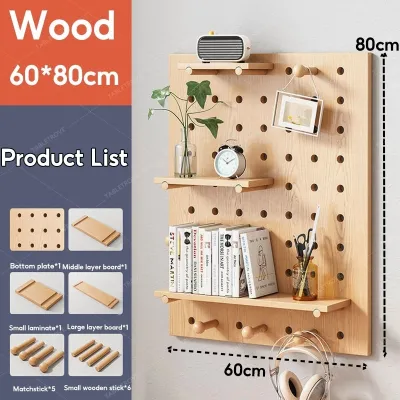
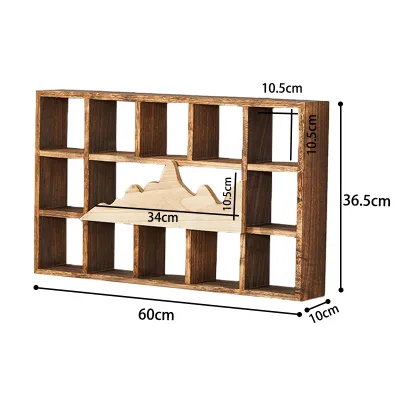
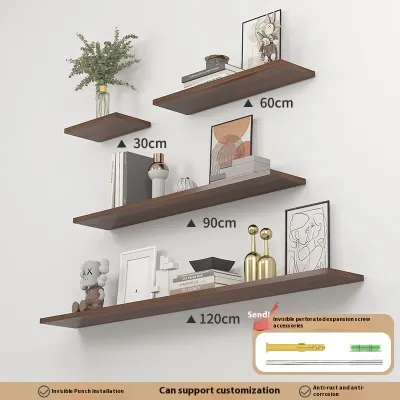
Prices are valid at publication and may change. Please refer to the product page for the latest price.
Next, analyze how the depth of the organizer will impact the room’s overall flow and traffic patterns. A shelf that protrudes too far from the wall can make a small study feel cramped and may obstruct your movement when you stand up or slide your chair back. For narrow rooms, look for low-profile designs with a shallow depth that keep the walkway clear. Ensure there is comfortable clearance between the bottom of the organizer and the top of your desk to prevent you from bumping your head while working.
Once you have mapped out the physical space, create a detailed inventory of the items you intend to store. Group these items into categories based on their weight and size, such as heavy reference books, lightweight notebooks, small stationery items, and decorative pieces. This inventory will serve as your baseline for determining the load capacity and shelf depth you require. For example, standard binders and textbooks require deeper, more robust shelving than small pen cups or decorative frames.
Finally, consider the visual footprint of the organizer within your study’s design scheme. A massive, dark wood unit can dominate a small room and make it feel dark, whereas a lighter wood tone or an open-frame modular system can make the space feel more open and airy. Think about whether you prefer open shelving for quick access to active projects, or closed compartments to hide visual clutter and protect sensitive documents from dust and humidity.
Key Specifications to Check Before Buying
When reviewing product listings on an online marketplace or in a catalog, you must carefully verify the overall dimensions of the unit. Check the exact width, height, and depth listed in the product specifications to ensure they align with your wall measurements. Pay close attention to the internal depth of the shelves; some organizers have a wide outer frame but narrow internal shelves, which can prevent standard-sized books or binders from sitting flat without overhanging the edges.

Weight capacity is one of the most critical safety specifications to verify before making a purchase. Manufacturers typically list two weight limits: the maximum capacity per individual shelf and the total weight capacity for the entire unit. Never exceed these limits, as overloading a wall organizer can cause the shelves to sag, the joints to fail, or the entire unit to pull away from the wall. If a product listing does not clearly state these weight limits, contact the manufacturer or seller to verify them before buying.
Review the spacing between shelves and check whether the unit offers adjustable height options. Fixed shelves limit your storage flexibility, forcing you to store tall books horizontally or find alternative storage for oversized items. Organizers with pre-drilled holes and adjustable shelf pins allow you to customize the vertical layout as your storage needs change over time. If you choose a modular pegboard or track system, verify that the individual components can be locked securely into place.
Additionally, consider the assembly conditions and delivery requirements of the organizer. Some wooden wall organizers are delivered fully assembled, which ensures structural integrity but may require a larger doorway or lift clearance during delivery. Others arrive flat-packed and require self-assembly. If you choose a flat-packed unit, review the assembly instructions to ensure you have the necessary tools, such as a level, screwdriver, and drill, and that you can comfortably complete the installation process.
Evaluating Wood Materials and Surface Finishes
Understanding the differences between wood materials is essential for predicting how your organizer will perform over time, particularly in humid environments. Solid wood, such as mahogany, pine, or rubberwood, offers exceptional strength, natural beauty, and long-term durability. However, solid wood is also heavier, which increases the load on your wall, and it can expand or contract with seasonal humidity changes. If you select solid wood, look for kiln-dried options, which are more stable and less prone to warping.
Engineered wood products, such as plywood, medium-density fiberboard (MDF), and particleboard, are common alternatives that offer different balances of cost and performance. High-quality plywood consists of layered wood veneers, providing excellent resistance to warping and a high strength-to-weight ratio. MDF and particleboard are highly uniform and budget-friendly, but they are more susceptible to moisture damage. When evaluating MDF or particleboard organizers, inspect the edge banding closely; high-quality, sealed edges are vital to prevent humidity from penetrating the core material and causing it to swell or crumble.
The surface finish of the organizer plays a major role in its scratch resistance, maintenance, and longevity. Common finishes include natural wood veneers, melamine laminates, and protective paints or lacquers. In tropical climates, a high-quality polyurethane or lacquer finish helps seal the wood against moisture and makes it easier to clean. Check the product description for details on the finish, and look for options that are rated as scratch-resistant if you plan to slide heavy binders or metal organizers across the shelves.
Always review the manufacturer’s care instructions rather than assuming a material’s performance based solely on its name. A material labeled as “hardwood” can still suffer from water damage or fading if exposed to direct sunlight or improper cleaning agents. Look for specific guidelines regarding environmental limits, such as avoiding placement directly beneath an air conditioning unit or in direct path of intense afternoon sun, which can dry out the wood and cause the finish to crack.
Installation Methods and Wall Compatibility
A wooden wall organizer is only as secure as its mounting system, making wall compatibility a primary safety consideration. Before purchasing, identify the mounting hardware required for the unit. Common systems include concealed keyhole brackets for a floating look, heavy-duty L-brackets that support the shelf from underneath, and French cleat systems that distribute weight evenly across a wide horizontal span. Verify whether the necessary mounting hardware, screws, and wall plugs are included in the package.
You must match the mounting hardware and installation method to your specific wall structure. In many homes in the Philippines, walls are constructed from solid concrete, hollow concrete blocks, or masonry. Installing an organizer on these walls requires a hammer drill, masonry drill bits, and heavy-duty plastic or metal wall plugs. If your study has drywall partition walls, you must locate the wooden or metal wall studs using a stud finder and anchor the organizer’s main brackets directly into them to support heavy loads.
Using drywall anchors without securing the unit to studs is only acceptable for very lightweight, decorative organizers. If you must use anchors, ensure they are specifically rated for the weight of both the organizer and its intended contents. Never guess the weight capacity of your wall or the hardware. If you are unsure of your wall’s composition, cannot locate the studs, or if the organizer is exceptionally heavy, stop the installation and consult a qualified carpenter or professional handyman to ensure a safe and secure mount.
Proper leveling during installation is crucial for both aesthetics and safety. An unlevel shelf causes items to slide, placing uneven stress on the mounting brackets and wall anchors over time. Always use a spirit level or a digital leveling app during the installation process to mark your drill holes accurately. Double-check your measurements before drilling, and ensure that all screws are driven straight and flush against the brackets to prevent any wobbling or instability.
Building Your Shortlist: Matching Features to Use Cases
To narrow down your options and create a practical shortlist, match the organizer’s features to your primary daily activities in the home study. If your study is filled with heavy reference books, academic journals, or thick binders, prioritize structural strength above all else. Look for organizers made from solid wood or thick plywood, featuring robust L-brackets or French cleat mounting systems, and high weight ratings. Avoid thin MDF shelves that may sag under the weight of heavy volumes over time.
If your storage needs are focused on display items, lightweight stationery, and quick-access notes, you can prioritize aesthetic flexibility and modularity. A wooden pegboard organizer with adjustable shelves, pegs, and small hanging bins is an excellent choice for creative work, allowing you to reposition components as your projects change. For these lightweight setups, floating shelves with concealed brackets offer a clean, minimalist look that keeps your desk surface completely clear.
For a mixed-use home office where you handle both active paperwork and long-term storage, look for a versatile organizer that combines different storage types. A unit with a mix of open shelves for active files, closed drawers or cabinets to conceal clutter, and integrated hooks for cables or headphones can help you maintain an organized and productive workspace. Some advanced modular systems even feature integrated fold-down desk surfaces, which are ideal for maximizing space in compact study rooms.
As you finalize your shortlist, compare the care requirements, installation complexity, and physical dimensions of your top choices. Ensure that the model you select fits comfortably within your budget while meeting all your safety and structural requirements. By focusing on verified specifications, quality materials, and secure installation methods, you can choose a wooden wall organizer that enhances your productivity and serves as a durable, beautiful feature in your home study for years to come.
Frequently Asked Questions (FAQ)
How do I clean and maintain a wooden wall shelf?
To keep your wooden wall organizer looking its best, dust it regularly with a soft, dry microfiber cloth to remove dust and prevent surface scratches. Always check the manufacturer’s manual or product label for approved cleaning agents, and avoid using harsh chemical sprays, abrasive pads, or wax polishes unless specifically recommended. Wipe up any liquid spills or condensation immediately with a dry cloth to prevent water spots, warping, or damage to the protective finish, especially in humid tropical environments.
Can I install a wooden wall organizer on a drywall partition?
Yes, you can install a wooden wall organizer on a drywall partition, but you must take specific safety precautions. For heavy loads like books or office equipment, you must locate the wall studs using a stud finder and screw the mounting brackets directly into them. If you are storing only lightweight items and cannot align the brackets with studs, use high-quality, heavy-duty drywall anchors rated for the specific load. Always check the total weight of the organizer and its contents against the drywall’s rated capacity, and consult a professional installer if you are unsure of the wall’s strength.

Community discussion
Share your experience or ask a question. Comments are reviewed before publication.