
Configuring the internal layout of a wardrobe cabinet is the most effective way to double your usable storage space and keep your daily wear organized. To achieve maximum organization, you must design a system tailored to your specific clothing inventory, balance hanging and folded storage zones, and optimize the layout for local environmental conditions. A well-structured interior ensures that every shirt, dress, and accessory has a designated spot, making your morning routine seamless and preserving the condition of your garments.
Assess Your Cabinet Dimensions and Clothing Inventory
Before purchasing any storage accessories or moving shelves, you must accurately measure the internal dimensions of your wardrobe cabinet. Use a steel measuring tape to record the interior width, height, and depth. When measuring the depth, pay close attention to the clear depth, which is the actual space available between the back panel and the inside of the closed doors. Sliding doors, door hinges, and magnetic catches can easily reduce this usable depth by several centimeters, which may prevent standard hangers from fitting comfortably if not accounted for.
Next, perform a comprehensive audit of your clothing inventory. Lay out your garments and group them into distinct categories based on how they should be stored. Group long hanging items like dresses, long coats, and traditional barongs together. Separate short hanging items such as button-down shirts, blouses, and folded-over trousers. Gather folded items like denim jeans, cotton t-shirts, and knitwear into another pile. Finally, collect small accessories, including underwear, socks, belts, ties, and jewelry. This audit gives you a clear picture of exactly how much linear hanging space and how many shelves or drawers you actually need.
Products mentioned in this guide
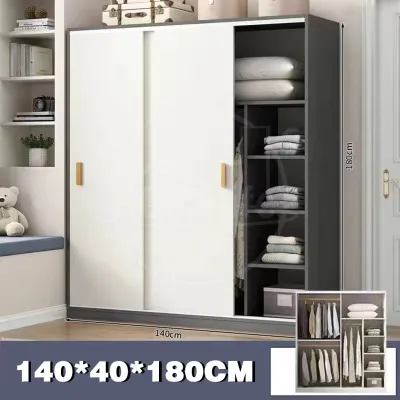
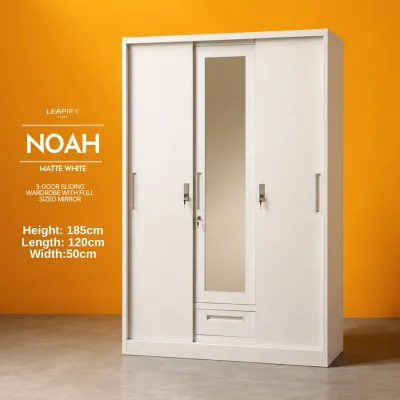
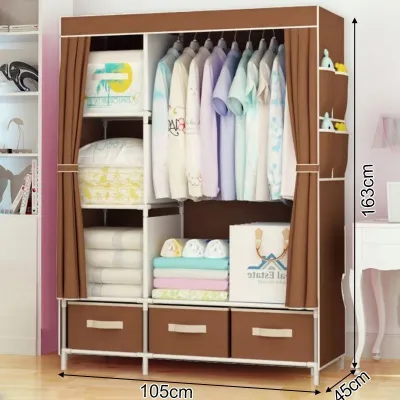
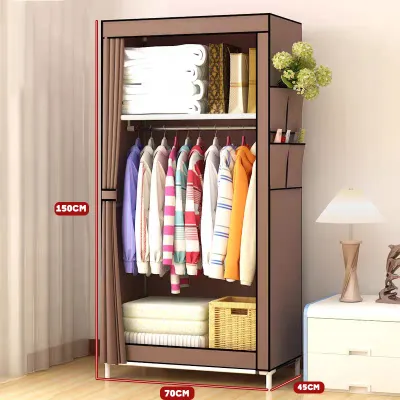
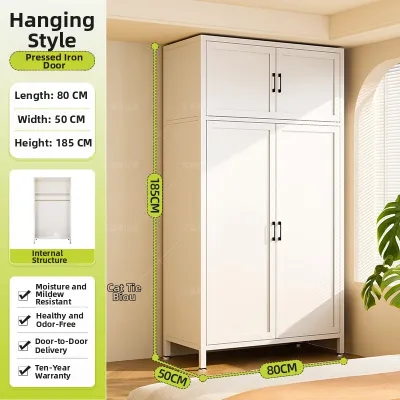
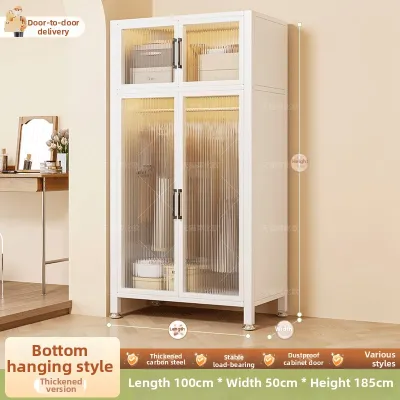
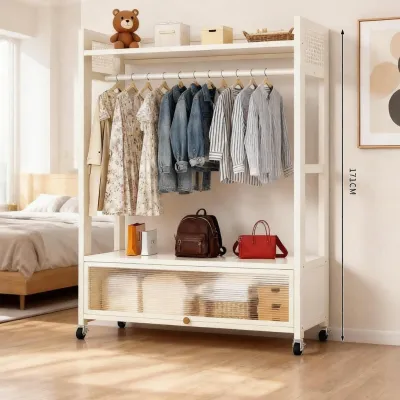
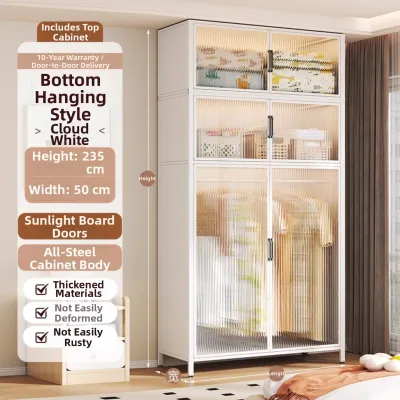
Prices are valid at publication and may change. Please refer to the product page for the latest price.
With your measurements and inventory in hand, identify the primary pain points of your current setup. Look for wasted vertical space, such as a single hanging rod with a massive empty void underneath it, or deep, dark corners where folded clothes get pushed to the back and forgotten. Recognizing these inefficiencies allows you to plan a targeted layout that addresses your specific storage struggles.
Design Functional Zones for Hanging, Shelving, and Drawers
A highly efficient wardrobe cabinet relies on three primary functional zones: hanging, shelving, and drawers.

Hanging Zone: Maximizing vertical efficiency often means dividing your hanging space into single-hang and double-hang sections. Double-hanging utilizes two rods mounted one above the other, which effectively doubles your storage capacity for shorter garments like shirts, skirts, and folded trousers. A standard double-hang configuration requires a total vertical height of about 2 meters, with each rod allocated roughly 1 meter of clearance. Reserve single-hang sections for longer garments like maxi dresses, gowns, or long trousers hung from the cuff, ensuring they do not bunch up at the bottom.
Shelving Zone: Adjustable shelves are essential for accommodating folded items, bags, and hats. Unlike fixed shelves, adjustable shelving allows you to customize the height of each compartment to match the height of your folded clothing stacks. Position your most frequently used items—such as daily casual wear or work clothes—at eye level, which is the most accessible active zone of the cabinet. Place less-frequently used items, such as seasonal wear, travel bags, or extra bed linens, on the highest shelves near the top panel.
Drawer and Accessory Zone: Deep wardrobe spaces can easily become cluttered when storing small items. To prevent this, plan for shallow drawers, pull-out trays, or dedicated accessory organizers. Drawers that are 10 to 15 centimeters deep are ideal for organizing socks, underwear, belts, and jewelry. Utilizing internal drawer dividers or shallow fabric bins within these drawers ensures that small items remain separated, visible, and easy to retrieve without disrupting the entire drawer.
Step-by-Step Guide to Installing and Arranging Components
To safely and effectively transform your wardrobe cabinet’s interior, follow this sequential installation and arrangement process.
Step 1: Mount or adjust hanging rods. Begin by verifying the manufacturer’s load limits for both the hanging rods and their supporting brackets. Use a spirit level to ensure the rods are perfectly horizontal before securing them; an uneven rod will cause hangers to slide to one side, creating an unbalanced load and causing clothes to bunch up. When mounting brackets into engineered wood or MDF side panels, use the correct screw size and depth recommended by the cabinet manufacturer to avoid stripping the wood or puncturing the outer finish.
Step 2: Position adjustable shelves. Group your folded garments by category and fold them into neat, uniform stacks. Measure the height of a typical stack of four to five t-shirts or three pairs of jeans. Adjust your shelf heights so there is only a 3 to 5 centimeter gap above the top of each stack. This tight clearance prevents you from building excessively tall, unstable stacks that are prone to toppling over, while simultaneously freeing up vertical space for additional shelves. Ensure all shelf support pins are fully seated in their pre-drilled holes before loading them with weight.
Step 3: Install drawers and pull-out accessories. If you are adding aftermarket drawers or pull-out wire baskets, carefully mount the drawer slides to the interior side panels. Before permanently fastening the screws, test the full extension of the tracks. You must verify that the drawer boxes or baskets do not strike the cabinet door hinges, the door frames, or the overlapping edges of sliding doors when pulled out. If you encounter interference, you may need to install spacer blocks behind the slides to push them inward, clear of the door obstructions.
Step 4: Maximize vertical and door space. The topmost area of your wardrobe cabinet is often underutilized. Place lightweight, rarely used items in clear, labeled storage bins on these high shelves to keep them dust-free yet identifiable. If your wardrobe features sturdy hinged doors with robust, high-quality hinges, you can utilize the inner door panels for extra storage. Mount lightweight hooks or over-door organizers to hold scarves, belts, or hats. Always check that the added weight does not exceed the weight capacity of the hinges, which could cause the doors to sag, misalign, or fail to close properly.
Optimize Airflow and Stability for Humid Climates
In the tropical climate of the Philippines, high humidity levels present a constant challenge for wardrobe maintenance. Without proper precautions, stagnant air inside a closed cabinet can quickly lead to mold, mildew, and musty odors that ruin delicate fabrics.
Airflow and moisture control: To combat humidity, avoid packing your clothes too tightly on the hanging rods or stuffing shelves to maximum capacity. Leave a 2 to 3 centimeter gap between your garments and the back panel of the cabinet, as well as small gaps between individual hangers. This space allows air to circulate freely throughout the interior. Additionally, check product labels for suitable moisture absorbers, silica gel packets, or hanging dehumidifier bags designed for closets. Place these in corners or hang them between garments, and establish a routine to check and replace them once they become saturated.
Weight distribution and stability: Proper weight distribution is critical for both the structural integrity of the cabinet and household safety. Always place your heaviest items—such as stacks of thick denim, winter wear, heavy storage boxes, or shoes—on the lowest shelves or in the bottom drawers. Keeping the heaviest loads near the base lowers the cabinet’s center of gravity, significantly reducing the risk of the unit tipping forward. For freestanding wardrobe cabinets, always follow the manufacturer’s instructions regarding wall anchoring, especially if your layout includes heavy, fully extending drawers.
Visibility enhancements: Deep cabinets and dark corners make it difficult to locate items, often leading to messy rummaging that disrupts your organized layout. To solve this, install battery-operated LED puck lights or motion-sensor light strips along the underside of shelves or inside drawer cavities. These energy-efficient lighting solutions illuminate dark spots clearly without requiring complex electrical hardwiring, helping you maintain your organization system day and night.
Avoid Common Layout Mistakes and Structural Risks
Avoiding structural and functional errors during configuration will save you from damaged furniture and ruined clothing.
Over-spanning shelves: A frequent mistake is installing wide shelves (typically over 80 centimeters) without any center support. When loaded with heavy stacks of folded jeans or sweaters, these long shelves will gradually bow in the center. Over time, this bowing can cause the shelf to slip off its support pins and collapse. Always check the manufacturer’s maximum span limits and load ratings. If you must use a wide shelf for heavy items, install a central vertical partition or an under-shelf support bracket to distribute the load safely.
Ignoring door clearance: Never assume that a drawer or pull-out tray will automatically clear your wardrobe doors. Many hinged doors do not swing open fully past 90 degrees, and sliding doors always leave one half of the cabinet covered. If a drawer slide is mounted directly against the side panel without checking this clearance, the drawer front will collide with the door edge or hinge when pulled. Always hold the drawer slide in place and simulate the pull-out motion while the cabinet doors are open to confirm there is zero contact before drilling.
Inadequate hanging height: Hanging rods placed too low will cause your garments to drag on the bottom shelf or floor, leading to wrinkled hems and accumulated dust. Before fixing the height of any hanging rod, measure your longest garments on their actual hangers. Add a buffer of at least 5 to 10 centimeters of clear space below the hem of the longest item to ensure it hangs completely free of any obstructions.
Frequently Asked Questions (FAQ)
How much weight can a standard wardrobe shelf hold?
The load capacity of a wardrobe shelf depends heavily on its material thickness, overall width, and support mechanism. Standard 15mm or 18mm engineered wood (MDF or particle board) shelves can typically support between 15 to 25 kilograms of evenly distributed weight, provided they do not exceed a span of 80 centimeters. To determine the safe limit for your specific cabinet, always consult the manufacturer’s specifications. Avoid concentrating heavy items in the center of the shelf; instead, distribute the weight evenly and place the heaviest items closest to the side supports.
Should I use wooden or metal hanging rods?
Both materials are highly functional, but they suit different storage needs. Wooden rods, typically made of hardwood dowels, offer an aesthetic, classic look but are prone to bowing over long spans if loaded with heavy garments. Metal rods, such as chrome-plated steel or heavy-duty aluminum, provide superior rigidity and a smooth surface that allows hangers to slide effortlessly. When choosing, check the rod’s diameter, wall thickness, and bracket support structure against the weight of the clothing you plan to hang to ensure long-term stability without sagging.
How do I prevent musty smells in my wardrobe cabinet?
To prevent musty odors in humid environments, ensure that all clothing is 100% dry before placing it inside the wardrobe. Residual moisture from line-drying during the rainy season is the primary cause of mold growth in enclosed spaces. Keep your wardrobe doors open for an hour or two during dry days to encourage air exchange. Additionally, place activated charcoal deodorizers, cedar blocks, or disposable calcium chloride moisture absorbers on shelves and inside drawers to actively capture excess moisture and neutralize odors.

Community discussion
Share your experience or ask a question. Comments are reviewed before publication.