
Finding a genuine heavy-duty boss chair within a strict ₱10,000 budget requires careful evaluation of structural specifications rather than relying on marketing labels. In the mid-range price tier, terms like “executive” or “heavy-duty” are often used loosely, making it essential to verify the actual weight capacity, material durability, and mechanical components before checkout. This guide provides a practical framework to help you identify reliable options, avoid common e-commerce pitfalls, and ensure your chosen chair safely meets your daily needs without exceeding your budget.
When shopping for office furniture in the Philippines, the tropical climate and high humidity add extra layers of consideration to your buying decision. A chair that looks plush and imposing in online photos might quickly deteriorate under daily stress, especially if the materials and structural joints are not built to withstand both weight and environmental factors. By focusing on verifiable specifications rather than aesthetic appeal, you can secure a durable, supportive executive chair that fits your workspace and your budget.
Understanding "Heavy-Duty" Claims Under ₱10,000
In the local furniture market, the term “boss chair” often conjures images of thick, padded leather seats with high backrests and wide armrests. However, when shopping within a ₱10,000 budget, these visual cues can be highly misleading. Many sellers use terms like “heavy-duty” or “executive” purely as marketing buzzwords to describe the visual style of the chair rather than its actual load-bearing capacity. To make a safe purchase, you must look past the styling and seek out the manufacturer’s verified weight rating, which should ideally be explicitly stated in the technical specifications.
Products mentioned in this guide
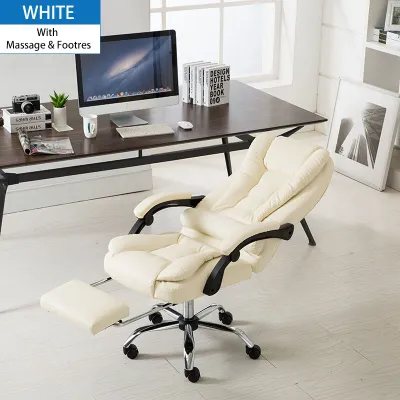
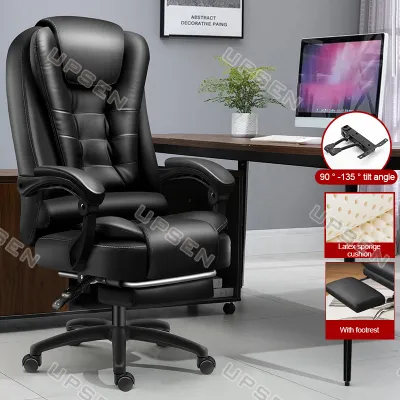
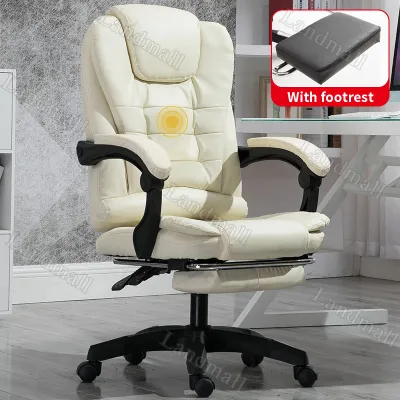
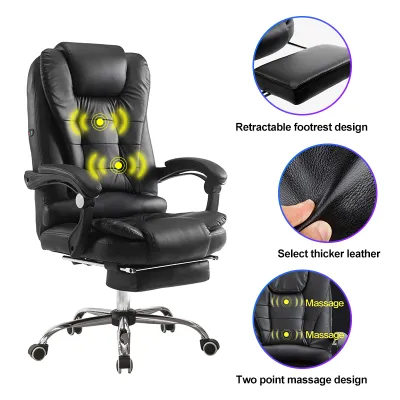
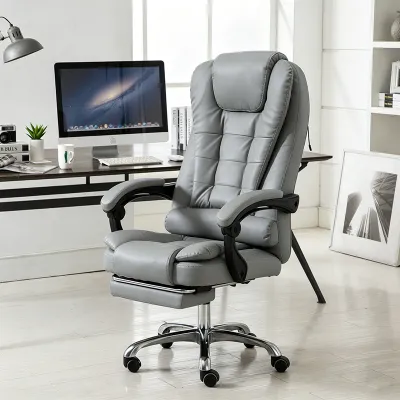
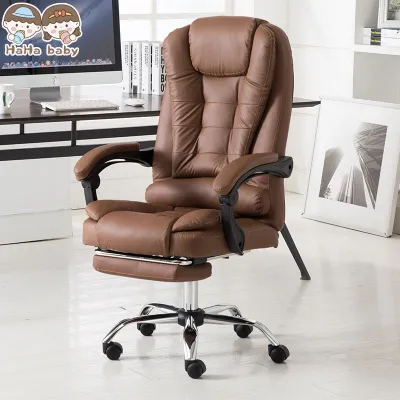
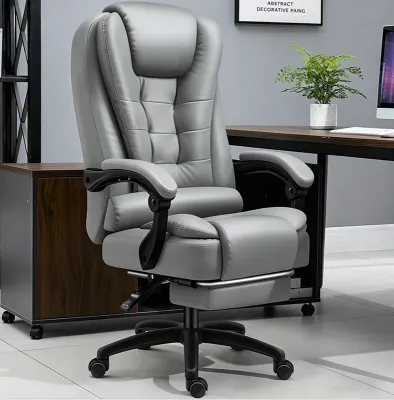
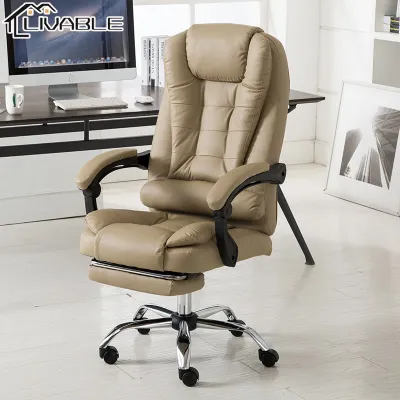
Prices are valid at publication and may change. Please refer to the product page for the latest price.
Upholstery choice is another critical factor where budget constraints force significant trade-offs. At this price point, chairs covered in synthetic polyurethane (PU) leather are highly common. While they offer a classic, premium executive appearance initially, inexpensive PU leather is prone to peeling, cracking, and trapping heat, particularly in the warm and humid Philippine climate. If your workspace lacks continuous air conditioning, a high-density mesh backrest is often a far more practical and durable choice, as it allows for ventilation while maintaining its shape under tension.
Staying under the ₱10,000 threshold also means accepting certain mechanical compromises. High-end ergonomic chairs feature complex multi-angle tilt locks, sliding seat pans, and highly adjustable armrests. In contrast, a budget-friendly heavy-duty chair will typically feature simpler mechanisms, such as a basic upright tilt lock and fixed or height-adjustable armrests. Prioritizing a robust, heavy-duty frame and a reliable gas lift over these extra adjustment features is the safest way to ensure your chair lasts for years.
It is also important to recognize that price does not always correlate directly with weight capacity within this budget tier. A ₱9,500 chair with elaborate aesthetic details, built-in massage vibrators, or extendable footrests might actually have a lower weight capacity than a simpler, stripped-back ₱6,000 model that allocates its manufacturing budget toward reinforced steel frames and heavy-duty casters. When evaluating options, always prioritize structural integrity over secondary convenience features.
Essential Specifications to Verify Before Buying
To ensure a chair can safely support heavier weights over long periods, you must inspect its individual structural components. The most critical point of failure on any office chair is the gas lift cylinder, which regulates height adjustments and bears the user’s direct weight. For heavy-duty performance, you should look for chairs equipped with either a Class 3 or Class 4 gas lift cylinder. These cylinders feature thicker steel walls and more robust internal seals, typically rated to support weights up to 150 kilograms, whereas standard Class 1 or Class 2 cylinders are only designed for lighter, standard-use scenarios.

The base of the chair distributes the weight to the floor and must be constructed from high-strength materials. While reinforced nylon bases can be highly durable if they feature internal ribbing, heavy-duty chairs under ₱10,000 often benefit from chrome-plated steel or aluminum alloy bases. When reviewing product descriptions, check the diameter of the base; a wider base, typically around 320mm to 350mm, provides a lower center of gravity and prevents the chair from tipping when you lean back. Additionally, ensure the casters are made of heavy-duty polyurethane (PU) or nylon to prevent cracking under load and to protect your flooring.
Seat pan construction is another area where manufacturers might cut corners to save costs. A reliable heavy-duty seat pan should feature a thick plywood or metal support plate underneath the cushioning. If the seat pan relies on thin plastic or low-grade particle board, it can warp or crack over time under consistent pressure. Look for listings that specify the use of high-resilience molded foam rather than standard cut foam. Molded foam retains its shape and supportive properties much longer, preventing you from bottoming out against the hard wooden or metal frame of the seat.
Before finalizing your purchase, cross-reference the seller’s advertised weight capacity with the visual evidence provided in product photos and schematics. If a listing claims a 200-kilogram weight capacity but features a thin plastic base, a generic unclassed gas lift, and a lightweight butterfly tilt mechanism, the claim is highly suspect. A genuine heavy-duty build will almost always feature a visibly reinforced multi-functional tilt mechanism, thick metal mounting plates, and a substantial overall product weight, often exceeding 15 to 20 kilograms for the chair itself.
Smart Shopping Strategies on E-Commerce Platforms
Navigating online marketplaces in the Philippines requires a strategic approach to filter out low-quality listings. Instead of searching for broad terms like “office chair” or “boss chair,” use specific, long-tail keywords such as “Class 4 gas lift chair,” “steel base executive chair,” or “150kg capacity office chair.” These precise search terms help bypass generic, lightweight models and bring up listings that highlight structural specifications in their titles and descriptions.
Customer reviews are an invaluable resource for verifying real-world durability, but you must read them critically. Skip past the initial five-star reviews that only comment on fast shipping or nice packaging, and focus instead on reviews written after several months of use. Look specifically for feedback regarding structural integrity, such as reports of the gas lift slowly sinking over time, the frame squeaking under movement, or the seat cushion flattening out. Photos and videos uploaded by actual buyers can also reveal the true thickness of the metal parts and the quality of the welds.
Before clicking the checkout button, initiate a conversation with the seller through the platform’s chat feature. Ask direct questions about the warranty coverage, specifically what parts are covered (such as the gas lift, base, and mechanism) and the duration of the warranty, which should ideally be at least six months to a year. A reputable seller who is confident in their product’s heavy-duty rating will provide clear, prompt answers and may even share official testing certificates or detailed assembly manuals upon request.
Finally, keep a close eye on the total checkout cost to ensure it remains strictly under your ₱10,000 budget. Heavy-duty chairs are bulky and heavy, which can result in substantial shipping fees, especially if you live outside Metro Manila or major urban hubs. Be sure to factor in these delivery charges, along with any potential taxes or optional assembly service fees, before applying platform vouchers or discounts. This ensures you do not accidentally exceed your budget limit at the final payment screen.
Delivery, Assembly, and Safety Checks
Because heavy-duty boss chairs are shipped in large, heavy boxes, you must prepare your space before delivery day. Measure your doorways, hallways, and elevator doors to ensure the package can easily pass through to your designated workspace. If you live in a high-rise condominium or an apartment building with strict delivery guidelines, coordinate with your building administration beforehand to avoid any logistical delays or handling issues on the day of arrival.
During assembly, take your time and carefully follow the manufacturer’s step-by-step instructions. Use the provided tools, or your own high-quality hex keys, to tighten all bolts evenly. Avoid over-tightening, as this can strip the threads or crack the mounting brackets, but ensure every bolt is firmly secured to prevent structural wobble. If the manual specifies torque settings, follow them closely; otherwise, tighten the bolts in a cross-pattern to distribute the tension evenly across the frame and seat pan.
Once assembly is complete, perform a series of initial safety and stability checks before using the chair for long working sessions. Test the gas lift by adjusting the height up and down several times while seated to ensure smooth operation without sticking or sudden drops. Lean back slowly to test the tilt tension and locking mechanism, checking for any unusual creaking, popping, or flexing in the base. The chair should feel solid and balanced, with all five casters remaining firmly in contact with the floor.
If you encounter any issues during assembly, such as misaligned screw holes, bent metal brackets, or missing hardware, stop immediately. Forcing a bolt into a misaligned hole can permanently damage the frame and compromise the chair’s weight capacity. Take clear photos or videos of the defective parts and contact the seller’s customer service right away to request replacement components or a return, rather than attempting to modify the chair yourself.
Frequently Asked Questions (FAQ)
Can I find a genuine heavy-duty boss chair for under ₱10,000?
Yes, it is entirely possible to find a reliable, heavy-duty boss chair within this budget, but you must prioritize structural components over premium aesthetics. At this price point, you should focus your search on chairs that feature a Class 3 or Class 4 gas lift, a reinforced steel or heavy-duty nylon base, and high-density molded foam. You may need to compromise on advanced ergonomic adjustments, such as seat-slider depth or multi-directional armrests, to ensure the manufacturer has invested the budget into a robust, safe frame. If you require specialized orthopedic support or a weight capacity exceeding 150 kilograms, it may be safer to save for a higher budget tier where certified heavy-duty ergonomic chairs are more common.
What should I do if the product listing does not state the weight capacity?
If a product listing lacks an explicit weight capacity, do not assume it is built for heavy-duty use. Your first step should be to contact the seller directly via the platform’s chat system to ask for the official manufacturer specification sheet or user manual. If the seller cannot provide a clear, documented weight rating, or if they give a vague verbal assurance without proof, it is best to skip the purchase entirely. Relying on visual cues alone is risky, as many standard-duty chairs are styled to look identical to heavy-duty models while using thinner steel, lower-grade plastics, and unrated gas cylinders that can fail under load.

Community discussion
Share your experience or ask a question. Comments are reviewed before publication.