
Maximizing floor space in a compact condo often makes an adult bunk bed an appealing solution, but fitting one requires more than just checking the room’s length and width. Balancing the bed’s footprint with ceiling clearance, delivery access, and structural safety is critical for adult sleepers. Choosing the right setup involves calculating vertical headroom, verifying weight capacities, and ensuring the frame can physically clear the tight corners of modern high-rise developments. By taking precise measurements and understanding how mattress thickness affects safety, you can create a comfortable, space-saving sleeping arrangement that feels open rather than cramped.
In the Philippines, where urban condo units in major metropolitan areas often feature compact layouts, every square centimeter counts. High humidity levels and concrete wall construction also influence how you position and maintain heavy furniture. This guide walks you through the essential measurements, spatial calculations, and safety checks needed to choose the right bunk bed configuration for a small bedroom without compromising comfort or safety.
Measure Your Condo Space and Ceiling Constraints
Before browsing furniture catalogs or visiting showrooms, you must map out the physical boundaries of your bedroom. Start by measuring the usable floor area with a steel tape measure. Do not rely solely on the floor plan provided by your developer, as actual post-construction dimensions can vary slightly. Mark the locations of existing features that require clearance, such as built-in wardrobe doors, swing-out bedroom doors, and windows. You must ensure that when the bunk bed is fully assembled, it does not block natural light or obstruct primary walking paths.
Products mentioned in this guide
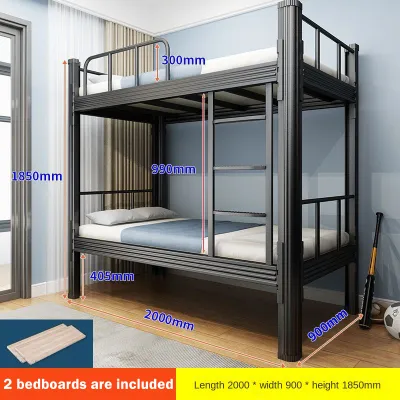
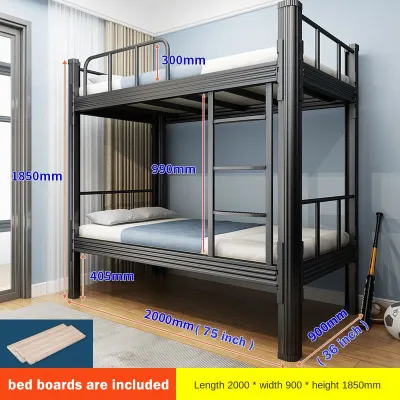
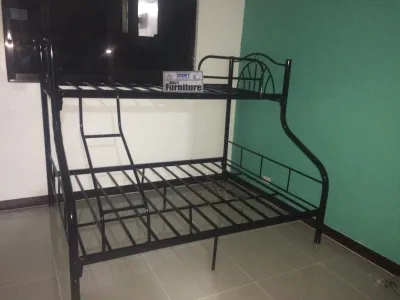
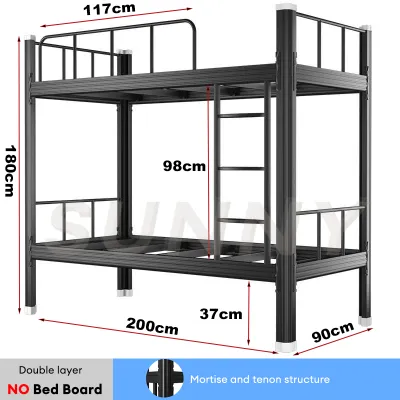
![[Manila 24-hour Boat] Iron Bed Up and Down Staff Dormitory Student High and Low Bed 180 * 200 * 90/120CM Dormitory Apartment 90CM Iron Bed Up and Down Double Iron Frame Bed](https://img.lazcdn.com/g/p/d01a5b9ff7546a0690487f60f7d22389.jpg_400x400q80.jpg_.webp)
![[Manila 24-hour Boat]Black Loft Bed Elevated Bed 180*200*90/120/150CM Modern Simple and Thickened Iron Art Elevated Bed Apartment Bed Loft Bed For Small Room Student Dormitory Bed Single Size Iron Art Bed Adjustable Staircase Alternating Left And Right](https://img.lazcdn.com/g/p/61a97ae76a0c00cd13c04edac78cc9a4.jpg_400x400q80.jpg_.webp)
Prices are valid at publication and may change. Please refer to the product page for the latest price.
Vertical measurements are even more critical than floor space when installing a bunk bed. Record the exact ceiling height in multiple spots around the room. Modern condos often feature dropped ceilings in certain areas to conceal utility pipes, electrical wiring, or air conditioning ducts. Note the location of any low-hanging light fixtures, surface-mounted ceiling fans, or structural concrete beams. A bunk bed placed too close to a ceiling fan poses an immediate safety hazard, while proximity to a concrete beam can severely restrict movement on the top bunk.
Finally, do not forget to measure the journey from the delivery truck to your bedroom door. Many condo dwellers purchase large furniture only to find it cannot fit inside the building’s elevator or navigate the tight turns of the emergency stairwell. Measure the height and width of the elevator door, the interior cabin dimensions, the hallway corridors, and your unit’s main entrance. If your building has strict association rules regarding delivery hours or elevator reservations, knowing these dimensions beforehand will prevent costly return delivery fees and logistical headaches.
Match Adult Mattress Sizes to Your Floor Plan
When selecting a bunk bed for adults, mattress dimensions dictate the overall footprint of the frame. Standard adult mattresses in the local market typically start at a single size, which measures approximately 36 inches by 75 inches (91 cm by 190 cm). If space permits and the room is shared by couples or individuals who prefer more sleeping area, a double size measuring 54 inches by 75 inches (137 cm by 190 cm) is a common alternative. A twin-over-full or single-over-double configuration is often the most practical compromise for guest rooms or shared adult spaces.

Keep in mind that the outer dimensions of the bed frame will always be larger than the mattress itself. A solid wood frame or a heavy-duty metal frame can add anywhere from 5 to 15 centimeters to both the length and width of the bed. You must factor in these extra centimeters when planning the layout. If the frame features an angled ladder rather than a vertical built-in ladder, this will extend the footprint even further into the room’s primary traffic lane.
If a standard vertical bunk bed blocks a window or makes the room feel too claustrophobic, consider alternative configurations. An L-shaped bunk bed positions the bottom bed perpendicular to the top bed, leaving open space underneath the top bunk for a small desk, storage chest, or vanity. Alternatively, a loft bed lifts a single sleeping platform high off the ground, completely freeing up the floor space below for a functional home office or a cozy seating area. These configurations help maintain a sense of openness in studio units where a single room serves multiple purposes.
Calculate Safe Headroom and Bunk Clearance
To ensure adult sleepers can use both the top and bottom bunks comfortably, you must perform specific vertical calculations. The most critical measurement is the headroom on the top bunk. As a general rule, there should be at least 75 to 90 centimeters of open space between the top of the upper mattress and the ceiling. This clearance allows an average-sized adult to sit up straight, read, or get out of bed without ducking or accidentally bumping their head against the ceiling.
Similarly, you must calculate the vertical gap between the bottom mattress and the underside of the top bunk. The lower bunk should offer enough clearance for an adult to sit comfortably without their head brushing against the upper bed support. To find this dimension, subtract the height of the bottom bed platform and the thickness of the bottom mattress from the overall height of the upper bunk support. If this gap is too tight, the bottom bunk will feel restrictive and may only be suitable for sleeping rather than lounging.
Mattress thickness plays a direct role in these vertical calculations. While a thick, plush mattress might seem more comfortable, it reduces the available headroom on both levels. For the top bunk, a thick mattress also compromises safety by reducing the effective height of the guardrails. Opting for a low-profile mattress, typically between 10 to 15 centimeters (4 to 6 inches) thick, is highly recommended for the top bunk to maximize vertical space and ensure the safety rails function as intended.
Verify Delivery Access and Assembly Requirements
Because bunk beds are large, heavy structures, they are almost always delivered flat-packed in multiple boxes. Before finalizing your purchase, confirm with the retailer or manufacturer that the longest packaged components, such as the side rails or support posts, can easily fit inside your condo’s service elevator and pass through your front door. If the boxes are too long to fit horizontally in the elevator, you may need to coordinate with building security to carry them up the stairs, which can incur additional handling fees measured in ₱.
Review the assembly instructions carefully before the delivery date. Adult bunk beds require robust joints and precise fastening to remain stable under adult weight. Determine if the assembly requires specialized tools, such as hex keys, socket wrenches, or power drills, and check if these are included in the package. If you are not confident in your DIY skills, it is highly advisable to pay for professional assembly services. A professional installer will ensure that all structural bolts are tightened to the correct specifications and that the frame is perfectly level on your condo floor.
Additionally, plan the bed’s placement relative to your condo’s climate control systems. In tropical climates, split-type air conditioning units are common in bedrooms. Avoid placing the top bunk directly in the path of the air conditioner’s cold air stream, as direct drafts can cause discomfort. Furthermore, ensure the bed frame does not block access to the air conditioner’s filter panel, which requires regular cleaning and maintenance to keep the unit running efficiently in humid conditions.
Check Weight Capacity and Adult Safety Features
Safety is the most critical factor when choosing a bunk bed for adult use. Unlike children’s furniture, adult bunk beds must support significantly higher static and dynamic loads. Always verify the manufacturer’s certified weight capacity for both the individual bunks and the overall frame. A reliable adult bunk bed should typically support at least 135 to 180 kilograms (300 to 400 pounds) on each level to safely accommodate an adult sleeper and their bedding.
Examine the construction materials and joint designs of the frame. Metal frames should feature thick-gauge steel tubing with fully welded joints or heavy-duty bolts, rather than thin metal sheets that can bend under pressure. Wood frames should be constructed from solid hardwoods rather than composite materials like particleboard, which can strip or crack at connection points over time. Check that the mattress support system uses sturdy wooden slats or a steel mesh grid with center support legs to prevent sagging.
Finally, inspect the safety guardrails and the ladder design. The guardrails on the top bunk must extend at least 12 to 15 centimeters above the top surface of the mattress to prevent accidental falls during sleep. The ladder should be securely bolted to the main frame rather than simply hooked over the side rail, which can slip during use. Look for wide, flat rungs rather than thin, round bars, as flat rungs distribute weight more evenly and are much more comfortable for adult feet to climb.
Frequently Asked Questions (FAQ)
Can I use a standard children's bunk bed for adults?
No, using a standard children’s bunk bed for adults is not recommended due to structural and safety limitations. Children’s bunk beds are designed for lighter weight capacities, often capped around 70 to 90 kilograms, which can easily be exceeded by an adult sleeper and a heavy mattress. Additionally, the frame dimensions of children’s beds are often shorter, and the ladders and guardrails are not scaled or reinforced to handle the physical force and weight distribution of adults. Using a children’s frame for adults can lead to joint failure, bending, or structural collapse over time.
What mattress type works best for low ceiling clearance?
A low-profile foam or latex mattress is the best choice for bunk beds with low ceiling clearance. These mattresses typically range from 10 to 15 centimeters (4 to 6 inches) in thickness, which preserves precious centimeters of headroom on the top bunk. Despite their slim profile, high-density foam or natural latex mattresses can still provide excellent support and pressure relief for adults without the added height of traditional innerspring coils. Always check the bunk bed manufacturer’s specifications to ensure your chosen mattress thickness does not exceed the maximum height limit allowed for the top bunk’s guardrails.

Community discussion
Share your experience or ask a question. Comments are reviewed before publication.