
Integrating a covered steel shoe cabinet into an existing closet organization system requires balancing structural durability with spatial efficiency. While traditional wooden shelves or hanging fabric organizers offer soft, flexible storage, a steel cabinet introduces a rigid, protective enclosure that shields footwear from dust and light. Achieving a seamless layout means treating the cabinet not as an isolated piece of furniture, but as an anchor point that must align with your hanging rods, shelving units, and accessory bins. By carefully planning the placement, clearance, and visual flow, you can maximize your closet’s footprint without creating physical bottlenecks or aesthetic clutter.
Assessing Your Closet Space and the Steel Cabinet
Before purchasing or positioning a steel shoe cabinet, a precise physical assessment of your closet is essential. Begin by measuring the available floor space, paying close attention to the depth and height clearance. Standard closets often feature baseboards, door frames, or low-hanging trim that can reduce the actual usable footprint. If your closet has sliding or bifold doors, measure the opening width rather than the interior wall-to-wall distance, as these doors often block access to the outermost corners even when fully opened.
Next, verify the exact outer dimensions of the steel cabinet. Do not rely solely on general descriptions; check the manufacturer’s specifications for handle protrusions, hinge placement, and the door swing radius. A cabinet with swing-out doors requires a clear arc in front of it to open fully, whereas a roll-up or sliding cover needs vertical or lateral clearance. If the cabinet features a fabric or plastic cover that zips or rolls, ensure there is enough finger room on the sides to operate the fasteners comfortably.
Products mentioned in this guide
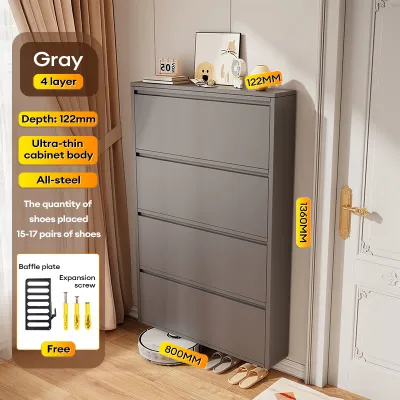
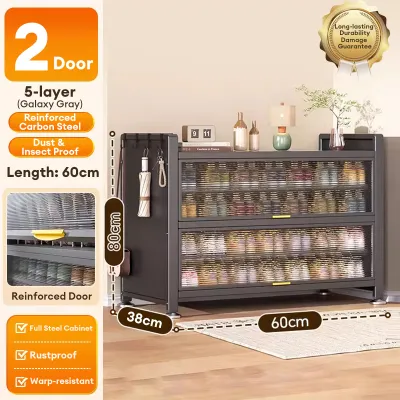
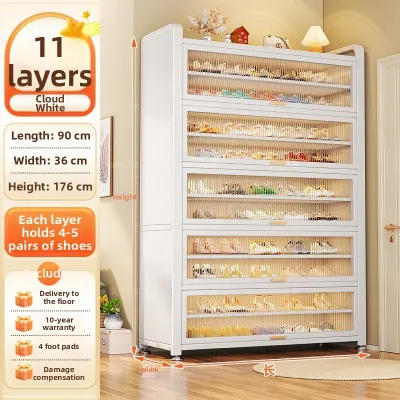
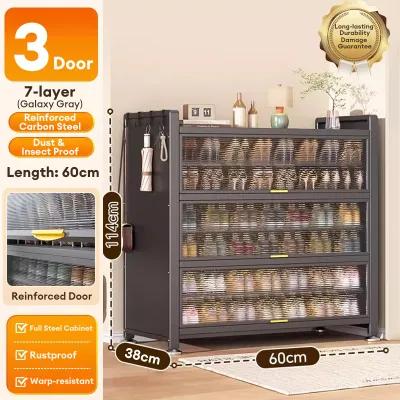
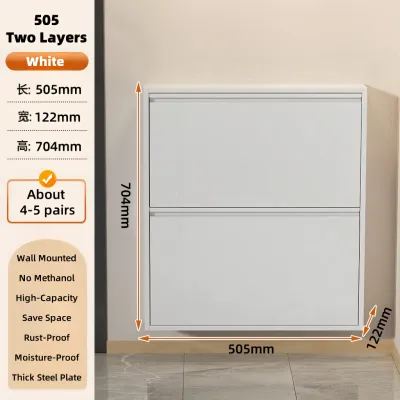
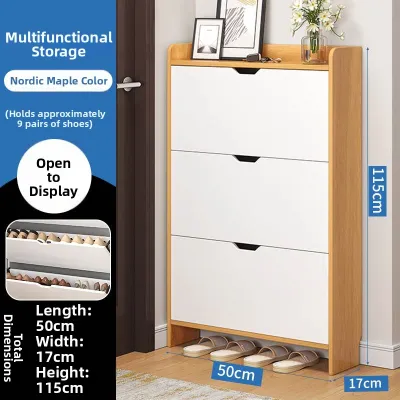
Prices are valid at publication and may change. Please refer to the product page for the latest price.
Finally, consider the structural capacity of your closet floor. Steel furniture is heavier than wood composites or wire shelving, and when fully loaded with shoes, the concentrated weight can be substantial. If your closet features elevated platforms or modular laminate flooring, check the manufacturer’s load limits. Placing a heavy steel cabinet on a floating floor without proper support can cause warping or joint separation over time, making a solid, level foundation a primary requirement.
Zoning Your Closet: Where the Shoe Cabinet Fits Best
Strategic zoning ensures that your closet remains highly functional and that daily routines flow smoothly. Ideally, you should position the steel shoe cabinet near the closet entrance or transition zone. This placement allows you to retrieve or store your daily footwear immediately upon entering or leaving the space, preventing dirt from being tracked deeper into the dressing area. It also keeps the most frequently accessed items within arm’s reach, reducing the time spent searching through deeper storage zones.

As you plan the layout, map out the swing paths of all moving parts within the closet. The shoe cabinet doors or cover must never conflict with the swing path of the main closet door, internal drawers, or pull-out valet rods. A common layout mistake is placing a rigid steel cabinet directly opposite a deep drawer unit; if both are opened simultaneously, they can collide, leading to scratched finishes. Maintain a clear walkway of at least 60 to 70 centimeters in front of the cabinet to allow you to stand and access your shoes comfortably.
If floor space is limited, look for underutilized areas such as dead corners or the empty volume beneath short-hanging clothes. Many modular closets have awkward corner gaps that cannot accommodate standard hanging rods; a compact steel shoe cabinet can slide into these zones perfectly, turning wasted space into high-density storage. Just ensure that the cabinet’s height allows you to reach the top shelves easily and that the metal edges do not scrape against the adjacent walls during installation.
Combining the Steel Cabinet with Hanging Rods and Shelves
Integrating a rigid steel structure with soft hanging garments requires careful vertical planning. The most efficient configuration is to position the shoe cabinet directly beneath short-hanging items, such as folded trousers, skirts, or short-sleeve shirts. This utilizes the lower half of the closet wall, which often remains empty, while leaving the full-height sections open for long dresses, coats, or jumpsuits.
To protect both your clothing and the cabinet, maintain a clearance gap of at least 10 to 15 centimeters between the top of the steel cabinet and the bottom of your hanging garments. This gap prevents fabrics from dragging across the metal surface—which could cause snagging or transfer dust—and ensures adequate air circulation. In enclosed closets, packing clothes too tightly against a solid cabinet can trap moisture, leading to stale odors or fabric degradation.
Aesthetic and physical alignment is equally important when placing the cabinet alongside existing shelving units. Try to align the front depth of the steel cabinet with your wooden or wire shelves to create a flush, continuous line. If the cabinet protrudes past the shelving line, it creates a sharp physical corner that can catch on loose clothing or cause tripping hazards. If a flush fit is impossible, position it at the far end of a shelving run so it acts as a natural terminal boundary.
Pairing with Storage Bags and Bins for a Unified Look
To prevent the industrial look of a steel cabinet from clashing with the rest of your closet, coordinate it with soft storage solutions like fabric bags, baskets, and bins. If the top of your steel cabinet is flat, rigid, and rated for load-bearing use by the manufacturer, you can utilize this surface to stack lightweight storage bags containing seasonal items. However, always verify that the cabinet top is structurally reinforced; placing heavy items on an unsupported steel panel can cause bowing, which may jam the door tracks or compromise the cover mechanism.
To create a cohesive visual design, select storage bins and organizer bags in colors that complement the steel cabinet’s finish. For instance, if you have a dark charcoal or black steel cabinet, pairing it with neutral grey, cream, or navy fabric bins on adjacent shelves helps soften the metal’s hard edges and integrates it into a unified color scheme. This prevents the steel cabinet from looking like an afterthought or an out-of-place utility item.
Avoid the temptation to overload the top of the cabinet with loose accessories. Loose items can easily fall behind the cabinet or slide into the door tracks, causing mechanical issues. Instead, keep all top-of-cabinet storage contained within structured, closed bins, and ensure that these containers do not overhang the edges, which could interfere with the operation of the cabinet’s cover or doors.
Maintenance and Safety Checks for Steel Furniture in Closets
Regular maintenance is crucial to ensure your steel shoe cabinet remains safe and functional within an enclosed closet environment. Periodically inspect the entire steel surface, paying close attention to the joints, corners, and bottom edges. Look for any signs of chipped paint, scratches, or early rust formation, which can occur if damp shoes are placed inside or if the closet suffers from poor ventilation. If you notice any exposed metal, consult the manufacturer’s guidelines for touch-up recommendations to prevent moisture from penetrating the protective coating.
Stability is a primary safety concern, especially when dealing with tall or heavily loaded steel furniture. Always check that the cabinet sits perfectly level on the closet floor. If your closet floor is uneven or carpeted, the cabinet may wobble, increasing the risk of tipping. Use the manufacturer-supplied leveling feet to adjust the balance, and always install anti-tip brackets or wall anchors if the cabinet is tall. Secure anchoring prevents accidental tip-overs when multiple heavy drawers or doors are opened at once.
Finally, perform a routine operational check on the cabinet’s moving parts. Ensure that the doors, drawers, or fabric covers open and close smoothly without rubbing against adjacent closet walls, wooden shelves, or hanging clothes. If the cabinet uses a zipper or a roll-up cover, check for wear and tear along the tracks or seams, and clear away any dust or debris that could cause the mechanism to jam.
Frequently Asked Questions (FAQ)
Can a steel shoe cabinet rust inside a closed closet?
Yes, a steel shoe cabinet can develop rust inside a closed closet if environmental conditions allow moisture to accumulate. In humid tropical climates, such as in the Philippines, enclosed closets often trap warm, damp air, creating a microclimate that accelerates oxidation if the steel’s protective finish is compromised. To prevent this, ensure your closet has adequate ventilation, such as slatted doors or a dehumidifier. Avoid storing damp or wet shoes inside the cabinet, and periodically inspect the factory finish for scratches. If recommended by the manufacturer, applying a thin layer of protective furniture wax can help shield the metal from ambient moisture.
How do I prevent the cabinet from scratching my closet floor?
To protect your closet flooring from scratches and indentations caused by heavy steel furniture, start by checking the cabinet’s base design. Many manufacturers include built-in plastic glides or leveling feet designed to safeguard floors. If these are missing or rigid, you can apply heavy-duty felt pads to the contact points to cushion the weight on hardwood or laminate surfaces. For tiled or vinyl floors, placing a thin, non-slip rubber mat or a low-profile area rug underneath the cabinet provides an effective barrier that prevents sliding and absorbs vibrations when opening and closing the doors.

Community discussion
Share your experience or ask a question. Comments are reviewed before publication.