
Choosing the right wall hanging cabinet for clothes requires balancing your available wall area with the physical weight and volume of your wardrobe. In space-conscious homes, lifting your storage off the floor is an excellent way to maximize room layout, improve air circulation in humid tropical climates, and keep your bedroom organized. To find the perfect fit, you must measure your physical wall boundaries, calculate the weight of your garments, and verify that your wall structure can safely support the installation.
By taking precise measurements before purchasing, you avoid the common pitfalls of doors that cannot open fully, sagging walls, or cabinets that overwhelm the room. A well-planned wall cabinet provides a streamlined look while keeping your garments clean, dry, and easily accessible.
Step 1: Measure Your Available Wall Space and Clearance
To begin, clear the area around the target wall for unobstructed access. Use a reliable steel tape measure, which resists bending over long distances and provides accurate readings. Measure the total width of the wall section where you plan to mount the cabinet, followed by the vertical height from the floor to the ceiling. Finally, measure the depth of the space, keeping in mind how far the cabinet will protrude into the room and whether it will block natural walking paths.
Products mentioned in this guide
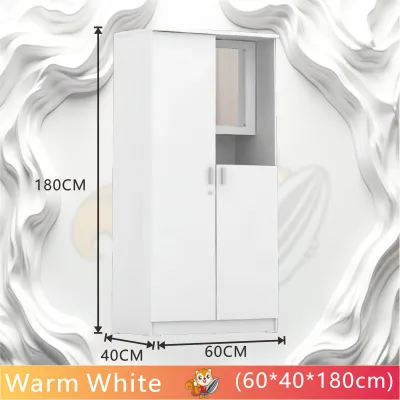
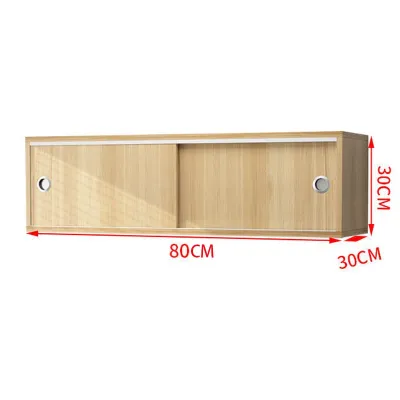
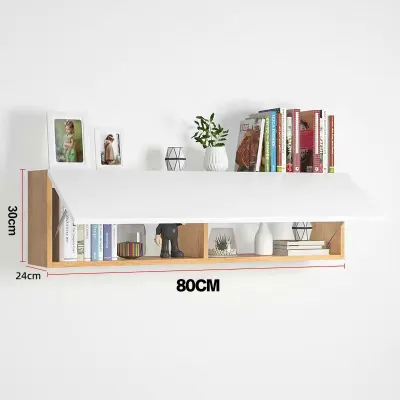
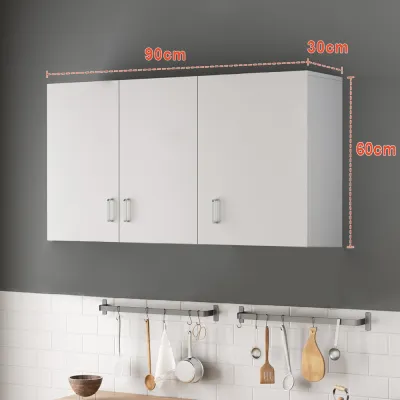

Prices are valid at publication and may change. Please refer to the product page for the latest price.
Do not assume your walls are perfectly square. Take measurements at three different points—top, middle, and bottom for width; left, center, and right for height—and use the smallest of these figures to ensure your cabinet fits. You must also account for permanent architectural features such as baseboards, crown moldings, window frames, light switches, and electrical outlets. In many homes, wall-mounted air conditioning units or wall fans require significant clearance, so map out their positions carefully to prevent blocking airflow.
Ceiling height and vertical clearance are critical when planning a wall hanging cabinet for clothes. Decide how high off the floor the cabinet will sit, ensuring there is enough space underneath for existing furniture or comfortable foot traffic. Additionally, calculate the clearance required for the cabinet doors to swing open completely without hitting light fixtures, curtain rods, or adjacent doors. If your room has a ceiling fan, verify that the fan blades have a safe clearance zone from the cabinet when in motion.
Step 2: Assess Your Clothing Volume and Weight Requirements
Before selecting a cabinet size, evaluate what you plan to store inside it. Unlike floor-standing wardrobes that distribute weight across the ground, a wall-mounted unit relies entirely on the structural integrity of your wall and mounting hardware. Start by categorizing your clothing into distinct groups, such as lightweight tropical wear, heavy denim, formal attire, and folded linens. In warm, humid climates, lightweight cottons and linens dominate the wardrobe, which keeps the overall weight lower, but accumulated items can still become surprisingly heavy.

Next, determine your preferred ratio of hanging space to folded storage. Hanging clothes require more vertical height and depth to prevent garments from bunching up against the back or bottom of the cabinet. Folded clothes can be stacked on shelves or in drawers, which maximizes vertical space but concentrates weight in specific areas. If you plan to store heavy items like bedsheets or travel bags, allocate space for them on the lowest shelves of the cabinet to keep the center of gravity as stable as possible.
To translate your clothing volume into physical cabinet dimensions, measure the total length of your current hanging rods. As a general rule, a standard shirt or dress requires a cabinet depth of at least 55 to 60 centimeters to hang freely without the sleeves getting caught in the doors. If you have limited depth, look for cabinets featuring pull-out valet rods that run from back to front. Estimate the total weight of your wardrobe by weighing a small bundle of typical garments on a home scale and multiplying that by the total number of items you plan to store.
Step 3: Match Cabinet Dimensions to Your Space and Load
With your wall measurements and clothing assessment complete, compare these figures against available cabinet models. Begin by checking the external dimensions of the cabinet to ensure it fits comfortably within your measured wall boundaries, leaving at least a few centimeters of breathing room on all sides. This gap is especially important in humid environments, as tight fits against adjacent walls can trap moisture and encourage mold growth on both your clothes and the cabinet material.
Evaluate the interior layout of the cabinet to see if it matches your storage strategy. If your wardrobe consists mostly of dresses, long trousers, or light jackets, a single high hanging rod is ideal. For shorter items like t-shirts, folded shorts, and folded garments, a double-rod configuration or a combination of adjustable shelves and drawers will utilize the space more efficiently. Adjustable shelving is highly recommended, as it allows you to reconfigure the interior layout as your wardrobe needs change over time.
Most importantly, compare your estimated clothing weight against the manufacturer’s specified maximum load capacity. This rating indicates the maximum weight the cabinet structure itself can safely hold, assuming it is installed correctly. Never plan to load a cabinet to its absolute limit; instead, choose a unit with a load capacity that comfortably exceeds your estimated wardrobe weight by at least twenty percent. If the manufacturer does not provide a clear weight rating, look for alternative models that explicitly state their load limits to ensure safety.
Step 4: Verify Wall Structure and Installation Safety
The safety of your wall hanging cabinet for clothes depends heavily on the material of the wall it is mounted on. In many residential buildings, walls are constructed from solid concrete or concrete hollow blocks (CHB), which offer excellent load-bearing capacity when paired with the correct masonry anchors and sleeve bolts. Alternatively, interior partition walls are often made of drywall or fiber cement boards mounted on wooden or metal studs. Drywall alone cannot support the weight of a loaded clothing cabinet, meaning all mounting brackets must align directly with the underlying studs.
Before drilling any holes, use a reliable stud finder to locate and mark the exact positions of the studs behind your wall. If you are mounting onto a concrete wall, use a hammer drill with a masonry bit to create precise holes for heavy-duty wall plugs or expansion bolts. Always use the specific mounting hardware recommended by the cabinet manufacturer, as using incorrect screws or anchors can lead to structural failure. Ensure all mounting points are level by using a spirit level during the marking and installation process.
If you encounter any resistance while drilling, or if you are unsure of the wall’s internal structure, stop immediately. Older walls, damaged plaster, or walls with hidden electrical wiring and water pipes present significant hazards during installation. If you do not have the appropriate tools, such as a hammer drill for concrete or a stud finder for drywall, or if you feel uncomfortable handling heavy mounting tasks, consult a qualified local carpenter or professional installer. Investing in professional installation ensures your cabinet remains securely anchored to the wall, protecting your belongings and your household.
Common Measuring and Sizing Mistakes to Avoid
One of the most frequent errors when installing a wall hanging cabinet for clothes is forgetting to measure the distance from the floor to the bottom of the unit. If the cabinet is mounted too low, it can obstruct walkways, block electrical outlets, or prevent you from placing other furniture underneath. Conversely, mounting the cabinet too high can make daily access to your hanging rods and top shelves difficult without a step stool, increasing the risk of accidental falls.
Another common mistake is ignoring the swing radius of the cabinet doors. Standard hinged doors require ample clearance to open fully, and failing to account for this can result in doors hitting your bed, bedroom entry doors, or nearby windows. If your bedroom has limited space, consider choosing a cabinet with sliding doors or open shelving to eliminate door swing issues entirely.
Finally, never overlook the structural limits of your wall or the cabinet itself. Overloading a wall-mounted wardrobe with heavy winter coats, heavy luggage, or stacked books can cause the mounting brackets to pull away from the wall, leading to a sudden and dangerous collapse. Regularly inspect the mounting brackets and the wall surrounding them for any signs of cracking, sagging, or loosening screws, and address any structural issues immediately.
Frequently Asked Questions (FAQ)
Can I install a wall hanging cabinet on drywall?
Yes, but you cannot mount it directly onto the drywall sheet itself. The mounting brackets must be securely anchored into the wooden or metal studs behind the drywall. Always consult the cabinet manufacturer’s installation guide to determine the required stud spacing and the specific type of heavy-duty toggle bolts or stud screws needed for a safe installation.
How much weight can a standard wall hanging cabinet hold?
The weight capacity of a wall hanging cabinet varies significantly depending on its construction materials, size, and the quality of the mounting hardware. To find the exact weight limit for your specific unit, always refer to the product label, user manual, or manufacturer specifications. Never exceed this stated limit, and ensure your wall type is capable of supporting both the cabinet’s weight and its contents.

Community discussion
Share your experience or ask a question. Comments are reviewed before publication.