
Balancing daily living space with overnight hosting utility in a 20 square meter condo living room requires a highly strategic approach to furniture selection. In a compact layout, every centimeter counts, and choosing a multifunctional foldable sofa bed is often the most practical solution for maximizing utility. However, a sofa bed that is too large can quickly turn a cozy living area into an impassable obstacle course, blocking vital pathways to the kitchen, bathroom, or balcony. To achieve the perfect balance, you must establish a clear decision framework that prioritizes precise physical measurements, clearance zones, and mechanism types before making a purchase.
Mapping Your 20 Sqm Layout and Walkway Clearances
Before browsing online marketplaces or visiting local showrooms, you must map the physical boundaries of your living space. A 20 square meter room might sound manageable on paper, but the actual usable furniture footprint is significantly smaller once you subtract structural columns, entryways, and fixed fixtures. Start by drawing a rough floor plan of your living area, noting the exact locations of wall outlets, light switches, and air conditioning units.
To maintain a comfortable and safe home environment, you must establish clear walkway zones around your furniture. Standard ergonomic guidelines suggest maintaining a minimum clearance of 60 centimeters for secondary walkways and at least 90 centimeters for primary traffic paths. In a compact condo, these clearances ensure you can walk freely without turning sideways or bumping into corners.
Products mentioned in this guide
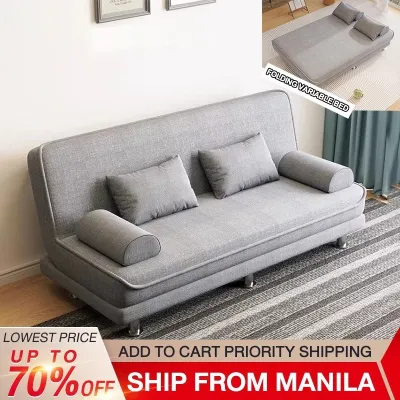
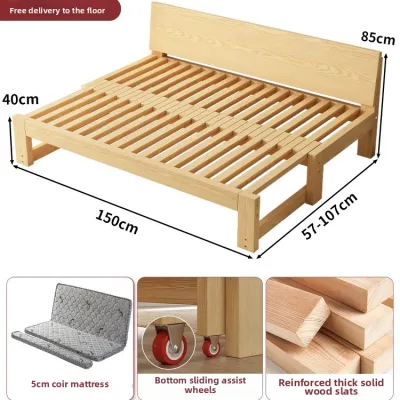
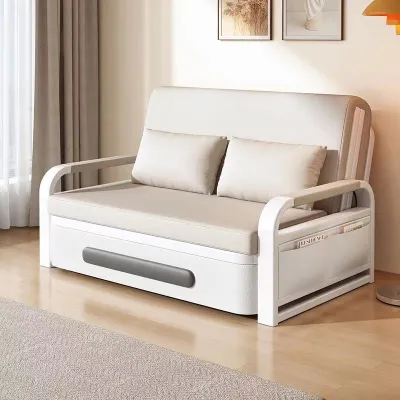
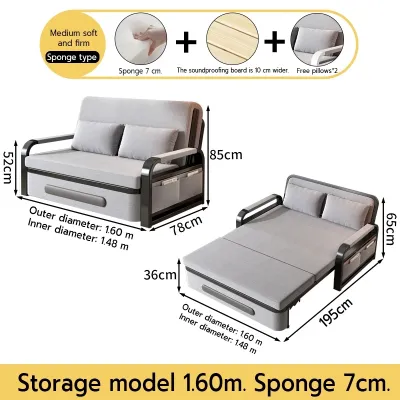
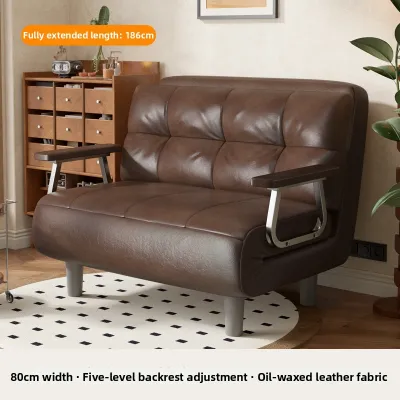
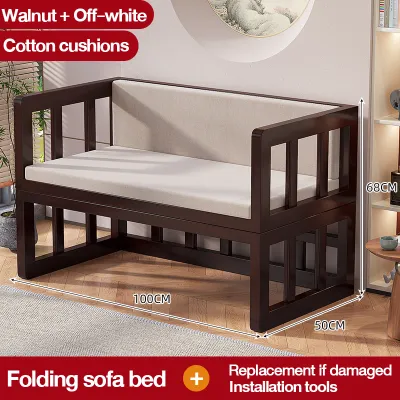
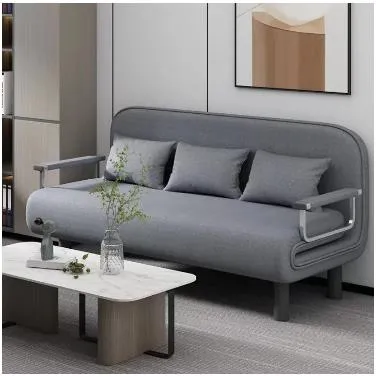
Prices are valid at publication and may change. Please refer to the product page for the latest price.
Architectural constraints are another critical factor that many condo dwellers overlook. You must measure the swing radius of your main entry door, bathroom door, and balcony door to ensure they do not collide with the sofa bed in either its folded or unfolded state. Additionally, take note of built-in cabinets, wardrobe doors, and low-hanging windows that could restrict where a taller or wider sofa can be placed.
Matching Sofa Bed Dimensions to Your Available Space
When shopping for a multifunctional foldable sofa bed, you will generally choose between a compact two-seater and a small three-seater model. A standard two-seater sofa bed typically ranges from 120 to 150 centimeters in width, making it an ideal choice for tight walls or alcoves. If you have a slightly longer uninterrupted wall, a compact three-seater measuring between 160 and 190 centimeters can offer more seating comfort without overwhelming the room.

While the width of the sofa determines how it fits against your wall, the depth and unfolded length dictate how much floor space it consumes when converted into a bed. A standard closed sofa depth ranges from 80 to 90 centimeters, but when fully extended, the bed length can stretch from 180 to over 200 centimeters. You must verify that your room has sufficient front clearance to accommodate this fully extended length while still leaving at least 50 centimeters of walking space at the foot of the bed.
To prevent the sofa bed from visually dominating your 20 square meter room, pay close attention to its overall profile and armrest design. Bulky, heavily padded armrests can add up to 30 centimeters of unnecessary width without increasing the actual seating or sleeping surface. Opting for armless designs or models with slender, low-profile armrests helps minimize both the physical footprint and the visual weight of the furniture, making your condo feel more open and airy.
Selecting a Folding Mechanism That Maximizes Floor Space
The type of folding mechanism you choose directly impacts how much clearance space you need to reserve in front of the sofa. Click-clack models are highly popular for small spaces because they transition quickly by flattening the backrest, requiring very little forward clearance. However, because the backrest folds downward, you must leave a small gap between the back of the sofa and the wall, or be prepared to pull the sofa forward every time you convert it.
Pull-out and fold-down mechanisms, on the other hand, extend forward into the room, requiring substantial front clearance. A pull-out model typically features a hidden frame that rolls out from under the seat cushions, while a fold-down design unfolds directly onto the floor. These mechanisms are excellent for narrow, deep rooms where you have plenty of length but limited wall width, as they keep the sofa’s folded footprint highly compact.
In tropical climates like the Philippines, high humidity levels make material selection and ventilation crucial for any multi-functional furniture. When evaluating sofa beds with built-in storage compartments, check that the storage area has adequate ventilation holes to prevent musty odors and mold growth on stored linens. Furthermore, verify the structural stability of the folding frame and ensure the legs are equipped with protective rubber or felt pads to prevent scratching or denting typical condo flooring materials like vinyl planks, laminate, or ceramic tiles.
Arranging the Sofa Bed to Maintain Functional Flow
Positioning your multifunctional foldable sofa bed correctly is key to maintaining a natural flow of movement through your condo. In a square 20 square meter layout, placing the sofa flush against the longest solid wall is usually the most efficient setup, as it leaves the center of the room open for traffic. For rectangular layouts, you might consider a floating arrangement where the sofa acts as a subtle divider between the living zone and the dining or sleeping area, provided you maintain the required walkway clearances on either side.
To optimize the room’s layout, always align the unfolding direction of the bed with the longest open zone in your living room. If your living area connects directly to a balcony, ensure the bed extends parallel to the balcony door rather than directly toward it, keeping the exit clear at all times. This alignment prevents the bed from cutting off access to outdoor spaces or blocking natural light and ventilation.
Traditional, heavy wooden coffee tables are highly impractical for small, flexible living spaces. Instead, integrate lightweight nesting tables or movable ottomans that can easily be shifted to the side or used as extra seating when the sofa bed is fully extended. Choosing tables with open metal frames or glass tops can also help maintain a sense of spaciousness by allowing light to pass through, reducing visual clutter.
Common Sizing and Clearance Mistakes to Avoid
One of the most common mistakes condo owners make is purchasing a sofa bed based solely on its folded “sofa” dimensions. It is easy to forget that a piece of furniture that fits perfectly against your wall during the day can completely block your living room once it is opened at night. Always map out both the folded and unfolded footprints on your floor using painter’s tape before finalizing your purchase.
Another critical error is blocking main entryways, kitchen access, or emergency exit routes. Even if you only plan to unfold the bed occasionally for guests, an obstructed pathway can create a safety hazard and make daily tasks incredibly frustrating. Ensure that even when the bed is fully extended, there is still a clear, unobstructed path to the bathroom and the main exit.
Finally, avoid the temptation to buy oversized furniture with excessively deep seats or thick, plush backrests. While these features may look comfortable in a spacious showroom, they quickly shrink the primary walking paths in a 20 square meter condo. Stick to streamlined, mid-century modern, or minimalist designs that prioritize clean lines and efficient proportions to keep your living space functional and comfortable.
Frequently Asked Questions (FAQ)
Can a multifunctional foldable sofa bed serve as my primary bed in a studio condo?
While a multifunctional foldable sofa bed is an excellent space-saving solution, using it as your primary daily bed requires careful consideration of support and durability. Standard sofa bed mattresses are often thinner than traditional mattresses to allow for folding, which can lead to less spinal support over extended periods. If you plan to sleep on it daily, look for models with robust metal or slatted wooden support systems and high-density foam mattresses. Additionally, daily folding and unfolding subjects the mechanical joints to significant wear and tear, so prioritizing heavy-duty steel mechanisms and verifying the manufacturer’s warranty is essential for long-term use.
How do I measure my condo door to ensure the sofa bed will fit during delivery?
To avoid the frustration of a delivery failure, you must measure every doorway, hallway, and elevator the sofa bed must pass through before it reaches your living room. Start by measuring the clear width and height of your condo’s main entrance door frame, as well as any tight corners or hallways leading into your unit. Don’t forget to measure the elevator door opening, interior cabin height, and depth, as high-rise building stairwells can be incredibly difficult to navigate with bulky furniture. Compare these measurements against the sofa bed’s packaged shipping dimensions, keeping in mind that some models can be partially disassembled to fit through tight spaces.

Community discussion
Share your experience or ask a question. Comments are reviewed before publication.