
To comfortably seat 6 to 10 people, an expandable dining table must balance daily space efficiency with occasional hosting capacity. Typically, this requires a table that transitions from a collapsed length of approximately 150 to 180 centimeters (ideal for 6 people) to an expanded length of 240 to 300 centimeters (designed for 10 people). Finding the right size involves more than just looking at the tabletop surface; you must also account for chair widths, table shapes, and room clearance.
In many homes, especially in open-plan layouts where the dining area serves as a multi-functional hub, the table must adapt without overwhelming the room. Selecting the correct dimensions ensures that your daily living space remains open and breathable, while still allowing you to welcome guests for large family gatherings or festive ‘handaan’ celebrations.
Standard Dimensions for Seating 6 to 10 People
When planning your dining setup, the first step is understanding the physical space required for an individual diner to eat comfortably. Ergonomic standards suggest allocating a minimum of 60 centimeters of width per person along the table edge. For a more relaxed dining experience where guests do not bump elbows, increasing this allocation to 70 or 76 centimeters is highly recommended. Additionally, each person requires a depth of about 35 to 40 centimeters for place settings, leaving a central zone of at least 20 centimeters for shared serving platters and centerpieces.
Products mentioned in this guide
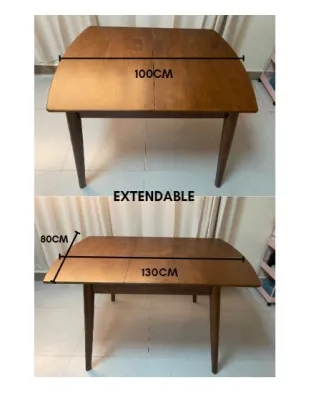
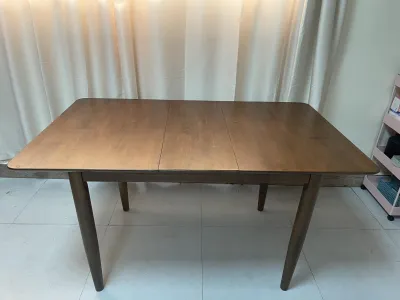
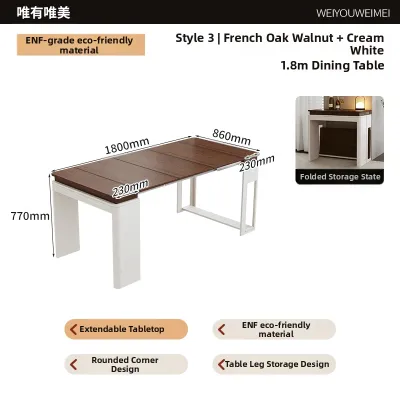
Prices are valid at publication and may change. Please refer to the product page for the latest price.
The shape of the table significantly influences how these dimensions translate to actual seating capacity. Rectangular expandable tables are the most common and efficient choice for seating 6 to 10 people. Their straight edges align perfectly with walls and allow for structured, parallel seating arrangements. Oval tables offer a softer aesthetic and can make navigating tight spaces easier due to their rounded corners, though they provide slightly less surface area at the ends. Round tables that expand into ovals are excellent for square rooms, maintaining an intimate setting daily and stretching to accommodate larger groups when extended.
Relying solely on generalized seating estimates from manufacturers can lead to layout issues. Dining chairs vary greatly in their dimensions; modern upholstered chairs or those with wide armrests can easily measure 55 to 60 centimeters in width, whereas slim wooden side chairs might only measure 45 centimeters. Before purchasing, measure the exact width of the chairs you plan to use. You must also verify the distance between the table legs when the table is both collapsed and fully extended to ensure they do not block chairs from sliding fully underneath.
Measuring Your Dining Room for Collapsed and Expanded States
A successful dining room layout requires a clear distinction between the table’s footprint and the surrounding clearance zones. To ensure guests can sit down, rise, and adjust their chairs comfortably, maintain a minimum clearance of 90 centimeters between the edge of the table and the nearest wall, sideboard, or appliance. If the area behind the chairs serves as a primary walkway, increase this clearance to 120 centimeters. This prevents the dining area from feeling congested and allows for smooth foot traffic even when every seat is occupied.

Architectural features within your home can impose strict limits on where a table can expand. Take note of swinging doors, low-hanging light fixtures, wall-mounted air conditioning units, and large windows. In tropical environments, maintaining proper airflow is essential, so ensure the expanded table does not block standing fans, air conditioning vents, or pathways to balconies and patios. If your dining area is part of a combined living and dining space, map out how the fully extended table will interact with your sofa or entryway.
Beyond the dining room itself, you must consider the logistics of getting the table into your home. Expandable tables are often heavy, dense, and packaged in large, flat boxes. Measure the width and height of your front door, hallway corners, stairwells, and elevator cabins to confirm the package can pass through safely. If you live in a condominium or a multi-story home, check the building’s elevator weight limits and clearance dimensions. Verifying these delivery paths beforehand prevents the frustration of receiving a beautiful piece of furniture that cannot physically enter your living space.
Evaluating Extension Mechanisms and Leaf Storage
The mechanism that allows your table to expand plays a major role in its daily usability, stability, and storage requirements. Drop-leaf tables feature hinged sections that hang vertically when collapsed and lift up to lock into place. While highly convenient for quick transitions, they often have visible seams and may offer less legroom near the support brackets. Butterfly leaf designs feature an integrated extension panel stored in a hidden compartment beneath the tabletop. When the table is pulled apart, the leaf unfolds smoothly like wings. This design is highly user-friendly and eliminates the need to find external storage for the leaves, though the internal gears require careful handling.
Removable leaf designs require you to manually insert separate panels into the center or ends of the table. While these tables often provide a very clean, seamless look when collapsed, you must plan for dedicated storage space for the loose leaves. In humid climates, storing wooden leaves in a damp closet or flat on the floor can cause the wood to warp, swell, or develop mold, making it difficult to align them with the main tabletop later. Store removable leaves flat in a dry, well-ventilated closet, ideally wrapped in a protective fabric sleeve to prevent scratches.
Stability is a critical safety factor when an expandable table is stretched to its maximum length. Pedestal and trestle bases offer excellent legroom because they eliminate corner legs, but they must be engineered with a heavy, balanced base to prevent the table from tipping when weight is applied to the extended ends. Conversely, tables where the legs slide outward to the corners provide exceptional stability but can limit where you place chairs. Inspect the underside of the table to check the quality of the slides, metal runners, and locking latches. Ensure the joints are robust and that the manufacturer provides clear guidelines on weight capacity and regular maintenance.
Final Verification Checklist Before Buying
Before committing to a purchase, perform a physical test of the table’s dimensions in your actual space. Use painter’s tape or lay down sheets of newspaper on your dining room floor to outline the exact dimensions of both the collapsed and fully expanded table. Place your existing dining chairs within this taped outline and practice sitting down, pulling the chairs out, and walking around the perimeter. This simple exercise provides a realistic sense of the room’s flow and helps you visualize whether the expanded table will feel too cramped during large gatherings.
Next, carefully review the product specifications, labels, and care instructions. If you are purchasing a wooden table, verify the type of finish used; a high-quality, moisture-resistant sealant is essential to protect the wood from spills, condensation from cold drinks, and high humidity. Check the manufacturer’s guidelines regarding assembly requirements, tool specifications, and maximum load capacities. Avoid making assumptions about durability based solely on the material name, and instead focus on the quality of the joinery and the manufacturer’s recommended care routines.
Finally, clarify all logistical details with the furniture retailer before finalizing your order. Confirm the delivery fees, which may vary based on your location, and ask if they offer professional assembly services, which typically range from ₱500 to ₱2,000 depending on the complexity of the extension mechanism. Professional installation ensures that the slides, gears, and alignment pins are set up correctly, reducing the risk of mechanical failure. Additionally, review the retailer’s return policy and warranty terms, especially regarding mechanical parts, to protect your investment in case of manufacturing defects.
Frequently Asked Questions (FAQ)
How much clearance is needed between the dining table and walls or other furniture?
For comfortable seating and movement, maintain a minimum clearance of 90 centimeters between the edge of your dining table and any walls or adjacent furniture. This distance allows guests to pull out their chairs and sit down without difficulty. If the space behind the chairs is a primary walkway, or if you have cabinets with doors and drawers that open into the space, increase this clearance to 120 centimeters to ensure safe, unobstructed passage.
Is it possible to seat 10 people on an expandable table without extending it?
Attempting to seat 10 people on a table collapsed for 6 is highly discouraged. Squeezing extra chairs into a restricted space forces guests to sit too close together, leading to overlapping place settings, restricted elbow room, and an uncomfortable dining experience. It can also cause chair legs to bump against the table base, potentially scratching the finish or damaging the joints. Always extend the table to its designated length to ensure everyone has adequate space and the furniture remains stable.

Community discussion
Share your experience or ask a question. Comments are reviewed before publication.