
Hosting large family gatherings, or salo-salo, is a cherished tradition that brings loved ones together over shared meals. Finding a dining table that accommodates a fluctuating guest list of 6 to 10 people while fitting comfortably within your home requires careful planning. An extendable rattan dining table offers a beautiful, tropical aesthetic that suits warm climates, but its dimensions must be calculated precisely to ensure everyone has enough room to enjoy their meal.
To comfortably seat 6 to 10 diners, you will generally need a table that can expand from a closed length of 150 to 180 centimeters up to an extended length of 240 to 300 centimeters. This transition allows you to maintain an intimate setting for daily family meals while remaining fully prepared for larger celebrations. Balancing the physical footprint of the table with the natural flow of your dining room is the key to creating an inviting and functional space.
Understanding Table Dimensions for 6 to 10 Seats
When calculating the size of your dining table, the first factor to consider is the personal space required for each individual diner. A standard rule of thumb is to allocate 60 to 75 centimeters of table width per person. This range ensures that guests can eat, toast, and converse without bumping elbows. Additionally, each place setting requires a minimum depth of 35 to 40 centimeters to accommodate dinner plates, glassware, and utensils comfortably.
Products mentioned in this guide
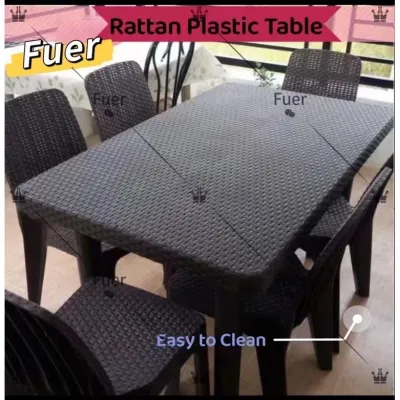
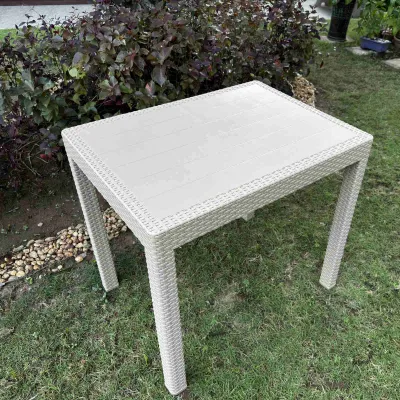
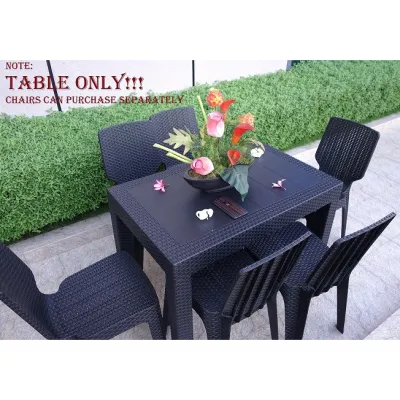
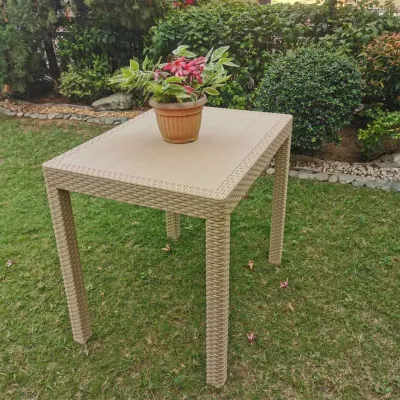
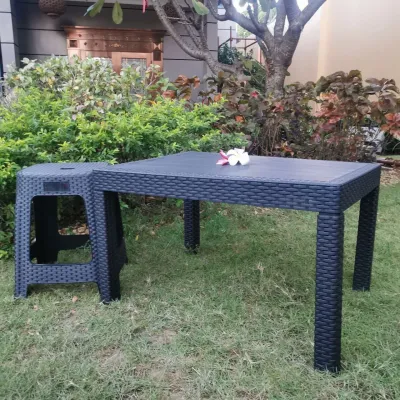
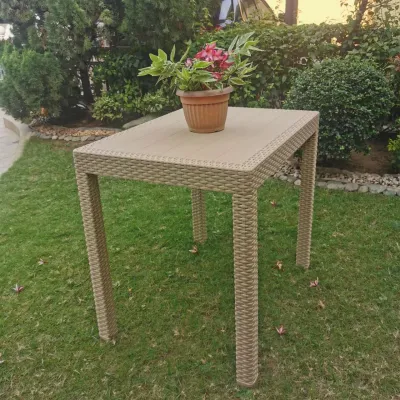
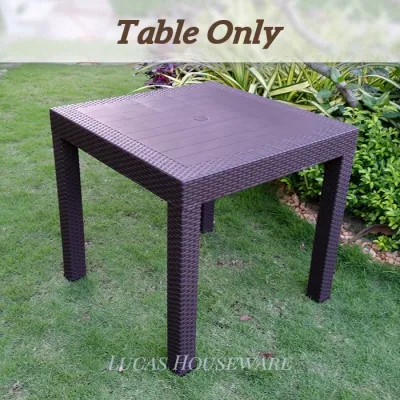
Prices are valid at publication and may change. Please refer to the product page for the latest price.
To transition seamlessly between different hosting scenarios, you must understand how these measurements translate into table lengths. A closed table length of 150 to 180 centimeters is ideal for seating 6 people comfortably, with two diners on each long side and one at each end. To expand this setup for 8 people, the table should extend to approximately 200 to 220 centimeters. For a full gathering of 10 people, you will need an extended length of 240 to 300 centimeters to prevent crowding.
Table shape also plays a significant role in seating capacity and overall legroom. Rectangular rattan tables offer a classic look and maximize surface area for serving platters, but their sharp corners can sometimes limit seating flexibility. Oval extendable tables, on the other hand, feature curved ends that allow you to squeeze in an extra chair more easily. Furthermore, tables with a central pedestal base offer significantly more legroom than traditional four-legged designs, which can restrict where guests sit near the corners.
Finally, the type of dining chairs you pair with your rattan table will influence your sizing calculations. Standard armless dining chairs are highly space-efficient and can easily slide under the table apron when not in use. However, if you prefer the comfort of armchairs at the ends of the table, you must account for their extra width. Armchairs typically require an additional 10 to 15 centimeters of clearance and may not tuck fully under the table frame, especially if the table has a thick woven apron.
Evaluating Extension Mechanisms for Rattan Tables
Extendable rattan tables rely on various mechanical designs to transition between sizes, and choosing the right one depends on your physical handling preferences. The three most common mechanisms are drop-leaf, butterfly leaf, and removable center leaves. Drop-leaf tables feature hinged sides that hang down when closed, making them highly compact but sometimes limiting legroom for those sitting near the hinges. Butterfly leaf mechanisms are integrated directly into the table frame, folding and storing neatly beneath the tabletop when not in use.

Removable center leaves are another popular option, requiring you to physically insert one or two separate panels into the center of the table when it is pulled apart. Because rattan furniture often features a solid wood or metal sub-frame beneath the woven exterior, these extension leaves can be surprisingly heavy. Before purchasing, verify the weight of the leaves and assess whether you can comfortably lift, insert, and align them without assistance.
Regardless of the mechanism you choose, the quality of the extension tracks is critical for long-term durability. Look for tables equipped with smooth metal or heavy-duty hardwood glides that allow the table to open easily without sticking. It is also essential to check for secure locking latches underneath the tabletop. These latches lock the extended sections firmly in place, preventing the table from drifting apart or sagging under the weight of heavy serving dishes.
If you select a table with removable leaves, you must also plan for their storage when they are not in use. Because the Philippines experiences high relative humidity, storing wooden or rattan components in damp, unventilated areas can lead to warping or mold growth. Keep your spare leaves in a dry closet or under-bed storage container, and consider using protective fabric storage bags to shield the delicate woven edges from scratches and dust.
Measuring Your Dining Space for Comfort and Flow
Before committing to a specific table size, you must measure your dining room to ensure the fully extended table does not block essential walkways. To allow guests to pull out their chairs and sit down comfortably, maintain a minimum clearance of 90 centimeters between the edge of the table and the nearest wall or piece of furniture. For a truly comfortable flow that allows people to walk behind seated guests, aim for a clearance of 120 centimeters.
In many homes, the dining area shares space with other furniture, such as sideboards, buffets, or display cabinets. When measuring your room, always calculate your clearances from the outermost edge of these adjacent pieces rather than the wall itself. Additionally, take note of any nearby doors, including pantry doors or patio entryways, to ensure their swing paths remain completely unobstructed even when the table is fully extended to its 10-seat capacity.
Lighting is another crucial element of space planning that is easily overlooked. A dining pendant light or chandelier should ideally hang directly over the center of the table to provide balanced illumination. When a table extends from a 6-seat to a 10-seat configuration, its center point shifts. Ensure your lighting fixture is wide enough to cast adequate light across the extended length, or consider installing an adjustable track lighting system that can be repositioned as needed.
Lastly, pay close attention to high-traffic zones and emergency exit routes within your home. In open-plan layouts where the dining room connects the kitchen to the living area, a fully extended table can easily turn into an obstacle. Walk through the space with a tape measure or lay down painter’s tape on the floor to visualize the table’s maximum footprint, ensuring that pathways to exits, bathrooms, and hallways remain clear and safe at all times.
Checking Rattan Table Build and Stability at Full Length
An extendable table must remain structurally sound and stable when fully expanded to support the weight of food, dinnerware, and leaning elbows. The placement of the table legs or base is a primary factor in preventing tipping. Pedestal bases offer excellent legroom but must be heavy and wide enough at the floor to anchor the table when weight is applied to the extended ends. Conversely, four-legged tables where the legs slide outward with the extension offer superior stability at the ends, though the legs may interfere with chair placement.
Because rattan is a flexible vine, it cannot serve as the sole structural support for a large dining table. High-quality rattan tables feature a robust underlying frame made of solid hardwood or powder-coated metal. Before buying, look underneath the table to inspect this sub-frame. The frame should run the entire length of the table, including the extension tracks, to provide adequate load-bearing strength and prevent the center of the table from sagging over time.
Joint reinforcement is another critical area to examine, particularly at the seams where the extension leaves meet the main tabletop. High-quality tables utilize heavy-duty dowels, metal alignment pins, and robust locking hardware to ensure a flush, seamless fit. Gently shake the table when it is fully extended to check for wobble resistance; any significant swaying or looseness at the joints indicates a weak frame that may fail under heavy use.
To preserve the integrity of your table, always review the manufacturer’s weight limits and care instructions. Woven rattan surfaces are susceptible to damage from extreme heat and moisture. When serving hot dishes during family gatherings, always use thick trivets or heat-resistant placemats to protect the weave. Additionally, avoid placing wet cups directly on the rattan, as moisture can seep into the fibers and weaken the adhesive or binding materials over time.
Common Sizing and Placement Mistakes to Avoid
One of the most common mistakes homeowners make is overestimating their dining room’s capacity by ignoring the physical footprint of their chairs. Woven rattan chairs, especially those with wide, flared armrests, take up significantly more space than standard metal or wooden chairs. If you do not account for the width of these armrests, you may find that your fully extended table cannot actually accommodate the 10 chairs you planned for without squeezing guests uncomfortably close together.
Another frequent oversight is failing to measure the delivery path leading into your home. An extendable table may fit perfectly in your dining room once assembled, but its packaged box or fully assembled closed frame must first navigate doorways, narrow hallways, stairwells, and condominium elevators. Always compare the manufacturer’s packaging dimensions with the narrowest points of your entry path to avoid a frustrating delivery day experience.
Placing an extendable table too close to walls or corners is another error that can lead to physical damage. When guests are forced to squeeze into tight spaces, their chairs are more likely to scrape against the walls, which can scratch paint and fray the delicate outer peel of the rattan weave. Ensuring adequate clearance around the entire perimeter of the table protects both your home’s walls and your furniture investment.
Finally, consider the visual weight of the rattan weave you choose. Thick, chunky, or dark-stained rattan weaves possess a heavy visual presence that can make a small or moderately sized dining room feel incredibly cramped and cluttered. If your dining space is compact, opt for lighter, open-cane weaves or tables that pair a woven rattan base with a sleek glass or smooth wooden top to maintain an airy, spacious feel.
Frequently Asked Questions (FAQ)
How do I clean the extension tracks of a rattan dining table?
To clean the extension tracks, start by using a vacuum cleaner with a crevice tool attachment to suck up loose crumbs, dust, and pet hair. For stubborn debris lodged in the tracks, use a soft-bristled brush or an old toothbrush to gently scrub the area clean. If the tracks require lubrication to slide smoothly, apply a small amount of dry silicone spray lubricant according to the manufacturer’s instructions, taking care to shield the surrounding rattan fibers with a cloth to prevent oil stains.
Can I use a tablecloth on an extendable rattan table without it slipping?
Yes, you can easily use a tablecloth on a rattan table. The natural texture of the woven rattan actually provides a decent grip that helps keep fabrics from sliding around. However, to ensure a perfectly flat surface and prevent the cloth from shifting during lively meals, place a thin, non-slip silicone pad or a felt table pad underneath the tablecloth, or secure the edges using adjustable table clips.
Does the rattan weave stretch or loosen when the table is extended?
No, the rattan weave itself should not stretch or loosen when the table is extended, as the woven material is tightly wrapped and secured around a rigid wood or metal frame. However, the seams where the table splits to accommodate the extension leaves are areas of high friction. Periodically inspect these seams for any loose ends, fraying fibers, or binding wraps that might catch on the metal tracks or locking hardware during operation.

Community discussion
Share your experience or ask a question. Comments are reviewed before publication.