
Finding the right outdoor table with an umbrella hole for a compact apartment balcony requires balancing shade needs, seating capacity, and safe movement. There is no single standard size that fits every space; the ideal dimensions depend entirely on your balcony’s usable area, door swing clearance, and the specific umbrella you plan to use. This guide walks you through the measurement, shape selection, and safety checks needed to choose a table that maximizes comfort without overcrowding your outdoor lounge.
Measure Your Balcony and Calculate Usable Space
Before browsing online marketplaces or visiting local showrooms, you must establish the exact physical boundaries of your balcony. Start by measuring the total length and width of the concrete floor slab from wall to railing. Do not assume the space is a perfect rectangle; structural pillars or drainage pipes often cut into your floor plan. Additionally, pay close attention to the slope of the floor. Balconies in tropical climates are designed with a slight incline to direct heavy monsoon rainwater toward the drainage grates, which can affect how level your table and chairs will sit.
Next, map out the swing radius of all entryways. Open your balcony doors and any adjacent windows fully, measuring the exact path they travel. Your furniture must sit completely outside this swing zone to prevent glass damage and ensure you can easily step outside or retreat indoors during a sudden downpour. Beyond door clearance, you must factor in human movement. A functional layout requires a clear walking path of at least 60 to 75 centimeters around the table. You must also account for the space needed to pull out chairs and sit down comfortably without hitting the railing or the apartment wall.
Products mentioned in this guide
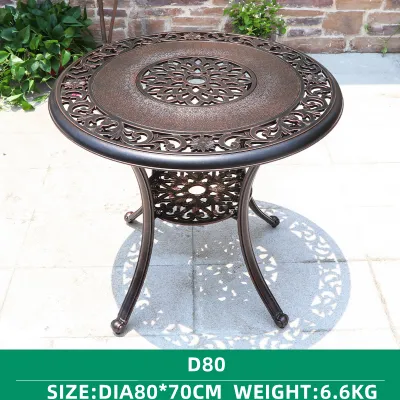
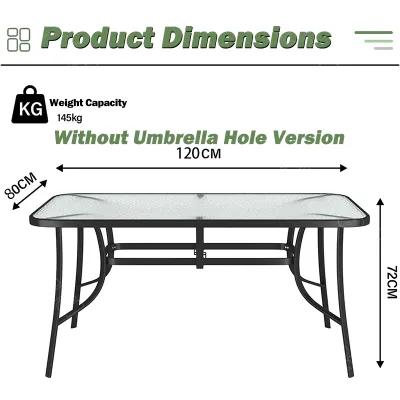

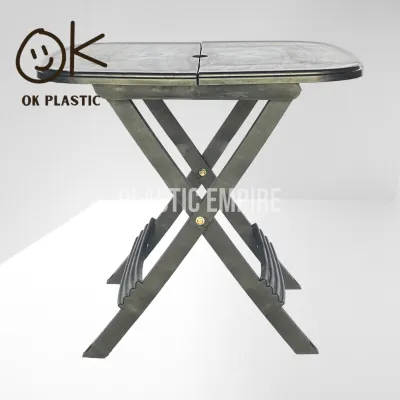
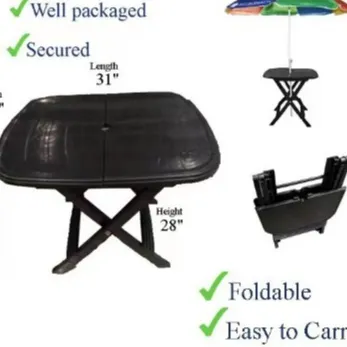
Prices are valid at publication and may change. Please refer to the product page for the latest price.
Finally, consult your building’s property management office (PMO) guidelines before making any purchase. Many condominium developments and apartment complexes enforce strict rules regarding balcony aesthetics, weight limits, and safety. Some associations prohibit any furniture or umbrellas that extend past the height of the railing, while others restrict the total weight allowed on the slab. Understanding these structural and administrative limits beforehand prevents costly returns and ensures your setup remains safe and compliant.
Match Table Dimensions and Shapes to Your Layout
Once you have calculated your true usable footprint, you can select a table shape that complements your balcony’s layout. Round tables are highly popular for small spaces because their lack of sharp corners improves traffic flow and allows you to squeeze in an extra chair when hosting guests. Square tables offer a clean, modern look and can be pushed directly against a wall or railing when you need to clear the floor. For narrow balconies, a rectangular table or a half-round wall-mounted design works best, hugging the wall while still providing a center hole for a half-canopy umbrella.

To determine the maximum allowable dimensions for your table, subtract your required seating and walking clearances from your total usable space. For example, if your usable balcony width is 150 centimeters, a table wider than 70 to 80 centimeters will likely crowd the space, leaving too little room for chairs to slide out safely. Remember that when seated, a person’s chair extends an additional 45 to 50 centimeters from the table edge. If the table is too large, chairs might sit dangerously close to the railing.
If you require flexibility, consider folding or extendable outdoor tables. These designs allow you to keep the table compact for daily use and expand it only when needed. When evaluating these options, inspect the hinge stability, locking mechanisms, and the placement of the support legs. Ensure that the folding joints are made of rust-resistant materials like powder-coated aluminum or treated stainless steel to withstand high humidity. A common sizing error is choosing a table that fits the floor plan perfectly but fails to accommodate the heavy, wide base required to keep the umbrella stable, leaving you with no legroom under the table.
Align the Umbrella Hole with Shade and Clearance Needs
An outdoor table with hole functionality is only as useful as the umbrella you pair with it. Start by verifying the diameter of the table’s center hole against the pole specifications of your chosen umbrella. Most standard outdoor tables feature a hole diameter of 4 to 5 centimeters, but poles can vary significantly. If the hole is too wide, the pole will tilt and wobble; if it is too narrow, the pole will not fit at all. Check if the table includes a plastic or rubber ring adapter to help secure poles of different thicknesses.
You must also assess the open canopy radius of the umbrella in relation to your balcony’s physical surroundings. A canopy that is too wide will scrape against exterior walls, damage ceiling fixtures, or intrude into neighboring balconies. Measure the vertical clearance from floor to ceiling, ensuring the umbrella’s height does not touch overhead structures. Keep in mind that a standard umbrella canopy needs room to expand fully without friction, as constant rubbing against concrete walls will quickly tear the fabric.
Wind load management is a critical safety consideration for any balcony setup, especially on higher floors where wind speeds are significantly stronger. A center-hole table provides excellent lateral support, but it must always be paired with a heavy, dedicated umbrella base underneath the table to prevent the wind from lifting the canopy. Never rely on the table alone to hold the umbrella upright. Establish a strict household rule to collapse and secure the umbrella whenever it is not in use or when weather forecasts predict high winds. If a center-hole setup restricts your legroom too much, look into compact offset or cantilever umbrellas that stand independently, though these require even heavier bases and more floor space.
Verify Clearance, Assembly, and Safety Conditions
Before finalizing your purchase, you must ensure that the table can actually reach your balcony. Measure the height and width of elevator doors, service stairwells, and your unit’s entryways. Many buyers overlook these transit routes, only to find that a large flat-packed table cannot clear a tight hallway corner. If you live in a high-rise building without a service elevator, choosing a modular or easily disassembled table is essential for a hassle-free delivery.
Next, inspect the design of the table’s feet. Balcony floors are commonly finished with ceramic tiles, natural stone, or synthetic wood decking, which are susceptible to scratching under heavy furniture. Look for tables equipped with non-marking rubber or plastic glides on the feet. If the table does not come with these, plan to purchase heavy-duty outdoor protective pads to shield your flooring from damage and prevent rust stains from metal frames.
Review the manufacturer’s assembly instructions to confirm you have the necessary tools and a safe workspace. Assembling furniture on a cramped balcony can be difficult and dangerous, as small screws or tools can easily slip through railing gaps. If possible, assemble the table indoors in a spacious room before moving it outside. Finally, check if the table or umbrella base requires anti-tip or wind-securing mechanisms. Some manufacturers recommend anchoring the table frame or the umbrella base directly to the balcony floor or railing using heavy-duty straps or brackets, which is highly recommended for wind-prone coastal or high-rise apartments in the Philippines.
Frequently Asked Questions (FAQ)
Can I use a standard patio umbrella on a small balcony table?
Using a standard patio umbrella on a small balcony table is generally not recommended unless the canopy diameter is specifically designed for compact spaces. Standard umbrellas often feature a canopy span of 2.5 to 3 meters, which can easily overhang the balcony railing, block walkways, or catch strong winds like a sail. This creates a severe safety hazard in high-rise buildings. Before pairing any umbrella with a lightweight balcony table, verify that the table can support the weight of both the umbrella pole and the heavy base required to keep it stable.
What if the umbrella hole is too large for my umbrella pole?
If the table’s umbrella hole is larger than your umbrella pole, you should use manufacturer-approved hole reducers, plastic inserts, or rubber grommets to bridge the gap. These accessories center the pole, prevent it from tilting, and protect both the table surface and the pole from scratches. Avoid using improvised wedges like folded cardboard, wooden shims, or tape, as these materials degrade quickly under tropical humidity and rain, compromising the umbrella’s stability and increasing the risk of tipping during a sudden gust of wind.
Are glass-top tables with umbrella holes safe for high-rise balconies?
Glass-top tables with umbrella holes can be safe, but they require careful verification. You must confirm that the table features tempered safety glass rated for outdoor thermal stress and impact resistance. High-rise balconies experience intense sun exposure and strong wind gusts, which can put immense pressure on the glass around the umbrella hole. Ensure the table frame has a secure, cushioned grip on the glass panel, and consider lighter, shatter-resistant alternatives like powder-coated aluminum, treated teak, or metal mesh if your balcony is highly exposed to the elements.

Community discussion
Share your experience or ask a question. Comments are reviewed before publication.