
Utilizing the dead space beneath hanging clothes is a highly effective way to maximize storage in a typical condominium or bedroom wardrobe. However, fitting a slim shoe cabinet into this specific area requires precise spatial planning and an understanding of how different cabinet designs interact with your existing closet structure. To achieve a seamless fit, you must balance the physical dimensions of your footwear, the length of your hanging garments, and the operational clearances of both the wardrobe doors and the shoe cabinet itself. In tropical climates like the Philippines, where high humidity can easily trap moisture and lead to mold, selecting the correct dimensions also plays a critical role in maintaining adequate airflow to protect your wardrobe investments.
Measuring Your Wardrobe's Available Space
Before browsing for a slim shoe cabinet, you must establish the exact physical boundaries of the empty space at the bottom of your wardrobe. Start by measuring the total internal depth of the wardrobe, running your tape measure from the back panel to the inner edge of the closed doors. External wardrobe measurements are often misleading because door tracks, back panels, and frame thicknesses can reduce the actual usable internal depth by several centimeters.
Next, determine the gross vertical space available by measuring from the floor of the wardrobe to the lowest point of your hanging rod. This measurement provides the absolute vertical limit, though the actual usable height for a cabinet will be significantly lower once you account for the clothes hanging on the rod. If your wardrobe features a raised bottom lip or a built-in plinth, measure from that raised surface rather than the room’s floor.
Products mentioned in this guide
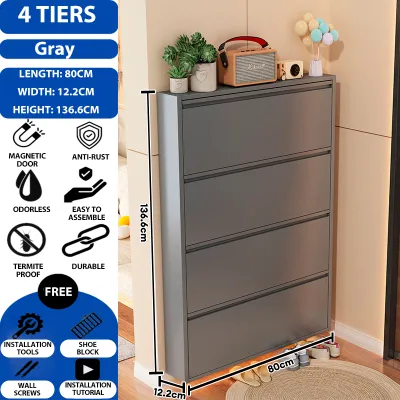
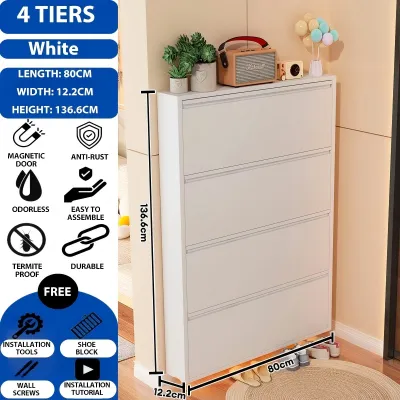
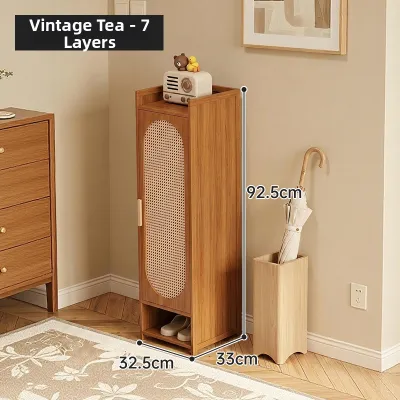
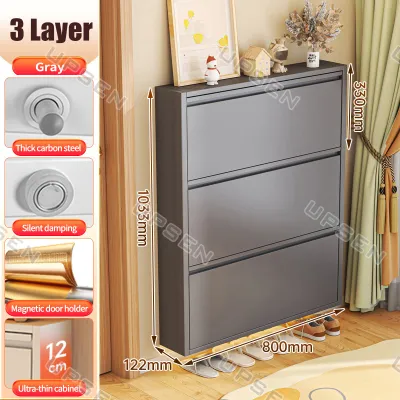
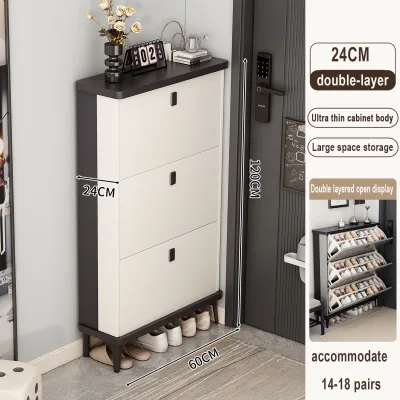
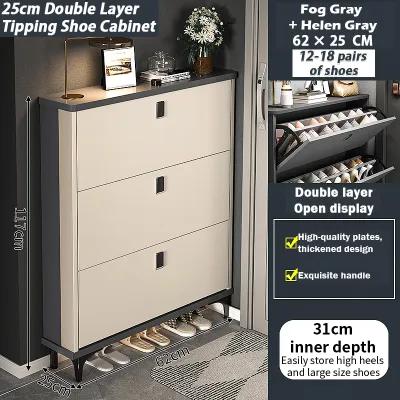
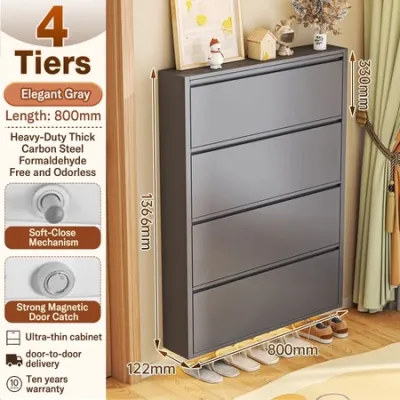
Prices are valid at publication and may change. Please refer to the product page for the latest price.
Finally, inspect the interior of the wardrobe for any structural obstructions that could interfere with a flat-backed cabinet. Look for baseboards, protruding screw heads, internal hinges, or sliding door tracks that sit along the floor. If your wardrobe uses sliding doors, the bottom track often occupies a significant portion of the floor space, which will reduce the depth available for your shoe cabinet. Note down these restricted zones so you do not accidentally purchase a unit that sits unevenly or blocks the door mechanisms.
Calculating the Maximum Cabinet Height
To find the safe height limit for your shoe cabinet, you must evaluate the garments currently hanging in your wardrobe. Begin by categorizing your hanging clothes by length, separating shorter items like folded trousers, shirts, and blouses from longer items such as dresses, coats, or long skirts. This categorization allows you to identify the shortest consistent hemline in the designated zone where you plan to place the cabinet.

Once you have identified the lowest hemline, measure the distance from that hem to the wardrobe floor. To prevent your clothes from dragging on top of the cabinet, wrinkling, or snagging on the cabinet’s edges, you must subtract a mandatory clearance gap of at least 10 to 15 centimeters from this measurement. This gap ensures that air can circulate freely around the bottom of your garments, which is especially important in humid environments where stagnant air can lead to musty odors.
If your wardrobe is currently a mix of various clothing lengths, consider reorganizing your hanging rod to maximize the continuous floor space. By grouping all short garments on one side of the wardrobe, you create a taller, wider opening underneath them. This simple adjustment allows you to accommodate a taller shoe cabinet with more tiers, significantly increasing your shoe storage capacity without requiring a larger wardrobe footprint.
Selecting the Ideal Depth and Width Constraints
Standard wardrobes typically feature an internal depth of 55 to 60 centimeters to accommodate standard clothes hangers. In contrast, a slim shoe cabinet is specifically designed to minimize its footprint, with typical depths ranging from 15 to 30 centimeters. When selecting a cabinet, you must ensure that its depth leaves enough room for your hanging clothes to hang naturally without being pushed forward against the wardrobe doors.
The choice between different cabinet styles heavily influences the depth you can afford. Tilt-out slim cabinets are the most space-efficient option, often requiring a depth of only 15 to 20 centimeters because the shoes are stored vertically. Standard flat-shelf shoe racks or cabinets, on the other hand, usually require a depth of at least 30 to 35 centimeters to accommodate average shoe sizes horizontally. If your wardrobe is shallow, a tilt-out model is almost always the necessary choice to keep the unit completely contained within the closed doors.
To determine the maximum width of the cabinet, measure the horizontal distance between the wardrobe’s side panels or internal vertical dividers. Ensure you leave a small clearance of about 1 to 2 centimeters on either side of the cabinet. This minor gap makes the cabinet much easier to slide in during installation and prevents the cabinet corners from scratching the interior finish of your wardrobe over time.
Managing Clearances and Avoiding Common Sizing Mistakes
A common pitfall when integrating a shoe cabinet into a wardrobe is failing to account for operational clearances. If your wardrobe has hinged doors, you must ensure that the cabinet does not obstruct the door hinges or prevent the doors from closing completely. For wardrobes with sliding doors, the cabinet must sit entirely behind the front track, as even a millimeter of protrusion can jam the sliding mechanism or scratch the door panels.
You must also evaluate the opening mechanism of the shoe cabinet itself. Tilt-out drawers require a specific forward clearance when opened, as the drawer fronts swing outward and downward. If the wardrobe’s internal depth is tight, you may not be able to open the tilt-out drawers fully without hitting the wardrobe door frame or the sliding door tracks. Always check the manufacturer’s specifications for the fully opened depth of the cabinet to ensure it can operate smoothly within your closet.
To avoid frustrating sizing mistakes, never rely on visual estimates or assume that standard cabinet sizes will fit your specific wardrobe. Always use a rigid metal tape measure rather than a flexible fabric one, as fabric tapes can stretch and lead to inaccurate readings. Double-check every measurement, and always round down your available space measurements by a few millimeters to provide a safe margin for error.
Evaluating Slim Shoe Cabinet Styles for Enclosed Closets
When choosing a slim shoe cabinet for an enclosed wardrobe, you must weigh the pros and cons of different styles based on accessibility and airflow. Tilt-out slim cabinets offer a clean, hidden look and excellent space savings, but they require sturdy wall anchoring or a very stable base to prevent tipping when the heavy drawers are pulled open. If you select a tilt-out model, verify that the wardrobe floor or back panel is strong enough to support the unit’s weight and any necessary anchoring hardware.
Open shelving units and simple wire shoe racks provide a highly functional alternative. While they do not hide your shoes from view, they offer maximum ventilation, which is highly beneficial for preventing moisture buildup and mold growth in tropical climates. Open racks also allow you to see and access your footwear instantly without dealing with opening clearances, making them an excellent choice for tight wardrobe spaces where door clearance is a major issue.
Stackable shoe boxes made of clear plastic are another versatile option. They allow you to customize the height and width of your storage layout to match the exact contour of your hanging clothes. When budgeting for your closet upgrade, check local furniture retailers in the Philippines for options that fit your allocated ₱ budget. While high-end wooden cabinets offer a premium look, lightweight plastic or metal modular systems are often more practical for rental properties or condominiums where permanent modifications are not permitted.
Frequently Asked Questions (FAQ)
Can I place a shoe cabinet in a wardrobe with sliding doors?
Yes, you can place a shoe cabinet in a wardrobe with sliding doors, but you must pay extra attention to the bottom track. Sliding door tracks often require a completely flush floor area directly behind them, and any cabinet feet or baseboards must not encroach on this path. Ensure the cabinet’s depth is shallow enough to sit entirely clear of the sliding door’s path to prevent friction and damage to the doors.
How do I prevent shoe odors from transferring to my hanging clothes?
To prevent odors from transferring, ensure that your shoes are completely clean and dry before placing them inside the wardrobe. You should also maximize airflow by choosing a shoe cabinet with slatted doors or an open-frame design. Placing moisture-absorbing sachets, charcoal deodorizers, or silica gel packs inside the cabinet will help control humidity and neutralize odors in enclosed spaces.
What if my hanging clothes are too long for any shoe cabinet?
If your hanging garments leave very little vertical clearance, consider using low-profile stackable shoe boxes or flat under-bed storage organizers that can slide under the lowest hemlines. Alternatively, you can relocate your longer garments, such as dresses or long coats, to a different section of the wardrobe or a separate garment rack, freeing up a dedicated high-clearance zone for a proper slim shoe cabinet.

Community discussion
Share your experience or ask a question. Comments are reviewed before publication.