
Hosting a large family dinner for 6 to 10 guests is a cherished tradition, but passing heavy serving platters back and forth can quickly disrupt the flow of a meal. Integrating a turntable for dining table setups—often referred to as a lazy Susan—is the most practical way to ensure everyone has effortless access to every dish. To find the ideal size, you must balance the physical dimensions of your table with the space required for individual place settings.
For a standard 6 to 10-person dining table, the ideal turntable diameter typically ranges from 24 to 32 inches (60 to 80 cm) for round tables, and 18 to 24 inches (45 to 60 cm) for rectangular tables. Choosing a size within these ranges prevents guests from stretching across the table while preserving enough perimeter space for dinnerware, glassware, and cutlery. Selecting the wrong size can lead to cramped dining quarters or, conversely, a turntable that is too small to reach comfortably.
To make an informed purchase, you must evaluate your specific table shape, calculate precise clearances, and select materials that can withstand heavy serving loads. This guide details the essential mathematical rules, material considerations, and practical arrangement tips to help you choose the perfect turntable for your dining room.
Products mentioned in this guide
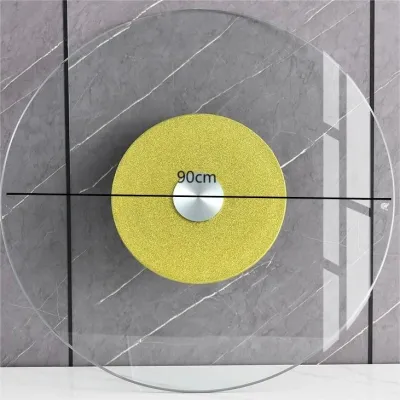
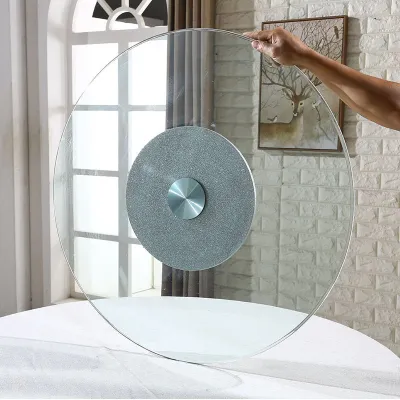
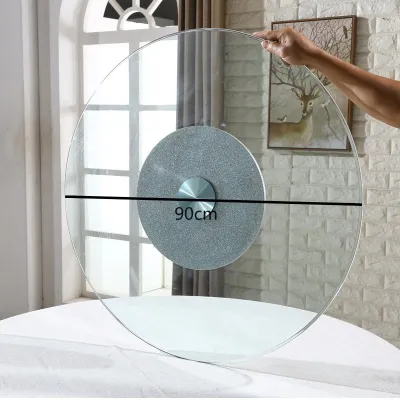
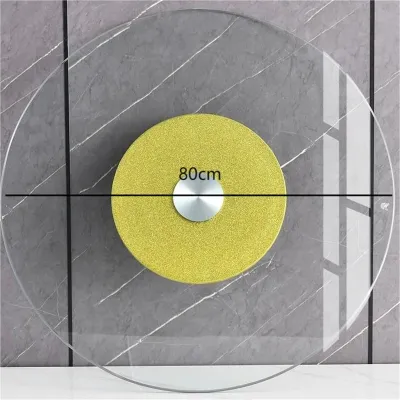
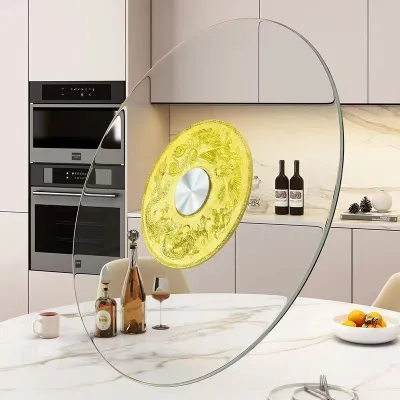
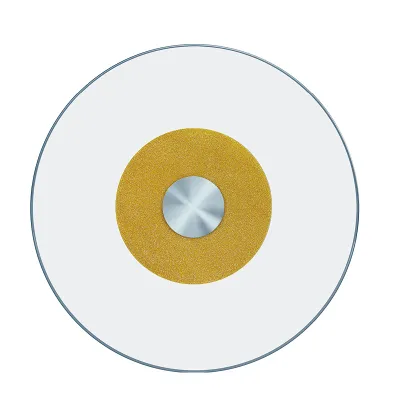
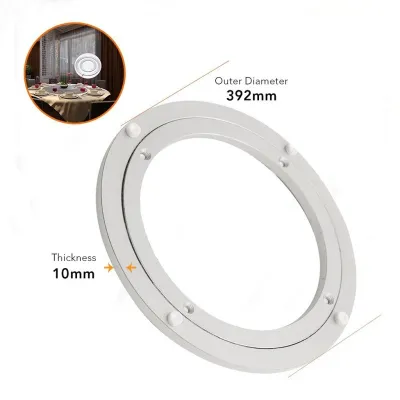
Prices are valid at publication and may change. Please refer to the product page for the latest price.
The Golden Rule of Turntable Sizing and Clearance
When introducing a revolving tray to your dining setup, the most critical factor is the clearance rule. Clearance refers to the empty space left between the outer edge of the turntable and the edge of the dining table. This perimeter zone is where your guests place their dinner plates, silverware, serving napkins, and drinking glasses. If this space is too narrow, guests will feel cramped, and their personal items may collide with rotating dishes.
To maintain a comfortable dining environment, you should leave a minimum of 12 to 16 inches of clearance on all sides of the turntable. This translates to reducing the total width or diameter of your table by 24 to 32 inches to determine the maximum allowable size of your turntable. For example, if you have a round table with a diameter of 60 inches, subtracting 30 inches of total clearance (15 inches on each side) leaves you with an ideal turntable diameter of 30 inches. This spacing ensures that a standard 10-inch dinner plate and a water glass fit comfortably without hanging over the edge or getting bumped during rotation.
Measuring your table accurately before purchasing a turntable is a straightforward process but requires attention to detail. For a round table, use a flexible tape measure to find the exact diameter across the widest central point. For rectangular, oval, or square tables, always measure the narrowest width rather than the length. Because rectangular tables are typically narrower than they are long, the narrowest width dictates the maximum diameter of the turntable; exceeding this limit will cause the rotating tray to overhang the sides of the table.
Additionally, consider the height of your dining chairs and how close your guests sit to the table. If your family prefers spacious place settings with multiple glasses or side bowls, lean toward the higher end of the clearance recommendation (15 to 16 inches per side). If you typically serve simple, single-plate meals, you can operate comfortably with a 12-inch clearance on each side, allowing for a slightly larger rotating surface to hold more shared dishes.
Recommended Turntable for Dining Table Sizes (6-10 Persons)
Selecting the right turntable size depends heavily on your table’s shape and seating capacity. Round tables are highly efficient for group dining because every seat is equidistant from the center, making them the most natural fit for a central revolving tray. If you are seating 6 to 8 people at a 60-inch round table, a 24-inch to 28-inch turntable is highly recommended. For larger gatherings of 8 to 10 people gathered around a 72-inch round table, look for a turntable diameter of 30 to 34 inches, which leaves ample room for large serving platters while maintaining a generous 19-inch perimeter for dinnerware.

Rectangular and oval tables require a different approach because their elongated shapes mean that guests seated at the far ends will always be further from the center than those seated along the sides. When choosing a turntable for a rectangular table, you must base the size entirely on the table’s width. For a standard rectangular table with a width of 36 to 42 inches, the turntable should not exceed 18 to 22 inches in diameter. This size ensures that guests seated along the sides still have 9 to 10 inches of space for their plates while keeping the rotating tray safely centered.
For extra-large or extendable tables designed to seat 10 or more guests, a single central turntable is often impractical. Guests seated at the far ends of an 8-foot or 10-foot rectangular table will find it impossible to reach a single center unit without standing up. In these scenarios, a highly effective alternative is to use two smaller turntables, such as two 18-inch models, placed at opposite ends of the table’s centerline. This dual-zone setup ensures that all guests have easy access to food, condiments, and drinks without disrupting those seated in the middle.
When budgeting for your dining room upgrade, keep in mind that prices vary based on size and material. In the local market, standard tempered glass or basic wooden turntables ranging from 18 to 24 inches generally cost between ₱1,200 and ₱3,500. Larger, premium options measuring 30 to 36 inches, particularly those crafted from high-grade solid hardwoods or thick architectural glass, typically range from ₱4,000 to ₱8,000 or more. Investing in the correct size prevents the inconvenience of returning a bulky item that crowds your dining space.
Choosing Materials and Bases for Heavy Serving Loads
Serving a meal to 6 to 10 people requires a turntable that can support significant weight. Between heavy ceramic soup bowls, cast-iron sizzling plates, large rice dispensers, and multiple beverage carafes, the total load can easily reach 10 to 15 kilograms. To prevent the turntable from tilting, wobbling, or stalling, you must examine the construction of the rotating base and the quality of the bearings.
When reviewing product specifications, prioritize bases equipped with heavy-duty aluminum alloy or stainless steel ball-bearing rings rather than cheap plastic tracks. Steel ball bearings distribute weight evenly across the base, ensuring a smooth, silent glide even when fully loaded. Additionally, look for bases that feature non-slip rubber pads on the bottom; these pads prevent the entire turntable assembly from sliding across your wooden or glass tabletop during rotation, protecting your furniture from unsightly scratches.
Surface materials play a significant role in both the durability and maintenance of your turntable, especially in tropical climates where humidity and spills are constant factors.
- Tempered Glass: This is a highly practical choice for busy households. It is exceptionally easy to wipe clean, completely resistant to moisture, and can handle hot serving pots directly from the stove without marking. It also offers a sleek, modern aesthetic that blends seamlessly with various table designs.
- Solid Wood (e.g., Acacia or Mahogany): Wooden turntables offer a warm, classic look that complements traditional dining sets. However, because wood is susceptible to warping or cracking in humid conditions, you must verify that the piece has been treated with a food-safe, moisture-resistant sealant. Always check the manufacturer's care instructions regarding heat exposure.
- Bamboo: A lightweight and budget-friendly alternative to solid wood, bamboo is naturally water-resistant but must be dried thoroughly after cleaning to prevent mold growth in humid environments.
- Acrylic: While lightweight and modern, acrylic is prone to scratching from the rough ceramic bases of heavy serving bowls. It is best reserved for lighter casual dining or condiment organization.
Another functional design element to consider is whether to choose a flat-edge turntable or one with a raised lip. A raised lip or rim, typically measuring 0.5 to 1 inch in height, is incredibly useful for preventing condiment bottles, small dipping bowls, or glassware from sliding off the edge due to centrifugal force. This feature is particularly beneficial in households with children or elderly family members who may rotate the turntable with a bit too much enthusiasm.
Setup and Balancing Tips for Large Family Meals
To ensure your turntable operates smoothly during a lively family gathering, proper setup and dish arrangement are essential. Even the highest-quality bearing mechanism can struggle or squeak if the weight on top is distributed unevenly. When placing food on the rotating tray, practice balanced loading by placing your heaviest dishes, such as large soup tureens or heavy meat platters, directly opposite one another. This balanced distribution keeps the center of gravity aligned over the bearing ring, reducing wear on the mechanism and preventing the tray from tipping.
Height management is another key factor in maintaining a pleasant dining atmosphere. Place taller items, such as water pitchers, wine bottles, or decorative centerpieces, in the exact center of the turntable. Shorter dishes, dipping bowls, and condiment jars should occupy the outer perimeter. This arrangement ensures that tall items do not block the sightlines of guests sitting across from each other, and it prevents tall bottles from tipping over when someone reaches for a dish on the opposite side of the tray. Additionally, verify that the height of your central items does not interfere with any low-hanging dining room pendant lights or chandeliers.
Maintaining your turntable’s track is vital for long-term performance. Over time, food crumbs, sticky sauce drips, and dust can migrate underneath the rotating platform and clog the bearing track, causing friction and uneven rotation. After every heavy meal, take a moment to inspect the underside of the unit. Wipe the surface down with a damp microfiber cloth, and use a soft-bristled brush or compressed air to clear any debris from the bearing ring.
If you notice the rotation becoming stiff or noisy over time, consult the manufacturer’s guidelines regarding lubrication. Many metal bearing tracks benefit from an occasional light application of food-safe silicone lubricant to restore their silent, effortless glide. Taking these simple maintenance steps will keep your dining accessory functioning perfectly for years of family feasts.
Frequently Asked Questions (FAQ)
Can I use a turntable on a rectangular dining table?
Yes, you can comfortably use a turntable on a rectangular dining table, but you must select the size based on the table’s narrowest width rather than its length. To ensure guests have enough room for their dinner plates, the turntable’s diameter should be at least 24 inches smaller than the table’s width. For very long rectangular tables seating 10 or more people, placing two smaller turntables (such as two 18-inch models) at opposite ends of the table is much more effective than using a single large one, as it allows everyone to reach the dishes without straining.
What is the best way to clean a wooden turntable after a messy family dinner?
To clean a wooden turntable safely without damaging the finish or causing the wood to warp, wipe the surface immediately after use with a slightly damp microfiber cloth and a drop of mild dish soap. Avoid using harsh chemical cleaners, abrasive scrubbing pads, or soaking the wood in water. Once the food residue is removed, dry the surface thoroughly with a clean towel to prevent moisture from soaking into the grain. To protect the wood from humidity and drying out, occasionally apply a thin coat of food-safe mineral oil according to the manufacturer’s care instructions.

Community discussion
Share your experience or ask a question. Comments are reviewed before publication.