
Industrial wall shelves combine the raw strength of metal frameworks with the natural warmth of wood shelving boards to create a functional, rugged focal point in your workspace. Determining the most durable option for your home office does not depend on a single material name, but rather on how well those materials are treated, joined, and installed. To find a shelf that withstands daily use, you must evaluate the combination of metal coatings, wood sealants, and structural hardware against your specific environmental conditions and storage needs.
Common Materials Used in Industrial Wall Shelves
Metal frames and brackets form the structural backbone of these shelving units. Manufacturers typically use carbon steel or structural iron to provide rigidity and prevent bending under load. Because raw metal is highly susceptible to oxidation, these components require protective surface treatments. Powder coating is a common industrial finish that bakes a dry polymer powder onto the metal, creating a thick, impact-resistant barrier. Alternatively, liquid paint finishes offer a smooth look but may chip more easily under heavy contact with office tools.
Wood shelving boards provide the primary surface area for your books, files, and decorative items. Solid wood boards, such as pine, oak, or mahogany, offer natural grain patterns and excellent screw-holding capacity. Reclaimed wood boards introduce unique historical character, featuring weathered textures, nail holes, and natural aging. Engineered wood options, including medium-density fiberboard (MDF) or high-density particleboard with wood veneers, provide a highly uniform surface that resists warping, making them a practical alternative for budget-conscious workspaces.
Products mentioned in this guide
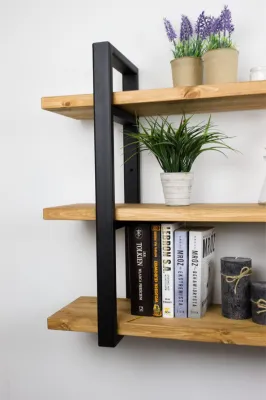
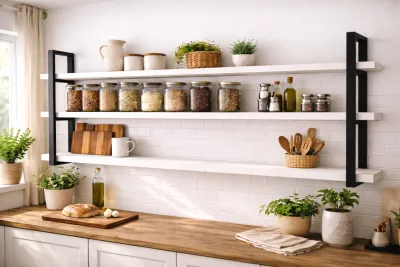
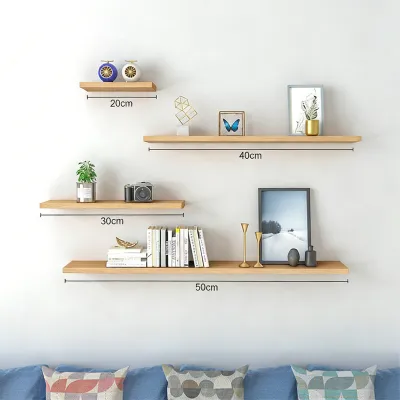
Prices are valid at publication and may change. Please refer to the product page for the latest price.
Pipe fittings and specialized hardware define the classic industrial aesthetic while serving critical structural roles. Real plumbing pipes made of black iron or galvanized steel are threaded into flanges, elbows, and tees to build highly customizable, rigid frames. These pipe configurations allow you to adjust shelf heights or extend the unit from floor to ceiling. The heavy-duty flanges distribute the weight of the shelf across a wider surface area on your wall, ensuring the entire assembly remains stable under load.
Evaluating Durability for Home Office Environments
Assessing durability in a home office requires looking beyond material labels to verify actual product specifications. Rather than assuming a steel frame is automatically strong, you should check the manufacturer’s stated weight capacity for the entire shelving unit. This rating indicates the maximum load the shelf can safely support when properly installed. A high-quality industrial shelf will clearly specify weight limits for both individual tiers and the overall assembly, helping you avoid structural failure.

Local environmental factors, particularly high humidity and ambient moisture, play a significant role in material longevity. In tropical climates like the Philippines, untreated wood can swell, warp, or develop mold, while exposed metal parts can quickly rust. Look for wood boards treated with polyurethane, lacquer, or specialized wood oils that seal the pores against moisture. For metal components, a continuous, flawless powder-coated finish is essential to prevent humid air from reaching the underlying iron or steel.
When comparing solid wood to engineered or reclaimed wood, focus on observable density and finish quality. Solid wood is highly durable but must be properly kiln-dried to prevent cracking as indoor humidity levels fluctuate. Reclaimed wood offers excellent density due to its age, but you must inspect it to ensure it has been thoroughly cleaned, dried, and sealed. Engineered wood is stable in humid conditions but can sag over long spans if it is not supported by a robust metal framework underneath.
Inspecting Construction and Hardware Quality
Before finalizing your purchase or during assembly, perform a physical inspection of the structural components. Check the thickness of the metal brackets and the gauge of the pipe fittings; thicker walls and heavier components resist bending and vibration. Examine the mounting hardware supplied with the shelf. High-quality kits include robust steel screws and heavy-duty wall anchors rather than thin, brittle plastic plugs that can easily shear under tension.
Inspect the wood-to-metal joints to ensure a secure, flush connection. The shelving boards should sit flat against the metal supports without rocking, gaps, or uneven alignment. Look for pre-drilled screw holes or dedicated metal tabs that allow you to fasten the wood directly to the frame. If the wood is simply resting on the metal without mechanical fasteners, the shelf may slide or tilt when you retrieve heavy reference books or office equipment.
Reclaimed wood requires a closer inspection to ensure it is safe and structurally sound for indoor use. Verify that the wood has been properly treated to eliminate any potential pest infestations or residual moisture. Run your hand along the surface to check that any rough edges, splinters, or old nail holes have been sanded down and sealed. A quality reclaimed board will retain its rustic character while offering a smooth, clean surface that will not snag your documents or office supplies.
Installation Requirements for Long-Term Stability
The ultimate durability of any wall-mounted shelf depends heavily on how securely it is anchored to your wall. Different wall types require specific mounting strategies to handle heavy loads. For solid concrete or hollow block walls, which are common in many homes, you must use masonry drill bits and expansion anchors designed for concrete. If you are mounting the shelf onto drywall, you should locate the wooden or metal studs behind the wall and drive your main screws directly into them.
Achieving level alignment is critical to prevent uneven weight distribution and structural stress. Use a spirit level to ensure both the horizontal shelves and vertical supports are perfectly aligned before drilling. If one side of the shelf is lower than the other, gravity will pull your stored items toward the lower end, placing excessive shear stress on a single set of wall anchors. Distribute your books, printers, and organizers evenly across the entire shelf surface to minimize localized strain.
Recognizing the limits of your tools and expertise is essential for a safe installation. If you are dealing with an exceptionally heavy industrial shelf, complex pipe configurations, or unfamiliar wall materials, stop and consult a qualified professional installer. A professional can accurately assess your wall’s load-bearing capacity, select the correct industrial-grade fasteners, and ensure the shelf remains safely anchored to the wall for years to come.
Frequently Asked Questions (FAQ)
How do I maintain the finish on metal and wood industrial shelves?
To maintain your shelves, dust them regularly with a dry, soft microfiber cloth to remove abrasive particles. For sealed wood boards, use a slightly damp cloth with a mild, pH-neutral soap if needed, and dry the surface immediately to prevent moisture damage. Avoid harsh chemical cleaners, bleach, or abrasive scrubbing pads, as these can strip away protective wood sealants and scratch powder-coated metal finishes. Periodically check the manufacturer’s care instructions to see if your specific wood finish requires occasional re-oiling or waxing.
Can industrial pipe shelves support heavy office equipment?
Industrial pipe shelves can support heavy office equipment like printers, scanners, or large book collections, provided you follow the manufacturer’s specified weight limits. Ensure the pipe diameter is thick enough to resist bending and that the wall flanges are securely anchored into studs or solid masonry. When placing heavy equipment on the shelf, position the items directly over or near the supporting brackets rather than in the middle of a long wood span. This placement minimizes sagging and reduces the leverage force exerted on your wall anchors.

Community discussion
Share your experience or ask a question. Comments are reviewed before publication.