
Deciding on the centerpiece of your dining room is a major milestone when furnishing a home. The dining table is where families share meals, children finish homework, and friends gather for long conversations. If you are shopping for a new setup, you might wonder if a standard dining table set with chair 4 is sufficient for your household, or if you should invest in an extendable option. The answer depends on your daily household size, your hosting habits, and the physical constraints of your dining area. While a fixed four-seater offers unmatched spatial efficiency for compact homes, an extendable table provides the flexibility needed for larger gatherings without permanently sacrificing your floor space.
Evaluate Your Household Size and Daily Dining Habits
To make an informed decision, start by analyzing your daily household dynamics. Count the number of people who sit down for meals together on a regular basis. For a nuclear family of three or four, a standard four-seater table is highly practical and comfortable. However, if your household includes live-in relatives, helpers, or frequent long-term guests, a four-chair set will quickly feel restrictive, forcing family members to eat in shifts or use alternative spaces like the living room sofa.
Next, consider your social calendar and hosting habits. In the Philippines, dining is deeply tied to hospitality and community. Weekend family reunions, birthday celebrations, and holiday feasts often bring extended family and friends to your home. If you regularly host these gatherings, a fixed four-seater table can leave your guests feeling cramped or scattered. On the other hand, if you rarely host or prefer to gather at restaurants or outdoor venues, a smaller table is perfectly adequate.
Products mentioned in this guide
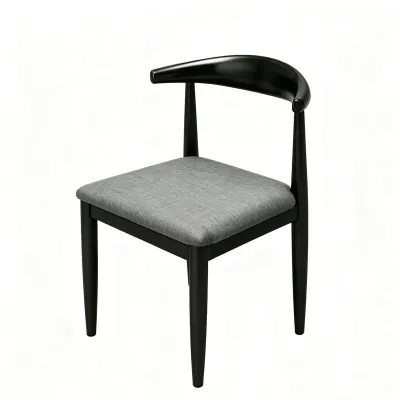
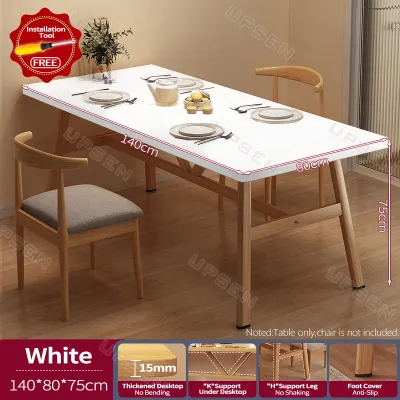
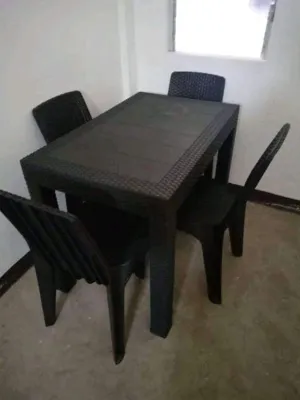
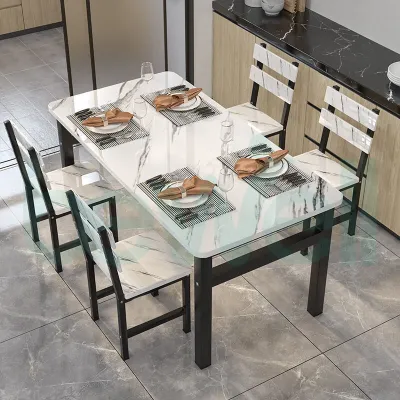
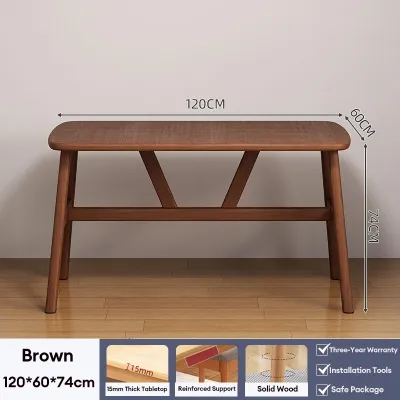
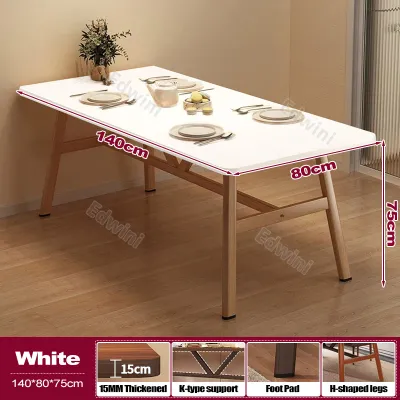
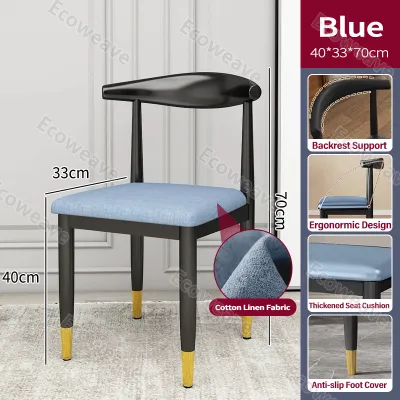
Prices are valid at publication and may change. Please refer to the product page for the latest price.
Finally, measure your designated dining area carefully. The physical dimensions of your room dictate what size table can comfortably fit. In tropical climates, maintaining an open, airy layout is essential for natural ventilation and comfort. Cramming a massive table into a small room restricts airflow and makes the space feel hot and cluttered. You must balance the desire for seating capacity with the necessity of maintaining clear pathways for daily movement.
Signs a Fixed 4-Chair Dining Set Is the Right Fit
A fixed dining table set with chair 4 is often the most practical choice for small to medium households. If your daily household consists of two to four people and you rarely host large groups indoors, a compact four-seater provides a cozy and intimate setting for daily meals. It encourages face-to-face conversation and keeps the dining experience focused and personal.

This setup is particularly beneficial for compact living spaces, such as modern condominiums, townhouses, or apartments in dense urban areas. In these layouts, maximizing available floor space is critical. A fixed four-seater table has a small footprint, allowing you to preserve valuable square footage for other furniture or open walkways. It prevents the dining area from overwhelming the living room in open-plan designs, maintaining a balanced and visually appealing home environment.
Additionally, a compact four-seater table is highly versatile for multi-purpose use. In many contemporary homes, the dining table serves as a temporary home office, a study desk for children, or a surface for hobbies and crafts. A smaller table is easier to clean, organize, and transition between different activities. It provides a dedicated workspace without dominating the room, making it an excellent fit for dynamic, multi-functional lifestyles.
When an Extendable Table Is a Better Long-Term Investment
While a fixed four-seater is highly efficient, an extendable table is often a superior long-term investment for growing families or active hosts. If your home is the designated hub for Sunday lunches, holiday celebrations, or casual get-togethers, an extendable table offers the flexibility to accommodate everyone comfortably. It allows you to expand your seating capacity from a modest four-seater to a spacious table for 6 to 10 people in just a few minutes, ensuring no guest has to eat with a plate on their lap.
An extendable table also future-proofs your home against major life changes. If you anticipate your household size growing, plan to move to a larger house in the future, or expect elderly parents to move in, an adjustable table adapts to your evolving needs. Instead of buying an entirely new dining set when your living situation changes, you can simply adjust your existing table to fit the new space and household dynamics.
Although extendable tables generally carry a higher initial cost than fixed four-seater sets, the versatility they offer provides excellent long-term value. You avoid the daily inconvenience of a massive, space-consuming table while retaining the ability to host large groups whenever necessary. It is a practical compromise that balances daily spatial efficiency with occasional high-capacity seating.
Essential Space and Delivery Checks Before Purchasing
Before making a final purchase, it is crucial to perform several practical space and delivery checks. First, measure all entry points to your home, including doorways, stairwells, hallways, and elevator doors. Many high-rise condominiums have strict size limitations for freight elevators, and narrow stairwells in townhouses can make delivering large furniture pieces extremely difficult. Ensure that the packaged table can safely navigate these pathways to reach your dining room without damage.
Second, verify the fully extended dimensions of the table if you are opting for an extendable model. It is easy to forget how much space an expanded table occupies. Use painter’s tape on your dining room floor to outline the table’s dimensions when fully extended. Ensure there is still enough room for guests to pull out their chairs, sit down comfortably, and walk behind seated individuals without bumping into walls or other furniture.
Finally, review the manufacturer’s specifications regarding structural stability, weight limits, and leg placement. Extendable tables rely on moving parts, hinges, or sliding tracks to function. In humid tropical environments, these mechanisms can be prone to wear or stiffness if not properly maintained. Look for tables with robust, smooth-operating hardware and stable leg designs that do not obstruct seating when the table is fully extended. Checking these details beforehand ensures your investment remains safe, stable, and functional for years to come.
Frequently Asked Questions (FAQ)
What is the recommended clearance around a dining table?
For comfortable seating and safe movement, it is recommended to maintain a minimum clearance of 90 centimeters (approximately 36 inches) between the edge of the table and the nearest wall, cabinet, or obstacle. This distance provides enough space for a person to pull out their chair and sit down without restriction. If the area behind the chairs serves as a primary pathway or hallway, increase this clearance to 120 centimeters (about 48 inches) to allow others to walk past comfortably while people are seated.
Do extendable tables compromise stability?
High-quality extendable tables do not compromise stability, but it is essential to inspect the design and mechanism before buying. Tables that feature extra support legs, central pillars, or heavy-duty locking latches tend to remain highly stable even when fully extended. Always check the manufacturer’s specified weight limits and assembly instructions. Avoid overloading the extended leaves, and periodically inspect the sliding tracks or hinges to ensure they remain clean, aligned, and secure.

Community discussion
Share your experience or ask a question. Comments are reviewed before publication.