
Deciding between a fixed 4-seater dining table and an extendable model depends on balancing your daily household size against your hosting frequency and available floor space. For many homes, a standard 4-seater is highly efficient for daily meals and keeps walkways clear. However, if you regularly host extended family gatherings, an extendable table offers the flexibility to expand seating without permanently crowding your dining room.
Evaluating your specific household routines, spatial limits, and structural preferences will help you determine which option is the better long-term investment for your home.
Assess Your Daily Household Size and Dining Space
If you live alone, with a partner, or have a small family of three or four, a fixed 4-seater dining table is often the most practical baseline. It comfortably accommodates daily meals, homework sessions, and morning coffee without taking up unnecessary space. Establishing your actual daily seating needs prevents you from buying more furniture than you realistically use on a regular basis.
Products mentioned in this guide
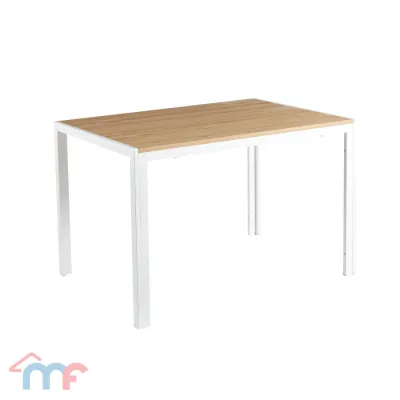
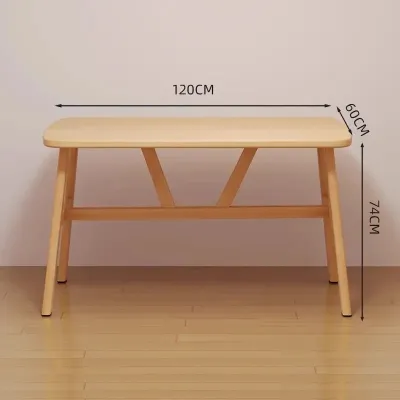
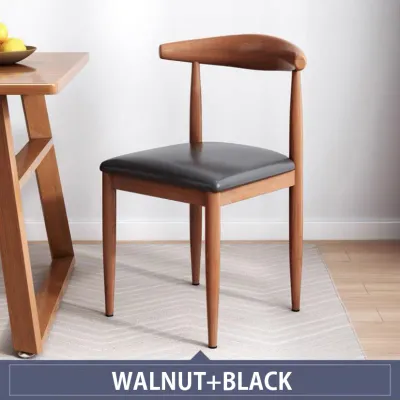
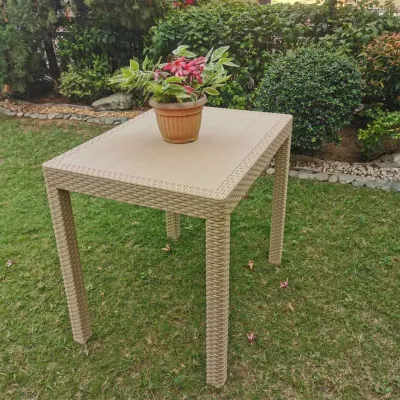
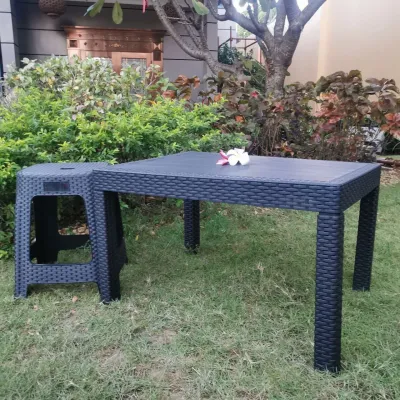
Prices are valid at publication and may change. Please refer to the product page for the latest price.
Measuring your dining area is a critical step before making any furniture purchase. You must account for the physical footprint of the table itself, plus the space required to pull out chairs and walk around them. Standard ergonomic guidelines suggest leaving ample clearance around the perimeter of the table so that family members can move freely without bumping into walls or other furniture.
In compact living spaces, such as urban condominiums or townhouses in the Philippines, visual clutter can make a home feel smaller than it is. A fixed 4-seater table has a lighter visual footprint, which helps maintain an airy, open feel. This open layout is particularly beneficial in tropical climates, where maximizing natural airflow and light keeps the living dining area comfortable and breezy.
Evaluate Your Hosting Habits and Guest Overflow
Filipino households are known for warm hospitality, often hosting Sunday lunches, birthday celebrations, and holiday gatherings. However, it is essential to look at the actual frequency of these events rather than the ideal. If you only host large groups a few times a year, a massive permanent table might sit empty and collect clutter most of the time.

If your gatherings consistently bring in six, eight, or ten guests, a standard 4-seater will quickly feel inadequate. Guests may end up eating on the sofa, balancing plates on their laps, or standing around the kitchen counter. An extendable table bridges this gap by transforming to accommodate larger groups when needed, ensuring everyone has a place at the table.
While an extendable table offers built-in convenience, it does require some physical effort to set up and adjust. You must also consider where you will store the extra dining chairs or stools when the table is in its compact state. If you do not mind retrieving folding chairs from storage, the flexibility of an extendable mechanism is highly valuable.
Fixed vs. Extendable: Comparing Structure, Space, and Cost
Extendable tables rely on moving parts, hinges, and sliding tracks to function. In humid environments, solid wood can expand or contract, which may affect how smoothly the extension mechanism operates over time. It is crucial to check manufacturer specifications for joint stability, glide materials, and rust-resistant hardware before buying.
A fixed table has a predictable, unchanging footprint, making it easy to plan your room layout. An extendable table, however, requires two sets of spatial planning. You must ensure that when the table is fully opened, it does not block essential pathways, balcony doors, or kitchen entryways.
Because of the complex engineering and hardware involved, extendable tables generally carry a higher price tag than fixed models of similar material quality. You should weigh this price premium against the cost of alternative solutions, such as buying a smaller fixed table and pairing it with a separate folding table for occasional use.
| Feature | Fixed 4-Seater Table | Extendable Dining Table |
|---|---|---|
| Everyday Footprint | Compact and permanent (typically 110 to 120 cm in length) | Compact when closed, expanding by 40 to 80 cm when open |
| Mechanism Type | None (solid, fixed frame) | Butterfly leaf, drop leaf, or sliding insert panels |
| Maintenance | Low (regular cleaning and surface protection) | Moderate (checking runners, lubricating hinges, monitoring humidity) |
| Relative Cost | Budget-friendly to moderate | Higher initial investment due to specialized hardware |
| Seating Capacity | Strictly 4 people | 4 daily, expanding to 6, 8, or 10 guests |
Final Verdict: Choosing the Right Table for Your Home
A fixed 4-seater dining table is the ideal choice if your household consists of four or fewer people, your dining space is compact, and you rarely host large indoor gatherings. It offers a straightforward, durable, and cost-effective solution that keeps your daily living area open and functional.
An extendable dining table is the better investment if you host family gatherings regularly and have the physical floor space to accommodate the table when it is fully expanded. This option allows you to enjoy a spacious dining room during the week while remaining fully prepared for weekend guests.
If an extendable table is out of your budget or does not fit your layout, you can still host successfully with a fixed 4-seater. Consider pairing your table with space-saving seating options like stackable stools, a bench that tucks completely underneath, or a separate folding console table that can be brought out for buffet-style serving.
Frequently Asked Questions (FAQ)
How much clearance space do I need around a dining table?
To maintain comfortable movement, aim for at least 90 centimeters of clearance between the edge of the table and the nearest wall, cabinet, or doorway. This space allows diners to pull their chairs out and sit down without blocking the walkway. If the table sits in a high-traffic pathway, increasing this clearance to 120 centimeters ensures smooth foot traffic even when everyone is seated.
Are extendable dining tables less stable than fixed ones?
Not necessarily, but stability depends heavily on the design, materials, and manufacturing quality. High-quality extendable tables feature robust locking latches, sturdy support rails, and center legs or heavy pedestals to prevent sagging when fully extended. Before purchasing, check the manufacturer’s weight capacity guidelines and inspect the locking mechanisms to ensure the table remains rigid when locked in both positions.
Can a 4-seater dining table double as a home office desk?
Yes, a standard 4-seater dining table can serve as a functional workspace, provided it has a comfortable surface height (typically 75 to 76 centimeters) and adequate under-table clearance for your legs and chair armrests. When using a dining table for remote work, check the manufacturer’s care instructions regarding heat and scratch resistance, especially if you plan to use laptops, monitors, or heavy stationery daily. Using a desk pad or protective mat can help preserve the finish.

Community discussion
Share your experience or ask a question. Comments are reviewed before publication.