
Deciding on the right dining table often comes down to a balance between your daily reality and your social aspirations. For many households, a standard 4 seater dining table set is the default choice, offering a compact footprint that fits comfortably into modern homes. However, if you frequently host gatherings, you might find yourself wondering if an extendable table that expands to seat 6 to 10 people is a wiser long-term investment. A fixed 4-seater is best if your space is highly constrained and you rarely host, while an extendable table is the superior choice if you want to accommodate guests without permanently sacrificing your daily floor space.
Assess Your Daily Routine and Hosting Habits
To make an informed choice, start by looking closely at how your household operates on an average weekday versus a festive weekend. It is easy to fall into the trap of buying a table for the person you wish you were—the ultimate host—rather than the person you actually are daily. Count the exact number of people who sit down for breakfast and dinner every single day. If there are only two to four permanent residents in your home, a standard 4-seater table easily covers your baseline needs.
However, in the Philippines, dining is rarely a strictly nuclear affair. Sunday family lunches, birthday celebrations, and spontaneous gatherings with relatives or neighbors are central to daily life. If your home regularly becomes the designated meeting spot for extended family, a fixed 4-seater will quickly feel restrictive. You must decide whether you are comfortable with guests eating on the sofa, using paper plates in the living room, or if you prefer everyone gathered around a single cohesive surface.
Products mentioned in this guide
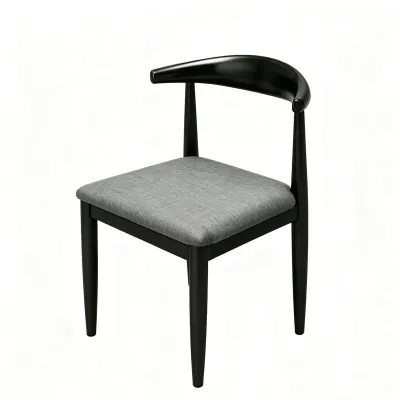
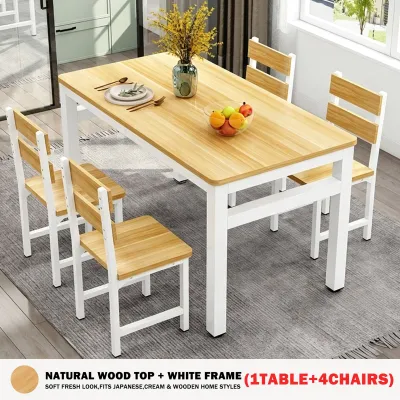
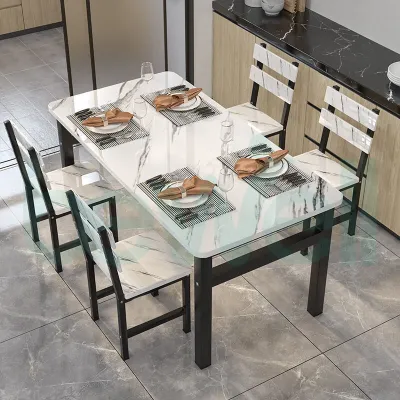
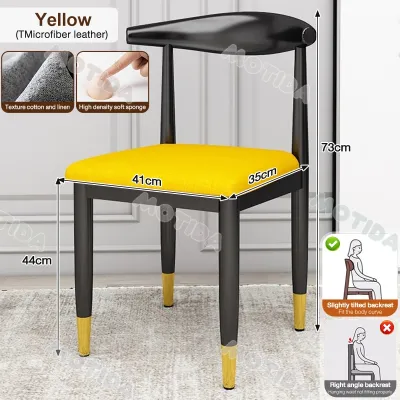
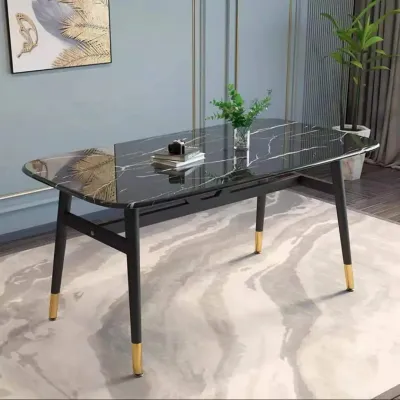
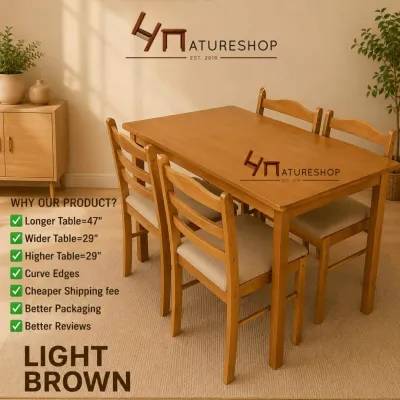
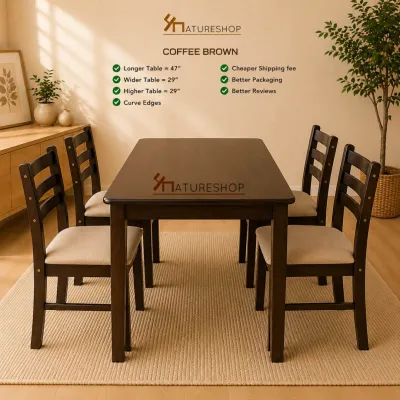
Prices are valid at publication and may change. Please refer to the product page for the latest price.
Beyond eating, consider how your dining table functions as a multi-purpose hub. With the rise of hybrid work arrangements and home-based learning, the dining table often doubles as a workstation, a study desk for children, or a space for sorting household bills. A larger surface area allows one person to work on a laptop while another eats, without either feeling crowded.
Finally, identify the specific pain points of your current setup. If you constantly run out of room for serving platters, rice cookers, and water pitchers during ordinary meals, your table is already too small. A cramped dining experience can make daily meals feel rushed and stressful rather than relaxing.
When a Fixed 4-Seater Dining Table Set Makes Sense
For many homes, particularly modern condominiums and townhouses in bustling urban centers, a fixed 4-seater dining table set is not just a compromise—it is the most practical choice. When floor space is at a premium, a compact, permanent table preserves the flow of your home. It ensures that your dining area remains open, airy, and easy to navigate, preventing the room from feeling like a crowded furniture showroom.

Small families, couples, and individuals who rarely host large groups stand to benefit the most from a fixed table. Without the need to accommodate extra seating, you can position the table against a wall or in a cozy corner to maximize your living area. This layout flexibility is incredibly valuable in open-plan layouts where the dining room, kitchen, and living area all merge into one continuous space.
From a structural standpoint, fixed tables offer distinct advantages. Because they are constructed from solid, continuous pieces of wood, glass, or engineered materials, they feature a clean, seamless tabletop. There are no visible lines where leaves join, and no hidden gaps where dust, food crumbs, or spilled liquids can accumulate. This seamless design often translates to a more cohesive aesthetic that highlights the natural grain of the wood or the sleekness of the stone.
Additionally, fixed tables excel in long-term durability and low maintenance. They have no mechanical parts, sliding tracks, hinges, or folding brackets that can wear out, rust, or become misaligned over time. In a tropical climate with high humidity levels, wood can naturally expand and contract. Fixed tables handle these environmental shifts much better than extendable models, which may suffer from sticking joints or warped extension leaves if the material is not properly sealed and cared for.
Signs You Need the Flexibility of an Extendable Table
While a compact table is highly efficient, there are clear signs that your lifestyle demands the adaptability of an extendable dining table. The most obvious indicator is your hosting frequency. If you host family reunions, holiday feasts, or weekend dinners at least once a month, the effort of setting up temporary dining arrangements can quickly become exhausting. An extendable table allows you to transition from a cozy family setup to a grand banquet-ready surface in a matter of minutes.
Another key consideration is future-proofing your home. If you are a young couple planning to expand your family, or if you anticipate elderly relatives moving in with you in the coming years, your seating requirements will inevitably change. Investing in an extendable table now prevents the need to replace your entire dining set when your household dynamics evolve. It is a long-term strategy that accommodates growth without cluttering your current space.
Consider, too, the style of dining you prefer. If your meals are served family-style—with large platters of food, rice bowls, soup tureens, and beverage dispensers placed in the center of the table—a 4-seater table can quickly run out of real estate. An extendable table provides the extra surface area needed to display food beautifully, allowing guests to serve themselves comfortably without knocking over glasses or squeezing plates together.
Ultimately, the greatest benefit of an extendable table is that it offers the best of both worlds. For daily use, you keep the table closed to maintain a spacious, walkable dining room. When special occasions arise, you unlock its potential to seat 6, 8, or even 10 guests. It is an elegant solution to the classic space-versus-hospitality dilemma.
Essential Space and Layout Checks Before You Buy
Before committing to either a fixed 4-seater or an extendable dining table, you must conduct precise spatial measurements. A table that looks perfectly sized in a spacious retail showroom can easily overwhelm your actual dining room.
First, measure your dining area to ensure there is a clearance of at least 90 cm between the edge of the table and the nearest wall, cabinet, or doorway. This 90 cm boundary is essential because it allows diners to pull out their chairs and sit down comfortably without hitting obstacles. It also ensures there is enough room for someone to walk behind seated guests without causing disruption.
If you are leaning toward an extendable table, you must calculate its fully extended footprint. Map out the maximum length of the table on your floor using painter’s tape or newspapers. Verify that when the table is fully open, it does not block main traffic pathways, kitchen cabinet doors, or entranceways. If an extended table completely traps your guests in their seats or blocks access to the restroom, it is too large for your space.
Do not overlook the logistics of getting the table into your home. Measure your doorways, stairwells, hallway corners, and elevator dimensions before finalizing your purchase. This step is particularly critical for residents of high-rise condominiums or narrow townhouses, where tight corners and low ceilings can make delivering a large, heavy tabletop incredibly difficult or even impossible.
Finally, examine the specific extension mechanism of the table. Common designs include:
- Butterfly leaves: The extra panels are folded and stored directly beneath the tabletop, swinging out like wings when needed.
- Drop-leaf tables: The ends of the table hang down vertically and are lifted and locked into place to extend the surface.
- Removable leaves: Separate panels must be physically inserted into the center or ends of the table.
If you choose a model with removable leaves, ensure you have a dry, climate-controlled closet or storage space to keep them safe from moisture and warping when they are not in use.
Making the Final Decision: Fixed vs. Extendable
To make your final decision, weigh your daily spatial comfort against your hosting aspirations. If your dining area is small and you only host large groups once or twice a year, prioritize your daily life. A fixed 4 seater dining table set will keep your home feeling spacious, clean, and easy to maintain every single day. While extendable tables generally carry a higher price tag due to their complex hardware, a quality fixed 4-seater set is often more budget-friendly, leaving room in your budget for other home improvements.
For those rare hosting occasions, you can easily supplement a fixed 4-seater table with creative seating solutions. Keep a set of high-quality folding chairs or stackable wooden stools tucked away in a closet or utility room. When guests arrive, you can set up a secondary folding table or serve meals buffet-style from your kitchen counter, allowing guests to eat comfortably in the living area.
However, if you have the physical space to accommodate an extended table and you host guests on a regular basis, the investment in an extendable table is highly justified. It provides a seamless transition between intimate family dinners and lively celebrations, ensuring your home is always ready for hospitality without compromising your daily comfort.
Frequently Asked Questions (FAQ)
What is the standard size of a 4-seater dining table?
A standard rectangular 4-seater dining table typically measures between 120 cm and 140 cm in length, and 75 cm to 90 cm in width. For round 4-seater tables, the standard diameter generally ranges from 100 cm to 120 cm. These dimensions provide adequate space for individual place settings while leaving a modest strip of space down the center for shared dishes. However, you should always check the manufacturer’s specific dimensions before buying. Design elements like thick pedestal bases, wide corner legs, or thick frames can significantly reduce actual legroom and chair clearance.
How do I maintain the extension mechanism of a dining table?
To keep your extendable table operating smoothly, you must keep the tracks, gears, and hinges clean. Regularly vacuum or wipe down the internal tracks to remove food crumbs, dust, and debris that can jam the mechanism. If the table becomes difficult to open, never force it, as this can bend the metal tracks or split the wood joints; instead, inspect the mechanism for hidden obstructions or misaligned leaves. Always consult the manufacturer’s care instructions before applying any lubricants, as using the wrong oil or spray can damage wood finishes, attract more dust, or void your product warranty.

Community discussion
Share your experience or ask a question. Comments are reviewed before publication.