
Quick Answer: Will You Overheat on a Cloud Bed Mattress?
A traditional plush memory foam cloud bed mattress can easily cause overheating during warm, humid nights in the Philippines, but this outcome is highly conditional. The deep contouring of a “cloud” design naturally hugs your body, which restricts airflow and traps body heat close to your skin.
Whether you actually wake up drenched in sweat depends on three main variables: the specific construction of the mattress, your bedroom’s temperature control, and your personal sleep habits.
If you sleep in a room with consistent air conditioning set to a cool temperature, a modern cloud bed mattress with advanced cooling features can be highly comfortable. Conversely, if you rely solely on a ceiling fan or natural ventilation during the humid summer months, a thick, traditional memory foam mattress is highly likely to feel uncomfortably warm.
Products mentioned in this guide
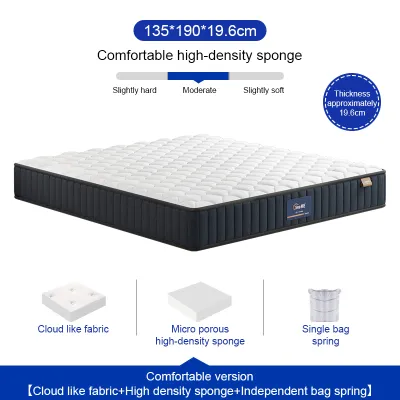
![[Vacuumed Comfy Rest Cloud Max] Joyce & Diana Comfy Rest Cloud Max Mattress 6/8 inches Foam Mattress](https://img.lazcdn.com/g/ff/kf/Sc823250a07f04e179f5ebbda35eab33cs.png_400x400q80.png_.webp)
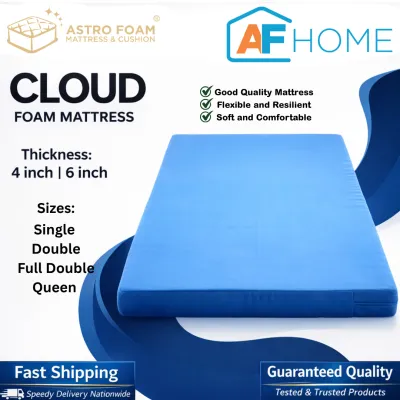
![[Compressed Classic Cloud Max Foam Mattress] Home de Luxe 6/8 Inches Classic Cloud Max Foam Mattress 100% Hypoallergenic](https://img.lazcdn.com/g/p/bbff0766fc3e0bae7856a81f8f9c51f5.jpg_400x400q80.jpg_.webp)
Prices are valid at publication and may change. Please refer to the product page for the latest price.
Why Plush Memory Foam Traps Heat in Tropical Climates
To understand why a cloud bed mattress feels warm, it helps to look at the physical properties of memory foam. Memory foam is a dense, viscoelastic material designed to respond to body heat and pressure. As it warms up, it softens and contours to your unique shape, distributing your weight evenly.

While this contouring provides excellent pressure relief for your shoulders and hips, it also creates a physical barrier to airflow. When you sink deep into a plush cloud-style mattress, the foam wraps around the sides of your body. This increased surface contact leaves very little room for air to circulate around your skin, effectively trapping your body heat within the mattress layers.
The “cloud” design itself often exacerbates this heat retention. To achieve that signature cloud-like, sinking sensation, manufacturers add thick, plush pillow-tops or comfort layers. These layers are frequently made of low-density foam or synthetic fiber fills that act as excellent insulators, keeping warmth locked in right beneath your body.
In the Philippines, this physical heat retention is compounded by high ambient humidity. When the air is saturated with moisture, your body’s natural cooling mechanism—the evaporation of sweat from your skin—slows down significantly.
When you combine a humid room with a mattress that hugs your body and blocks airflow, the microclimate between your skin and the bed becomes increasingly warm and damp. This can lead to restless tossing and turning as your body struggles to regulate its temperature naturally.
Specifications and Labels to Check Before Buying
If you are set on purchasing a cloud bed mattress but want to minimize the risk of overheating, you must carefully evaluate the manufacturer’s specifications and product labels. Not all memory foams are created equal, and specific structural designs can help mitigate heat retention.
First, examine the foam structure. Traditional memory foam has a closed-cell structure, which acts like a solid block that prevents air from passing through. Look for labels that explicitly specify “open-cell foam” or “plant-based foam.” Open-cell designs feature tiny, interconnected pathways that allow air to escape when compressed, while plant-based foams replace a portion of the petroleum products with natural oils, which generally retain less heat.
Second, look into cooling infusions. Many modern mattresses feature gel-infused, copper-infused, or graphite-infused memory foam. It is important to manage expectations here: these infusions do not actively generate cold air. Instead, they work by absorbing your initial body heat and dispersing it away from you, which delays the point at which the mattress begins to feel hot.
Third, pay close attention to the cover materials. The fabric closest to your skin plays a massive role in temperature regulation. Look for mattress covers made from breathable, moisture-wicking fibers such as bamboo-derived fabrics, organic cotton, or specialized phase-change materials that absorb and release heat to maintain a stable surface temperature.
Fourth, verify the base support layer. A cloud bed mattress is not made entirely of soft foam; it relies on a dense support core to keep your spine aligned. Check if the support core uses channels, convoluted “egg-crate” cuts, or pocketed coils to facilitate airflow, rather than a solid, ultra-high-density foam block that traps heat from the top layers.
Finally, consider the physical dimensions and weight of the mattress. A thick, multi-layered cloud bed mattress can be exceptionally heavy. Before purchasing, verify that your bed frame can support the load capacity of both the mattress and the sleepers, and ensure the finished dimensions fit your bedroom layout and doorway access.
Practical Strategies to Keep Your Memory Foam Mattress Cool
Even if you already own a plush cloud bed mattress or are committed to buying one, you can take several practical, low-risk steps to improve ventilation and manage the sleeping temperature in your home.
Your choice of bed frame is critical for under-bed ventilation. Avoid placing your memory foam mattress directly on the floor or on a solid wooden platform, as these setups completely block airflow from the bottom of the bed. Instead, use a sturdy, slatted bed frame with gaps of no more than three inches between the slats to ensure both proper support and maximum air circulation.
The bedding you pair with your mattress can either help or hinder its cooling properties. Avoid synthetic polyester sheets, which trap moisture and heat. Instead, opt for lightweight, breathable sheets made from natural fibers like percale cotton, linen, or bamboo, which allow air to pass through easily and help wick sweat away from your body.
Managing your room environment is the most effective way to counteract the natural warmth of memory foam. If possible, run your air conditioning during the hottest parts of the night to keep the ambient air cool, which also helps the memory foam maintain its supportive structure. If you rely on fans, position a ceiling fan or a standing fan to create cross-ventilation, moving warm air away from the bed surface.
Be cautious with your choice of mattress protectors. Many standard waterproof protectors use a thick plastic or polyurethane backing that completely seals the mattress, blocking any built-in cooling technology or airflow. If you need spill protection, search for thin, breathable, or cooling-specific protectors that use advanced membrane technology to allow air to flow while keeping liquids out.
When to Consider Alternative Mattress Types for Hot Sleepers
For some sleepers, the pressure-relieving benefits of a cloud bed mattress may not outweigh the discomfort of sleeping hot. If you are highly sensitive to heat, experience severe night sweats, or sleep in a room without consistent air conditioning, it may be wise to pivot to an alternative mattress category.
Innerspring and hybrid mattresses are excellent alternatives for hot sleepers. Hybrid models combine a plush comfort layer—sometimes even a thin layer of memory foam—with a supportive base of pocketed coils. The open space between the metal coils allows air to flow freely through the core of the mattress, preventing heat from building up and dissipating it far more efficiently than solid foam.
Natural latex is another premium option to consider. Derived from the sap of rubber trees, natural latex has a natural open-cell structure that does not trap heat the way synthetic foams do. Whether manufactured using the Dunlop or Talalay process, latex mattresses are inherently breathable, highly durable, and offer a responsive, “floating” sensation rather than the deep, sinking feel of memory foam.
To help you decide, consider this simple decision framework:
- Choose a cooling memory foam cloud bed mattress if: You sleep with consistent air conditioning, prefer a deep, body-hugging sensation, and are willing to invest in high-quality, breathable bedding.
- Choose a hybrid mattress if: You want the plush comfort of a pillow-top but require the active airflow and structural support provided by an open coil system.
- Choose a natural latex mattress if: You sleep very hot, prefer a responsive and bouncy surface, want a highly durable material, and sleep in a naturally ventilated or fan-cooled room.
Frequently Asked Questions (FAQ)
Do cooling gel memory foam mattresses actually work in humid weather?
Cooling gel memory foam mattresses offer temporary relief but are not a complete solution for high-humidity environments. The gel beads or layers work by absorbing your body heat when you first lie down, creating a cool initial sensation. However, once the gel reaches its thermal capacity, it stops absorbing heat and will begin to warm up to match your body temperature. In a humid tropical climate, these mattresses still require active room cooling, such as air conditioning or strong fan circulation, to remain comfortable throughout the entire night.
Will a mattress topper make a cloud bed mattress hotter?
Yes, adding a standard foam mattress topper to an already plush cloud bed mattress will generally make it sleep hotter. A thick topper adds another layer of insulation directly beneath your body, causing you to sink even deeper and further restricting airflow around your skin. If you must use a topper to adjust the firmness of your bed, look for very thin, highly breathable options made from open-cell latex, wool, or specialized cooling fabrics rather than thick, dense memory foam.

Community discussion
Share your experience or ask a question. Comments are reviewed before publication.