
A slim shoe cabinet is an excellent storage solution if you have limited closet floor space, require a clean, concealed look, and primarily store low-profile footwear like flats, sandals, or standard sneakers. These specialized organizers feature a shallow depth—typically between 15 cm and 25 cm—making them ideal for tight entryways, narrow hallways, or the interior walls of a walk-in closet. However, if your collection consists heavily of high heels, tall boots, or chunky athletic shoes, or if your closet doors lack the necessary clearance to open fully, a slim cabinet may cause more frustration than convenience. Deciding whether this furniture type is right for you requires a systematic evaluation of your physical space, your footwear collection, and the structural requirements of the cabinet itself.
Measure Your Closet Space: Depth, Width, and Door Clearance
Before purchasing any slim shoe cabinet, you must take precise physical measurements of your closet space. The primary appeal of a slim cabinet is its shallow footprint, with many models measuring just 15 cm to 25 cm in depth. To determine if a cabinet can physically fit inside or directly adjacent to your closet, use a metal measuring tape to find the available, unobstructed floor depth. Do not rely on visual estimates, as even a discrepancy of a few centimeters can prevent your closet doors from closing properly or obstruct your walking path.
Door clearance is the most critical spatial factor when installing a slim cabinet inside a closet. If your closet features standard swing doors, you must map out the swing radius to ensure the doors will not strike the cabinet. For closets with sliding or bi-fold doors, verify that the cabinet’s depth does not block the tracks or prevent the doors from sliding fully open. Furthermore, remember that tilt-out shoe cabinets require additional temporary depth when in use; the drawer fronts swing outward and downward, meaning you need at least 30 cm to 40 cm of clear space in front of the cabinet to comfortably open the compartments and retrieve your shoes.
Products mentioned in this guide
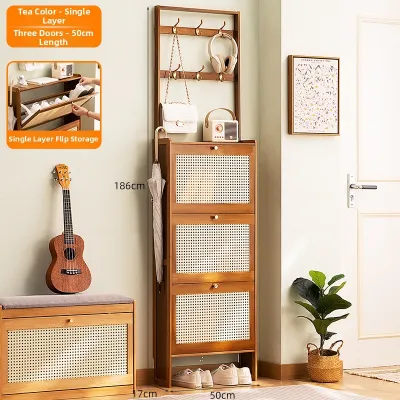
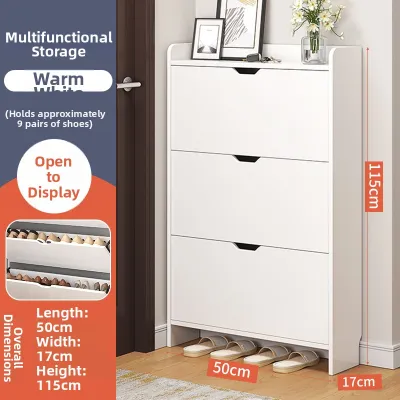
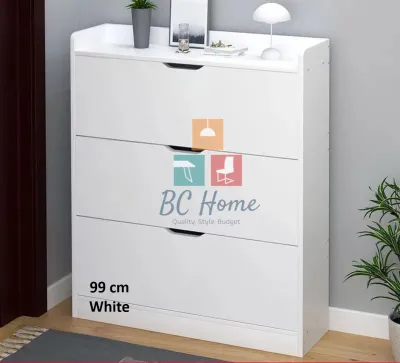
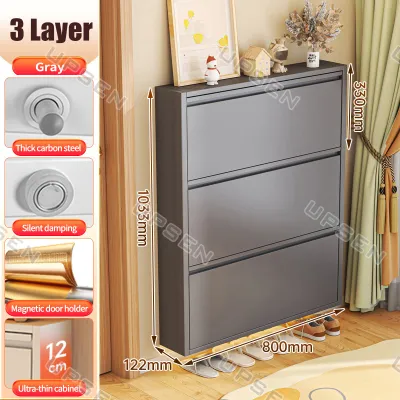
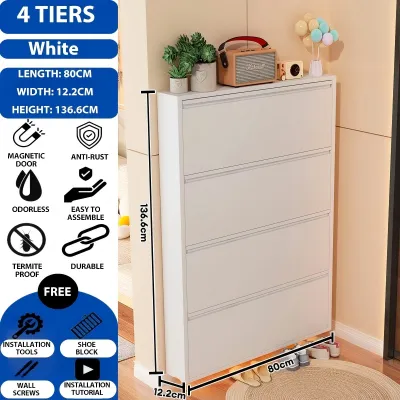
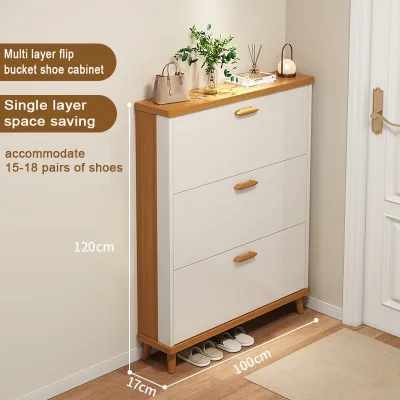
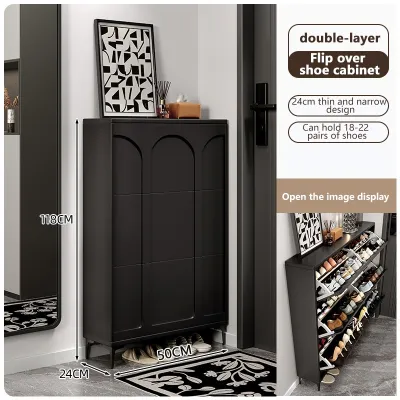
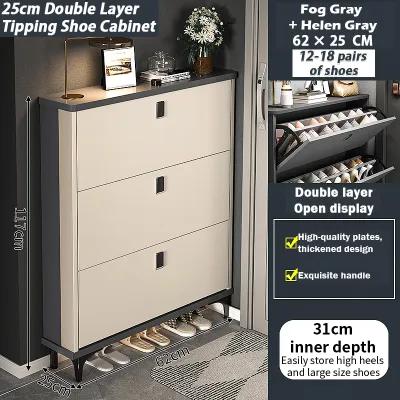
Prices are valid at publication and may change. Please refer to the product page for the latest price.
Another commonly overlooked detail is the presence of baseboards or wall trim. Most slim shoe cabinets are designed to sit flush against the wall to maximize stability. If your closet has thick baseboards, the cabinet will be pushed forward, creating a gap at the top and wasting precious centimeters of depth. Look for cabinets that feature a baseboard cutout at the back, or be prepared to mount the unit slightly forward and secure it with specialized spacers. Additionally, check for uneven flooring or warped walls inside older closets, as a tilted base will cause the tall, narrow frame to wobble.
Finally, evaluate the delivery and assembly pathway leading to your closet. Measure the width of your hallways, the clearance of your staircases, and the height of your bedroom and closet door frames. If you purchase a fully assembled cabinet, you must be certain it can navigate these tight corners. If you opt for a flat-pack model, ensure you have enough physical floor space inside or near the closet to safely unpack the panels, lay out the hardware, and complete the assembly without damaging your walls.
Audit Your Shoe Collection: Types, Sizes, and Volume
A slim shoe cabinet is only as useful as its ability to hold your specific footwear. Before committing to this storage style, conduct a thorough audit of your collection by laying out all your shoes and categorizing them by type, height, and size. Slim tilt-out cabinets utilize angled internal pockets to store shoes vertically, which works exceptionally well for flat shoes, canvas slip-ons, sandals, and low-profile dress shoes. However, these narrow compartments struggle to accommodate high heels, ankle boots, or chunky platform sneakers because the restricted internal height and depth of the drawers will prevent them from closing completely.

To estimate the number of tiers or drawers you require, count your active footwear and separate your daily essentials from seasonal or occasional items. A standard two-tier or three-tier slim cabinet is highly efficient for a curated collection of 10 to 15 pairs of everyday shoes. If you have a large collection exceeding 30 pairs, a single slim cabinet will not suffice unless you plan to rotate your shoes seasonally, storing off-season pairs elsewhere. Categorizing your collection helps you determine if a slim cabinet can serve as your primary storage or if it should function as a secondary organizer for your most frequently worn pairs.
Shoe size is another major limiting factor that manufacturers often downplay in their marketing materials. Standard slim cabinets are typically optimized for average shoe sizes. If you or members of your household wear larger sizes—such as US men’s size 10 (EU 44) or larger—your shoes may not fit straight inside the compartments. You might have to place them sideways, which immediately cuts the capacity of the drawer in half. While some slim cabinets feature adjustable or removable internal dividers to accommodate taller or wider shoes, removing these panels reduces the total number of tiers, thereby decreasing the overall storage capacity of the unit.
To avoid disappointment, do not rely solely on the manufacturer’s advertised pair capacity, which is often based on small, flat shoes. Instead, look for the detailed internal dimensions of the cabinet’s drawers. Measure the length, width, and height of your largest and bulkiest pairs of shoes—particularly the heel-to-toe length and the sole width. Compare these measurements directly against the cabinet’s internal pocket specifications to ensure your shoes will slide in smoothly without being crushed or preventing the tilt-out mechanism from latching shut.
Evaluate Cabinet Stability, Ventilation, and Hardware Limits
Because slim shoe cabinets are tall and exceptionally shallow, they possess a high center of gravity. This makes them inherently prone to tipping forward, especially when multiple tilt-out drawers are opened simultaneously and the weight of the shoes shifts outward. To ensure safety, almost all manufacturers require these cabinets to be securely anchored to the wall. If you live in a rental property where drilling into the walls is restricted, or if your closet walls are made of thin plasterboard without accessible studs, a tall, slim cabinet may pose a safety hazard. This is a vital consideration in households with young children or active pets who might pull on the handles.
In humid tropical climates, such as in the Philippines, storing shoes in enclosed, narrow spaces presents a significant risk of mold, mildew, and unpleasant odors. When leather, suede, or canvas shoes are stored immediately after wear, they retain sweat and environmental moisture. A sealed, slim cabinet traps this moisture, creating an ideal breeding ground for fungi that can ruin expensive footwear. To mitigate this, check the product specifications for built-in ventilation features, such as open backs, slatted drawer fronts, or ventilation grommets. Additionally, plan to place moisture-absorbing sachets, silica gel packs, or hanging dehumidifiers inside the compartments, and establish a habit of letting your shoes air out for a few hours before placing them inside the cabinet.
You must also evaluate the structural limits and weight capacity of the cabinet’s materials. Many budget-friendly slim cabinets are constructed from medium-density fiberboard (MDF) or particle board. While these materials are lightweight and cost-effective, they are highly susceptible to sagging, warping, or joint failure if overloaded or exposed to high humidity over time. Pay close attention to the maximum weight limit specified for each drawer and the top shelf. Avoid placing heavy bags, books, or decorative items on top of a lightweight cabinet, as this further compromises its stability and puts unnecessary stress on the frame.
The longevity of a slim tilt-out cabinet depends heavily on the quality of its moving parts. The tilt-out mechanism relies on plastic or metal hinges and side brackets that pivot every time you open a drawer. Frequent daily use puts continuous stress on these hardware components. Look for units that utilize durable metal hinges and reinforced tracks rather than thin plastic brackets, which can crack or warp under the weight of heavy shoes. If the hardware begins to sag, the drawers will misalign, causing them to stick, scrape against the frame, or fail to close securely.
When to Choose Alternative Closet Storage Solutions
If your space measurements, shoe audit, or stability concerns reveal that a slim shoe cabinet is not the ideal fit for your closet, several highly effective alternative storage solutions can maximize your space. For closets with absolutely zero available floor space but unused vertical space, an over-the-door shoe organizer is an excellent alternative. Typically made of durable fabric or mesh, these organizers hang directly over standard closet doors and feature individual pockets that are perfect for lightweight flats, sandals, slippers, and casual sneakers, keeping them off the floor and easily visible.
If you need to store bulkier footwear, winter boots, or seasonal shoes that do not fit into shallow drawers, consider utilizing under-bed storage boxes with wheels. These low-profile containers slide easily under your bed frame, keeping your shoes dust-free and out of sight while preserving your closet floor space for other items. Opt for clear plastic containers to easily identify the contents, or fabric zippered bags with clear window panels that protect delicate materials like leather and suede from dust.
For those who prefer a highly flexible and modular setup, stackable, clear drop-front shoe boxes are an outstanding choice. Unlike a fixed cabinet, these individual boxes can be stacked vertically or horizontally to fit the exact dimensions of your closet shelves or floor. The drop-front opening allows you to retrieve any pair without disturbing the stack, and the clear plastic construction provides instant visibility. This modular approach is particularly beneficial because you can purchase additional boxes as your collection grows, or rearrange them easily if you move to a new home.
Finally, you can maximize the vertical gaps inside your existing closet system by using tension rods or specialized hanging organizers. Placing two parallel tension rods near the bottom of your closet creates a custom, elevated shoe rack that keeps footwear off the floor. For delicate flats or tall boots that need to maintain their shape, hanging fabric organizers that attach directly to your closet rod offer vertical shelving without requiring any floor footprint. These alternatives ensure that regardless of your closet’s dimensions, you can find a safe, organized, and accessible home for every pair of shoes.
Frequently Asked Questions (FAQ)
How many pairs of shoes can a typical slim tilt-out cabinet hold?
While a standard three-tier slim cabinet is often advertised to hold between 12 and 18 pairs of shoes, the realistic capacity is usually lower. This estimate typically assumes small, flat footwear like sandals or flats stored side-by-side. If you store bulkier items like running shoes, high heels, or men’s formal shoes, the capacity drops significantly, often accommodating only 9 to 12 pairs. To determine realistic capacity, measure the internal drawer width and compare it to the sole width of your specific shoes.
Do slim shoe cabinets need to be anchored to the wall?
Yes, anchoring a slim shoe cabinet to the wall is highly recommended and often required by manufacturers for safety. Because these units are tall, narrow, and shallow, they have a high center of gravity that makes them unstable. When you open the tilt-out drawers, the weight of the shoes shifts forward, which can easily cause the entire cabinet to tip over. Wall anchoring is a non-negotiable safety step, particularly in homes with children or pets who might climb or pull on the drawers.
How can I prevent mold on shoes stored in a narrow closet cabinet?
To prevent mold in a narrow, enclosed cabinet—especially in humid environments—never store shoes that are wet, damp, or freshly worn. Allow your shoes to air out completely in a well-ventilated area before placing them inside. You can also place silica gel packs, charcoal deodorizing bags, or small moisture absorbers inside each compartment. Regularly opening the cabinet doors during dry days to let fresh air circulate will also help protect your leather and canvas shoes from mildew.

Community discussion
Share your experience or ask a question. Comments are reviewed before publication.