
The Quick Answer: Do Foam Mattresses Trap Heat in the Philippines?
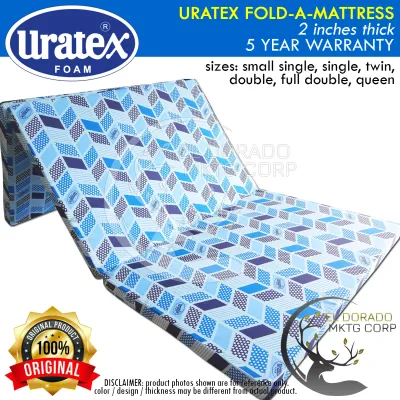
Sleeping comfortably in the Philippines requires a careful balance of ventilation and material choice. With year-round high temperatures and intense humidity, bedroom setups can easily turn into heat traps. Many households rely on a classic uratex foam 3 folded single mattress for its space-saving convenience, but the question of thermal comfort remains a major concern for hot sleepers.
Standard polyurethane foam naturally retains more body heat than innerspring or natural latex mattresses. This thermal retention is a direct result of its dense, cellular structure, which restricts the free passage of air. When you lie on a foam mattress, your body heat is absorbed by the material and slowly radiated back to you, creating a warm sleep surface.
However, severe overheating is rarely caused by the foam core alone. Your sleep temperature is heavily influenced by room ventilation, your bed base configuration, and the composition of your mattress cover. By understanding these variables, you can enjoy the practical benefits of a compact folding mattress without sacrificing your sleep quality.
Products mentioned in this guide




Prices are valid at publication and may change. Please refer to the product page for the latest price.
Managing ambient humidity and ensuring consistent airflow around the mattress are the ultimate keys to sleeping cool. Even the most basic foam mattress can perform surprisingly well in a tropical climate if you set it up correctly. Let us look at the science behind heat retention and how you can optimize your bedroom environment.
Why Foam Retains Heat and How Humidity Amplifies It
To understand why foam feels warm, you must look at how it interacts with your body. Polyurethane foam consists of millions of tiny, open or closed cells that compress under weight. As the foam conforms to your body shape, it maximizes the contact area between your skin and the mattress surface. This close fit minimizes the air gaps that would otherwise allow heat to escape naturally.

In the Philippines, high relative humidity amplifies this warming effect significantly. When the air is saturated with moisture, your body’s primary cooling mechanism—sweat evaporation—slows down. If a mattress surface does not allow moisture to wick away, sweat pools on your skin, creating a sticky, uncomfortable microclimate.
The material covering your foam mattress plays a critical role in this process. Many budget-friendly foam mattresses come wrapped in tightly woven synthetic fabrics, such as polyester, which act as barriers to both air and moisture. Replacing or covering these with natural fibers like cotton, linen, or bamboo-derived blends allows air to circulate and helps pull moisture away from your body.
You may also encounter mattresses marketed with “cooling gel” infusions or coatings. While these gel particles do absorb heat initially, providing a cool-to-the-touch sensation when you first lie down, they have a limited thermal capacity. Over several hours of sleep, the gel reaches thermal equilibrium with your body temperature, meaning it eventually stops cooling and behaves like standard foam.
Evaluating the Uratex Foam 3 Folded Single Design for Humid Bedrooms
The specific form factor of a tri-fold single mattress introduces unique environmental dynamics in a humid bedroom. Because these mattresses are designed for easy storage and portability, they are frequently placed directly on the floor or on low, solid wooden platforms. While this saves valuable floor space during the day, it creates a challenging environment for temperature regulation.
This setup triggers what is known as the “floor effect.” When a foam mattress sits directly on a solid floor, there is absolutely no space for air to circulate beneath it. The heat radiating from your body travels downward through the foam and becomes trapped against the cold floor. This temperature differential leads to condensation, creating a humid microclimate underneath the mattress that invites mold, mildew, and dust mites.
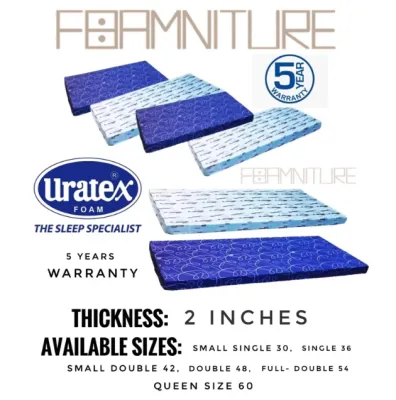
Mattress thickness and density also dictate how warm you will feel. A thinner, firmer foam mattress—such as a standard three-inch single model—does not allow your body to sink deeply into the material. Because you sleep “on” the mattress rather than “in” it, more of your skin remains exposed to the ambient air, which helps keep you cooler. Conversely, thicker, softer foams envelope your body, trapping more heat.
Before finalizing your setup, always review the manufacturer’s care label and product guidelines. Manufacturers often specify weight limits and provide instructions on how to handle moisture exposure. Adhering to these guidelines ensures that the foam maintains its structural integrity and support over time, preventing the premature sagging that can lead to even deeper heat pockets.
Optimizing Your Bed Setup to Prevent Overheating and Mold
To prevent your mattress from trapping heat and moisture, you must design a sleep setup that prioritizes continuous airflow. The most effective step you can take is raising the mattress off the floor. Using a slatted bed frame, a raised slatted platform, or even a highly breathable tatami mat allows air to flow freely beneath the foam, dispersing both heat and accumulated moisture.
Your choice of bedding is your primary defense against nighttime sweating. Avoid heavy synthetic sheets, microfiber, or thick quilted mattress protectors, as these materials trap heat close to your skin. Instead, invest in lightweight, high-thread-count cotton, linen, or Tencel sheets. These natural materials are highly breathable and allow your body heat to dissipate into the room.
Maintaining your mattress is just as important as choosing the right bedding. Establish a routine where you regularly unfold and air out your mattress in a well-ventilated room, preferably with a fan running. While it is tempting to place the mattress under the sun to dry, you must avoid prolonged exposure to direct sunlight. Intense ultraviolet rays can degrade the polyurethane structure, causing the foam to discolor, lose its elasticity, and eventually crumble.
Finally, managing your bedroom’s ambient environment will directly improve how your mattress feels. Using a ceiling fan or a standing air circulator helps move air across your skin, facilitating sweat evaporation even on humid nights. If your budget allows, running an air conditioner or a dedicated dehumidifier will lower both the temperature and the moisture levels in the room, ensuring the foam remains cool to the touch.
Cooling Accessories and Bedding That Complement Foam
If you find that your existing foam mattress still feels too warm despite optimizing your room, several compatible accessories can enhance your sleep comfort. A breathable mattress topper made from natural latex or organic wool is an excellent upgrade. Natural latex has an open-cell structure that allows superior airflow, while wool naturally regulates temperature and wicks away moisture, though these toppers will add height and make folding the mattress more difficult.
For active temperature regulation, you can look into specialized cooling pads. These range from phase-change material (PCM) mattress protectors that absorb and release heat to advanced water-cooled mattress pads. Placing one of these over your mattress cover creates a physical barrier that prevents your body heat from transferring directly into the dense foam core.
Simple airflow aids can also make a substantial difference without costing a fortune. Position a standing fan or an air circulator at the foot of your bed, directing the breeze across the mattress surface. This continuous movement of air helps clear the warm, humid boundary layer that forms around your body while you sleep.
When protecting your mattress from spills or sweat, be highly selective with your mattress protectors. Avoid cheap, heavy, non-breathable waterproof plastic covers, which act like greenhouse plastic and trap every bit of heat. Instead, opt for modern polyurethane-membrane protectors that are specifically rated as breathable and moisture-resistant, ensuring protection without suffocating the foam.
Frequently Asked Questions (FAQ)
Can I sleep directly on the floor with a 3-fold foam mattress in the Philippines?
While you can physically place a 3-fold mattress on the floor to save space, doing so is not recommended for long-term use in the Philippines. The lack of bottom ventilation traps body heat and sweat condensation, which quickly leads to mold growth on both the floor and the mattress. If you must use it on the floor, ensure you fold it up and air it out daily, or place a breathable mat beneath it.
Does memory foam feel hotter than standard polyurethane foam?
Yes, memory foam generally feels significantly hotter than standard polyurethane foam. Memory foam is a high-density, viscoelastic material designed to soften in response to your body heat and pressure, causing you to sink deeply into the mattress. This deep contouring restricts airflow around your body and traps heat far more efficiently than the firmer, more breathable standard polyurethane foam used in basic folding mattresses.
How often should I air out my foam mattress in a humid climate?
In a hot and humid climate like the Philippines, you should air out your foam mattress at least once every two to three weeks. Unfold the mattress completely and stand it on its side in a well-ventilated room with windows open or a fan running. If you experience heavy nighttime sweating, or if you notice a musty odor, you should air it out immediately to prevent moisture from settling deep into the foam core.

Community discussion
Share your experience or ask a question. Comments are reviewed before publication.