
Evaluating whether the Furnitura F06 offers the best value in the ₱3,000 to ₱15,000 price bracket depends on how its specific adjustments, material labels, and dimensions align with your body type and daily work habits. Since specifications vary widely across this price range, this guide provides a structured verification framework to help you objectively compare the F06 against competing ergonomic chairs before making a final decision. By focusing on verifiable physical features rather than marketing claims, you can determine if this model provides the support you need for long hours of sitting.
Core Ergonomic Adjustments to Verify
In the ₱3,000 to ₱15,000 price range, ergonomic chairs transition from basic office seating to highly adjustable task chairs. When evaluating the Furnitura F06 or any competitor, your first step is to examine the lumbar support mechanism. Look closely at the product specifications or user manual to determine if the lumbar support offers independent height and depth adjustments. A fixed lumbar curve or a simple tension pad might not align with the natural curvature of your lower back, especially during long hours of remote work in a warm tropical climate where posture fatigue sets in quickly.
Next, analyze the armrests, which are critical for preventing shoulder strain. In this price bracket, you will encounter various armrest configurations, often labeled as 2D, 3D, or 4D. Check whether the armrests on the F06 can adjust vertically to match your desk height, slide forward or backward to support your forearms while typing, and pivot inward or outward. If you frequently switch between typing on a keyboard and writing on a tablet, multi-directional armrests provide the necessary flexibility to keep your elbows at a comfortable 90-degree angle.
Products mentioned in this guide
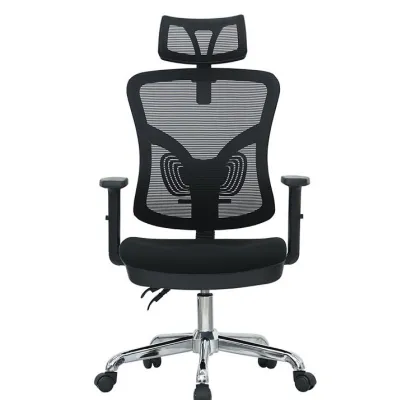
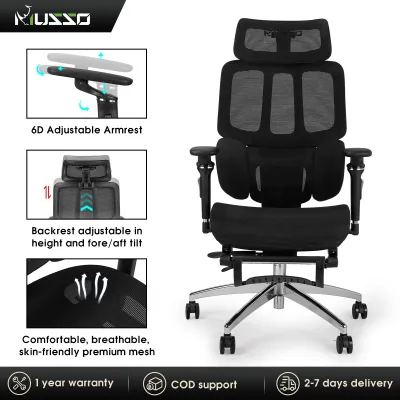
Prices are valid at publication and may change. Please refer to the product page for the latest price.
Recline and tilt mechanisms also vary significantly across mid-range chairs. Verify whether the chair utilizes a basic tilt-tension knob or a more advanced synchronous tilt mechanism, where the backrest reclines at a faster rate than the seat pan to keep your feet flat on the floor. Look for a multi-position tilt lock that allows you to secure the backrest at specific angles, which is highly beneficial if you like to transition from an upright focus posture to a relaxed reading angle.
Finally, do not overlook the headrest adjustment options. A poorly positioned headrest can push your neck forward, causing cervical strain rather than relieving it. Check if the headrest can be adjusted both vertically for height and tilted for angle. If you are taller or shorter than average, verify the total travel distance of the headrest to ensure it cradles your neck rather than pressing against your shoulders or the back of your head.
Material Quality and Safety Labels to Inspect
The durability of an ergonomic chair in the ₱3K-₱15K range is largely determined by its component certifications and material choices. To ensure your safety and the longevity of the chair, inspect the gas lift cylinder, which is the core component responsible for height adjustment and weight support. Rather than relying solely on online product descriptions, look for physical engravings on the metal cylinder itself once you receive the chair or when viewing it in a showroom. Reputable manufacturers typically use Class 3 or Class 4 gas lifts certified by international safety bodies such as SGS, BIFMA, or TÜV.

Upholstery materials require careful consideration, particularly in humid environments where heat retention can cause discomfort. Mesh backrests are popular for their breathability, but the quality of the mesh varies. Examine the tension of the mesh; it should feel firm and resilient, springing back into shape immediately when pressed. If you are looking at a model with a fabric-covered foam seat cushion, check the density rating of the foam. High-density molded foam retains its shape and support over years of daily use, whereas low-density cut foam may sag within a few months, leading to pressure points on your hips.
The base and casters form the foundation of the chair’s stability. In this price range, bases are typically constructed from heavy-duty nylon, steel, or aluminum alloy. While nylon bases can be highly durable if engineered well, metal bases generally offer greater resistance to wear and tear. Additionally, verify the caster material to ensure it matches your flooring. Hard nylon casters are ideal for thick carpets but can scratch delicate wooden or vinyl floors, whereas polyurethane (PU) coated casters glide quietly and safely on hard surfaces without leaving marks.
Sizing, Clearance, and Workspace Fit
An ergonomic chair can only perform its job if its physical dimensions match both your body proportions and your workspace layout. Begin by measuring your thigh length and comparing it to the seat depth of the Furnitura F06 and its competitors. When sitting fully back against the lumbar support, there should be a gap of about two to three fingers between the edge of the seat cushion and the back of your knees. A seat pan that is too deep will press against your blood vessels, restricting circulation, while a seat that is too shallow will not provide adequate thigh support.
Desk clearance is another practical factor that directly impacts your daily comfort and room organization. Measure the height of your desk from the floor to the underside of the desktop, taking into account any drawers or keyboard trays. Compare this measurement with the minimum armrest height of the chair when it is fully lowered. If the armrests cannot slide under your desk, you may find yourself sitting too far from your keyboard, forcing you to lean forward and lose the support of the backrest.
Finally, evaluate the overall footprint of the chair within your room. Measure the diameter of the star base to ensure it has enough clearance to rotate freely without bumping into desk legs, filing cabinets, or nearby walls. Consider the overall height of the chair, especially if you have low shelving or overhead cabinets above your desk. Ensuring these dimensions align before purchasing prevents the hassle of returning a bulky item that does not fit your physical workspace.
Decision Framework: Choosing the F06 or Alternatives
To finalize your decision between the Furnitura F06 and other options in the ₱3,000 to ₱15,000 range, apply a structured decision framework based on your verified findings. Choose the F06 if your measurements confirm that its seat depth, height range, and armrest adjustments align with your body proportions, and if its safety labels meet your standards. This model is particularly suitable if you require a breathable mesh design that fits standard desk heights and provides reliable daily support within a moderate budget.
Conversely, you should look for alternative chairs if your physical checks reveal that the F06 lacks specific adjustments critical to your comfort. For instance, if you are exceptionally tall or short, you may need a chair that features a dedicated seat depth slider or highly customizable 4D armrests to achieve an optimal ergonomic posture. Do not compromise on these key adjustments, as a chair that does not fit your body will eventually lead to physical discomfort regardless of its price.
Before proceeding to checkout on any online marketplace or local furniture store, verify the warranty coverage and return policy. Ensure that the seller provides clear terms for parts replacement, particularly for the gas lift, tilt mechanism, and casters. Confirming that reliable after-sales support is accessible in the Philippines will give you peace of mind, ensuring that your investment remains protected and functional for years to come.
Frequently Asked Questions (FAQ)
How do I know if the Furnitura F06 will fit my height?
To determine if the chair fits your height, measure your popliteal height, which is the distance from the underside of your thigh behind the knee to the floor while wearing your usual footwear. Compare this measurement to the chair’s seat height range, ensuring your feet can rest flat on the floor. Additionally, check the backrest height and the vertical adjustment range of the headrest to confirm that the lumbar curve aligns with your lower back and the headrest supports your neck rather than your shoulders.
What should I do if the armrests feel too hard or too high?
If the armrests feel too high, check if they have a vertical adjustment mechanism to lower them to a comfortable level where your shoulders can relax. If the armrests are at the correct height but the material feels too firm against your elbows, you can look into purchasing aftermarket memory foam armrest pads or covers. Ensure that any additions do not interfere with the adjustment buttons and that installing them does not void the manufacturer’s warranty.
Is a higher price within the ₱3K–₱15K range always better for ergonomics?
A higher price within this range often indicates premium materials, more adjustment axes, or longer warranty periods, but it does not guarantee a better ergonomic fit for your specific body. A mid-range chair that perfectly matches your seat depth and lumbar curve is far better for your posture than an expensive model that lacks the specific adjustments your body requires. Focus on how well the chair’s dimensions and adjustment ranges align with your physical needs rather than relying on the price tag as a measure of comfort.

Community discussion
Share your experience or ask a question. Comments are reviewed before publication.