
Selecting a round stool with wheels for your child’s study desk requires balancing mobility with safety and ergonomic support. Unlike standard adult office chairs, a child’s stool must adapt to rapid growth spurts while remaining stable enough to prevent accidental slips during homework sessions. The ideal stool features a responsive height adjustment mechanism, floor-appropriate casters with safety locks, a breathable or easy-to-wipe seat, and a wide, tip-resistant base. By focusing on these core specifications, you can create a comfortable, focused learning environment that supports healthy posture throughout the school year.
Evaluating Height Adjustability for Proper Posture
To support a child’s physical development, a study stool must allow their feet to rest flat on the floor while keeping their knees at a comfortable 90-degree angle. When browsing options on e-commerce platforms, always measure your child’s inseam—the distance from the underside of the knee to the sole of the foot—and compare it directly to the stool’s minimum seat height. If the minimum height is too high, your child’s legs will dangle, which can restrict circulation and lead to slouching or fidgeting during study sessions. Additionally, ensure the maximum height of the stool leaves at least 20 to 25 centimeters of clearance beneath the study desk so their thighs do not press against the underside of the drawer or desktop.
The mechanism used to adjust this height is equally important for safety and convenience. Pneumatic gas lifts are the most common option, allowing smooth, effortless adjustments with the pull of a lever. However, you must check the minimum weight required to compress the gas cylinder; lighter children may not have enough body weight to lower the seat on their own, requiring parental assistance. Manual screw-adjust mechanisms, which require spinning the seat to raise or lower it, offer a highly stable alternative with no risk of gas leaks, though they take more effort to adjust and must be checked regularly to ensure the threads remain tight and lubricated.
Products mentioned in this guide
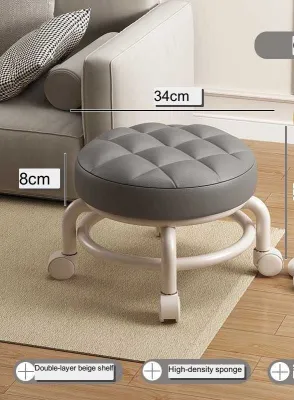
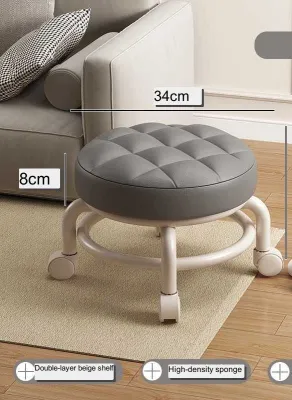
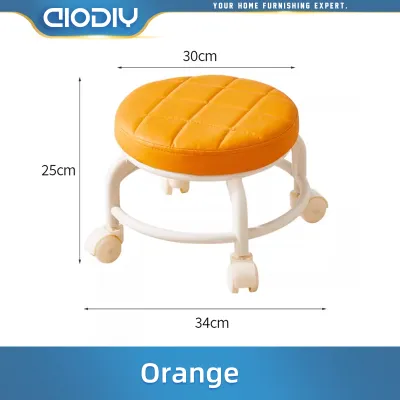
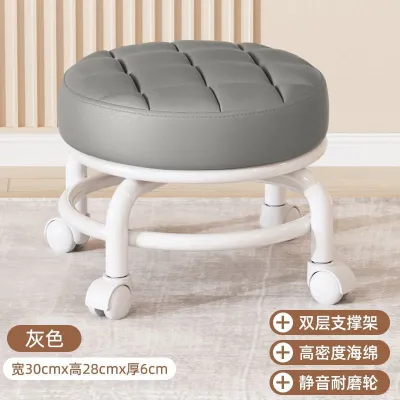
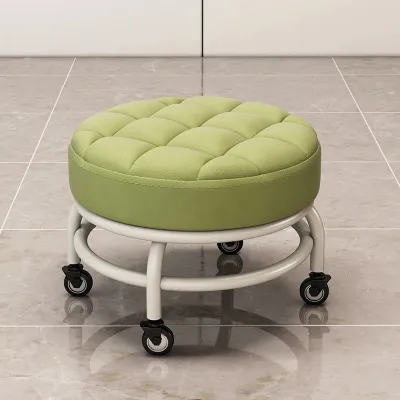
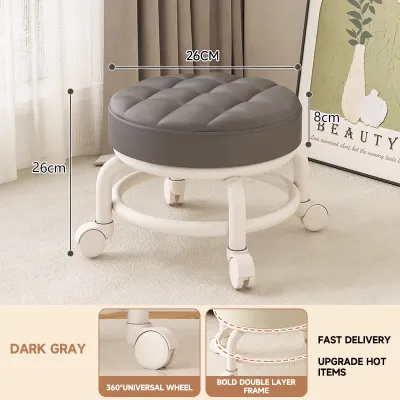
Prices are valid at publication and may change. Please refer to the product page for the latest price.
If you choose a stool that must be set higher to reach a tall family desk, a built-in footrest ring is a non-negotiable feature. This ring provides a stable platform for your child’s feet, preventing fatigue and maintaining the necessary pelvic alignment for focused work. Look for a footrest that is height-adjustable independent of the seat, allowing you to slide it down as your child’s legs grow longer over the years.
Choosing the Right Casters for Your Floor Type
The wheels, or casters, of a study stool dictate both how easily your child can position themselves at the desk and how well your home’s flooring is protected. In many homes, study areas are set up on hard surfaces like ceramic tiles, polished concrete, or vinyl planks. For these smooth, hard floors, soft polyurethane (PU) or rubber-coated wheels are highly recommended. These materials grip the floor gently, absorbing sound and preventing the unsightly scratches and scuffs that hard plastic wheels often leave behind.

Conversely, if the study corner is carpeted or uses a thick area rug, hard nylon casters are the better choice. Nylon wheels cut through carpet fibers more efficiently, allowing the stool to glide without snagging or requiring excessive physical effort from the child. Using soft wheels on a carpet can cause high friction, making it difficult for a young student to pull themselves close to the desk, which often leads to leaning forward and straining their back.
Safety is another critical factor when dealing with wheeled furniture for children. Weight-activated braking systems, often called sit-brake casters, are highly effective for younger students. These wheels lock automatically when weight is applied to the seat, preventing the stool from rolling backward when the child sits down or leans over to write. Alternatively, manual lever locks on individual wheels allow you to convert the mobile stool into a stationary seat during intense study hours, switching back to full mobility when it is time to tidy up the room. Always inspect the caster stem—the metal pin that inserts into the base—to ensure it is made of solid steel and fits snugly into the housing without any loose play or rattling.
Selecting Seat Materials for Comfort and Easy Maintenance
A child’s study stool must withstand daily use, occasional snack spills, and the warm, humid climate typical of tropical environments. The foundation of seat comfort lies in the cushion’s foam density and thickness. Avoid ultra-soft, plush cushions that feel comfortable for only a few minutes; these tend to bottom out quickly, leaving the child sitting directly on the hard wooden or plastic seat pan underneath. Look for high-density, resilient molded foam that distributes weight evenly and retains its shape even after hours of daily homework.
Upholstery selection requires a careful balance between breathability and ease of cleaning. Faux leather (such as polyurethane or vinyl) is highly practical because it can be wiped clean instantly with a damp cloth after juice spills or crayon mishaps. However, in warm, non-air-conditioned rooms, faux leather can trap heat and sweat, causing discomfort and skin irritation. To combat tropical humidity, breathable mesh upholstery is an excellent alternative, allowing continuous airflow to keep the child cool. If you prefer fabric, look for options treated with stain-resistant coatings, or consider using a removable, washable seat cover that can be tossed into the laundry when needed.
Pay close attention to the physical shape of the seat pan’s edge. A round stool should ideally feature a “waterfall” or gently sloping edge rather than a sharp, right-angle border. This curved design reduces pressure on the back of the child’s thighs, ensuring that blood circulation is not restricted during longer reading or writing sessions.
Checking Base Stability and Weight Capacity
Because children naturally wiggle, turn, and shift their weight while studying, the structural stability of the stool’s base is paramount to prevent tipping hazards. A standard five-star base—featuring five radiating legs with casters—provides the most stable footprint for a mobile stool. Avoid four-leg wheeled designs, as they have a much higher center of gravity and can easily tip over if a child leans too far to one side to grab a book or pencil. The overall diameter of the base should be slightly wider than the seat itself to create a secure, low center of gravity.
Always verify the manufacturer’s specified weight capacity before purchasing, ensuring it accommodates your child’s current weight with a generous margin for growth over the next three to five years. While a child may only weigh 30 kilograms now, a stool rated for at least 80 to 100 kilograms ensures the structural components, gas lift, and caster housings are robust enough to handle the dynamic forces of active daily use.
Before finalizing your choice, inspect the connection point where the seat plate attaches to the central column. This area bears the brunt of the child’s movement and twisting. Look for heavy-duty steel mounting plates secured with multiple bolts rather than thin plastic brackets. A high-quality connection will prevent the seat from developing an annoying wobble or tilt over time, which can distract a child and compromise their sitting posture.
Building Your Condition-Based Shortlist
To find the perfect round stool with wheels, start by establishing your household’s non-negotiable safety and environmental criteria. For instance, if your study area has smooth ceramic tiles, prioritize stools with soft polyurethane wheels and weight-activated locks to prevent slips. If your child is particularly active, set a minimum base diameter of 50 centimeters to guarantee tipping resistance.
Next, create a simple feature matrix to compare your options against your budget. In the local market, high-quality children’s study stools generally range from ₱1,500 to ₱4,000, depending on the adjustability features and material durability. Weigh this initial cost against the expected years of use; investing slightly more in a stool with a highly adjustable footrest and a durable gas lift can save you money by eliminating the need for a replacement as your child grows.
Finalizing your purchase requires careful verification steps. If buying from an online marketplace, read customer reviews specifically mentioning assembly difficulty and the clarity of the included instructions. Check the seller’s return policy to ensure you can exchange the stool if the minimum height does not align with your child’s desk setup upon arrival. If shopping in-store, have your child sit on the stool to test the cushion firmness and verify that their feet can comfortably reach either the floor or the integrated footrest.
Frequently Asked Questions (FAQ)
Can a standard adult office stool be safely used for a child's study desk?
Using a standard adult office stool for a child is generally not recommended due to ergonomic mismatches. Adult stools typically have a higher minimum seat height, which leaves a child’s feet dangling and strains their lower back. Furthermore, safety features like weight-activated braking casters are calibrated for adult weights; a lighter child may not exert enough force to engage the locks, causing the stool to roll away unexpectedly when they try to sit down.
How often should the stool's height be adjusted as the child grows?
You should perform a visual check of your child’s sitting posture every three to six months, or at the start of every new school semester. Look for physical signs of poor fit, such as slouching, shoulders hunched toward the ears, or feet dangling instead of resting flat. Adjust the seat height immediately if you notice their knees are no longer bent at a comfortable 90-degree angle or if their thighs are pressing against the underside of the study desk.

Community discussion
Share your experience or ask a question. Comments are reviewed before publication.