
Selecting a bedside table that combines natural textures with modern charging capabilities requires a careful look at material durability, storage layout, and electrical safety. A rattan bedside table brings a warm, organic aesthetic to the bedroom, but integrating electronic components introduces specific practical considerations. The ideal piece must not only match your bedroom decor but also safely power your devices and organize your nighttime essentials without cluttering your space.
To make a smart purchase, you need to evaluate how the natural fibers are finished, how the storage compartments are configured, and how the electrical components are certified. In tropical climates where humidity levels fluctuate, understanding the difference between natural and synthetic materials, as well as checking the quality of the protective sealants, is essential for long-term durability. This guide provides a comprehensive framework to help you analyze these features, measure your space accurately, and inspect your new furniture upon delivery.
Evaluating Rattan Material and Build Quality
When shopping for a rattan bedside table, the first step is to verify the authenticity and quality of the woven material. Natural rattan is harvested from climbing palms and is highly valued for its unique grain patterns, lightweight strength, and organic warmth. However, natural rattan is porous and sensitive to environmental changes. In contrast, synthetic rattan (often made from high-density polyethylene) is highly resistant to moisture and staining but may lack the tactile appeal of genuine wood fibers. Carefully review the manufacturer’s product description and material labels to confirm whether the table uses natural rattan or a synthetic alternative.
Products mentioned in this guide





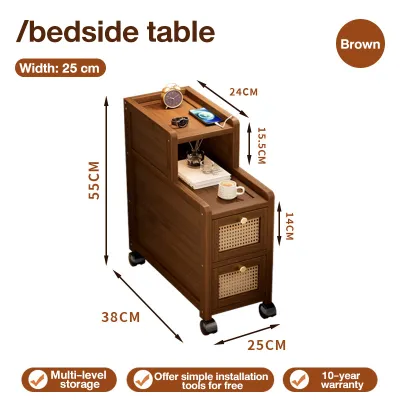

Prices are valid at publication and may change. Please refer to the product page for the latest price.
Beyond the woven panels, you must inspect the underlying frame material, which provides the structural foundation for the entire nightstand. Rattan panels are typically wrapped around or inset into a secondary frame. For lasting stability, look for frames constructed from solid hardwoods, such as mahogany, rubberwood, or mindi, or sturdy powder-coated metal. Avoid tables that rely entirely on low-grade particle board or thin fiberboard for load-bearing sections, as these materials can sag over time under the weight of heavy table lamps, books, and the constant physical pulling of charging cables.
The quality of the weave and the surface treatment also dictate how well the table will wear over time. Run your hands over the woven sections to assess the tightness of the weave. Loose or uneven weaving can easily snag delicate bedding, clothing, or charging cords, leading to premature fraying. Additionally, verify that the rattan has been treated with a protective topcoat, such as a clear lacquer, varnish, or polyurethane finish. This protective layer seals the natural fibers against moisture absorption, which is particularly important in humid environments where mold or mildew can develop in untreated crevices.
Assessing Storage Capacity and Layout
A functional bedside table must accommodate your specific nighttime routine, which means its storage layout should match the items you keep within arm’s reach. Bedside storage generally falls into two categories: enclosed drawers and open shelves. Enclosed drawers are excellent for concealing personal items, loose cables, and clutter, helping to maintain a clean and restful bedroom environment. Open shelves or cubbies, on the other hand, provide immediate, one-handed access to items you might need to grab in the dark, such as a water bottle, eyeglasses, or a book.

Before purchasing, verify the internal dimensions of the drawers rather than relying solely on the overall external measurements of the table. If you plan to store bulky items like tablets, e-readers, journals, or large medication organizers, ensure the drawer depth and width can accommodate them comfortably. Some tables also feature specialized cable management slots or hidden compartments within the drawers, allowing you to charge devices out of sight while keeping the tabletop clear.
The hardware and glide mechanisms of the drawers are critical for nighttime convenience. Squeaky, sticky, or hard-to-pull drawers can easily disrupt a sleeping partner when you reach for something in the middle of the night. Look for drawers equipped with smooth metal ball-bearing glides or soft-close hardware, which ensure quiet and effortless operation. Additionally, check that the drawers feature built-in safety stops to prevent them from being pulled completely out of the frame and spilling their contents onto the floor.
Checking Built-in Charging Ports and Electrical Safety
Integrating electrical components into wooden and woven furniture requires strict attention to safety and device compatibility. Begin by identifying the types of charging ports provided in the built-in hub. A versatile charging station should offer a combination of standard AC outlets, USB-A ports, and modern USB-C ports. Check the product specifications for the exact power output of each port, usually measured in watts (W) or amperes (A). Standard 5V/1A USB ports charge devices slowly, whereas ports with higher power ratings (such as 12W, 18W, or Power Delivery-enabled USB-C ports) are necessary to fast-charge modern smartphones, tablets, and smartwatches.
The physical placement and length of the table’s main power cord will determine where you can position the furniture. Measure the distance from your desired bedside location to the nearest wall outlet. The table’s power cord must comfortably reach the outlet without being stretched taut, which can damage the cord or pull the plug loose. Avoid setups that require daisy-chaining extension cords or running cables across high-traffic walking paths, as this creates a significant tripping hazard. Look for tables that feature a recessed power strip or a cord-routing channel to keep the main power cable neatly tucked against the back of the furniture.
Because the electrical module is embedded directly into flammable materials like wood and rattan, verifying safety certifications is non-negotiable. Look for recognized electrical safety certification marks (such as UL, ETL, CE, or local regulatory safety seals) printed on the charging unit or detailed in the product manual. The charging hub should also feature built-in surge protection to shield your expensive electronics from sudden voltage spikes, as well as overload protection to prevent the module from overheating. Ensure the design allows for adequate heat dissipation around the charging block, as enclosed spaces can trap heat during fast-charging cycles.
Measuring Space, Dimensions, and Clearance
To ensure the bedside table fits proportionally and functionally within your bedroom, you must take precise physical measurements of your space. Start by comparing the table’s surface height to the top of your mattress. For optimal ergonomic comfort, the tabletop should sit level with or slightly above the top of your mattress (ideally within a range of two inches). A table that is too low requires you to reach downward awkwardly, while a table that is too high makes it difficult to grab items or turn off a lamp while lying down.
Next, calculate the required floor footprint and clearance. Measure the width of the wall space between the edge of your bed frame and the adjacent wall or closet door. Ensure the table’s width fits comfortably within this boundary without blocking light switches, wall outlets, or air conditioning vents. You must also account for the clearance needed to fully extend the drawers or open cabinet doors. If the space is tight, a table with a sliding door or an open shelf design may be more practical than one with deep pull-out drawers.
Finally, consider the visual scale and delivery access of the furniture. A bulky, heavy-looking nightstand can overwhelm a low-profile platform bed, while a tiny, delicate table will look disproportionate next to a thick, high-top mattress. Additionally, verify the finished dimensions against your home’s entryways, hallways, and elevator doors to ensure the delivery team can easily transport the fully assembled or flat-packed unit into your bedroom without damaging your walls or the furniture itself.
Creating Your Pre-Purchase and Delivery Inspection Checklist
To streamline your decision-making and ensure you receive a high-quality product, use a structured checklist before finalizing your purchase and during the unboxing process. Consolidating your requirements beforehand prevents costly return shipping fees and ensures the table meets your daily needs.
Before purchasing, verify the following specifications:
- Confirm the overall height matches your mattress level.
- Verify the width fits your available bedside floor space with drawer clearance.
- Check that the frame is made of solid wood or metal, not low-grade fiberboard.
- Ensure the charging module includes USB-C ports and has safety certifications.
- Measure your room to confirm the power cord reaches the wall outlet safely.
Upon delivery, perform these physical and electrical checks:
- Unbox the unit on a clean, carpeted surface or blanket to prevent scratching.
- Inspect the rattan panels for loose weaving, broken fibers, or sharp protrusions.
- Check all frame joints, drawer glides, and legs for stability and alignment.
- Plug the table's power cord directly into a wall outlet.
- Test each charging port and AC outlet with a low-value device (such as a small rechargeable light) to verify consistent power delivery.
- Listen closely for any unusual buzzing, humming, or clicking sounds from the charging module.
- Feel the charging area after a few minutes of use to ensure it does not become excessively hot.
If you observe any electrical irregularities, loose wiring, or structural damage during this initial inspection, do not use the charging features. Immediately unplug the unit, take photos of the issue, and contact the manufacturer or seller to arrange for a replacement or professional repair.
Frequently Asked Questions (FAQ)
Can I replace the built-in charging module if it stops working?
Built-in charging modules are typically proprietary components designed to fit precisely within a specific cutout in the bedside table’s frame. Because of this integrated design, replacing a failed module with a standard, off-the-shelf power strip is rarely a straightforward DIY task and may require modifying the furniture. Before purchasing, check the manufacturer’s warranty terms, as electronic components often have a shorter coverage period than the wooden frame. If the module fails, contact the manufacturer to see if they offer authorized replacement parts. For safety reasons, avoid attempting to splice wires or modify the internal electronics yourself; instead, consult a qualified professional or use an external tabletop charging hub if the built-in unit cannot be safely repaired.
How do I clean and maintain rattan furniture in a humid bedroom?
Natural rattan is a fibrous material that can trap dust and absorb ambient moisture, making regular maintenance essential in humid climates. Dust the woven panels weekly using a soft-bristled brush, a dry microfiber cloth, or a vacuum cleaner equipped with a soft brush attachment to clear debris from the crevices. If the rattan requires a deeper clean, wipe it gently with a soft cloth slightly dampened with a highly diluted, mild soapy water solution, then dry it immediately with a clean towel. Avoid saturating the rattan, using harsh chemical cleaners, or applying abrasive scrubbing pads, as these can strip the protective topcoat and weaken the natural fibers. To prevent mold growth and fading, keep the table away from direct sunlight and areas with poor air circulation.

Community discussion
Share your experience or ask a question. Comments are reviewed before publication.