
Choosing between an L-shaped sofa and a modular sofa for a large family living room comes down to balancing your home’s physical layout with how your household gathers. In multi-generational homes where grandparents, parents, and children share the same living space, the sofa serves as the central hub for daily relaxation, study, and weekend gatherings. An L-shaped sofa offers a structured, space-saving design that anchors a room, while a modular sofa provides unmatched flexibility to adapt to changing family needs.
To make the right investment, you must evaluate how each configuration handles your room’s dimensions, your family’s daily habits, and the practical realities of delivery and assembly. By focusing on these key areas, you can select a seating arrangement that enhances comfort and maintains a smooth flow throughout your home.
Space and Layout Compatibility
Your living room’s physical shape is the first major factor to consider when choosing a sofa configuration. Rectangular rooms often benefit from a classic L-shaped sofa placed directly against the walls, which opens up the center of the room for children to play and keeps the main walkway clear. In contrast, square rooms or modern open-plan layouts are highly compatible with modular configurations, which can be positioned away from walls to act as a functional divider between the living and dining areas.
Products mentioned in this guide
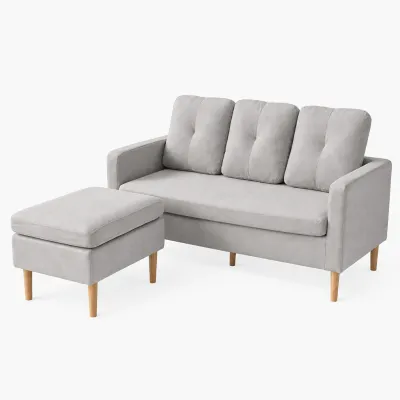
Prices are valid at publication and may change. Please refer to the product page for the latest price.
Managing traffic flow is essential in an active household to prevent bottlenecks and accidental bumps. A large sofa should never block natural pathways between doorways, hallways, or adjacent rooms. When planning your layout, aim to maintain a clear walkway of at least 75 to 90 centimeters around the seating area to ensure safe and comfortable movement for family members of all ages.
Clearance requirements also extend to your choice of coffee tables, side tables, and media consoles. A fixed L-shaped sofa limits where you can place side tables, often restricting them to the outer ends of the frame. A modular sofa allows you to separate individual sections, creating convenient gaps where you can place small tables, standing fans, or air purifiers to keep the room comfortable and well-ventilated.
Seating Capacity and Family Dynamics
While both configurations offer generous seating, they support different styles of family interaction. An L-shaped sofa provides continuous, cozy seating that naturally brings everyone close together. This layout is excellent for family movie nights or watching television, but the corner seat can sometimes feel cramped, offering limited legroom when multiple people are seated simultaneously.

Modular sofas offer segmented seating, allowing you to angle individual sections to face one another. This arrangement improves sightlines, making face-to-face conversations much easier during large family gatherings or casual weekend visits. It also allows older family members to engage comfortably with the rest of the household without having to strain or turn their heads constantly.
Before purchasing, always check the manufacturer’s specifications for weight limits, frame construction, and cushion density. Look for sturdy solid wood frames and reinforced joints that can withstand the daily activity of a large family. Opting for high-density foam cushions ensures the sofa retains its shape and support over time, resisting the sagging that can occur with heavy, daily use in warm, humid climates.
Flexibility and Long-Term Reconfiguration
Your family’s seating needs can change from day to day, and this is where modular sofas offer a distinct advantage. Because they consist of independent sections, you can easily rearrange them to suit different occasions. You can push the modules together to create a large daybed for a relaxed afternoon, or split them into separate armchairs and an ottoman when hosting guests who prefer individual seating.
L-shaped sofas have a fixed footprint that cannot be easily altered. Once you choose a left- or right-facing configuration, you are committed to that specific layout. This lack of flexibility can make it difficult to rearrange your living room in the future or adapt the sofa to a new home if your family decides to move.
If you choose a modular setup, it is important to verify the connection mechanisms used to hold the pieces together. Look for heavy-duty alligator clips or interlocking metal brackets underneath the frames. These connectors prevent the individual modules from sliding apart on polished tile or wooden floors when family members sit down or move around.
Delivery, Assembly, and Access Constraints
One of the most overlooked aspects of buying a large sofa is ensuring it can physically enter your home. Large L-shaped sofas often come in one or two bulky sections that can be difficult to maneuver through narrow doorways, tight hallways, or up winding stairwells. This is a critical consideration for families living in multi-story townhouses or high-rise condominiums with elevator size restrictions.
Modular sofas offer a much simpler delivery footprint because they are packaged in smaller, individual boxes. These boxes can easily navigate tight corners, narrow doors, and standard passenger elevators, significantly reducing the risk of damaging your walls or the sofa fabric during transit.
Always measure your entryways, hallways, and ceiling heights before finalizing your purchase. Additionally, review the retailer’s assembly requirements and return policies. Some large sofas may require professional installation to ensure the frame is properly aligned and secured, while others can be easily assembled at home with basic tools.
Decision Framework: Choosing Your Living Room Layout
To finalize your decision, consider which configuration aligns best with your household’s daily life and physical space.
Choose an L-shaped sofa if:
- Your living room layout is permanent and you prefer a clean, structured, and formal aesthetic.
- You want to maximize corner space and keep the center of the room completely open.
- You want a unified, continuous seating area that serves as a clear anchor for the room.
Choose a modular sofa if:
- You enjoy rearranging your furniture frequently to accommodate different family activities.
- Your home has tight entryways, narrow stairwells, or elevator access constraints that make moving bulky furniture difficult.
- You want the option to expand your seating capacity by purchasing additional matching sections in the future.
Verify first if:
- You have measured your exact room dimensions and mapped out the sofa's footprint on the floor using painter's tape.
- You have checked all doorway, hallway, and elevator clearances against the manufacturer's packaged dimensions.
- You have reviewed the fabric care labels to ensure the material is easy to clean and suitable for your family's lifestyle.
Frequently Asked Questions (FAQ)
How do I determine if a left-arm or right-arm facing L-shaped sofa is correct for my room?
To identify the correct orientation, stand directly in front of the sofa, facing it. If the chaise or corner extension is on your left side, it is a left-arm facing sofa. If the extension is on your right side, it is a right-arm facing sofa. Consider your room’s focal points, natural light sources, and traffic paths to ensure the extension does not block walkways or cover important features like low windows.
Can I add extra seats to an L-shaped sofa later like a modular one?
Standard L-shaped sofas are built with a fixed, continuous frame, meaning you cannot insert extra middle seats or alter the structural footprint later. If you anticipate needing more seating in the future but prefer the look of an L-shaped sofa, consider pairing it with matching ottomans, lightweight accent chairs, or floor cushions. These additions provide flexible seating options that can be easily moved or stored away when not in use.

Community discussion
Share your experience or ask a question. Comments are reviewed before publication.