
Choosing the right storage for a home office involves balancing accessibility, room layout, and structural capacity. The decision between a ladder cabinet and a traditional bookcase is not about finding a universally superior piece of furniture, but rather identifying which design aligns with your specific workspace constraints. A ladder cabinet features an open, upward-tapering structure that leans against or mounts to a wall, offering a visually light and modern aesthetic. In contrast, a traditional bookcase provides a fully enclosed, uniform, and highly structured framework designed for maximum volume and heavy-duty storage. Determining which option is better for your home office depends entirely on your available floor space, the weight of the items you need to store, and your specific safety and installation requirements.
Space and Layout: Footprint vs. Vertical Reach
When planning a home office layout, understanding how a piece of furniture occupies physical and visual space is essential. A traditional bookcase typically features a uniform depth from top to bottom, creating a consistent footprint on your floor. This design allows you to maximize vertical storage directly against the wall, but it can sometimes feel bulky or imposing in smaller rooms. On the other hand, a ladder cabinet has a footprint that varies; it is deepest at the base and becomes progressively shallower toward the top. While this tapering design reduces visual weight and makes a room feel more open, the angled stance means the base of the unit extends further into the room than the top, requiring dedicated floor clearance that cannot be blocked by desk chairs or walking paths.
Ceiling height and wall features also play a significant role in this decision. In rooms with low ceilings or decorative crown molding, a tall traditional bookcase might feel cramped or fail to fit flush against the wall. A ladder cabinet, with its open top and leaning profile, often accommodates architectural variations more easily, though you must ensure the top rail or mounting point rests securely against a flat, stable section of the wall. Additionally, in tropical climates where air circulation is vital to prevent mold and musty odors, the open sides of a ladder cabinet allow for better airflow around your items compared to the enclosed back panel of a standard bookcase.
Products mentioned in this guide
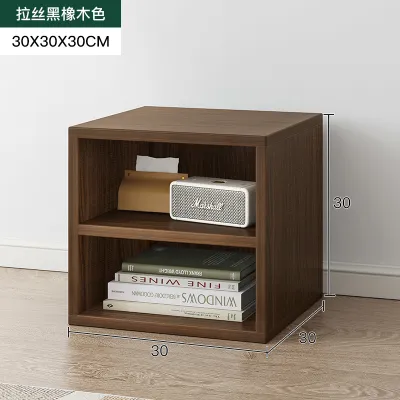
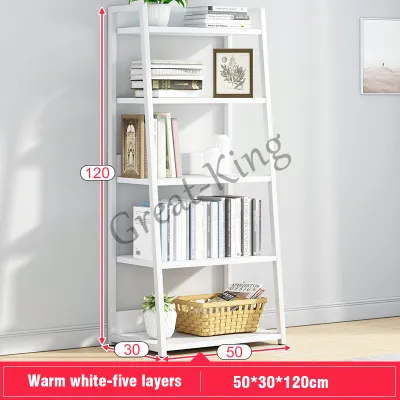
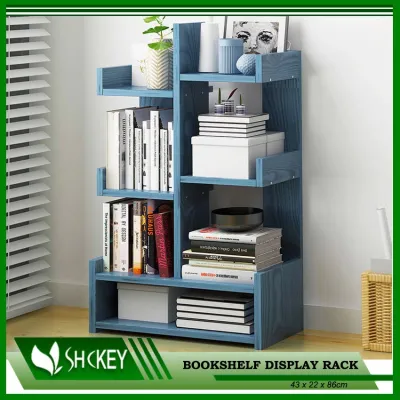
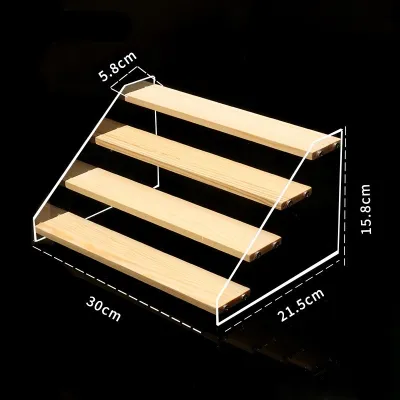
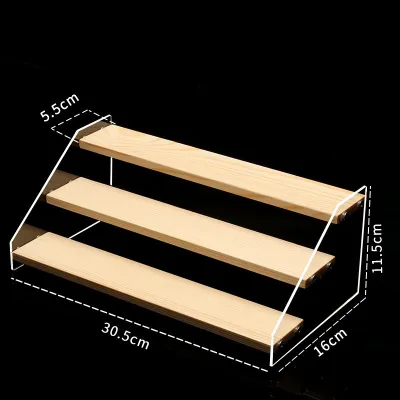
Prices are valid at publication and may change. Please refer to the product page for the latest price.
Before making a purchase, it is crucial to measure your space accurately to avoid delivery and installation headaches. Use this checklist to evaluate your home office layout:
- Measure the total wall height and width, noting any obstructions like light switches, wall outlets, or air conditioning units.
- Check the depth of your baseboards; thick baseboards can prevent a traditional bookcase from sitting flush against the wall unless the unit features a baseboard cutout.
- Map out the door swing paths for both the room entry door and nearby closet doors to ensure the shelving unit will not obstruct movement.
- Verify the clearance of your office chair, ensuring that when you roll back from your desk, you will not collide with the protruding lower shelves of a ladder cabinet.
- Confirm the dimensions of your hallways, doorways, and stairwells to guarantee the packaged furniture can be safely transported into the office.
Storage Capacity and Organization Needs
The structural differences between these two shelving styles directly dictate what types of office supplies and equipment they can accommodate. Traditional bookcases are the workhorses of office storage. They feature uniform shelf depths—typically ranging from 25 to 30 centimeters—and often include adjustable shelf pegs. This allows you to customize the vertical spacing to fit tall binders, heavy reference books, and storage boxes. Because the weight is distributed evenly across a solid, four-pointed base, traditional bookcases are highly suited for dense, heavy items.

In contrast, a ladder cabinet offers graduated shelf depths, with the deepest shelf at the bottom and the shallowest at the top. This configuration requires a more strategic approach to organization. Heavy items, such as a printer or stacks of document folders, must be placed on the lowest, deepest shelf to maintain the unit’s center of gravity and prevent stability issues. The upper, shallower shelves are ideal for lightweight items, such as small decorative plants, framed certificates, or daily-use notebooks. If you attempt to load heavy books onto the top shelves of a ladder cabinet, you risk bowing the shelves or destabilizing the entire frame.
Regardless of the style you prefer, always verify the manufacturer’s specified weight limits for each shelf before loading your equipment. Do not assume a shelf can support a heavy laser printer or a complete encyclopedia set simply because it fits the physical dimensions. Look for reinforced joints, metal support brackets, and thick shelving materials, especially if you plan to store dense paper archives. If the manufacturer does not provide a clear weight rating, err on the side of caution and reserve that unit for lighter, decorative storage.
Stability, Safety, and Installation Requirements
Safety is a paramount consideration when introducing tall shelving units into a home office, particularly in regions prone to seismic activity or in homes with active pets and young children. Both ladder cabinets and traditional bookcases present tipping hazards if they are overloaded or left unanchored. However, their physical designs require different approaches to stability. A traditional bookcase relies on a flat base and a low center of gravity, but its tall, narrow profile makes it susceptible to tipping forward if a heavy drawer is pulled out or if someone attempts to climb the shelves.
A ladder cabinet, by design, leans toward the wall, which naturally directs some of the gravitational force backward. However, this leaning mechanism is not a substitute for mechanical fastening. Many ladder cabinets must be anchored directly to the wall at the top contact point to prevent the feet from sliding outward on smooth flooring. If your home office features polished tile, hardwood, or smooth laminate floors, the risk of the base slipping is significantly higher, making secure anchoring non-negotiable.
When installing either unit, always consult the product manual for the exact hardware requirements. Standard plastic drywall anchors are often insufficient for supporting the combined weight of a heavy wooden bookcase and its contents. For secure installation:
- Locate the wall studs using a stud finder and mount the anchoring brackets directly into the wood framing.
- If you are mounting into concrete, brick, or masonry walls—which are highly common in Philippine residential construction—ensure you use appropriate masonry wall plugs and concrete screws.
- Check that the unit is perfectly level; use shims under the base of a traditional bookcase if your floor is uneven, as a slight tilt can dramatically increase tipping risks.
- If you are unsure of your wall structure or do not possess the necessary tools, stop the installation and hire a qualified local professional to secure the unit safely.
Aesthetics and Home Office Vibe
Beyond utility and safety, the visual design of your shelving plays a major role in shaping the atmosphere of your workspace. A ladder cabinet introduces an airy, contemporary, and minimalist aesthetic. Because it lacks solid side panels and often does not have a backboard, it allows the wall color to show through, making the room feel larger and less cluttered. This open design is highly beneficial if your home office doubles as a guest bedroom or is situated in a multi-purpose living area, as it blends seamlessly with residential decor without looking overly corporate.
Conversely, a traditional bookcase projects a classic, formal, and highly organized image. It creates a sense of academic authority and structure, which can be highly desirable for professionals who want to convey expertise. However, because traditional bookcases are visually dense, they can dominate a small room, making it feel darker if the wood finish is deep or if the shelves are packed tightly with books.
This visual distinction becomes particularly important if you frequently participate in video conferences or virtual meetings. An open ladder cabinet behind your desk can serve as an attractive, curated backdrop, allowing you to showcase a balanced mix of books, green plants, and professional awards. However, because everything is exposed, any disorganization or dust will be immediately visible to your colleagues. A traditional bookcase, especially one with lower cabinet doors or adjustable drawers, allows you to hide unsightly office clutter, cables, and loose paperwork out of sight, ensuring your professional background remains clean and distraction-free.
Decision Framework: Which Shelving Style Should You Choose?
To finalize your decision, evaluate your home office requirements against this practical framework. Your choice should align with your storage volume, the physical characteristics of your room, and your willingness to perform wall installation.
Choose a ladder cabinet if:
- Your home office is relatively small, and you want to maintain an open, airy visual feel.
- You primarily need to store lightweight items, decorative pieces, plants, and a moderate number of books.
- You want a modern, stylish backdrop for video calls and prefer curated displays over dense storage.
- You have smooth, level flooring and a solid wall structure suitable for securing top-rail anchors.
Choose a traditional bookcase if:
- You have a large collection of heavy reference books, thick binders, or heavy office machinery like printers and scanners.
- You require maximum, uniform storage capacity from top to bottom and want the flexibility of adjustable shelves.
- You prefer to conceal clutter, paperwork, and office supplies behind solid doors or in storage bins.
- You want a classic, formal office aesthetic that establishes a dedicated, structured workspace.
Verify first if:
- Your walls are made of lightweight partition materials that cannot support heavy anchoring loads without reinforcement.
- Your floor is significantly uneven, which could compromise the stability of a tall, unshimmed bookcase or cause a ladder cabinet to wobble.
- The dimensions of your largest office equipment exceed the shelf depth of your chosen unit.
| Feature | Ladder Cabinet | Traditional Bookcase |
|---|---|---|
| Footprint | Angled base; requires floor clearance at the bottom | Uniform depth; sits flush against the wall |
| Visual Weight | Light, open, and minimalist | Solid, structured, and formal |
| Ideal Load Types | Lightweight decor, plants, small books, framed items | Heavy binders, dense book collections, printers |
| Shelf Depth | Graduated (deepest at bottom, shallowest at top) | Uniform (typically consistent across all shelves) |
| Anchoring Requirement | Mandatory; top rail or upper shelf must secure to wall | Mandatory; must be anchored to prevent forward tipping |
Frequently Asked Questions (FAQ)
Can I use a ladder cabinet as a primary desk storage unit?
While a ladder cabinet is excellent for secondary storage and display, it is generally not suitable as a primary desk storage unit for high-frequency tasks. Because the shelves taper and become shallower near the top, you cannot easily store deep document trays or large office organizers at eye level. Additionally, if you place a ladder cabinet directly adjacent to your desk, the angled frame and protruding lower shelves can restrict your movement, increasing the risk of accidentally bumping into the unit and disturbing your items while seated.
Do traditional bookcases require professional installation?
Most traditional bookcases sold online are flat-pack units that require self-assembly. While basic assembly can usually be completed with standard hand tools, tall or heavy units often require a second person to safely lift, position, and align the panels. Professional installation is highly recommended when it comes to wall anchoring, especially if you are mounting the unit into concrete, brick, or hollow drywall where specialized anchors and drills are necessary to ensure the bookcase remains stable under a full load.

Community discussion
Share your experience or ask a question. Comments are reviewed before publication.