
Quick Answer: Which King Size Mattress Type Fits Your Sleep Style?
Choosing a king size mattress is a major investment, especially when navigating the high humidity and warm temperatures of a tropical climate. A king size bed offers an expansive sleeping area, but this larger surface area also amplifies how materials behave under weight and heat. The ideal choice depends on your personal sleep position, body weight, and how well a mattress manages heat throughout the night.
If your priority is staying cool and moving easily, latex is an excellent option due to its natural breathability and responsive bounce. For those seeking deep pressure relief and maximum motion isolation—especially when sharing the bed with a partner—memory foam excels, provided it includes cooling adaptations. If you prefer a traditional, highly breathable feel on a budget, an innerspring mattress remains a reliable standard.
Comfort and Support: How Each Material Handles a King Size Surface
A king size mattress measures approximately 183 cm by 193 cm, creating a vast surface that requires consistent support from edge to edge. How a mattress handles this space depends heavily on its core material.
Products mentioned in this guide
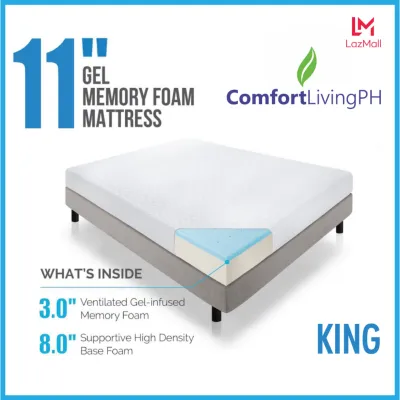
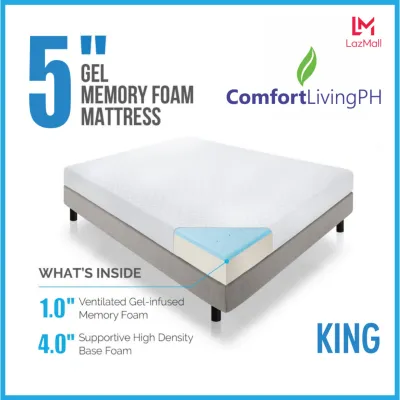
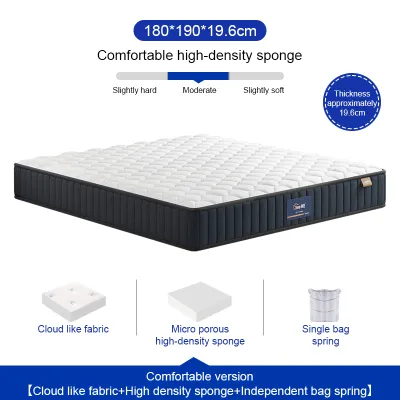
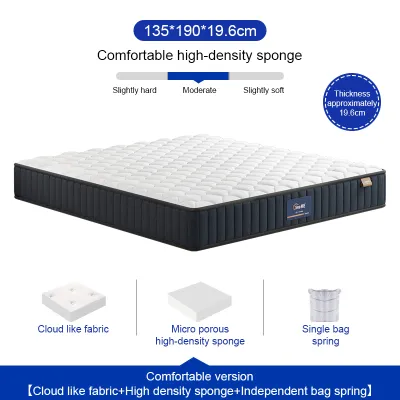
![[Non-Vacuum] Mandaue Foam Gala Bed Premium Memory Pocket Spring Mattress 12 inches thickness 10 years warranty](https://img.lazcdn.com/g/p/2bf5838f47911d7f3623aec25a457d1d.jpg_400x400q80.jpg_.webp)
Prices are valid at publication and may change. Please refer to the product page for the latest price.

Memory foam is renowned for its deep contouring properties. When you lie down, the foam reacts to your body heat and weight, molding to your specific shape to distribute pressure evenly. This makes it highly effective for side sleepers who need pressure relief on their shoulders and hips. However, on a wide king size surface, this deep sinkage can sometimes create a “stuck” sensation. Moving from one side of the bed to the other or changing positions can require more physical effort, as the foam takes a few moments to recover its shape.
Latex offers a contrasting sensation. Instead of contouring deeply, latex provides a responsive, upward pushback. This buoyant support keeps you positioned on top of the mattress rather than sinking into it. For active sleepers who turn frequently during the night, latex makes repositioning effortless. It supports spinal alignment across the wide king surface without restricting movement, making it highly suitable for back and stomach sleepers.
Innerspring mattresses rely on a network of metal coils to provide support. This construction offers a firm, traditional pushback that prevents the body from sinking. When evaluating an innerspring option, it is essential to check the coil gauge—a lower gauge number indicates thicker, stiffer coils that offer more robust support. Because innersprings do not contour to the body as closely as foam, sleepers who require targeted pressure relief may find them too rigid unless paired with a thick comfort layer.
For couples sharing a king size bed, motion isolation is a critical comfort factor. Memory foam excels in this category, absorbing movement locally so that one partner’s tossing and turning does not disturb the other. Latex also isolates motion reasonably well due to its localized elasticity, though it retains some natural bounce. Traditional open-coil innersprings tend to transfer motion across the entire width of the bed, though pocketed coil designs (where each spring is individually wrapped) significantly improve motion isolation.
Temperature Regulation: Sleeping Cool in a Tropical Climate
In tropical environments where high humidity and warm night temperatures are constant, heat retention can severely disrupt sleep. A king size mattress has more surface area to trap body heat, making temperature regulation a primary consideration.
Innerspring mattresses inherently excel at cooling. The open space between the metal coils allows air to circulate freely throughout the mattress core. As you move, warm air is pushed out and cooler air is drawn in, preventing heat from building up beneath your body. This natural ventilation makes innersprings a highly reliable option for hot sleepers in humid regions.
Latex mattresses also offer strong thermal performance, particularly those made from natural latex. The material features an open-cell molecular structure and is typically manufactured with ventilation holes throughout the core. This design allows heat and moisture to escape more efficiently than synthetic foams. When shopping, it is wise to check the product specifications to verify whether the latex is natural, synthetic, or a blend, as natural latex generally offers superior breathability.
Traditional memory foam is notorious for retaining heat. Because it relies on body warmth to contour and compress, it can act as an insulator, trapping heat directly against your skin. To combat this, manufacturers introduce various cooling technologies. When reviewing memory foam product tags, look for features such as gel infusions, open-cell formulations, or specialized phase-change covers designed to pull heat away from the body. However, rather than relying solely on marketing terms like “cooling foam,” always verify the manufacturer’s specific material certifications and construction details to ensure genuine breathability.
Durability, Edge Support, and King Size Logistics
Investing in a king size mattress requires looking closely at long-term structural integrity and the practicalities of managing a large piece of furniture.
Edge support is a critical factor for king size beds. Strong edges allow you to sleep right up to the margin of the mattress without feeling like you might roll off, effectively maximizing the usable sleeping surface. Innerspring mattresses, especially those with reinforced steel borders or high-density foam encasements, generally offer the strongest edge support. Latex also maintains decent edge integrity due to its natural resilience. In contrast, all-foam memory foam mattresses can compress significantly at the edges when you sit or sleep near the border, unless they feature a dedicated, firmer foam perimeter.
To assess the expected durability of your mattress, look past brand promises and examine the technical specifications on the product tag. For foam mattresses, check the density rating (typically measured in kilograms per cubic meter or pounds per cubic foot); higher density indicates a more durable foam that resists sagging over time. For innerspring models, look at both the coil count and the coil arrangement. A higher concentration of pocketed coils generally points to better weight distribution and a longer lifespan.
The sheer size and weight of a king mattress introduce unique logistical challenges. Natural latex is exceptionally heavy and floppy, making it difficult to lift, rotate, or move through tight hallways. Memory foam is also heavy but slightly more rigid, while innerspring mattresses are bulky but often easier to grip due to their structured borders. Before purchasing, measure your doorways, stairwells, and bedroom clearance to ensure a king size mattress can be safely delivered and installed in your home.
Value and Pricing: How to Evaluate Your Options
Evaluating the cost-to-value ratio of a king size mattress requires looking closely at materials and retail policies rather than just the price tag.
Price tiers generally align with the complexity and sourcing of the materials. Innerspring mattresses often occupy the entry-to-mid-level price points, making them highly accessible for budget-conscious buyers. Memory foam spans a wide range, from affordable entry-level options to premium models featuring advanced cooling layers. Natural latex sits at the top of the pricing spectrum, representing a significant upfront investment that is often justified by its exceptional durability and eco-friendly sourcing.
To ensure you are getting true value, inspect the product tag for key specifications. Verify the origin of the latex (such as 100% natural Dunlop or Talalay), the density of the foam layers, and the coil count of the spring system. A higher price tag should always correspond to higher-quality, denser materials that promise a longer lifespan.
Because a king size mattress is a substantial financial commitment, pay close attention to the manufacturer’s retail policies. Look for brands that offer a comprehensive sleep trial, allowing you to test the mattress in your own home for several weeks. Ensure you understand the return logistics: returning an oversized king mattress can be incredibly difficult and costly if the manufacturer does not cover the pickup and shipping fees. Additionally, read the warranty terms carefully to see what level of sagging or body impression is required to trigger a replacement.
Final Decision Framework: Choose Your King Size Mattress
To choose the right king size mattress for your home, align your personal preferences with the unique characteristics of each material.
Choose Latex if:
- You sleep hot and require a highly breathable, naturally cooling surface.
- You prefer a responsive, bouncy feel that makes it easy to move and change positions.
- You want an exceptionally durable mattress made from natural, resilient materials.
Choose Memory Foam if:
- You suffer from joint pain and need deep, contouring pressure relief.
- You share your bed and want to eliminate motion transfer from your partner.
- You prefer the sensation of sleeping "in" a mattress rather than "on" it.
Choose Innerspring if:
- You are working with a stricter budget but still want a supportive king size bed.
- You prefer a traditional, highly stable feel with robust edge support.
- You want maximum natural airflow through the core of the mattress.
Verify first if:
- Your bed frame is rated to support the substantial weight of a king size latex or memory foam mattress.
- Your home's entryways, stairwells, and doorways have sufficient clearance to accommodate a non-bendable king size mattress during delivery.
- The product care label matches your maintenance capabilities, as some materials require specific cleaning methods or specialized covers.
Frequently Asked Questions (FAQ)
Do I need a specific bed frame for a king size memory foam or latex mattress?
Yes, both memory foam and latex mattresses require a highly supportive, stable foundation due to their substantial weight. Traditional box springs designed for innersprings may not provide the rigid support these heavy materials need. Look for a solid platform or a slatted base where the slats are spaced no more than 7 to 8 centimeters apart to prevent the mattress from sagging through the gaps. Always check the manufacturer’s warranty guidelines, as using an unapproved foundation can void your coverage. Additionally, verify that the bed frame itself has a sturdy center support leg to handle the combined weight of the mattress and the sleepers.
How often should I rotate a king size mattress?
To prevent uneven wear and body impressions, it is generally recommended to rotate a king size mattress 180 degrees every three to six months. For brand-new mattresses, rotating them every two months during the first year can help break in the comfort layers evenly. Because a king size mattress is heavy and awkward to handle, always enlist a partner to help you rotate it safely to avoid personal injury or damage to the mattress seams. Periodically perform a visual check by stripping the sheets and looking for any early signs of sagging or deep body impressions, which can indicate it is time to rotate the bed or inspect your foundation.

Community discussion
Share your experience or ask a question. Comments are reviewed before publication.