
Selecting the right mattress in the Philippines requires balancing personal comfort with the realities of a tropical climate. High year-round temperatures and intense seasonal humidity directly impact how mattress materials perform overnight. A bed that feels cozy in a showroom can easily become a heat trap or succumb to moisture damage if its core materials are not suited to local conditions.
When shopping for a new bed, such as a Casova mattress, understanding how different materials behave under tropical conditions will help you make an informed investment. Evaluating the physical properties of latex, spring, and memory foam allows you to choose a sleep surface that remains cool, supportive, and hygienic over years of use.
Core Differences in Tropical Sleep Environments
Latex, spring, and memory foam mattresses utilize fundamentally different structures to support your body, and these structures react uniquely to heat and humidity. Natural and synthetic latex feature an open-cell structure that inherently resists heat retention. During manufacturing, latex is often perforated with tiny pinholes, creating a highly breathable matrix that allows air to pass through the material rather than remaining trapped within the core.
Products mentioned in this guide
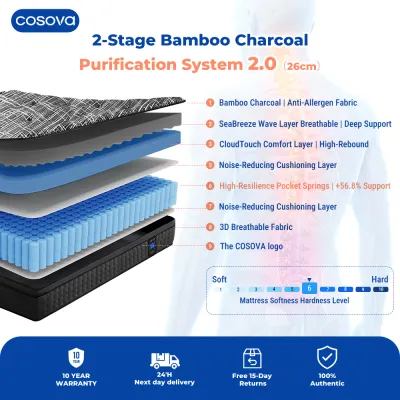
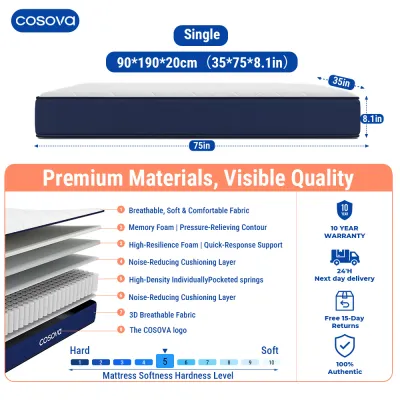
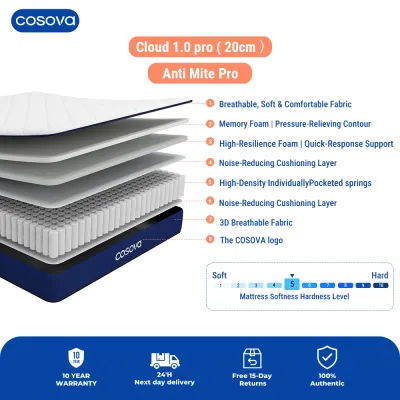
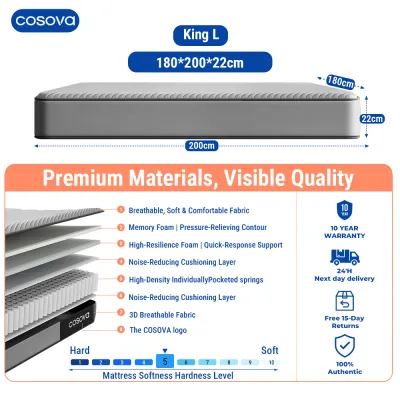
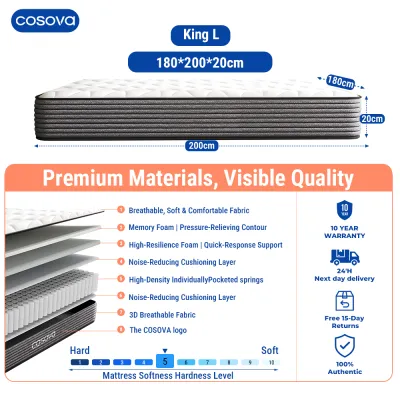
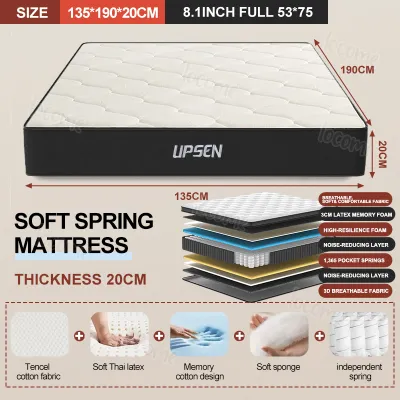
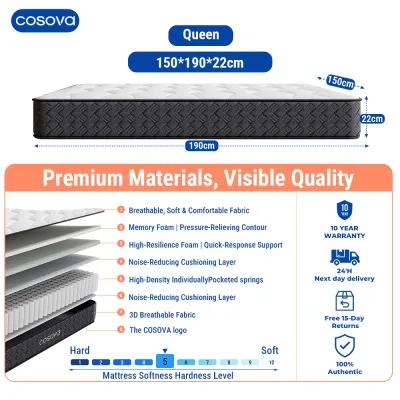
Prices are valid at publication and may change. Please refer to the product page for the latest price.
In contrast, spring mattresses rely on open space for support. Because the core consists of steel coils rather than solid blocks of foam, air circulates freely through the mattress. This open design makes spring systems highly efficient at dissipating body heat, as there is minimal material to block airflow.
Memory foam is a dense, viscoelastic material that contours closely to the body by responding to heat and pressure. While this provides excellent pressure relief, the dense cell structure naturally restricts airflow. Without specific cooling modifications, traditional memory foam tends to trap body heat, which can lead to an uncomfortably warm sleeping experience in a tropical climate.
Comparing Breathability and Heat Retention
When comparing temperature regulation, the passive cooling of innerspring coils generally outperforms solid foam structures. The open chambers of a pocket spring system allow air to move dynamically as you shift positions during sleep. This convective airflow helps carry heat away from the body, keeping the mattress surface closer to the ambient room temperature.

Latex offers excellent surface-level breathability due to its aerated design. While it does not have the large open air chambers of a spring mattress, the natural elasticity and open-cell nature of latex prevent it from hugging the body too closely. This limited contouring reduces the surface area of contact between your body and the bed, allowing heat to escape more easily.
Memory foam manufacturers often introduce gel, copper, or graphite infusions to improve heat dissipation. While these infusions help absorb initial body heat, their cooling effect can saturate over an eight-hour sleep cycle, especially in high ambient temperatures. If you sleep without air conditioning, these infusions may eventually warm up to match your body temperature.
To ensure effective cooling, look beyond material names and check the manufacturer’s technical specifications. Verify if the mattress features specialized ventilation layers, horizontal airflow channels, or a cover made from phase-change materials. These structural elements are more reliable indicators of overnight cooling than simple gel infusions.
Durability and Humidity Resistance
High humidity levels in the Philippines can accelerate the degradation of mattress materials and encourage the growth of allergens. Latex is naturally resilient against mold, mildew, and dust mites, which thrive in damp environments. This natural resistance makes latex an exceptionally durable option for humid regions, as it maintains its structural integrity without harboring moisture.
Spring mattresses face different challenges in humid climates. High moisture levels can lead to rust on steel coils, which weakens the support system and causes squeaking over time. To prevent this, check if the coils have rust-resistant coatings or if they are individually wrapped in non-woven fabric pockets, which shield the metal from ambient moisture.
Traditional memory foam is highly susceptible to moisture absorption from both sweat and humidity. Over time, this moisture can break down the polyurethane structure, leading to premature sagging and a loss of support. When considering memory foam, verify the manufacturer’s warranty conditions regarding humidity-related sagging and check if the foam has been treated to resist moisture retention.
Remember that a material name alone does not guarantee durability. You must verify the quality of the stitching, the density of the foams used, and the specific care instructions provided by the manufacturer to ensure the mattress is suited to your home’s environment.
Decision Framework: Choosing Your Ideal Mattress Material
To select the right mattress for your home, match your sleep habits, body temperature, and budget to the strengths of each material.
Choose latex if you prioritize natural temperature regulation, a responsive bounce, and inherent resistance to tropical allergens. Latex is ideal for those who prefer to sleep “on” the mattress rather than sinking “into” it, and it offers excellent longevity in humid conditions.
Choose spring if you sleep hot, prefer a traditional bouncy feel, and want a cost-effective cooling solution. The open coil design provides maximum airflow, making it highly suitable for bedrooms that rely on fans rather than continuous air conditioning.
Choose memory foam if you require deep pressure relief for joint pain or excellent motion isolation to prevent disturbing your partner. If you choose memory foam, ensure it features advanced cooling covers, open-cell technology, or horizontal ventilation channels to mitigate heat retention.
Verify first if you are considering a hybrid Casova mattress. Hybrid models combine the contouring comfort of foam or latex with the robust support of pocket springs. Check the exact thickness of the top comfort layers; thick layers of traditional foam can block the airflow from the springs below. Also, verify the coil gauge, as thicker steel coils provide stronger edge support and better durability under humid conditions.
Before finalizing your purchase, always measure your doorways, stairwells, and lift access. A mattress, especially a dense latex or hybrid model, can be heavy and difficult to maneuver during delivery. Ensure your bed frame is stable, has adequate load capacity, and matches the finished dimensions of your chosen mattress to prevent sagging and structural instability.
Frequently Asked Questions (FAQ)
How can I improve airflow for a memory foam mattress in a humid climate?
To improve airflow, use a slatted bed frame rather than a solid platform base. Solid bases block airflow from the bottom of the mattress, trapping heat and moisture within the foam layers. Ensure the slats are spaced according to the manufacturer’s guidelines to maintain proper support while allowing air to circulate underneath.
Additionally, use a highly breathable, moisture-wicking mattress protector. Avoid heavy plastic-backed protectors that trap heat; instead, look for breathable membranes that shield the foam from sweat while allowing air exchange. Regularly rotating the mattress according to the manufacturer’s schedule also helps distribute wear and allows compressed areas to air out.
Does a mattress require special care during the rainy season?
Yes, seasonal humidity spikes during the rainy season require proactive maintenance to protect your mattress. Maintain indoor humidity levels using dehumidifiers or air conditioning when possible to prevent moisture from settling deep within the mattress fibers.
Avoid exposing the mattress to direct, harsh sunlight for drying, as UV rays can degrade natural latex and synthetic foams. Instead, air it out in a well-ventilated room with a fan running. Always consult the care label for approved cleaning methods if accidental moisture exposure occurs.

Community discussion
Share your experience or ask a question. Comments are reviewed before publication.