
When shopping for an ergonomic office chair in the Philippines, understanding what your budget actually buys is the key to avoiding back strain and buyer’s remorse. The market for lumbar support chairs between ₱3,000 and ₱15,000 is highly competitive, but the quality, adjustability, and durability of the lower back support vary dramatically across this price spectrum. While entry-level options rely on simple, static designs, moving up the price scale introduces sophisticated mechanical systems that actively adapt to your body’s movements.
Choosing the right chair requires balancing your daily sitting hours with the specific adjustability features offered at each price point. In a tropical climate where high humidity can affect both material tension and personal comfort, the choice of mesh, foam, and frame construction becomes just as critical as the lumbar mechanism itself. By understanding what features are realistic at each tier, you can make an informed decision that protects your posture without overspending.
Understanding Lumbar Support Mechanisms
To make an informed purchase, you must first understand the different types of lumbar support mechanisms commonly found in modern office chairs. The most basic type is the fixed lumbar curve, which is molded directly into the backrest frame. This design relies entirely on the user’s height and spine shape matching the pre-molded curve of the chair, offering no customization if the support sits too high or too low.
Products mentioned in this guide
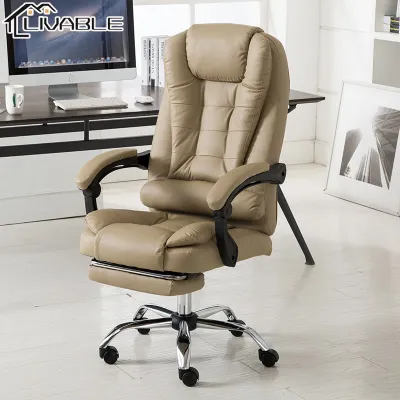
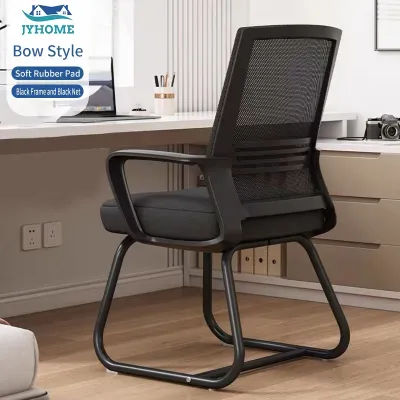
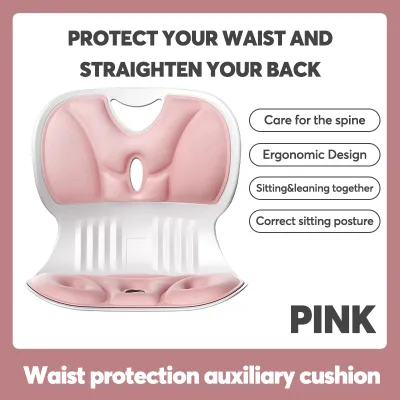
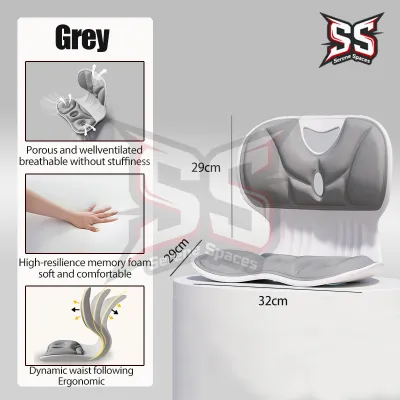
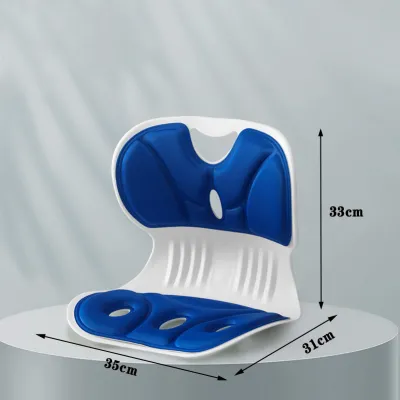
Prices are valid at publication and may change. Please refer to the product page for the latest price.
A step up is the independent adjustable lumbar pad, which is a separate component mounted behind or within the backrest mesh. These pads typically offer vertical adjustment (height) to target the L1 to L5 lumbar vertebrae, and some mid-range models also allow horizontal adjustment (depth) to control how firmly the pad presses against the lower back. This dual-axis adjustability is crucial for users who fall outside average height ranges.
For more targeted support, dual-back or split-backrest designs divide the backrest into two distinct sections: an upper thoracic support and an independent lower lumbar support. The lower section is often mounted on flexible joints or springs, allowing it to pivot and contour to the lower back as you shift your weight. This design helps maintain contact with the lumbar spine even when twisting or leaning sideways.
At the high end of this budget, you will find dynamic or adaptive lumbar systems. These advanced mechanisms do not require manual adjustment knobs; instead, they are engineered to automatically flex, pivot, and adjust their tension in response to your body weight and recline angle. When reviewing product specifications on online marketplaces, look closely at diagrams and user manuals to verify whether a ‘lumbar support’ claim refers to a simple plastic strip or a true mechanical adjustment system.
What to Expect in the ₱3,000 to ₱6,000 Range
In the entry-level price bracket of ₱3,000 to ₱6,000, lumbar support is generally basic and relies on simple structural designs. You should expect either a fixed lumbar curve molded into the plastic frame of the backrest or a basic height-adjustable plastic lumbar pad. These adjustable pads are often thin and offer limited vertical travel, meaning they may not align perfectly with very tall or very short users.

The primary material in this price range is standard polyester mesh, which provides decent breathability in warm, humid environments. However, the tension of the mesh in budget chairs can degrade over time, especially under constant humidity and daily use. As the mesh stretches and sags, the support offered by a fixed lumbar curve diminishes, forcing your back to press directly against the hard plastic frame behind the mesh.
Adjustability options are highly restricted in this tier. Recline mechanisms are usually basic tilt-lock systems that only lock in the fully upright position, with a simple tension knob under the seat to adjust the resistance of the tilt. Armrests are typically fixed to the frame or offer basic height adjustment, and the gas lift is usually a Class 2 or Class 3 cylinder, which may feel slightly wobbly over time.
When shopping in this range, it is vital to check the physical dimensions of the chair and compare them to your body measurements. Since customization is limited, the chair must fit your natural posture right out of the box. Look for models that feature a slightly thicker, padded lumbar strip rather than a bare plastic bar, as this provides a softer buffer if the mesh tension begins to soften.
What to Expect in the ₱6,000 to ₱10,000 Range
Stepping up to the ₱6,000 to ₱10,000 range introduces independent lumbar adjustability and significantly better build quality. In this mid-tier bracket, you can expect independent lumbar pads that offer both height and depth adjustments, often referred to as ‘2D lumbar support’. This allows you to not only position the support at the correct height but also control the intensity of the pressure against your lower back.
This price range also introduces split-backrest designs, where the lower lumbar zone is physically separated from the upper backrest. This separation allows the lumbar section to flex independently, providing continuous support as you transition between typing and reclining. The frames in this tier are typically constructed from glass-fiber reinforced nylon, which offers better structural rigidity and less flexing under weight.
The mesh used in mid-tier chairs is generally of higher quality, featuring tighter weaves that retain their tension over years of use. This is particularly important in tropical climates, as high-quality elastomeric mesh allows for excellent airflow while maintaining the necessary resistance to support your lower back. You will also find smoother adjustment mechanisms, such as dial knobs or sliding tracks that lock securely into place without slipping.
Other components see a noticeable upgrade in this range. You can expect Class 4 gas lifts, which offer smoother height adjustments and higher weight capacities, along with sturdy nylon or steel bases. Recline mechanisms often feature multi-position locks, allowing you to secure the backrest at several comfortable angles, which helps relieve pressure on the lumbar spine during long working sessions.
What to Expect in the ₱10,000 to ₱15,000 Range
At the upper end of this budget, from ₱10,000 to ₱15,000, you enter the territory of premium ergonomic features and dynamic support systems. The standout feature in this tier is the adaptive or spring-loaded lumbar system. These mechanisms are designed to automatically track your spine’s movement, pivoting and adjusting their tension as you shift postures, ensuring your lower back is supported whether you are sitting upright, leaning forward, or fully reclining.
In addition to dynamic lumbar tracking, chairs in this range often feature multi-zone mesh backrests. The mesh is woven with varying levels of tension across different zones, providing firmer, highly supportive tension in the lumbar region and softer, more forgiving tension around the shoulders and upper back. This zonal support reduces pressure points and promotes natural spinal alignment without the need for bulky plastic pads.
The tilt mechanisms in this tier are highly sophisticated, often utilizing weight-sensing technology that automatically calibrates the recline tension based on your body weight. This ensures a smooth, balanced recline without the need to constantly adjust a manual tension knob. Armrests are typically 3D or 4D, allowing you to adjust their height, depth, angle, and width to ensure your elbows are supported, which indirectly reduces strain on your upper and lower back.
Build quality is exceptionally robust in this price bracket, featuring heavy-duty aluminum alloy bases, reinforced frames, and premium elastomeric mesh that resists sagging even in high-humidity environments. Warranties are also more comprehensive, often covering the frame, mechanism, and mesh for several years. Investing in this tier is highly recommended for individuals who spend more than eight hours a day at their desks and require active, self-adjusting ergonomic support.
How to Evaluate and Test Lumbar Support Before Buying
Whether you are testing a chair in a physical showroom or inspecting it immediately after delivery from an online marketplace, a systematic evaluation is essential. Start by sitting in the chair for at least 10 minutes in your typical working posture. Do not just sit perfectly upright; mimic your daily routine by leaning back, reaching forward as if typing, and shifting your weight from side to side to see how the lumbar support responds.
Pay close attention to how the lumbar support tracks your spine when you recline. In poorly designed chairs, reclining causes the lumbar pad to slide away from your lower back, leaving a gap that forces your muscles to tense up. A well-designed chair will maintain consistent contact with your lumbar curve throughout the entire range of motion, providing continuous support without requiring manual readjustment.
Next, check for uncomfortable pressure points. The lumbar support should feel like a firm, supportive hand pressing gently against your lower back; it should never feel like a hard, localized bar digging into your spine. Additionally, ensure that the lumbar pad does not push your pelvis too far forward on the seat pan, as this reduces the usable seat depth and can cause your thighs to overhang, leading to restricted blood circulation.
Finally, if you are purchasing online, carefully review the return policy and assembly requirements. Ensure that the chair comes with clear instructions and all necessary hardware, and check that the frame joints and adjustment levers are tight and squeak-free once assembled. Taking the time to verify these structural details ensures that your investment provides long-term comfort and reliable spinal support.
Frequently Asked Questions (FAQ)
Is a fixed lumbar pillow better than an adjustable mechanism?
Fixed lumbar pillows, which are common on gaming chairs and entry-level office chairs, are simple and cost-effective, but they rely on a one-size-fits-all design. They only provide effective support if your height and natural spine curvature perfectly match the shape and position of the pillow. Adjustable lumbar mechanisms, on the other hand, allow you to customize both the height and depth of the support, making them far more versatile and effective for a wider range of body types and sitting postures.
Can I add an aftermarket lumbar cushion to a basic chair?
Yes, adding an aftermarket memory foam or mesh lumbar cushion can help improve a basic chair that lacks adequate built-in support. However, you must be cautious, as adding a thick external cushion pushes your entire torso forward on the seat pan. This reduces the effective seat depth, which can leave your thighs unsupported and cause the back of your knees to press uncomfortably against the front edge of the seat, ultimately disrupting the chair’s intended ergonomic geometry.

Community discussion
Share your experience or ask a question. Comments are reviewed before publication.