
Choosing a portable mattress for a tropical climate like the Philippines requires balancing sleep comfort with physical practicality. The intense heat and high humidity mean that a mattress material that traps body warmth can quickly lead to uncomfortable, sweat-inducing nights. At the same time, a portable mattress must be easy to fold, carry, and store without losing its shape or deteriorating over time.
When comparing memory foam and latex foam for this purpose, the decision hinges on how each material manages temperature and handles the mechanical stress of folding. Latex foam is naturally cooler and more resilient, making it highly suitable for humid environments, but it tends to be heavier and more expensive. Memory foam provides excellent pressure relief and is highly compact, but traditional formulations retain heat, requiring modern cooling modifications to be viable in tropical spaces.
By understanding the structural differences, weight profiles, and cooling technologies associated with both materials, you can make an informed decision that fits your sleeping habits and storage constraints.
Products mentioned in this guide
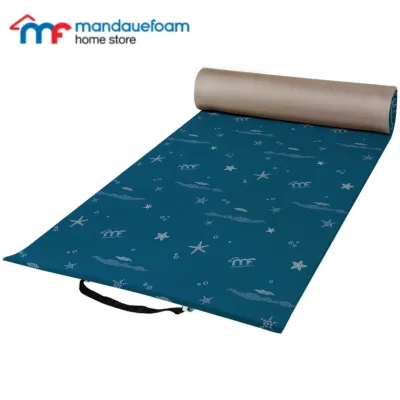
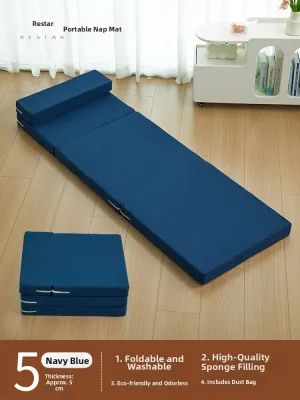
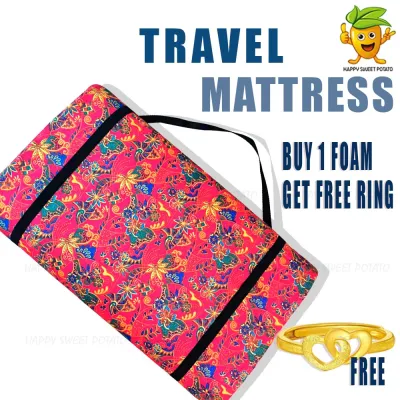
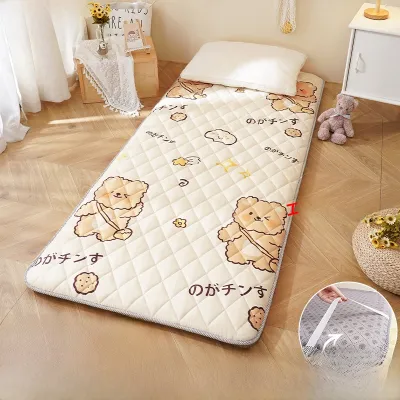
Prices are valid at publication and may change. Please refer to the product page for the latest price.
Comparing Heat Retention and Breathability
To understand why these materials perform differently in the heat, look at their physical structure. Traditional memory foam is made from polyurethane treated to increase its viscosity and density. This viscoelastic structure reacts to body heat and pressure, softening to contour precisely to your physical shape. While this contouring provides excellent pressure relief, it also creates a close seal around your body, trapping warm air and restricting ventilation. In a warm room without active air conditioning, this heat-retention property can make the mattress feel uncomfortably hot.
In contrast, latex foam—especially natural latex harvested from rubber trees—possesses an open-cell structure that does not rely on body heat to conform to your shape. It is naturally elastic and springy, supporting your body by pushing back rather than sinking. This open-cell design allows air to flow freely through the material, preventing heat from building up beneath you. Because you sleep “on” latex rather than “in” it, less of your body surface is enveloped by the mattress, which naturally keeps you cooler throughout the night.
If you prefer the contouring feel of memory foam but worry about the tropical heat, you must verify specific cooling modifications on the product label. Look for gel-infused memory foam, which incorporates gel beads designed to absorb and dissipate initial body heat. Other advanced options include copper- or graphite-infused foams, which leverage the natural thermal conductivity of these minerals to pull heat away from your body. For both memory foam and latex, look for aerated pin-core designs—small, regularly spaced ventilation holes punched through the foam layer to encourage continuous airflow.
The mattress cover plays an equally critical role in temperature regulation, acting as the primary barrier between your skin and the foam core. A dense, synthetic cover can completely block the airflow of an otherwise breathable latex mattress. When shopping, prioritize covers made from natural, moisture-wicking fibers such as bamboo-derived rayon, organic cotton, or specialized cooling fabrics. These materials pull sweat away from your skin and allow it to evaporate quickly, which is vital for maintaining comfort in high-humidity environments.
Assessing Portability, Weight, and Folding Mechanisms
Portability is the defining feature of a foldable mattress, and the weight of the foam directly dictates how easy it is to move. Latex foam is significantly denser and heavier than polyurethane-based memory foam. A three-inch-thick latex mattress can weigh up to twice as much as a memory foam mattress of the same dimensions. If you plan to pack the mattress into a car for road trips, move it between rooms daily, or store it on a high shelf, the physical effort required to lift a heavy latex model is a crucial factor to consider.

The two materials also behave differently when subjected to repeated folding, rolling, and storage. Memory foam is highly flexible and can be compressed tightly, making it excellent for compact storage. However, in cooler, air-conditioned environments, memory foam can become temporarily stiff and may take several minutes to fully expand and recover its shape after being unfolded. Latex foam, on the other hand, is highly resilient and snaps back to its original shape instantly, regardless of the ambient temperature. It resists permanent creasing and sagging, even after months of being stored in a folded position.
To ensure your portable mattress survives years of folding and unfolding, you must inspect its structural design. Tri-fold and bi-fold constructions are generally superior to roll-up designs because they fold along pre-determined fabric hinges rather than forcing the foam itself to bend at extreme angles. Look for mattresses with robust, reinforced fabric hinges and heavy-duty zippers. The edges of the foam sections should be cleanly cut and encased in individual inner covers to prevent the foam from crumbling or tearing at the joints over time.
Decision Framework: Which Foam Fits Your Lifestyle?
To simplify your choice, consider how your daily routine, sleeping environment, and physical needs align with the characteristics of each foam type.
Choose Memory Foam if:
- Your primary goal is deep pressure relief for sensitive joints, shoulders, or hips.
- You plan to use the portable mattress primarily in an actively air-conditioned room where heat retention is less of a concern.
- You are working within a stricter budget, as high-quality memory foam options are generally more affordable than natural latex.
- You need a lightweight mattress that can be easily lifted, folded, and stored by a single person without physical strain.
Choose Latex Foam if:
- You sleep hot and rely primarily on electric fans rather than air conditioning to stay cool at night.
- You prefer a responsive, bouncy sleeping surface that makes it easy to change positions without feeling stuck.
- You plan to use the mattress daily or fold it frequently, requiring a highly durable material that resists sagging and permanent body impressions.
- You prioritize natural, eco-friendly materials that are naturally resistant to dust mites and mold.
Verify First if:
- You suffer from chronic back pain; a mattress that is too soft or lacks sufficient support can worsen spinal alignment, making a firmer latex or high-density foam base necessary.
- You or your guests have a known latex allergy; in such cases, synthetic latex or certified memory foam is the safer choice.
- You have strict weight limits for travel or storage, as a heavy latex mattress may exceed the capacity of lightweight shelving or portable carrying bags.
Essential Specifications to Check Before Purchase
Before finalizing your purchase, you should carefully verify the technical specifications listed on the product tag or manufacturer’s website. First, look at the thickness and density of the foam. For a portable mattress, a thickness of 3 to 4 inches is generally the sweet spot; anything thinner may allow your hips and shoulders to press straight through to the hard floor, while anything thicker becomes bulky and difficult to fold. For memory foam, a density of 3 to 4 pounds per cubic foot (pcf) offers a good balance of support and durability without being excessively heavy.
Next, check for reputable material certifications to ensure safety and minimize chemical off-gassing, which can be particularly strong in warm, humid rooms. For memory foam and other polyurethane-based foams, look for the CertiPUR-US certification, which guarantees the foam is made without harmful ozone depleters, heavy metals, or formaldehyde, and has low volatile organic compound (VOC) emissions. For natural latex, look for the Global Organic Latex Standard (GOLS) or OEKO-TEX Standard 100 certification, which verifies that the material is free from harmful substances and sustainably sourced.
Finally, review the manufacturer’s warranty and return policy, paying close attention to what is actually covered. A standard mattress warranty may not cover issues unique to portable designs. Verify whether the warranty protects against premature foam softening, split seams along the folding hinges, or broken zippers on the removable cover. Some manufacturers also offer a trial period, which is highly beneficial for testing how the mattress handles the heat in your actual home environment before making a permanent commitment.
Frequently Asked Questions (FAQ)
Can I use a standard bed sheet on a foldable foam mattress?
Yes, you can use standard bed sheets on a foldable mattress, but you must select the right material and fit to maintain comfort. For tropical climates, choose lightweight, breathable sheets made from natural fibers like cotton percale, linen, or bamboo. These fabrics allow air to pass through easily, complementing the cooling properties of your mattress. When applying a fitted sheet to a tri-fold mattress, ensure the sheet has enough slack so it does not pull tight and restrict the folding hinges when you pack the bed away. Alternatively, you can use a flat sheet tucked securely under the mattress sections, which is easier to remove before folding.
How should I store a portable foam mattress to prevent mold in humid weather?
To prevent mold and mildew in humid tropical climates, never fold or store a portable mattress immediately after use. Allow the mattress to air out uncovered for at least an hour to let body moisture evaporate. When storing it for extended periods, place it in a breathable canvas or fabric storage bag rather than a sealed plastic cover, which can trap ambient humidity and encourage mold growth. Store the mattress in a dry, elevated location off the floor, preferably flat or folded according to the manufacturer’s instructions. Avoid compressing the foam under heavy objects during storage, as this can permanently damage the foam structure.
Does a thicker portable mattress always mean better sleep in hot weather?
Not necessarily. While a thicker mattress provides more cushioning from the floor, a greater volume of dense foam can actually trap more body heat. In hot weather, a very thick, soft memory foam mattress will envelop your body more deeply, restricting airflow and making you feel warmer. Instead of simply choosing the thickest option, look for a mattress that balances a supportive thickness (around 3 to 4 inches) with high-quality cooling features, such as an open-cell latex structure or gel-infused foam. This ensures you get adequate physical support without sacrificing the ventilation needed for a cool night’s sleep.

Community discussion
Share your experience or ask a question. Comments are reviewed before publication.