
Finding the right storage solution for a compact kitchen requires balancing limited floor space with a demanding tropical climate. There is no single “best” metal kitchen pantry cabinet that fits every home; instead, the ideal unit is one that aligns with your specific kitchen layout, clearance limits, and daily cooking habits. Metal cabinets are highly favored for their durability, resistance to pests, and sleek modern aesthetic. However, selecting the right one involves a systematic evaluation of your space, storage needs, and the cabinet’s structural specifications. By focusing on precise measurements, functional configurations, and robust finishes, you can secure a pantry that maximizes your storage capacity without making your cooking area feel cramped.
Assessing Your Kitchen Space and Clearance
Before browsing online marketplaces or visiting local showrooms, you must establish the exact physical boundaries of your kitchen. Begin by measuring the available floor footprint where you plan to position the cabinet. Use a reliable measuring tape to record the width and depth of the floor space, and measure the vertical distance from the floor to the ceiling. Do not rely on visual estimates, as even a small discrepancy can prevent a cabinet from fitting. When measuring, take note of any architectural obstructions such as baseboards, wall moldings, electrical outlets, or light switches. A cabinet pushed flush against a wall might block a crucial power outlet, so plan the placement of these utilities beforehand.
Beyond the static footprint, you must account for the dynamic clearance required when the cabinet is in daily use. Calculate the door swing radius to ensure doors open fully without striking nearby countertops, dining tables, or major appliances like your refrigerator or stove. If the cabinet features pull-out wire baskets or drawers, measure the maximum depth when these components are fully extended. Maintaining a safe, unobstructed walkway is essential for kitchen safety. As a general rule, aim to preserve a clear passage of at least 90 centimeters in front of the cabinet to allow comfortable movement.
Products mentioned in this guide
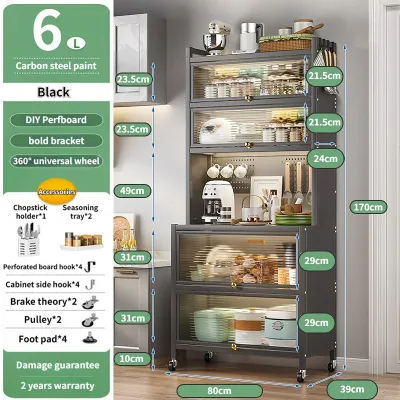
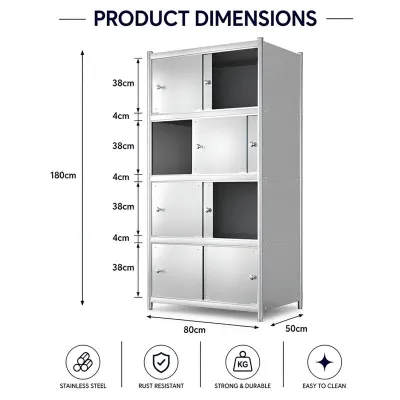
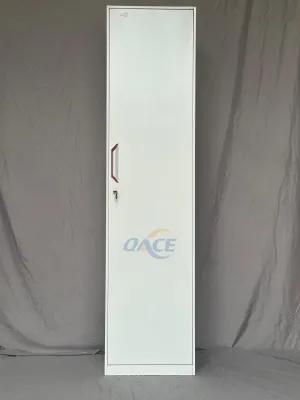
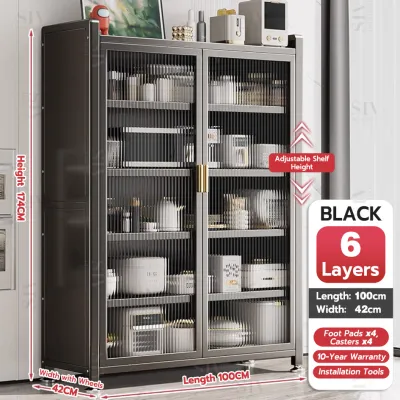
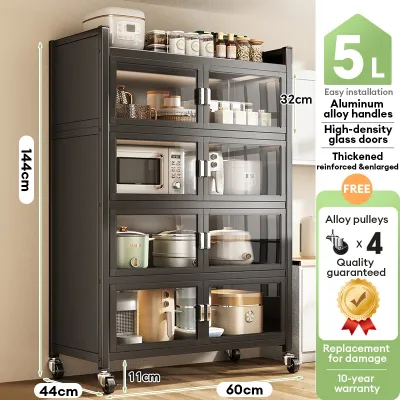
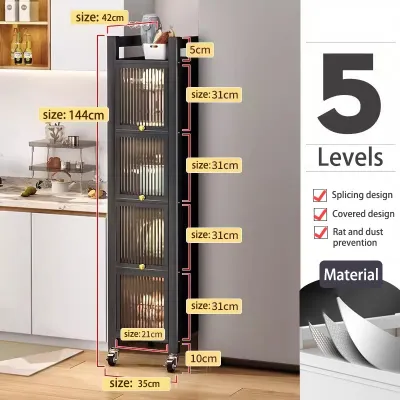
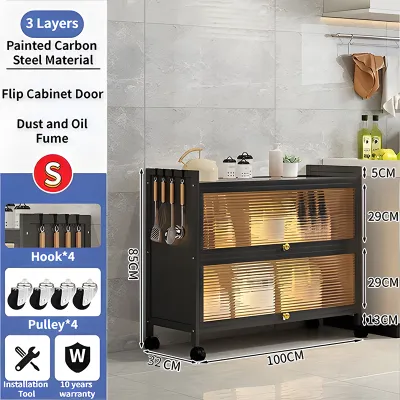
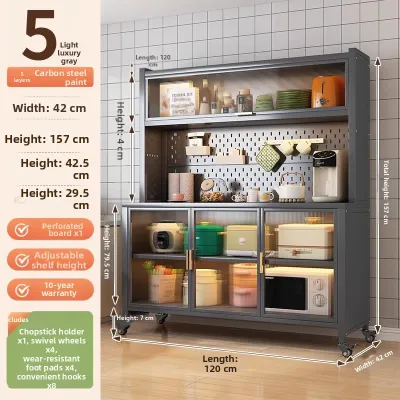
Prices are valid at publication and may change. Please refer to the product page for the latest price.
Finally, consider the logistics of getting the cabinet into your kitchen. If you are purchasing a pre-assembled metal unit, verify that its exterior dimensions allow it to pass through your home’s entryways. Measure the width and height of your main entrance door, hallway corners, and kitchen doorway. For high-rise condominiums or multi-story apartments, check the clearance of service elevators, stairwells, and tight corridor turns. Confirming these dimensions beforehand prevents the frustration of receiving a durable metal cabinet only to find it cannot be transported up to your unit.
Matching Cabinet Dimensions to Storage Needs
Once you have mapped out your kitchen’s physical limits, you can match those dimensions to your household’s actual storage requirements. In highly constrained layouts, vertical space is your most valuable asset. Utilizing tall, narrow metal cabinets—typically ranging from 12 to 18 inches (approximately 30 to 45 centimeters) in width—allows you to reclaim underutilized gaps. These slender units fit well in narrow spaces beside a refrigerator, at the end of a counter run, or within recessed wall niches.

When evaluating the depth of the cabinet, striking a balance is key. Standard kitchen countertops are usually 24 inches (60 centimeters) deep, but a pantry cabinet of this depth might overwhelm a small kitchen pathway. Opting for a shallower cabinet, such as 12 to 15 inches (30 to 38 centimeters) deep, keeps the unit low-profile while providing ample space for canned goods and condiments. A shallower shelf also keeps items visible, preventing smaller jars from getting lost at the back.
The internal configuration of the cabinet is just as important as its external dimensions. Prioritize metal pantry systems that feature adjustable shelving. Storage needs evolve over time; you may need to store appliances like a multi-cooker alongside bulk dry goods, such as a sack of rice. Adjustable shelves allow you to customize the vertical spacing to prevent wasted overhead clearance. Look for cabinets with closely spaced shelf-support slots, which give you the flexibility to fine-tune the height of each compartment to match your specific inventory.
Space-Saving Designs and Configurations
In tight kitchen layouts, the mechanism of how a cabinet opens can dramatically impact usability. Traditional swing doors require a clear arc of space, which can block narrow aisles and disrupt kitchen traffic. To resolve this, consider metal cabinets equipped with sliding doors or roll-up shutter systems. Sliding doors glide along horizontal tracks, allowing access to the pantry without occupying external floor space. This design is ideal for galley kitchens or compact studio apartments where floor space is limited.
Another versatile option for small kitchens is the mobile metal utility cart. These compact, multi-tiered units feature rolling casters that allow you to move your pantry storage wherever it is needed most during meal preparation. When choosing a mobile cart, look for heavy-duty, locking casters to ensure the unit remains stable and stationary when parked. Check the manufacturer’s weight limits to avoid overloading, and ensure the wheels are compatible with your flooring—whether ceramic tiles, vinyl, or polished concrete—to prevent scratching.
If floor space is completely unavailable, wall-mounted metal cabinets or over-the-refrigerator storage units offer an excellent alternative. These installations elevate your storage, keeping your floor clear for movement. However, mounting metal cabinets requires careful preparation. Because metal units can be heavy, you must verify the load-bearing capacity of your walls. In many homes, walls are constructed from concrete or hollow blocks, requiring specialized masonry wall plugs and expansion bolts. Never rely on simple drywall anchors to support a fully loaded metal pantry, as the weight can cause the unit to pull away.
Evaluating Metal Build Quality and Durability
The kitchen is a demanding environment characterized by high humidity, heat from cooking, and potential exposure to water spills. Therefore, evaluating the build quality and material finish of a metal cabinet is essential for ensuring long-term durability. Look for cabinets treated with a rust-resistant powder coating or a galvanized finish. Powder coating involves electrostatically applying a dry powder to the metal and curing it under heat, creating a protective barrier that resists moisture, scratches, and chipping. This is critical in tropical climates where ambient humidity can quickly cause untreated steel to rust.
Next, inspect the structural integrity of the shelving and support brackets. Since a pantry holds heavy items like canned food and small appliances, the shelves must resist bending. Check the manufacturer’s maximum load capacity per shelf, and look for reinforced metal ribs welded underneath each panel. The brackets holding the shelves should be made of thick metal rather than thin plastic to support the rated weight securely.
Finally, pay close attention to the moving parts of the cabinet. Open and close the doors and drawers multiple times to assess their alignment and operation. High-quality cabinets feature smooth-gliding drawer slides—ideally with ball-bearing mechanisms—and sturdy hinges that do not sag. Ensure doors close flush against the frame and have rubber bumpers or magnetic catches to prevent metal-on-metal scraping. A well-constructed cabinet should feel solid, with tight joints and minimal flexing when pressure is applied.
Frequently Asked Questions (FAQ)
How do I prevent a tall, narrow metal cabinet from tipping over?
To prevent a tall, narrow metal cabinet from tipping over, you must secure it directly to the wall using anti-tip brackets or wall anchors. Because these cabinets have a high center of gravity, especially when loaded with heavy items on the upper shelves, they pose a safety hazard if pulled or bumped. Always follow the manufacturer’s installation instructions and use hardware compatible with your specific wall type. For concrete or masonry walls, use heavy-duty wall plugs and screws; for drywall, ensure the anchors are fastened directly into the wooden or metal wall studs. Additionally, practice safe loading habits by placing heavier items, such as gallons of cooking oil or sacks of rice, on the bottom shelves to lower the unit’s center of gravity.
Can I use a metal pantry cabinet outdoors or on a balcony?
You should not use a standard indoor metal pantry cabinet outdoors or on an open balcony unless it is explicitly rated for outdoor use by the manufacturer. Indoor metal cabinets are typically finished with powder coatings designed for controlled indoor environments. When exposed to direct sunlight, heavy rain, and high outdoor humidity, these finishes can degrade, leading to rapid rust formation, paint peeling, and structural failure. Before placing any metal cabinet in a semi-outdoor or exposed area, check the manufacturer’s product specifications and warranty terms to verify its UV resistance and weatherproofing capabilities. If outdoor storage is necessary, look for units specifically constructed from marine-grade stainless steel or heavy-duty galvanized steel designed to withstand the elements.

Community discussion
Share your experience or ask a question. Comments are reviewed before publication.