
Choosing the right standing desk mechanism for your work-from-home (WFH) space often comes down to how you work, where your desk is positioned, and how much gear you use. A pneumatic standing desk, such as the Musso D5, offers excellent mobility, near-silent operation, and complete independence from electrical outlets. This makes it an ideal choice if you frequently rearrange your workspace, want to avoid cable clutter, or live in an area prone to power interruptions.
Conversely, an electric standing desk is better suited for users with heavy multi-monitor setups who require effortless, motorized adjustments at the press of a button. Electric models excel when you need precise, programmable memory presets to transition between exact sitting and standing heights throughout the day.
Before making a final decision, it is crucial to verify the specific weight capacity and physical dimensions of any model you consider. Ensuring the desk can safely support your monitors, laptop, and accessories prevents mechanical strain and guarantees long-term stability.
Products mentioned in this guide
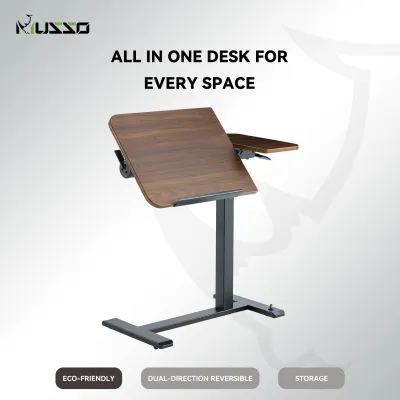
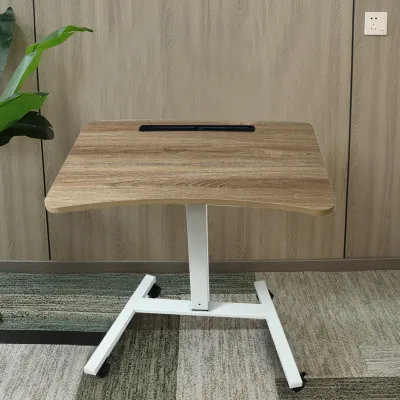
Prices are valid at publication and may change. Please refer to the product page for the latest price.
Understanding Pneumatic Standing Desks (Musso D5 Focus)
Pneumatic standing desks utilize a gas-spring mechanism, similar to the technology found in office chairs and car hatchbacks, to assist with height adjustments. When you pull the physical lever or trigger, the compressed gas inside the cylinder exerts upward force, making it easy to lift the desktop. To lower the desk, you pull the lever again and apply downward physical pressure using your hands or body weight.
One of the primary advantages of a pneumatic desk like the Musso D5 is its complete independence from electrical power. You do not need to position the desk near a wall outlet, allowing you to place your workstation in the middle of a room, near a window, or anywhere inspiration strikes. This power independence is particularly valuable in tropical climates where seasonal storms can cause sudden power fluctuations or outages. Additionally, because there are no motors, the adjustment process is exceptionally quiet and highly portable.
However, gas-spring mechanisms have specific limitations that require careful verification. Lowering the desk requires manual effort, which can become physically demanding if the desktop is loaded with heavy equipment. Furthermore, pneumatic desks have strict weight capacity thresholds; if your gear is too light, the desk may rise too quickly, and if it is too heavy, the gas spring may struggle to assist with the lift.
When considering the Musso D5, always check the manufacturer’s label or product manual for the exact lift capacity and net desk weight. This ensures your daily work setup—including your computer, monitor arms, and desk organizers—falls within the optimal operating range of the gas cylinder.
Understanding Electric Standing Desks
Electric standing desks rely on motorized lifting columns integrated into the desk legs to adjust the height of the work surface. These systems are powered by either a single motor or dual motors, which are controlled via an electronic keypad mounted on the edge of the desktop. With a simple button press, the motors smoothly raise or lower the desk to your desired level.

The standout benefit of an electric desk is its effortless operation. Most modern electric models feature programmable memory presets, allowing you to save your preferred sitting and standing heights. This is incredibly convenient for shared home offices where multiple family members use the same desk. Electric desks also generally offer higher weight capacities than pneumatic models, making them the preferred choice for heavy desktop towers, multiple large monitors, and heavy-duty desk accessories.
Despite these benefits, electric desks come with distinct constraints. They require constant access to a reliable power outlet, which limits where you can place your desk and necessitates careful cable management to prevent cords from stretching or unplugging during height transitions. The motorized legs and control boxes also add weight and complexity to the assembly process, and the motors themselves produce a low humming noise during operation.
Setting up an electric desk requires ensuring adequate clearance around the moving parts. You must verify that the motorized legs have enough space to travel up and down without hitting nearby shelves, window sills, or wall outlets, and that your power cables have sufficient slack to accommodate the maximum height.
Core Comparison Dimensions for Daily WFH Routines
When evaluating pneumatic and electric desks for daily WFH routines, several practical performance factors come into play. The speed and smoothness of adjustments can significantly impact your workflow. Pneumatic desks offer rapid transitions, often raising from sitting to standing height in a single, swift motion lasting only a second or two. However, the smoothness of the descent depends heavily on how much weight is on the desk, as you must manually push down against the gas cylinder’s resistance. Electric desks adjust at a slower, constant speed, but they provide a perfectly smooth, automated transition regardless of the load on the desktop.
Noise levels are another critical consideration, especially in quiet home environments or shared living spaces. Gas-spring mechanisms operate almost silently, with only a soft hiss of air as the cylinder compresses or expands. Electric motors, while generally quiet, produce a distinct mechanical hum that might be noticeable during late-night work sessions or quiet video calls.
Stability and wobble at maximum height are vital for maintaining focus. Both pneumatic and electric desks can experience minor sway when fully extended, but this is largely determined by the quality of the frame construction and the distribution of weight. If you use heavy monitor arms or type aggressively, a robust frame with wide feet is essential to minimize vibrations.
| Comparison Dimension | Pneumatic Desks (e.g., Musso D5) | Electric Standing Desks |
|---|---|---|
| Adjustment Power Source | Manual lever with gas-spring assistance | Electric motor(s) via wall outlet |
| Adjustment Speed | Rapid (1–2 seconds, manual lift/push) | Steady, motorized travel (varies by model) |
| Noise Level | Near-silent air compression hiss | Low mechanical motor hum |
| Power Dependency | None; works anywhere | Requires continuous electrical connection |
| Memory Presets | None; manual alignment | Programmable digital presets (model dependent) |
| Weight Capacity Limit | Strict range (check manufacturer specs) | Typically higher (check manufacturer specs) |
| Wobble Resistance | Varies by frame design and load balance | Varies by frame design and leg stages |
Budget, Maintenance, and Long-Term Value
From a financial perspective, pneumatic and electric desks occupy different segments of the home office market. Generally, pneumatic models like the Musso D5 offer a highly competitive entry point for standing desks, as they do not require expensive electrical components, control boards, or motors. Electric desks, particularly those featuring dual motors and advanced digital controllers, typically command a higher initial investment in ₱ due to the complexity of their motorized systems.
Long-term maintenance requirements also differ between the two mechanisms. For a pneumatic desk, maintenance involves periodically inspecting the gas cylinder for signs of pressure loss or oil leaks, and ensuring the manual lever mechanism remains securely connected. For electric desks, maintenance checks focus on verifying the electronic control box connections, ensuring the power cords are free from wear, and occasionally resetting or calibrating the motors if the legs become uneven.
Warranty coverage is another crucial factor to review before purchasing. Pneumatic desks often carry warranties focused on the structural frame and the gas cylinder. Electric desks usually have split warranty terms, with different coverage periods for the steel frame, the mechanical motor components, and the sensitive electronic control panels. Always check the specific warranty terms provided by the local retailer or manufacturer to understand what is covered over the lifespan of your desk.
Final Decision Framework: Which Mechanism Should You Choose?
To finalize your decision, evaluate your specific home office environment and daily working habits against these scenario-based guidelines.
Choose a Pneumatic Desk (like the Musso D5) if:
- You want a clean workspace free from trailing power cords and cable clutter.
- You frequently move your desk around your home or place it far from wall outlets.
- You want a silent, rapid adjustment mechanism that does not rely on electricity.
- Your daily setup is relatively lightweight, consisting of a laptop, a single monitor, and standard office accessories.
Choose an Electric Desk if:
- You use multiple monitors, heavy desktop computers, or clamp-on monitor arms that require a high weight capacity.
- You share your desk with other family members and need precise, repeatable height presets.
- You prefer effortless, automated adjustments at the touch of a button without applying physical downward force.
- Your workspace is permanently situated near reliable power outlets with adequate surge protection.
Verify first if:
- Your floor surface is level, as uneven floors can affect the stability of both pneumatic and electric frames at higher elevations.
- The total weight of your computer equipment, cables, and desk accessories falls safely within the manufacturer's specified limits for your chosen model.
- You have measured your doorways and access paths to ensure the desk frame can be easily moved into your designated WFH room during delivery and assembly.
Frequently Asked Questions (FAQ)
Do pneumatic desks lose their lift pressure over time?
Yes, pneumatic gas cylinders can gradually lose pressure over a period of several years due to the natural degradation of the internal seals. This slow loss of pressure is similar to what occurs in office chair cylinders. If a pneumatic desk begins to lose pressure, you may notice that it requires more physical effort to lift, or that it slowly sinks under a normal equipment load. To safeguard your investment, check the manufacturer’s warranty policy to see if the gas-spring cylinder is covered for replacement, and ensure you operate the desk within its recommended weight limits to prevent premature wear.
Can I convert a pneumatic desk to an electric one later?
Converting a pneumatic standing desk into an electric one is generally not practical or cost-effective. The structural frames, leg columns, and lifting mechanisms of pneumatic and electric desks are engineered differently to accommodate either gas cylinders or motorized spindles. Upgrading would typically require replacing the entire under-desk frame, legs, and control system, leaving only the original desktop surface. If you anticipate needing motorized adjustments, programmable presets, or a higher weight capacity in the future, it is highly recommended to invest in an electric desk from the start rather than attempting a complex and expensive conversion later.

Community discussion
Share your experience or ask a question. Comments are reviewed before publication.